

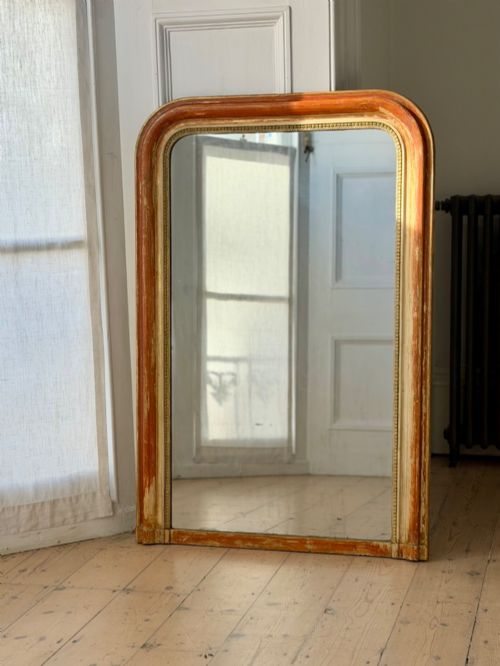
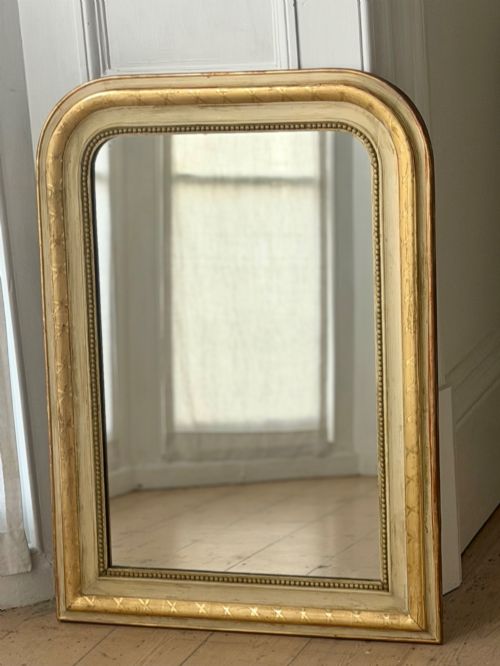
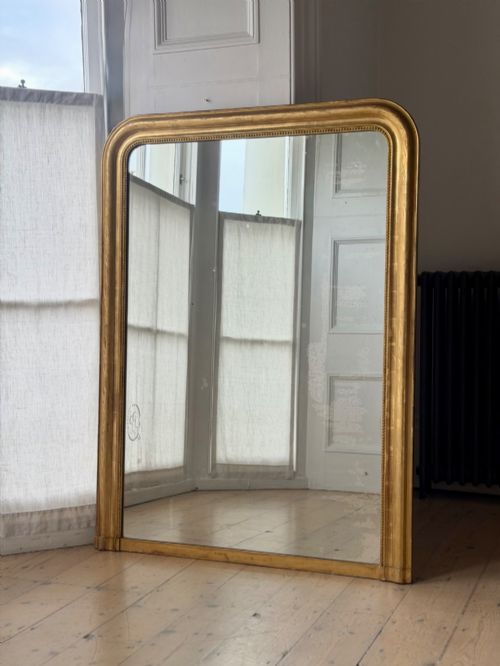
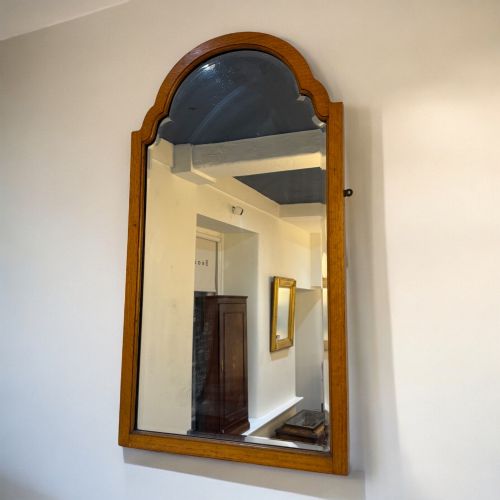


Antique Arch Top Mirrors
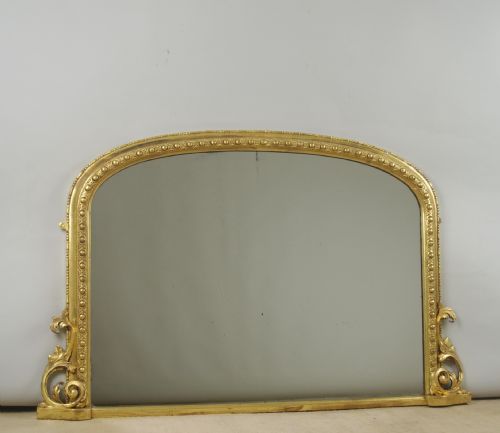
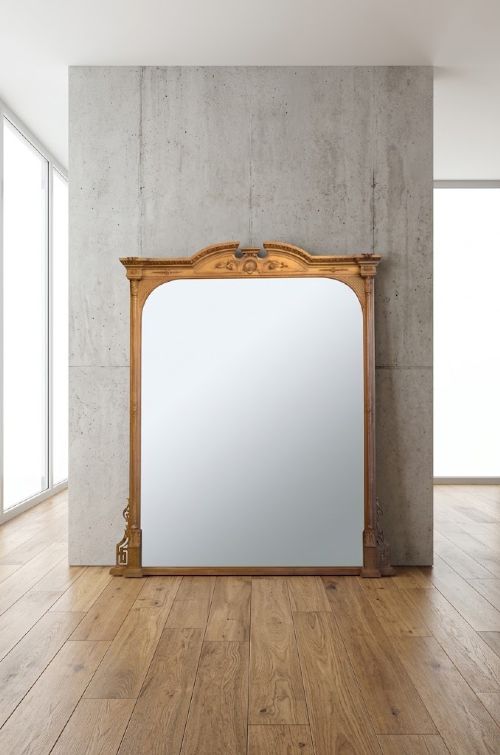
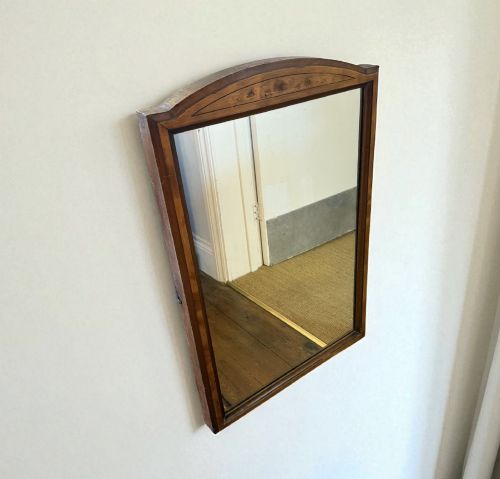
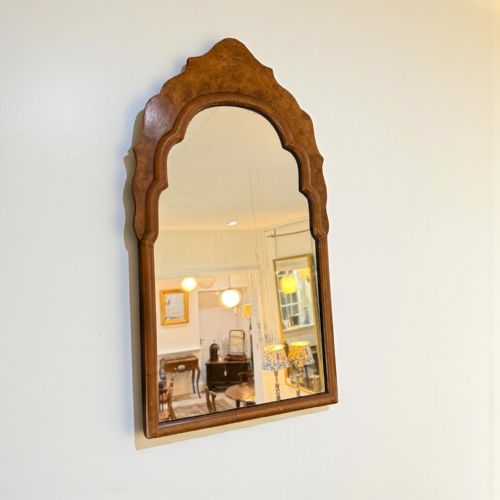
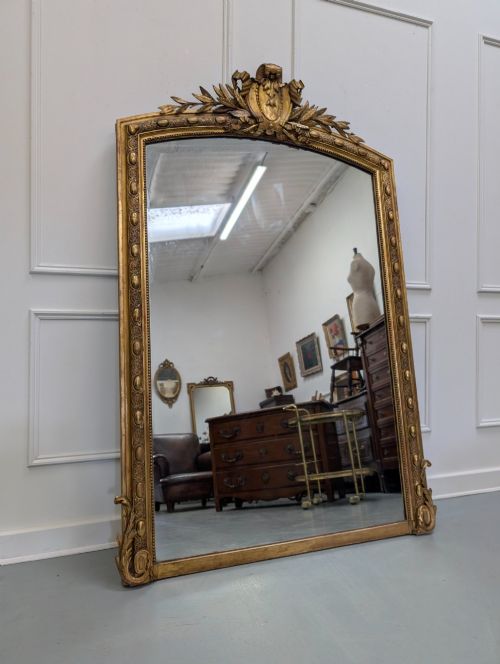
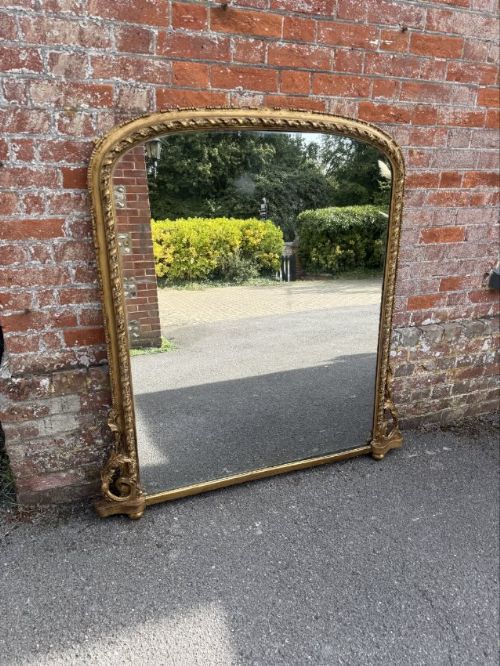
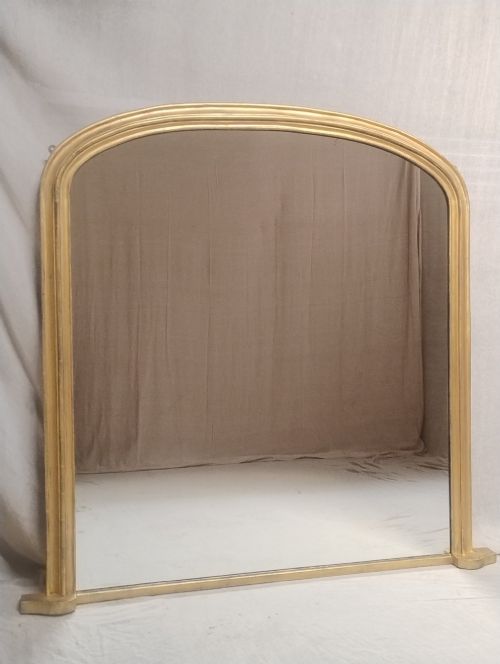
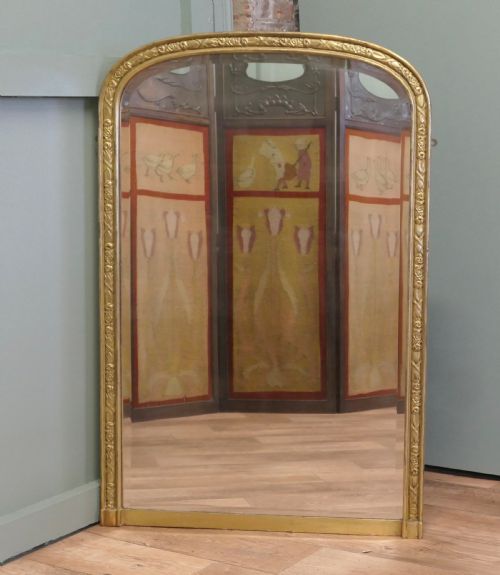
A wall mirror whose frame rises to a single arc at the head, made in the 19th century to hang above a fireplace or on the wall pier between windows.
Antique Arch Top Mirrors
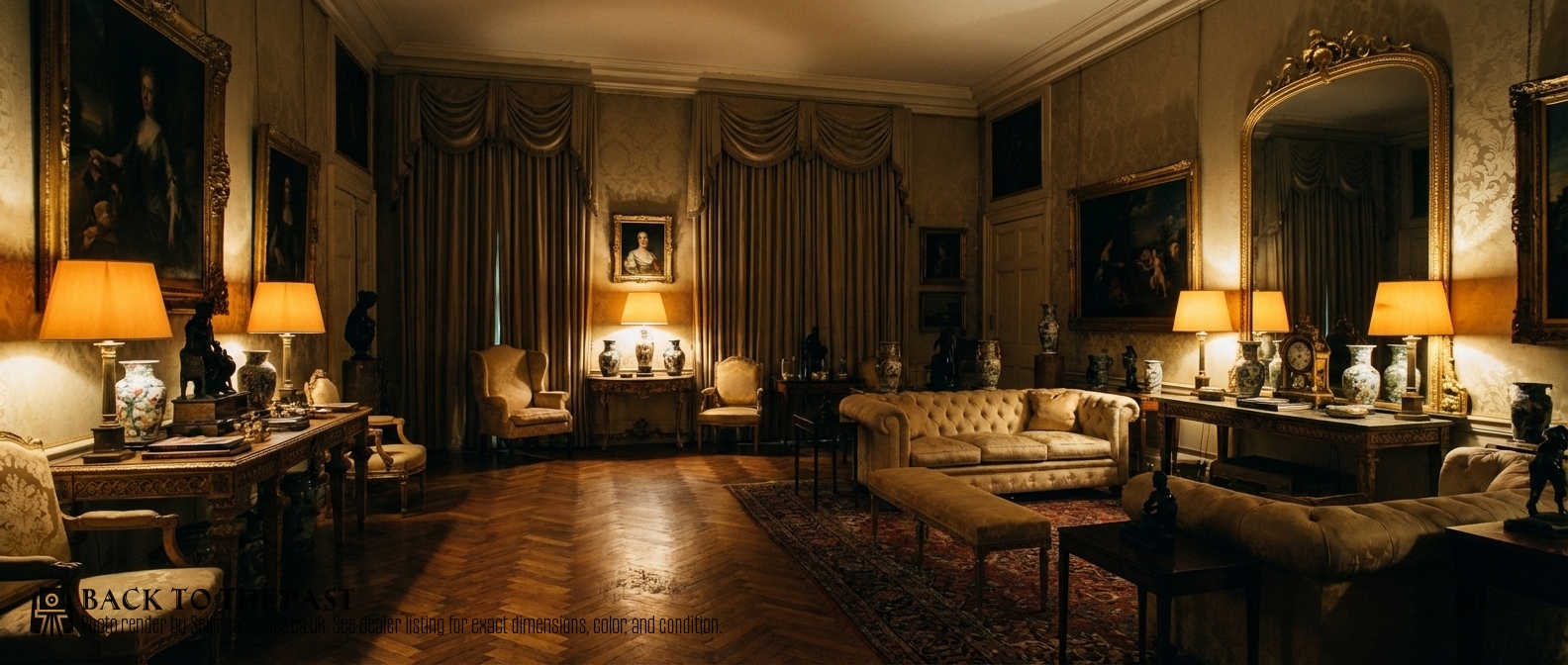
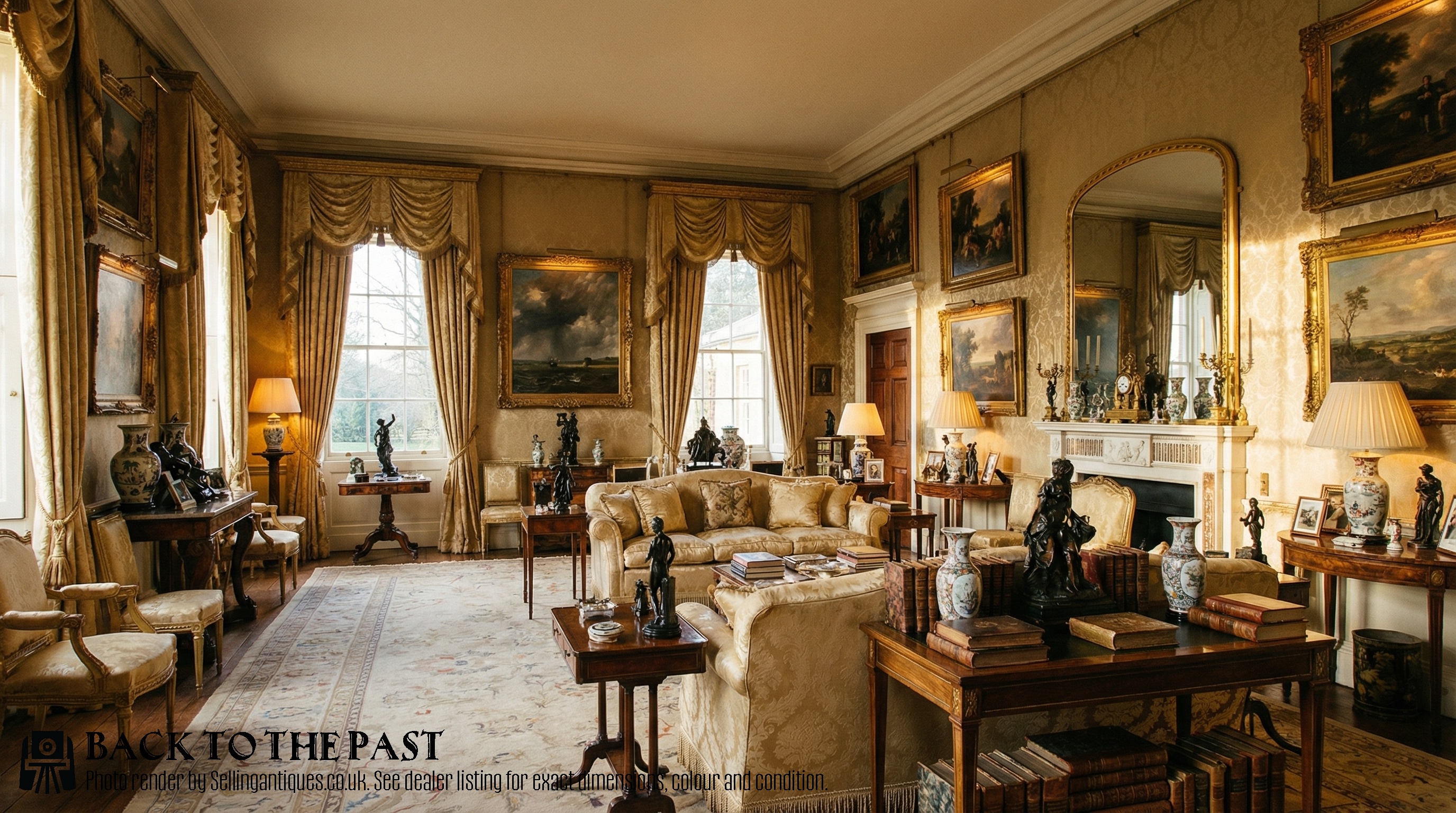
The form is a tall plate in a frame with a curved head. It became a standard domestic fitting in the 19th century, when plate glass could be made large enough to fill a frame over a chimneypiece, and the arch echoed the architecture of the room around it.
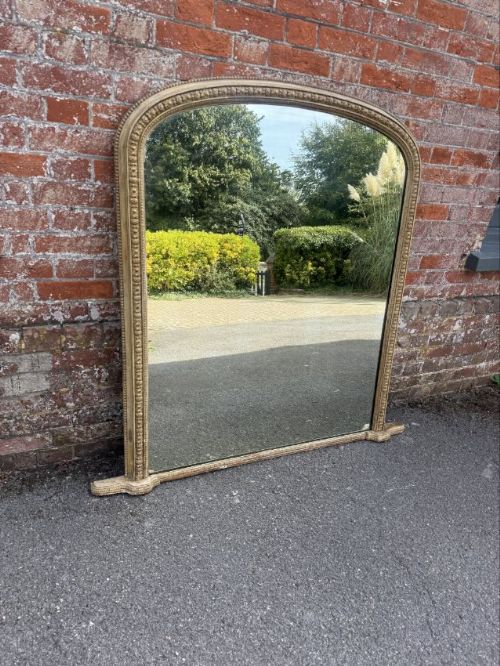
One construction dominates. Carved wood carries a gesso ground, moulded and smoothed, then finished in gilt or paint. Of 978 listings on Sellingantiques, 587 titles say carved wood and 529 say gesso, with 462 saying both. Gilt appears on 518, painted on 326.
Two origins appear in bulk: English on 398 titles, French on 310. The English side runs to Victorian gilt overmantels, often described as large. The French side leans painted, silvered or distressed, and carries the one style label with any weight, Louis Philippe, on 107 titles.
Dates run 1800 to 1930, but the weight sits in the third quarter of the 19th century, with the 1860s and 1870s together taking the bulk of the 874 listings that carry a clean year. Outside the overmantel norm sit smaller wall and pier mirrors, cheval and dressing glasses, a shop fitting mirror, and a handful of 1930s Art Deco bevelled arch tops built quite differently.
Where The Range Splits
Size does most of the work. "Large" sits on 591 titles, and the language tracks the range: "useful size" and "good size" cluster low and middle, while "extra large", "very large" and "massive" turn up only at the top. A big overmantel was an expensive object when new and still reads that way.
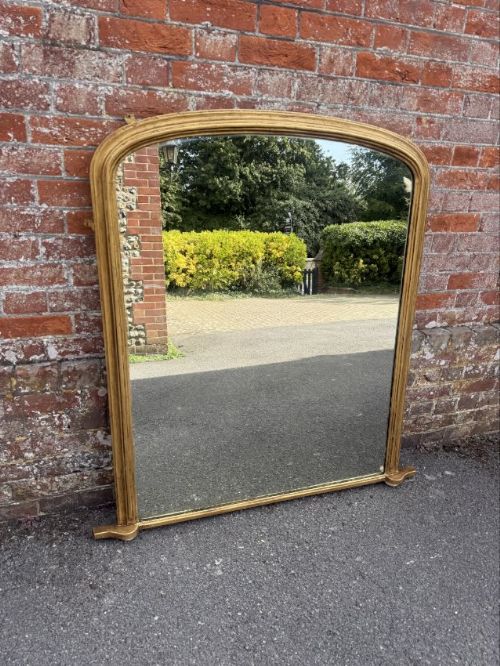
Surface is the second divide. Gilt runs toward the top of the range, painted and plain examples lower, and "plain" appears on 42 titles with "painted plain" on 26, concentrated in the lower and middle. Silvered and distressed finishes sit alongside the painted group rather than above it.
Then carving. Frames named for rope twist, laurel leaf, ribbing, beading, scrolls, columns, a shell cartouche or a putto cresting appear disproportionately in the upper part of the range, while a plain moulded arch sits below them. Originality counts too: "original gilt", "original silvered" and "original mirror plate" are used as distinguishing terms, not assumed.
Antique Arch Top Mirrors Retail Price Guide 2026
Typical UK retail prices for arch top mirrors, calculated from the Sellingantiques database of over a million retail prices indexed since 2003. This retail price guide relies exclusively on Sellingantiques data; no external sources or auction records are used, so the figures do not describe the wider market.
Carved wood and gesso is close to a house style. On Sellingantiques 587 arch top titles say carved wood, 529 say gesso, and 462 say both.
The Antique Arch Top Mirrors Glossary
- Arch top
- The frame's head curves in a single arc rather than running straight across, and the phrase appears on 643 of 978 titles.
- Overmantle
- Also spelled overmantel. A mirror made to hang above a fireplace, and the commonest use given in these titles.
- Gesso
- A chalk-and-glue ground laid over the carved wood, moulded and smoothed before gilding or painting.
- Parcel-gilt
- Gilded only in parts, often over an ebonised or painted ground, as against a frame gilded all over.
- Louis Philippe
- A French frame style label used on 107 titles, usually an arched top with a plain or lightly moulded frame.
- Pier mirror
- A tall narrow glass made for the wall pier between two windows rather than over a chimneypiece.
Antique Arch Top Mirrors: Frequently Asked Questions
What period do most arch top mirrors come from?
The dated field runs from 1800 to 1930, with 874 listings carrying a clean year. Almost two thirds of those fall in the 1860s and 1870s.
The 1880s and 1850s follow behind. Dates before the 1840s and after the 1890s are thin, and some listings give only "19th Century" or "Victorian" as an era label.
Are these mirrors English or French?
Both, and little else in quantity. English appears on 398 titles and French on 310. Italian, Swedish, Irish and "continental" surface only once or twice across the whole run.
The English group leans toward Victorian gilt overmantels. The French group carries the painted, silvered and Louis Philippe descriptions.
Why are so many described as carved wood and gesso?
It's close to a house style for the category. A wooden frame is carved, then gesso is laid over it and moulded into the ornament before the surface is gilded or painted.
On Sellingantiques, 587 titles say carved wood, 529 say gesso and 462 say both together.
Do arch top mirrors have named makers?
Not in this evidence. Across 978 listings, no maker, workshop or retailer name comes through in the titles.
What the listings name instead is origin, date, construction and finish. Louis Philippe is the one style label with real weight, on 107 titles.
How big are they?
Large is the norm rather than the exception, with the word on 591 titles. These were made as chimneypiece and pier furniture, so height was the point.
A smaller run does exist. "Useful size" appears on 74 titles, covering neat wall mirrors and narrower pier glasses. Only a handful of listings give measurements at all.
Are all arch tops overmantel mirrors?
Most are made for that position: 563 titles say overmantle or overmantel.
The rest spread across pier mirrors, dressing and cheval glasses, a shop fitting mirror, and a small set of 1930s Art Deco bevelled arch tops that are built quite differently from the gesso-framed norm.