
Antique Dressing Table Mirrors
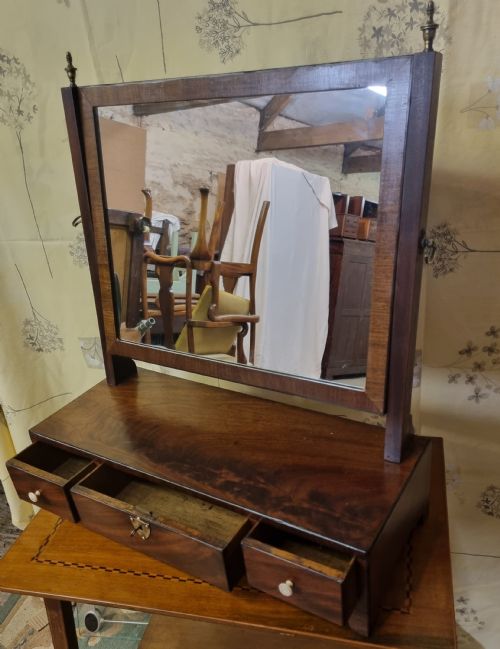
A small pivoting mirror plate on a stand, made to sit on a dressing table or chest and be tilted to whoever was sitting at it, commonly over a base of little drawers for combs, pins and cosmetics.

Antique Dressing Table Mirrors
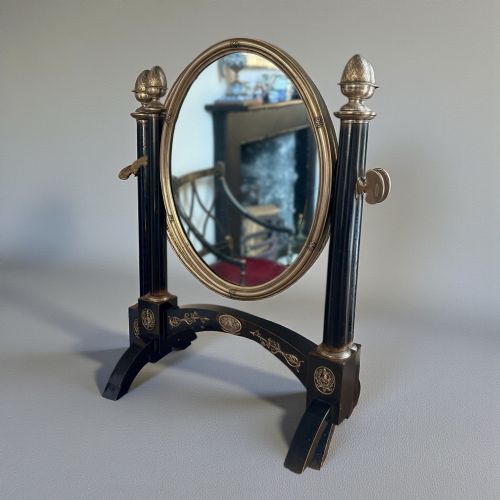
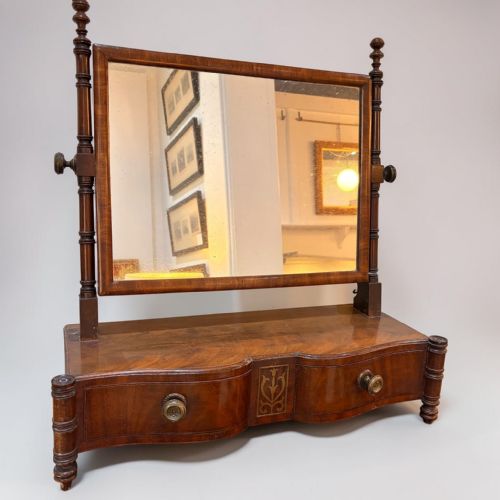
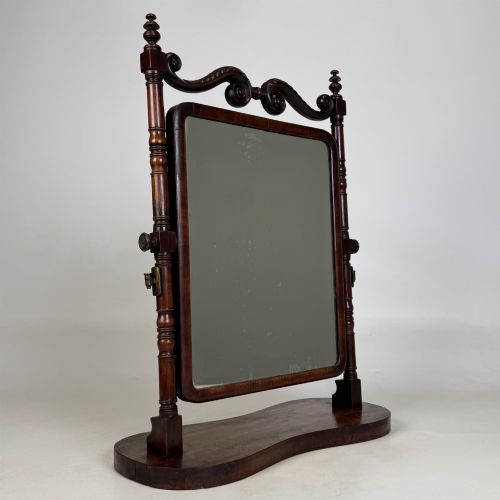
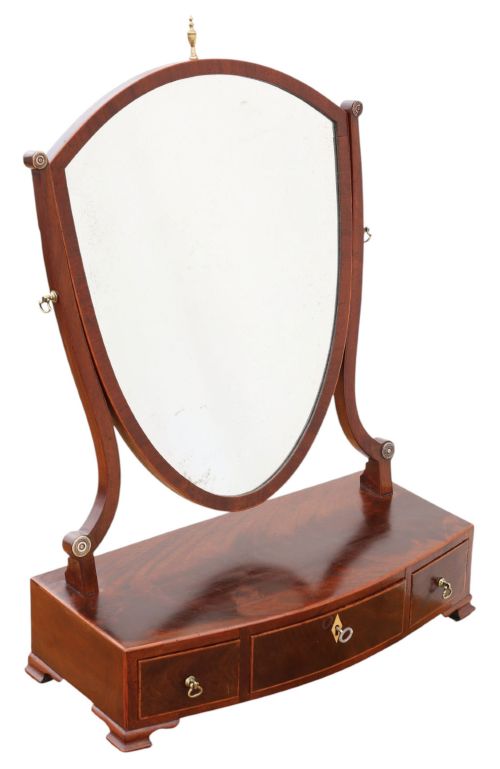
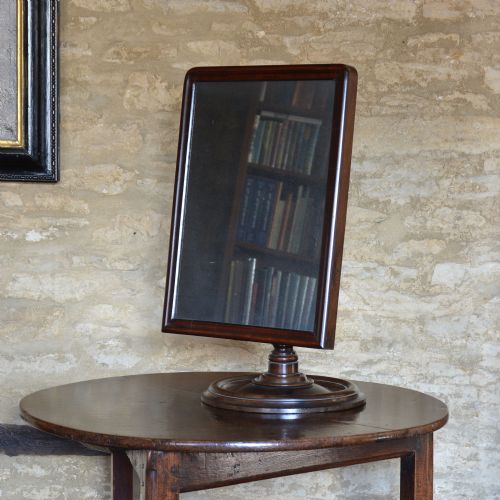
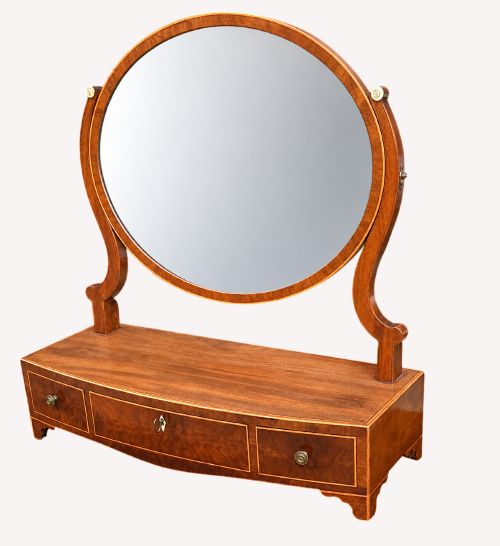
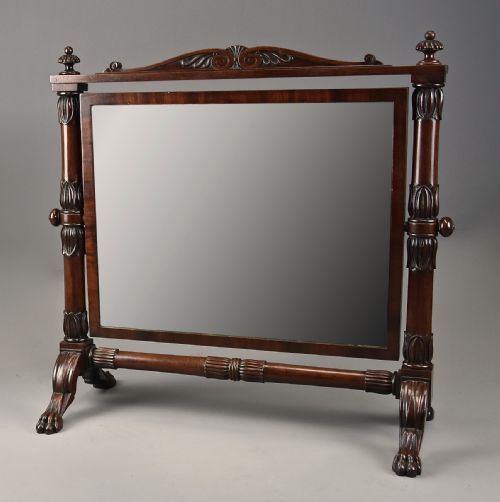
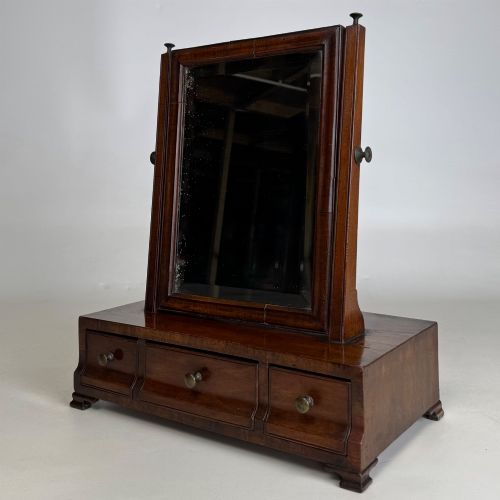
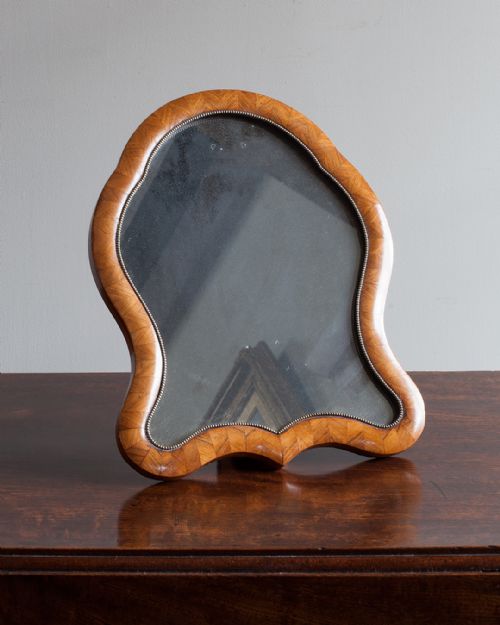
A rectangular, oval or shield-shaped plate held in a frame that pivots between two uprights, the uprights rising from a box or platform base. That base very often holds one to three small drawers. The form came into general use in the late 17th and 18th centuries, once mirror plate became cheap enough to sit on a dressing table rather than only hang on a wall.
One thing dominates: mahogany, which appears in 280 of 578 archive titles, on a swing frame over a drawered base. Walnut is a distant second at 54 titles, with satinwood and oak turning up occasionally and single examples in rosewood, kingwood, amboyna, harewood, burr maple, birch, olive wood and teak. Georgian and Victorian are the era labels attached most often.
Read the same object under three names. Dealers write 'dressing table mirror', 'toilet mirror' (124 titles) and 'swing mirror' (59), and plenty of listings give two of them separated by a slash. Shapes named in titles are oval, serpentine, shield and bow front.
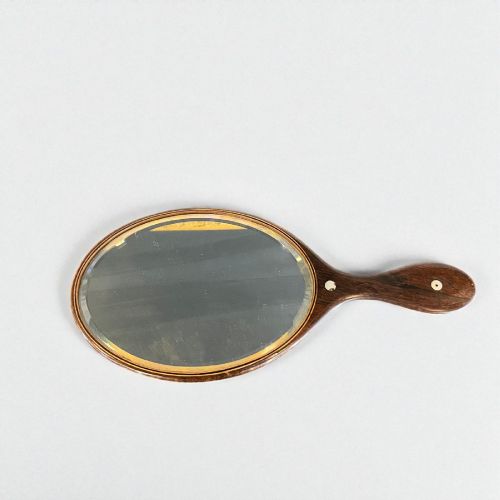
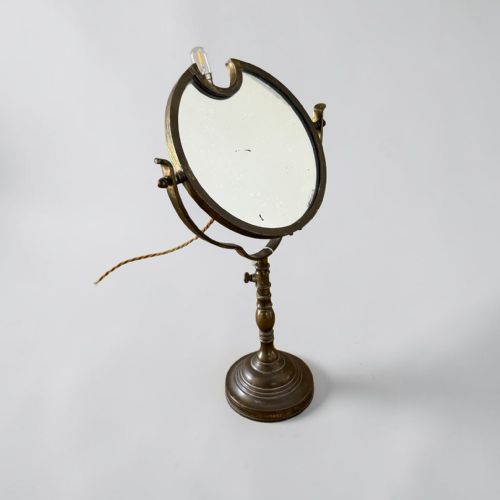
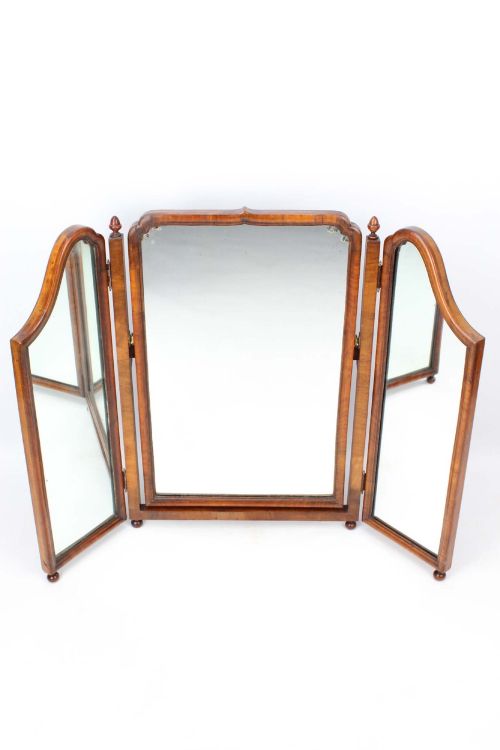
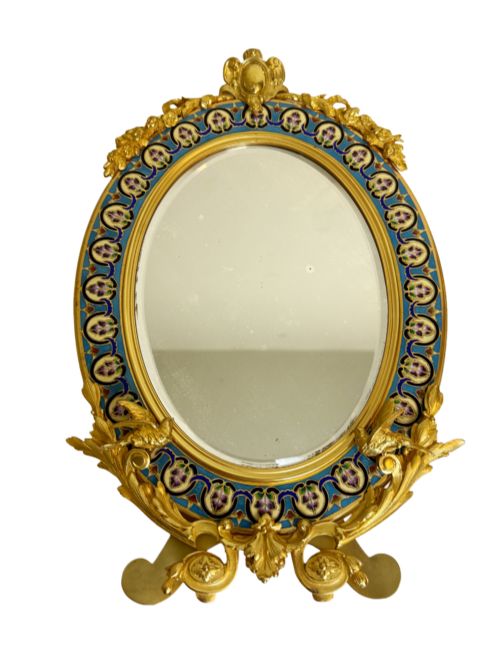
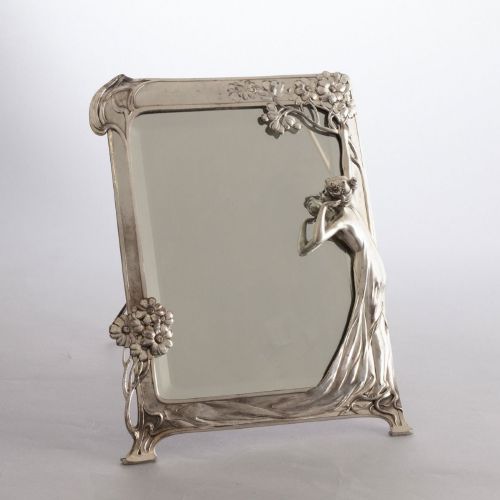
A smaller strand isn't furniture at all: table and easel mirrors in brass, bronze, gilt bronze, pewter and chrome, and a distinct group of silver and silver-mounted dressing mirrors, several carrying London assay years from 1889 through to 1904. Triptychs and other folding triple-plate mirrors, mostly Edwardian to the 1930s, make up around one in twenty.

Where The Range Sits
Timber and shaping do most of the work. A plain mahogany mirror on a flat rectangular base sits at the bottom; harewood, amboyna, kingwood, burr walnut, satinwood and flame-grain mahogany titles cluster in the upper part. Serpentine, bow, concave and shield outlines lift a piece, and George III serpentine examples turn up repeatedly at the top of the wooden range.
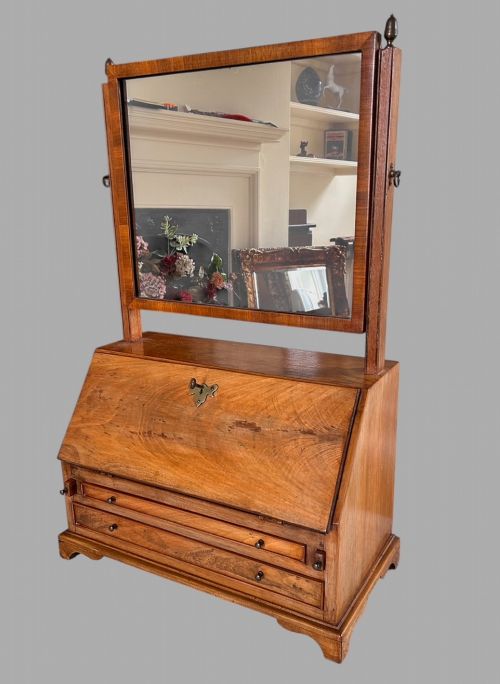
What the base does matters as much as what it's made of. Titles naming three drawers, box and platform bases, or a miniature bureau base with a fall front, sit well above the plain stands and skeleton frames that have no base at all.
Material class splits the category in two. Silver, ormolu, champlevé, Limoges enamel and porcelain-mounted mirrors appear disproportionately in the upper part of the range, while brass easel mirrors sit low. Date claims pull the same way: Queen Anne, George I and George II walnut examples occupy the highest positions, Victorian and Edwardian mahogany the lowest.
Antique Dressing Table Mirrors Retail Price Guide 2026
Typical UK retail prices for dressing table mirrors, calculated from the Sellingantiques database of over a million retail prices indexed since 2003. This retail price guide relies exclusively on Sellingantiques data; no external sources or auction records are used, so the figures do not describe the wider market.
Among the one-offs to pass through: a Chinese Qing cheval mirror in hardwood and mother of pearl, a Delft-mounted Dutch mirror and a boot maker's mirror.

The Antique Dressing Table Mirrors Glossary
- Toilet mirror
- The trade's older name for the same object, used in 124 titles and often printed alongside 'dressing table mirror' in one line.
- Swing mirror
- A plate that pivots on screws or thumbscrews between two uprights. Named in 59 titles.
- Serpentine
- A base or drawer front with a waved outline, concave then convex then concave again. Appears in 29 titles.
- Bow front
- A base bowed outward in a single curve. Written barrel-fronted or breakfront in some of these titles.
- Skeleton mirror
- A frame with no solid base, the uprights standing on small feet. Four titles use the word.
- Flame mahogany
- Mahogany cut to show a flared, plume-like figure, used in several titles for both base and frame.
Antique Dressing Table Mirrors: Frequently Asked Questions
What's the difference between a toilet mirror and a swing mirror?
In practice, nothing. Both names describe a plate pivoting between two uprights on a table-top stand, and dealers use them interchangeably.
Many listings hedge by giving two names at once, separated by a slash. 'Toilet mirror' is the older trade term and appears in 124 of 578 archive titles.
How old are these mirrors usually?
The dealer-supplied date field runs from 1750 to 1930. The largest single bucket is a vague '19th Century', which reads as an approximation rather than a date, followed by Georgian, Victorian, 18th Century and Regency labels.
Some titles reach back further than the dated range, with Queen Anne walnut examples described as early 18th century and one as about 1710. Edwardian, 1920s and 1930s pieces are real but a small share.
Which wood is most common?
Mahogany, and by a wide margin. It appears in 280 of 578 titles, close to a defining material for the category.
Walnut is second at 54 titles. Satinwood and oak turn up in about one title in a hundred each, with single instances of rosewood, kingwood, amboyna, harewood, burr maple, birch, olive wood and teak.
Are silver dressing mirrors part of this category?
Yes, as a small but distinct strand of 15 titles. They include silver-mounted frames and one flat-backed strut mirror held up by a hinged support.
This is the only part of the category dated to the year rather than by opinion, because assay marks give it. London years of 1889, 1895, 1896, 1900, 1903 and 1904 all appear.
Do these mirrors come up often for sale?
Around 57 come to market in a year on Sellingantiques, and 196 separate dealers have listed one.
That means the category is spread very thinly across the trade, with most dealers having handled only one or two.
What unusual examples turn up?
Non-British pieces are uncommon. French appears in 20 titles, with Dutch, Italian, Swedish, Venetian, Anglo-Indian, Russian and Chinese examples appearing once or twice each.
One-offs include a folding olive wood travel mirror, a Qing cheval mirror in hardwood and mother of pearl, a carved limewood mirror in the Black Forest manner, a Delft-mounted Dutch mirror and a boot maker's mirror.
Sizes are rarely given. The smallest recorded is a miniature mahogany dressing mirror of about 1860; the largest are described only as grand scale or very large.