



Antique Venetian Mirrors
A wall mirror framed in worked glass or carved giltwood in the Italian taste, made to bounce candlelight around a room and show off the glassmaker's hand.
Antique Venetian Mirrors
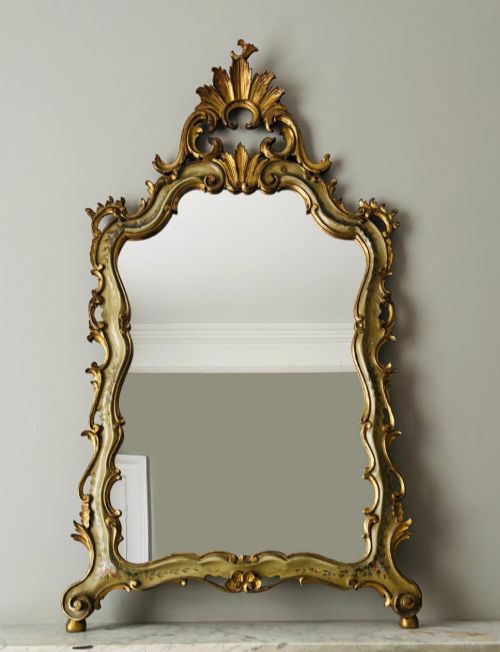
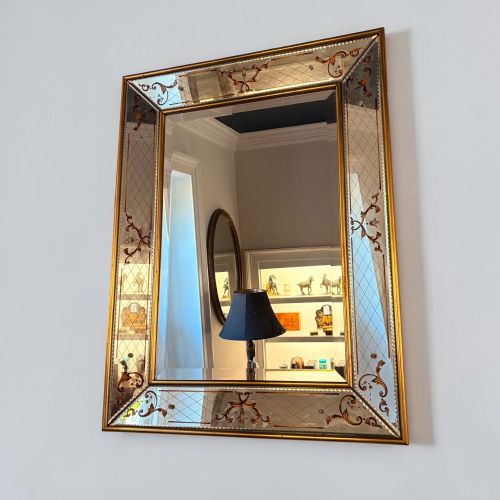
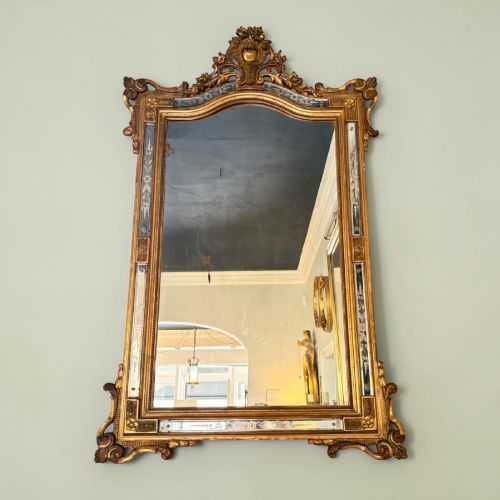
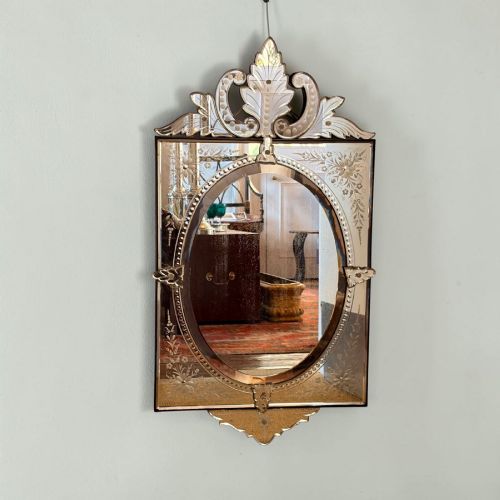
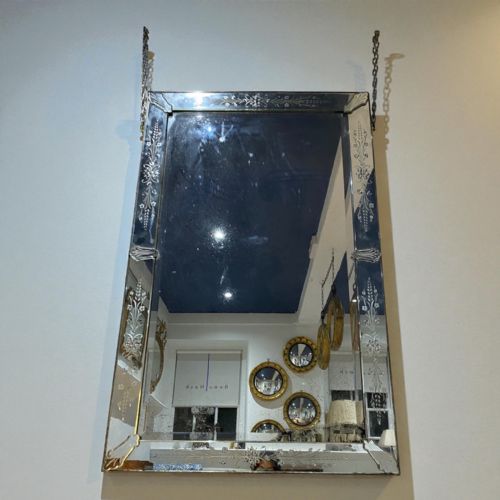
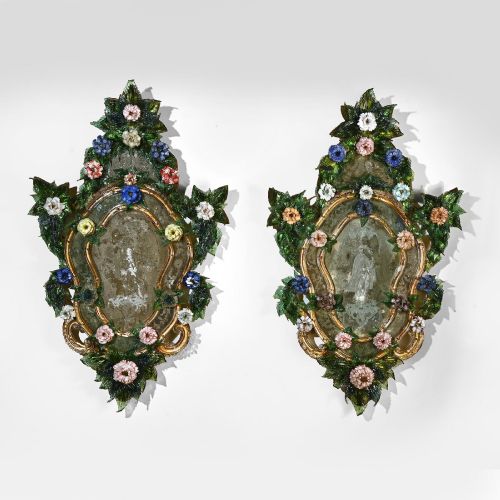
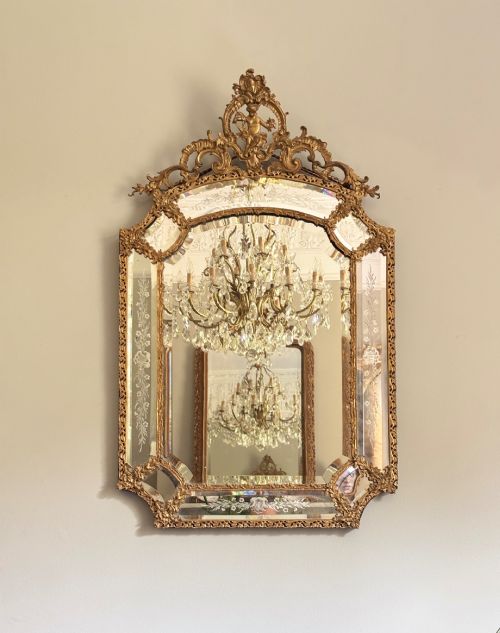
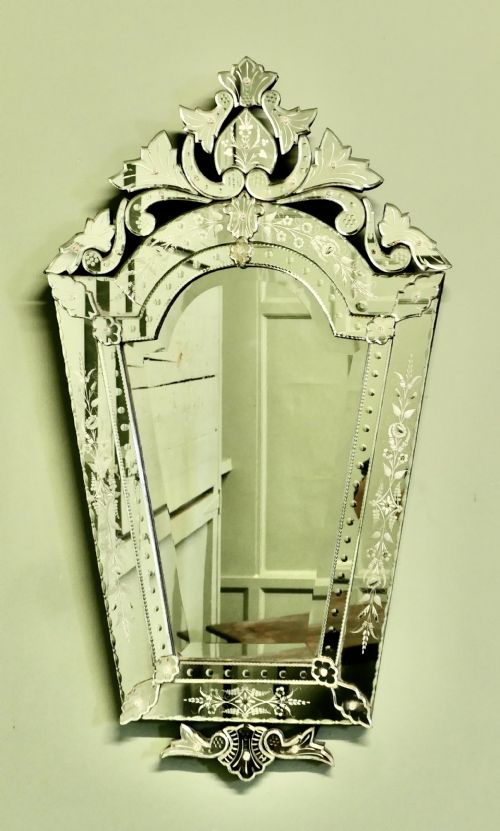
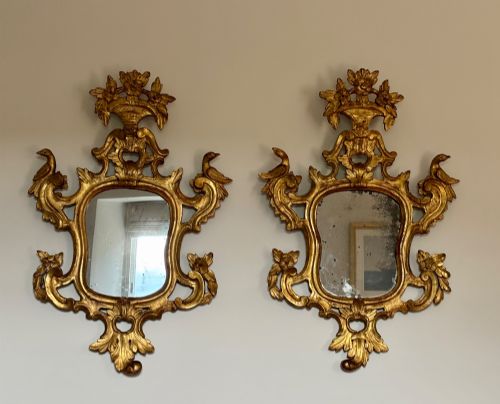
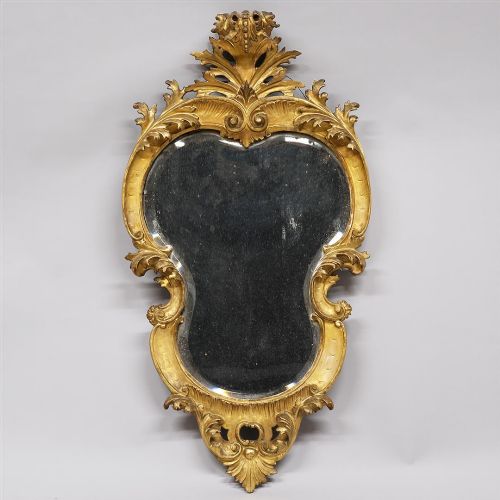
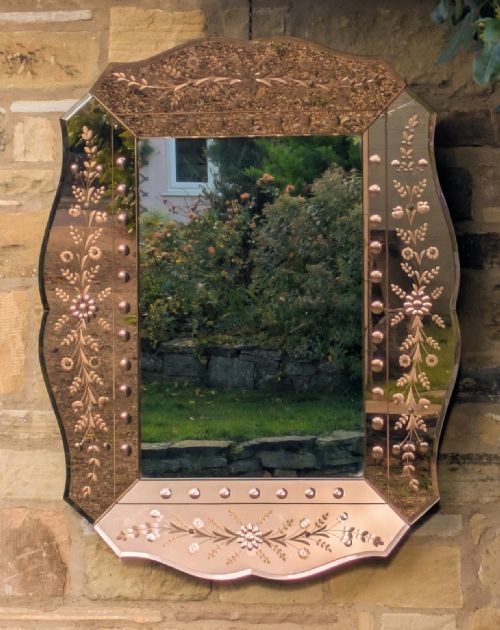
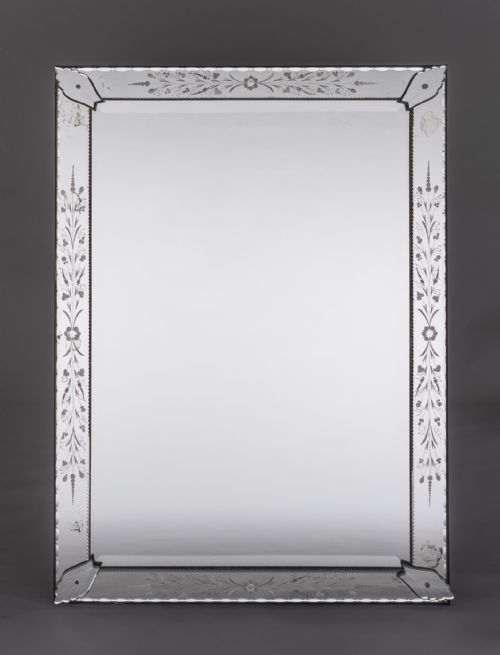
Two things share the heading. The larger group is a mirror plate ringed by separately cut sections of glass, etched, engraved or faceted, laid over a wooden carcass. The rest are carved and gilded frames of Italian rococo or baroque character, where the decoration is in the wood rather than the glass.
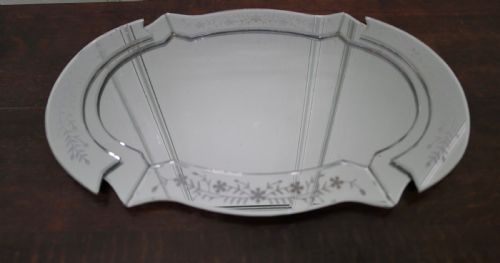
The piece you meet most often is a large wall-hung mirror with a decorated glass border. "Glass" appears in 53 of 234 titles and "large" in the same number, and many titles carry nothing more than "Venetian mirror". Etched, cut and engraved are the words dealers reach for to say how the border was worked.
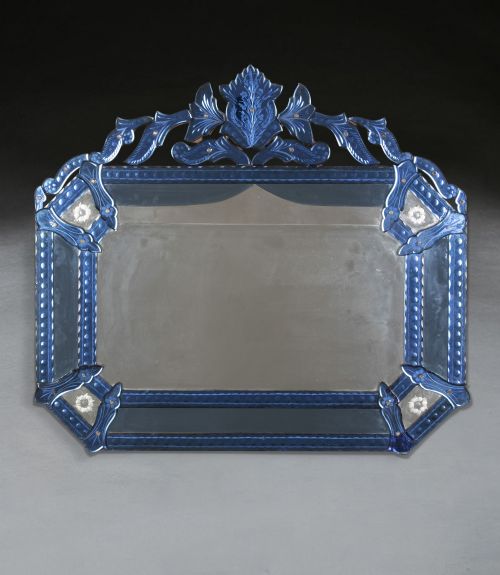
Titles run from small dressing and shield-shape mirrors up to overmantles and pier glasses, with a recurring cushion form, its bombé frame giving a padded profile. Pairs turn up throughout. Coloured borders in peach, ruby red and cobalt appear in a handful of listings, and micro-mosaic framing only twice in the whole archive. Murano is named in just 8 titles, so the glass is usually described simply as Venetian.
Dating leans later than the style suggests. Dealer-entered dates run 1800 to 1960, and the 1920s alone accounts for 46 listings, with the 1930s adding 29. The loose label "19th Century" covers 59 more, so nineteenth-century attributions here are often broad-brush. Thirteen listings are dated to the eighteenth century, and one sample is titled seventeenth. Around 25 come to market on Sellingantiques in a year, listed by 80 different dealers.
Where The Range Splits
Size does most of the work. "Large" clusters heavily in the upper half of the sampled range, and the biggest overmantles sit near the top. At the other end are small undecorated glass mirrors and little gilt wall mirrors, several of them 1920s and 1930s pieces.
After scale, it is how much work went into the glass. Plain bordered mirrors sit low; etching, wheel engraving and faceted cutting lift a piece, and the micro-mosaic and enamelled examples appear only near the top. Coloured borders sit mid-range and above. Carved giltwood framing pulls the same direction, with lacca and silver-leaf examples mostly in the upper half.
Pairs and early dates concentrate at the expensive end. Fourteen titles mention a pair, and pairs occupy the top of the sampled range, including the single highest listing, a pair of eighteenth-century Murano glass mirrors. Eighteenth-century attributions sit disproportionately high wherever they appear.
Antique Venetian Mirrors Retail Price Guide 2026
Typical UK retail prices for venetian mirrors, calculated from the Sellingantiques database of over a million retail prices indexed since 2003. This retail price guide relies exclusively on Sellingantiques data; no external sources or auction records are used, so the figures do not describe the wider market.
One-offs from the archive include a mirror with a clock built into it, a triptych folding dressing mirror and a velvet-covered mirror.
The Antique Venetian Mirrors Glossary
- Overmantle
- A wide mirror made to hang above a fireplace; 15 titles use the word.
- Pier glass
- A tall mirror for the wall pier between windows, appearing occasionally in titles.
- Cushion mirror
- A frame with a rounded, bombé profile that looks padded; 10 titles.
- Giltwood
- Carved wood covered in gold leaf, written both as one word and as "gilt wood". Water gilding, gold leaf laid on gesso and burnished, is named in one title.
- Verre eglomisé
- Gilded or painted decoration applied to the back of the glass; two titles use it.
- Girandole
- A mirror fitted with candle arms, spelled girandole and also "girondelle".
- Foxing
- The speckled deterioration of old mirror silvering, named in two titles.
Antique Venetian Mirrors: Frequently Asked Questions
Are Venetian mirrors always made in Venice?
The type is associated with the glasshouses of Venice and Murano, where mirror plate and decorative glass were made from the Renaissance onward. Carved and gilded Italian rococo and baroque frames belong to the same decorative tradition.
Both forms were widely reproduced in the style afterwards, and dealer titles usually say Venetian rather than naming a place of making. Murano appears in only 8 of 234 titles.
How old are most of these mirrors?
The dealer-entered dates run 1800 to 1960. The early twentieth century is the real centre of gravity: 46 listings in the 1920s, 29 in the 1930s, plus 24 in the 1900s and 16 in the 1910s.
A loose "19th Century" label covers 59 listings, and Victorian and Edwardian turn up as period words rather than dates. Thirteen listings carry an eighteenth-century date, with one sample titled seventeenth century.
Which makers signed Venetian mirrors?
The archive yields no maker names at all. Nothing in these listings is stamped, labelled or even attributed to a glasshouse or workshop.
Dealers describe them by form, decoration and date instead: etched, cut, engraved, giltwood, overmantle, cushion.
What is an overmantle mirror?
A wide mirror made to hang above a fireplace. The word appears in 15 titles, and the biggest overmantles sit near the top of the sampled range.
Pier glasses and pillar mirrors show up in the same part of the category, tall rather than wide, made for the wall between windows.
Do these mirrors come in pairs?
Fourteen titles mention a pair, roughly one listing in twenty. Pairs occupy the top of the sampled range, and the highest listing of all is a pair of eighteenth-century Murano glass mirrors.
Smaller forms turn up as pairs too, including a pair described as "gypsy" mirrors.
What unusual forms turn up in this category?
Beyond the wall mirrors, listings include swing dressing mirrors, a triptych folding dressing mirror, a cheval mirror and dressing table mirrors.
Some oddities surface only once each: a mirror with a clock built in, an Art Deco cut-glass wine tray with mirror, and a velvet-covered mirror.
Recorded heights are uncommon, but where given they run to about 98cm and 131cm, with one oval noted at 74cm.