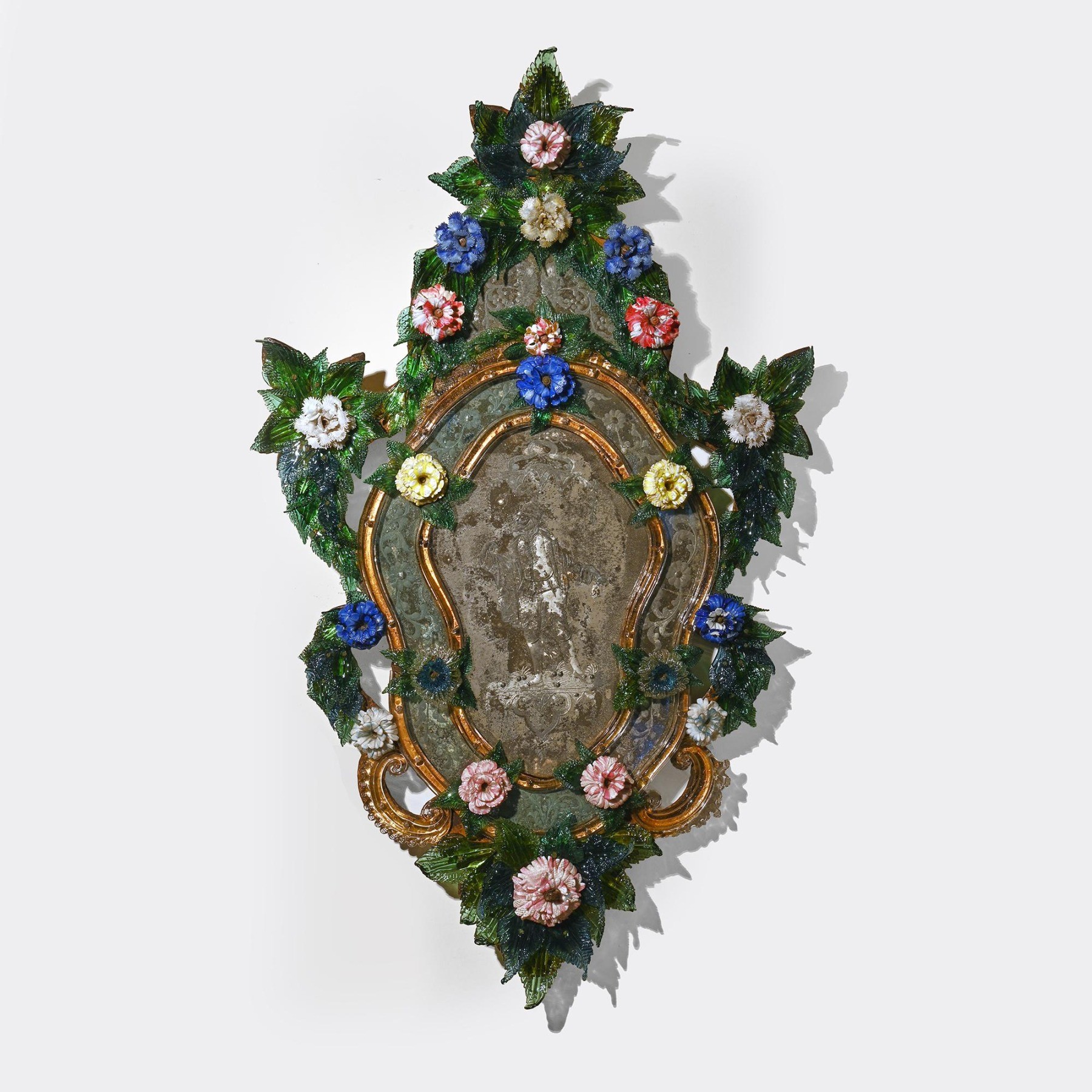
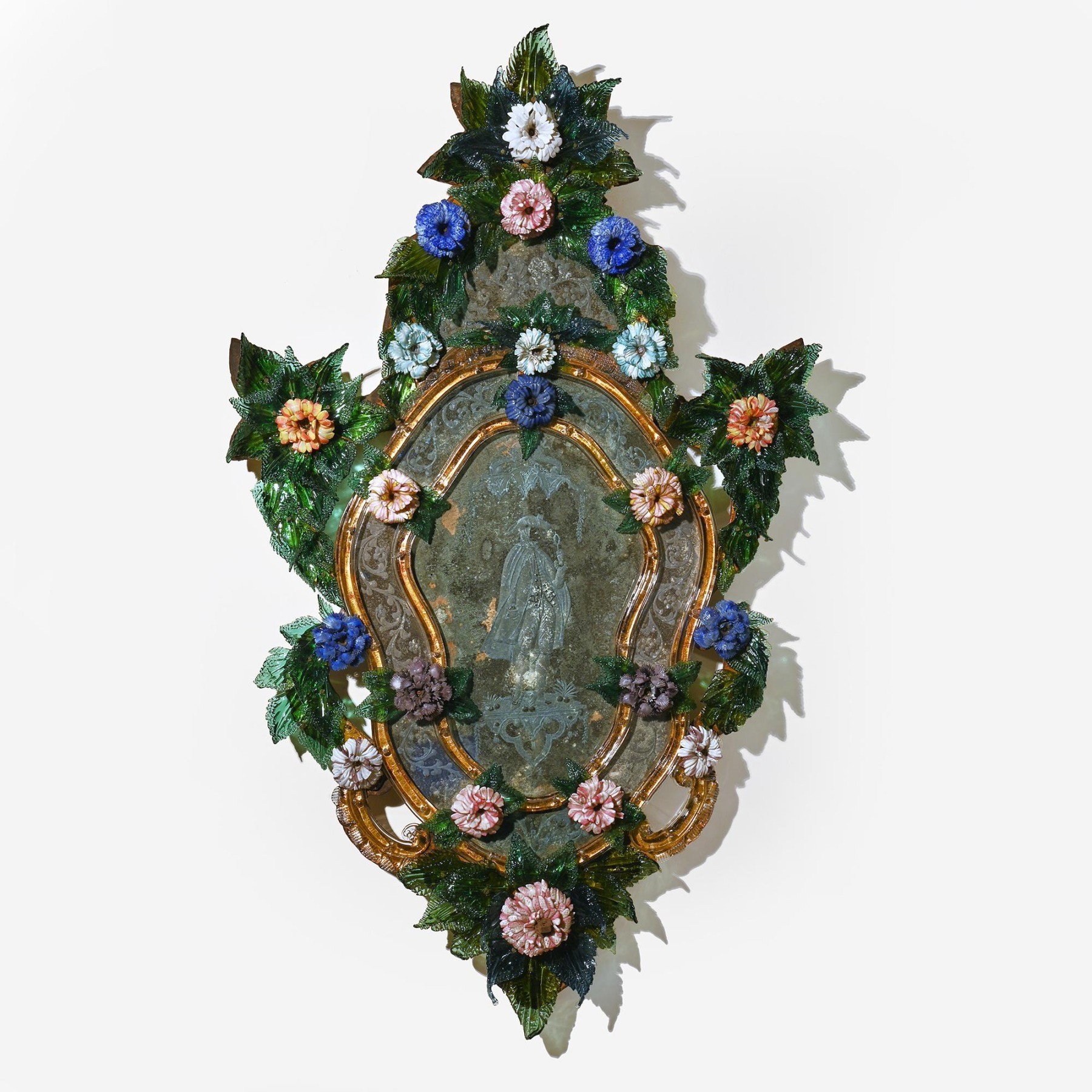
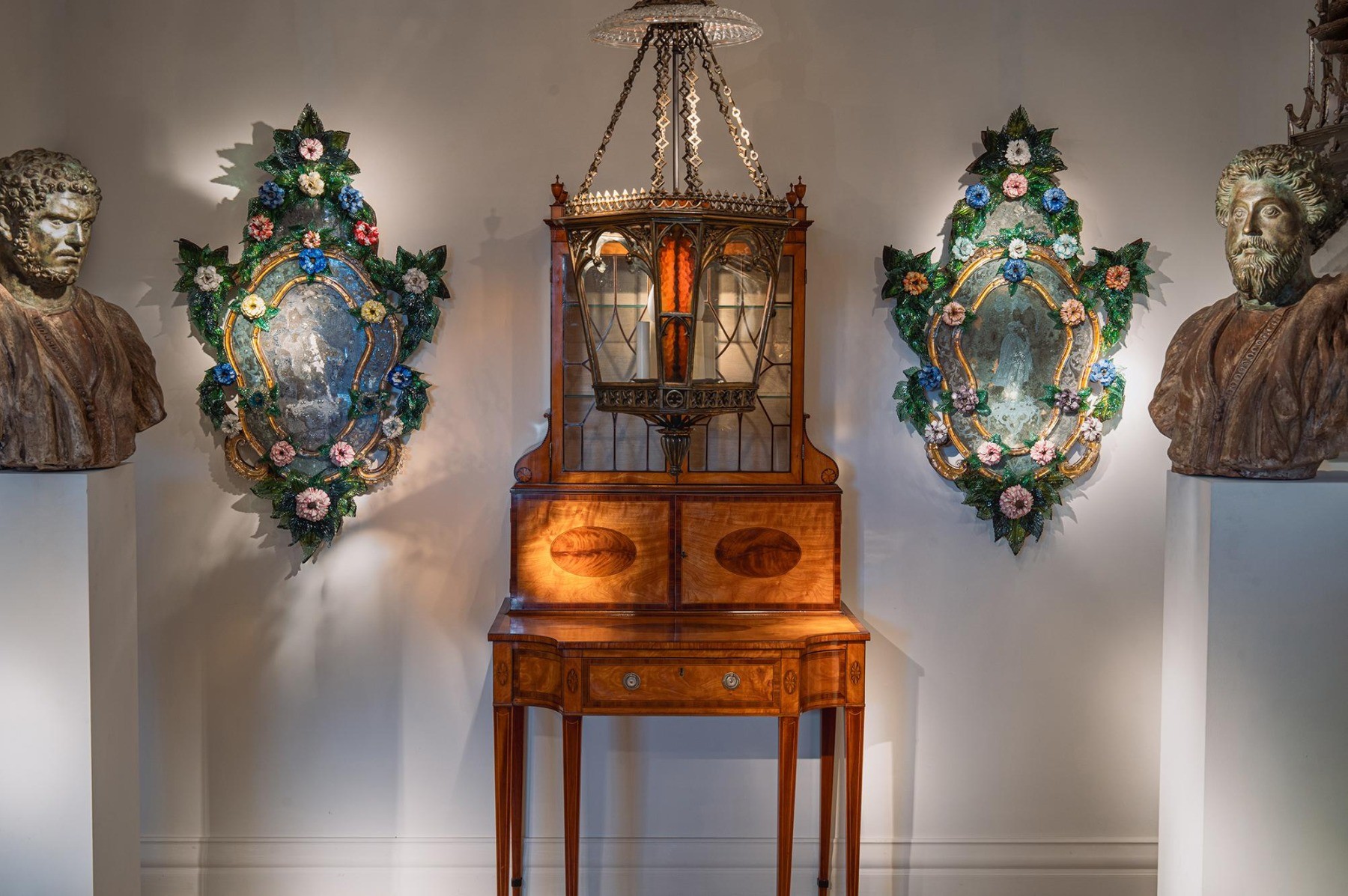
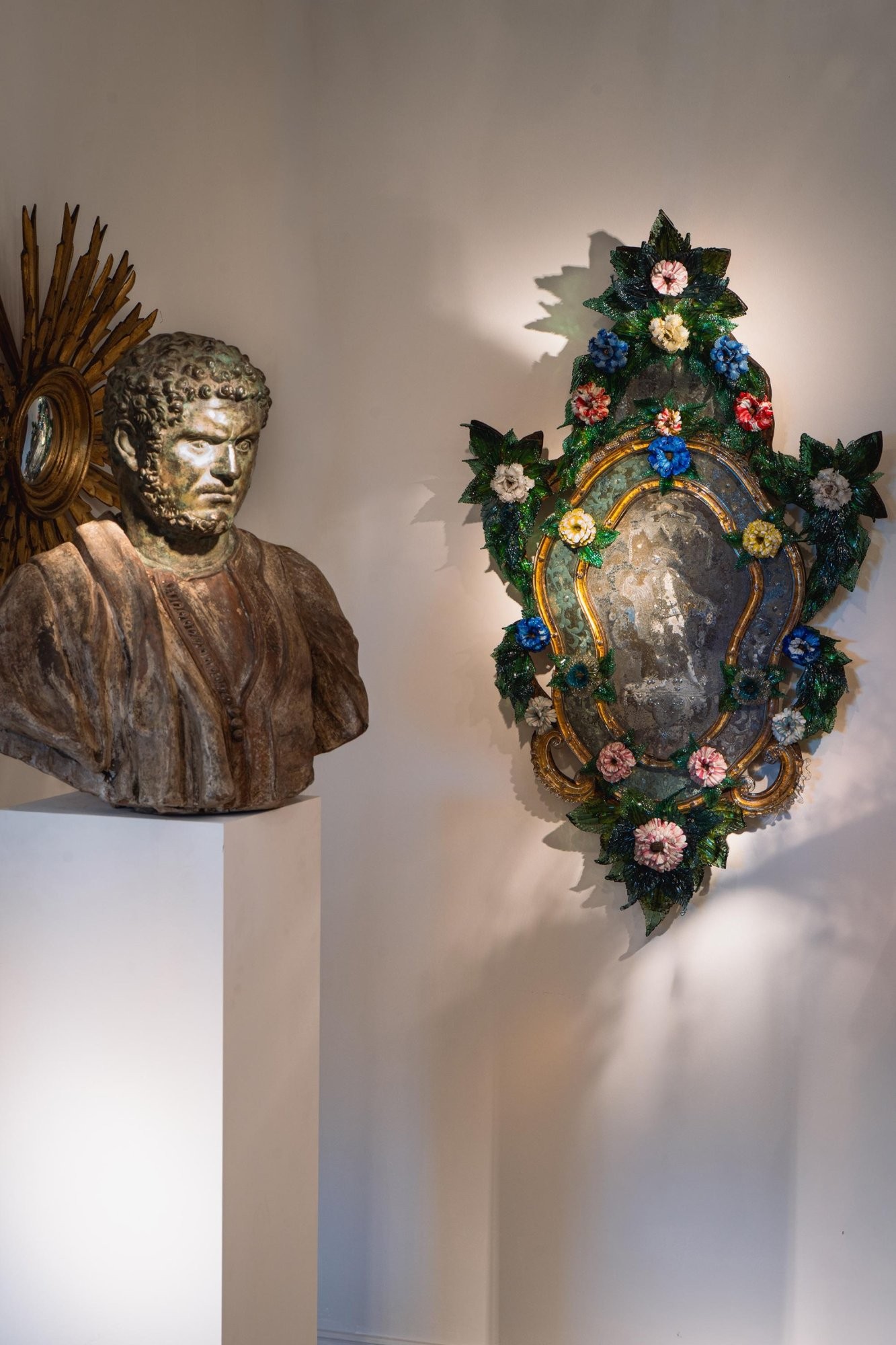
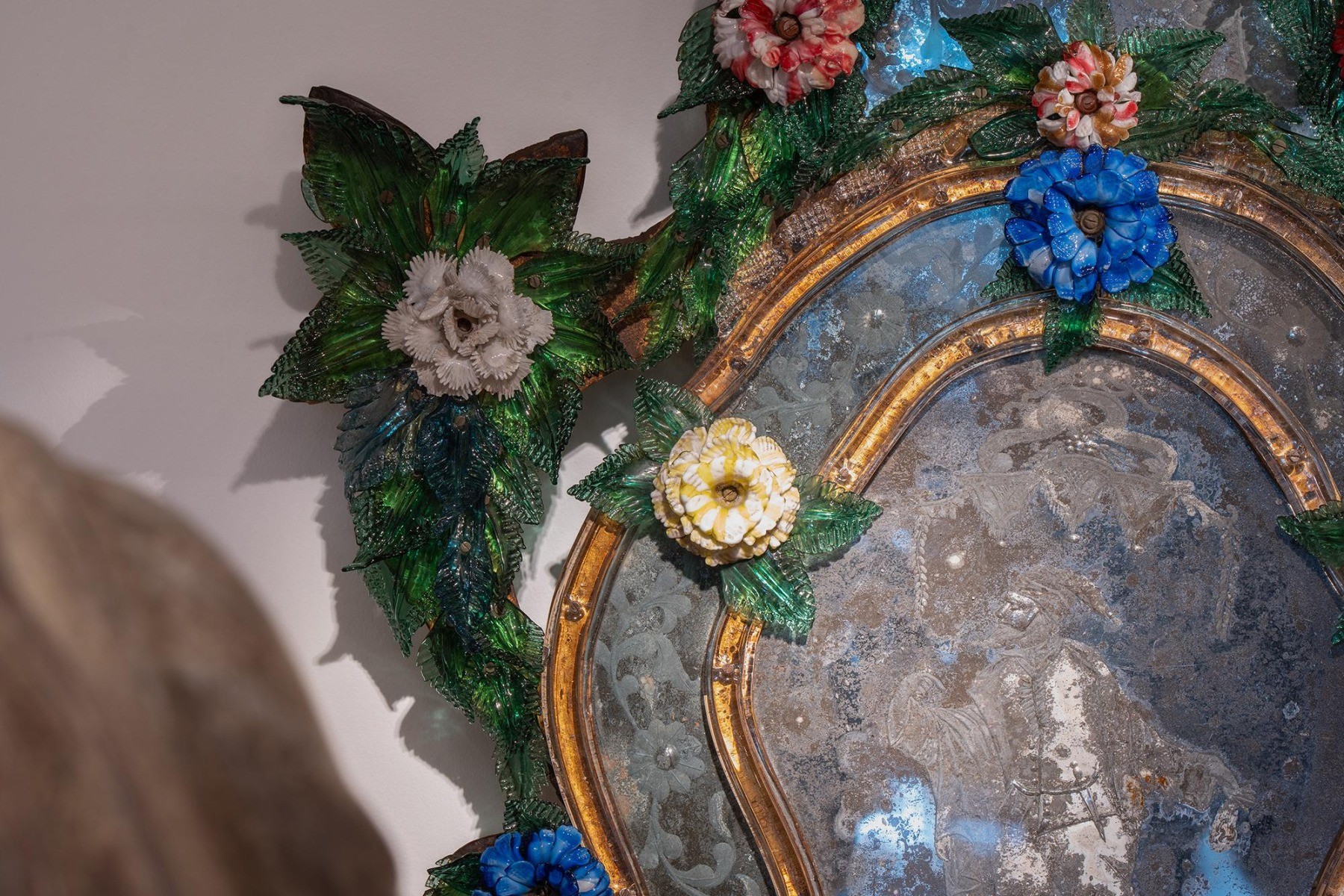
Loveday Antiques has dated this Venetian Murano Glass Mirror to the 18th Century.
Venice, circa 1730–1750
Created around 1730–1750, they reflect both the technical mastery of Murano artisans and the imaginative spirit of the Rococo period.
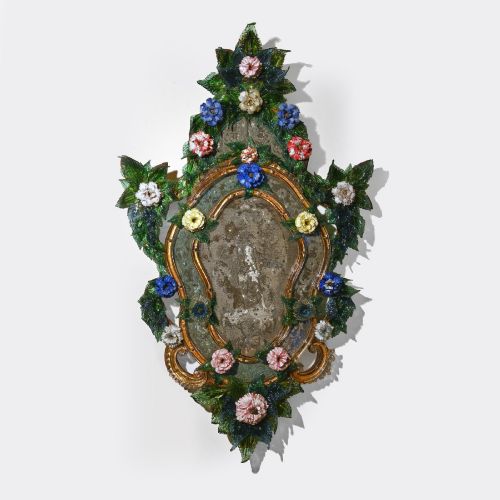
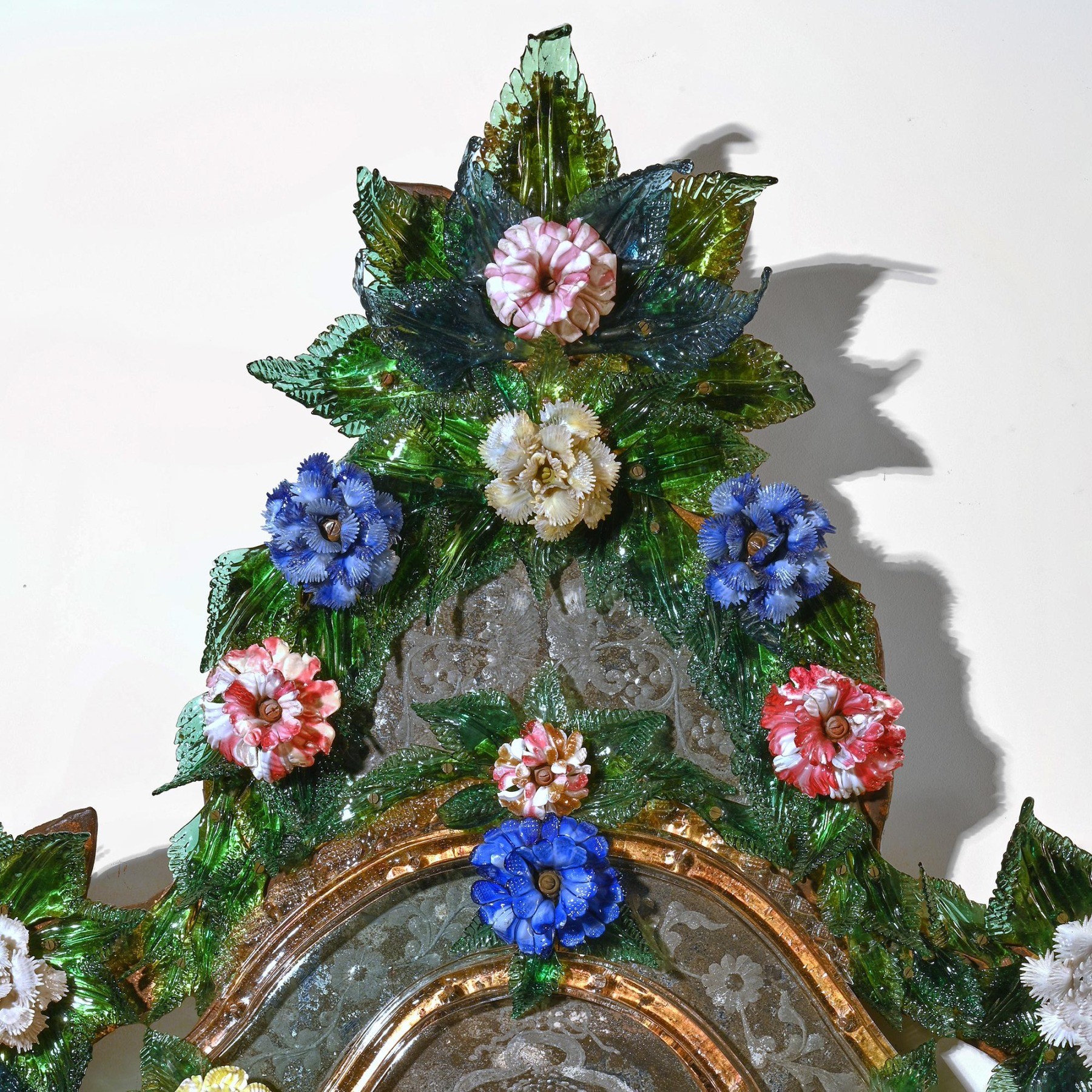
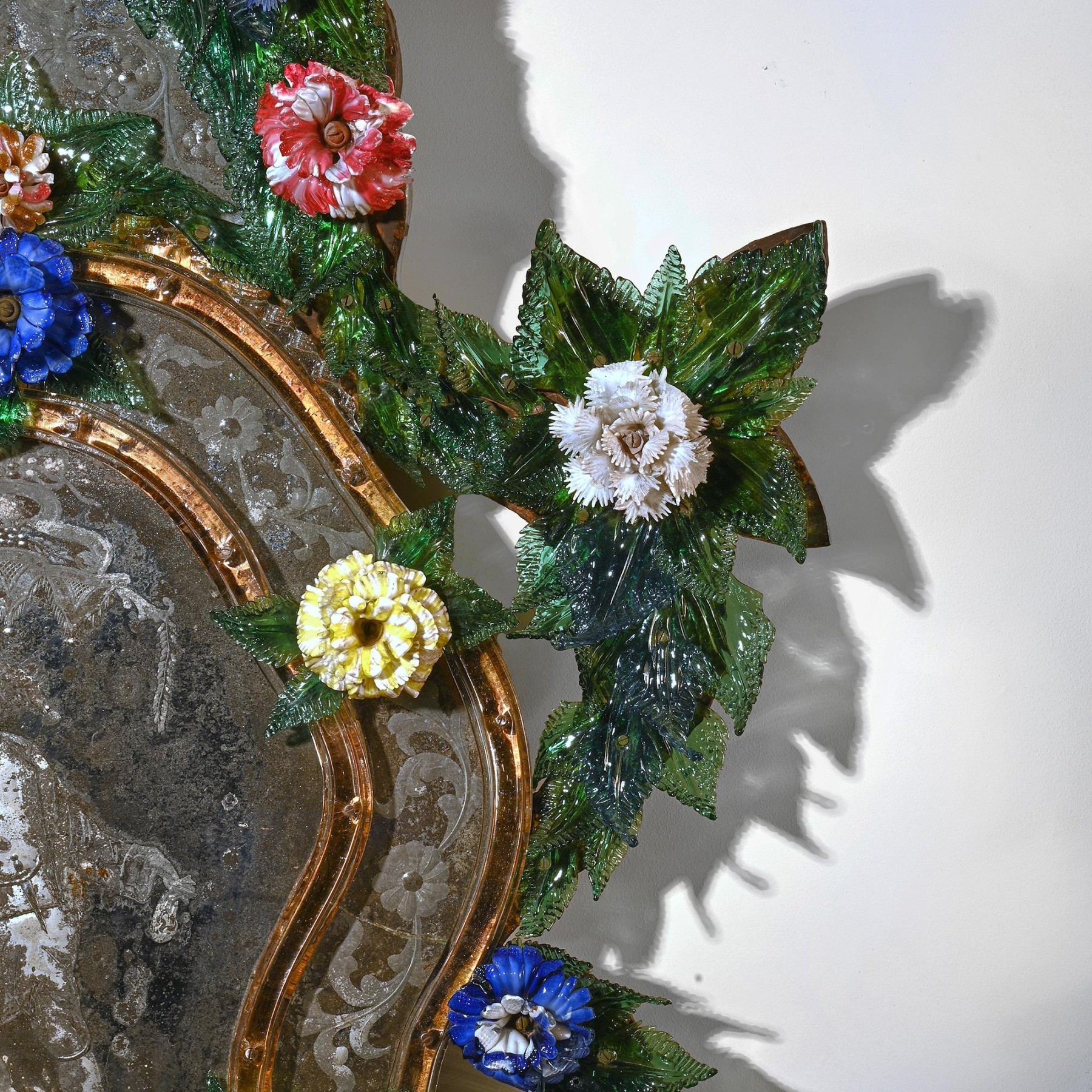
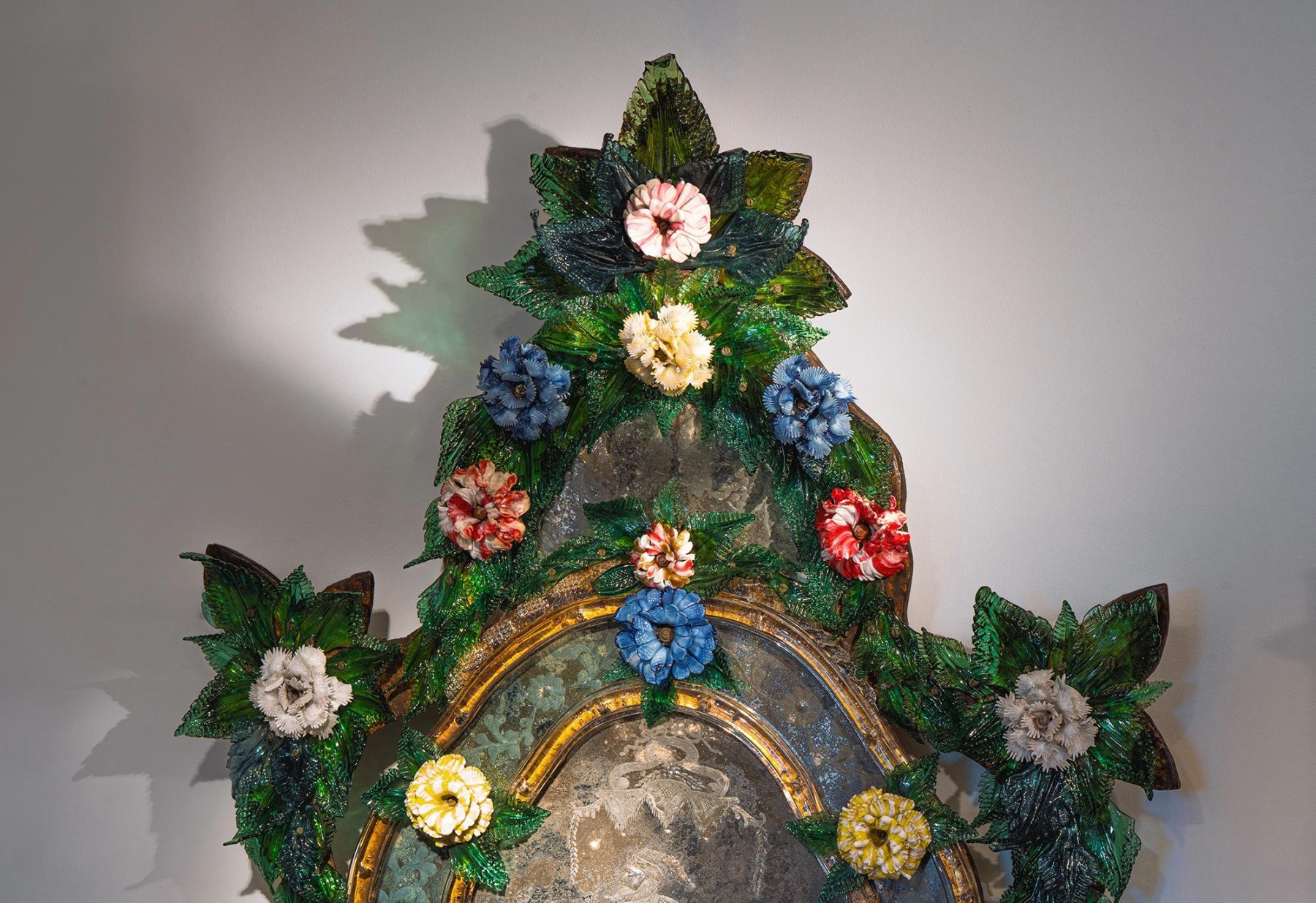
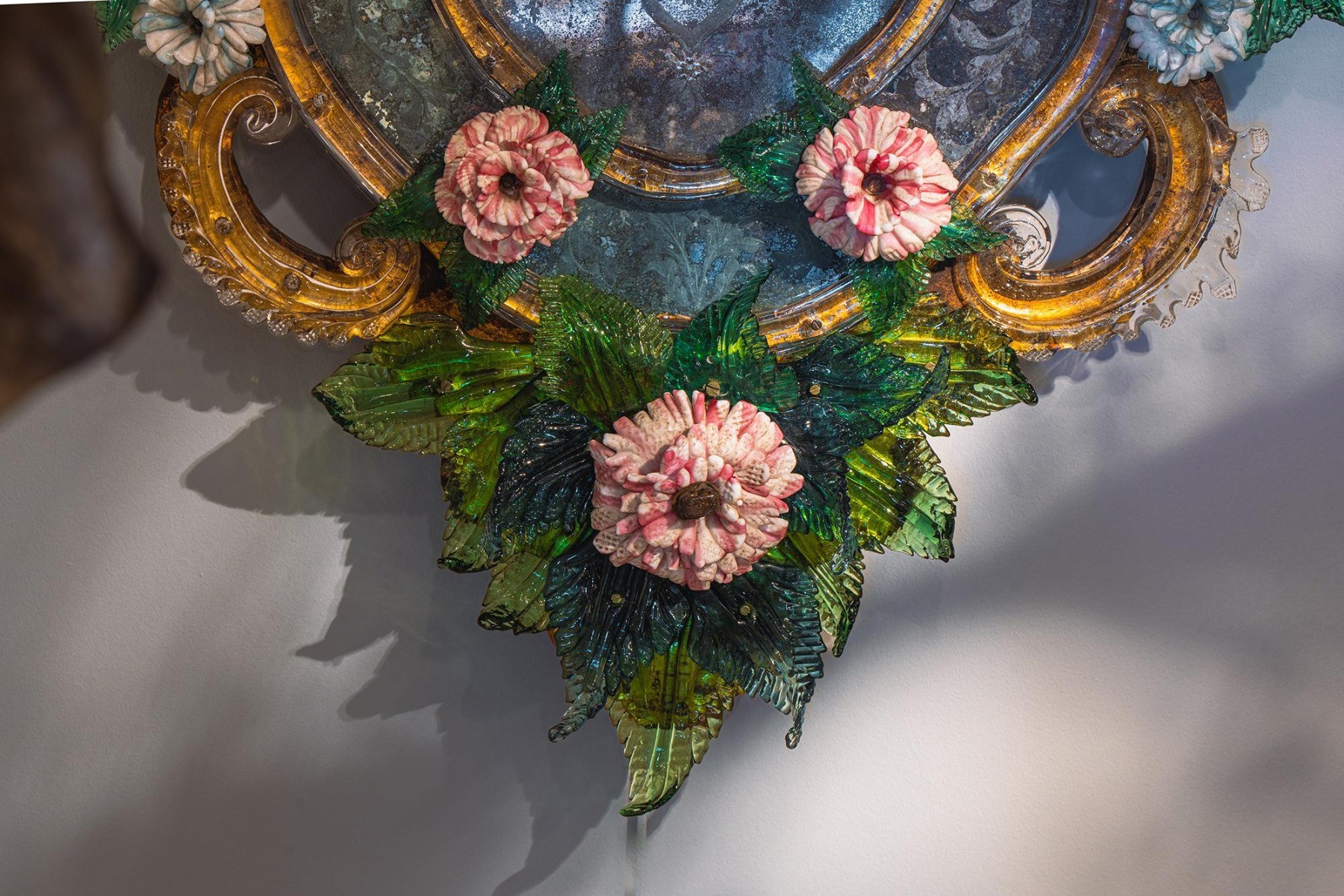
The mirrors are designed in a cartouche-shaped form, a style widely popular throughout Europe during the Rococo era. However, what makes these examples uniquely Venetian is the combination of engraved and etched mirror plates with applied decorative elements in coloured glass. Produced in and around Murano—the historic centre and birthplace of European glassmaking—these mirrors showcase techniques for which the island became internationally renowned. For many years, Murano held a near monopoly on the production of high-quality mirror glass before competition emerged with the rise of lead-glass manufacturing in England.
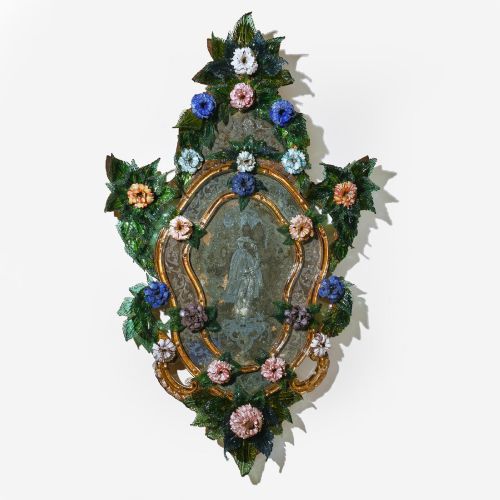
These mirrors perfectly capture the playful and decorative character of Rococo design, with its fascination for movement, asymmetry, and the natural world. Their flowing outlines are enhanced by vibrant green glass foliage and individually applied flowers in a variety of colours and forms. The mirrored surfaces feature etched borders with scrolling foliate patterns surrounding central panels engraved with figures from the Commedia dell’Arte. These theatrical characters stand on ornamental strapwork pedestals beneath stylised canopies, designs likely influenced by decorative grotesques associated with artists such as Jean Bérain and seen in works like the Gobelins tapestries.
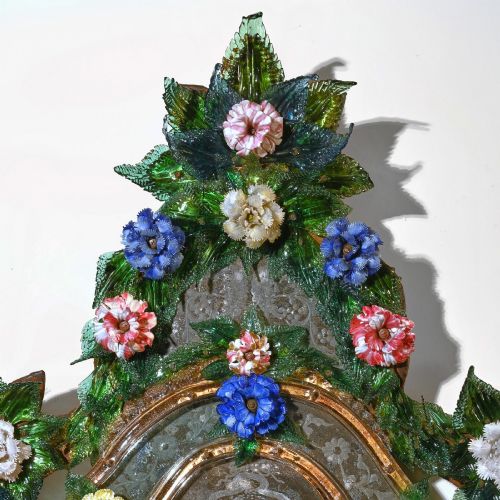
Only a small number of Murano mirrors with sculptural three-dimensional decoration from this early period survive today. During the late seventeenth century, Murano craftsmen first produced finely cut flat mirrors decorated with engraved glass, delicate rods, pearl-like edging, and floral ornament. During the 1730s, Murano glassmakers expanded their creativity and began producing more intricate mirror designs, drawing on techniques developed for decorative chandeliers and ornamental glass objects. Artisans began incorporating colourful three-dimensional elements into mirror design. This innovation led to the richly decorated polychrome mirrors that would remain highly sought after for centuries.
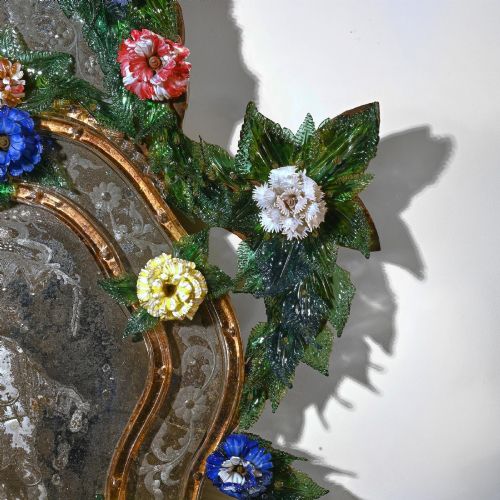
A closely related mirror is illustrated in Mirrors by Roche, Courage and Devinoy (1985), where similar examples featuring coloured flowers and green foliage are discussed. While single examples of mirrors of this type are already extremely rare, surviving pairs are exceptionally uncommon.
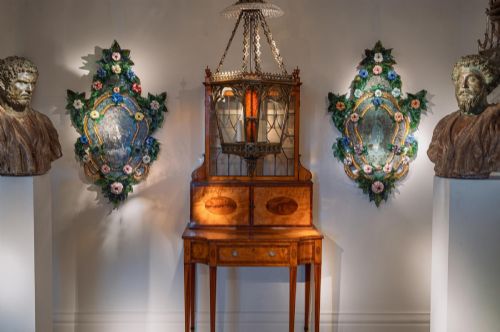
This pair therefore represents an important and rarely seen survival from the earliest and most inventive phase of Murano decorative mirror production.
Width: 28 3/4 inches - 72cm
Height: 51 inches - 130cm
Depth: 4 inches - 10cm
Loveday Antiques has dated this Venetian Murano Glass Mirror to the 18th Century.
Specialist furniture dealers 18th-20th century
You can view the stock and full dealer information on the Loveday Antiques Profile Page
Loveday Antiques is a registered member of LAPADA BADA CINOA
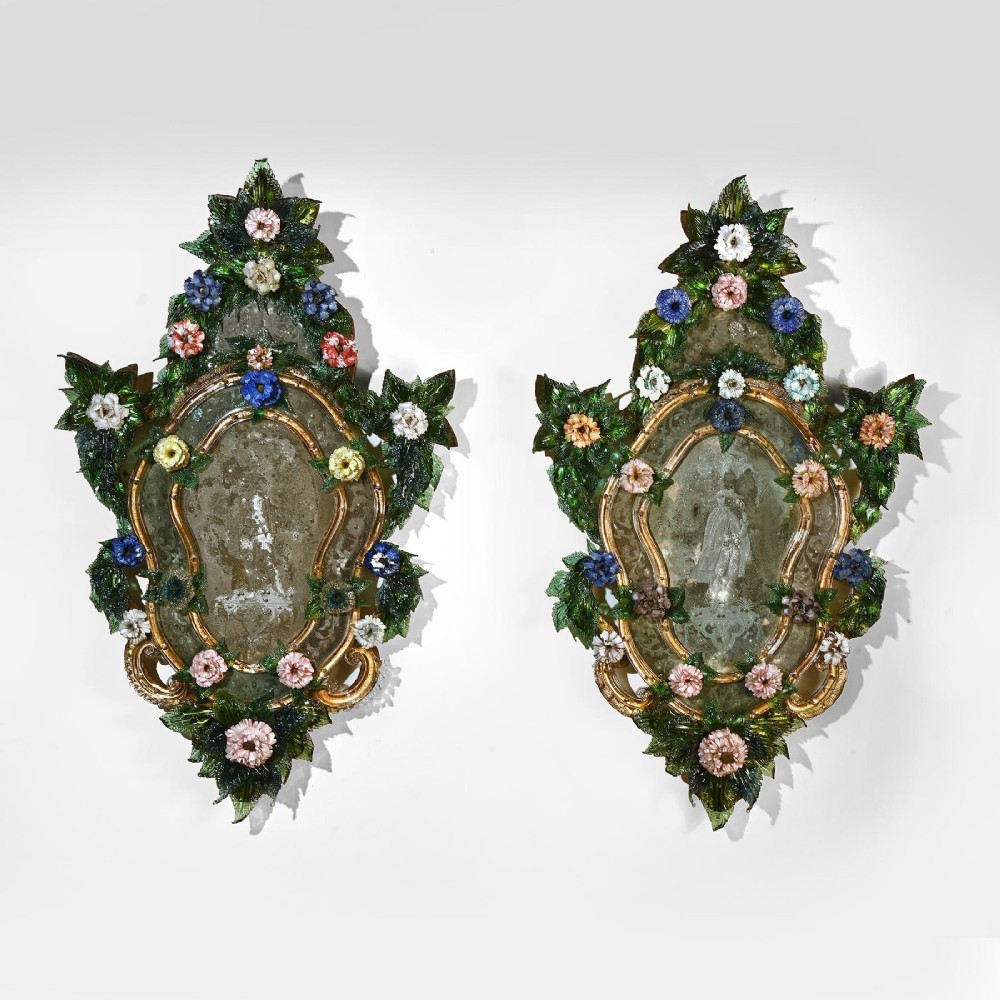
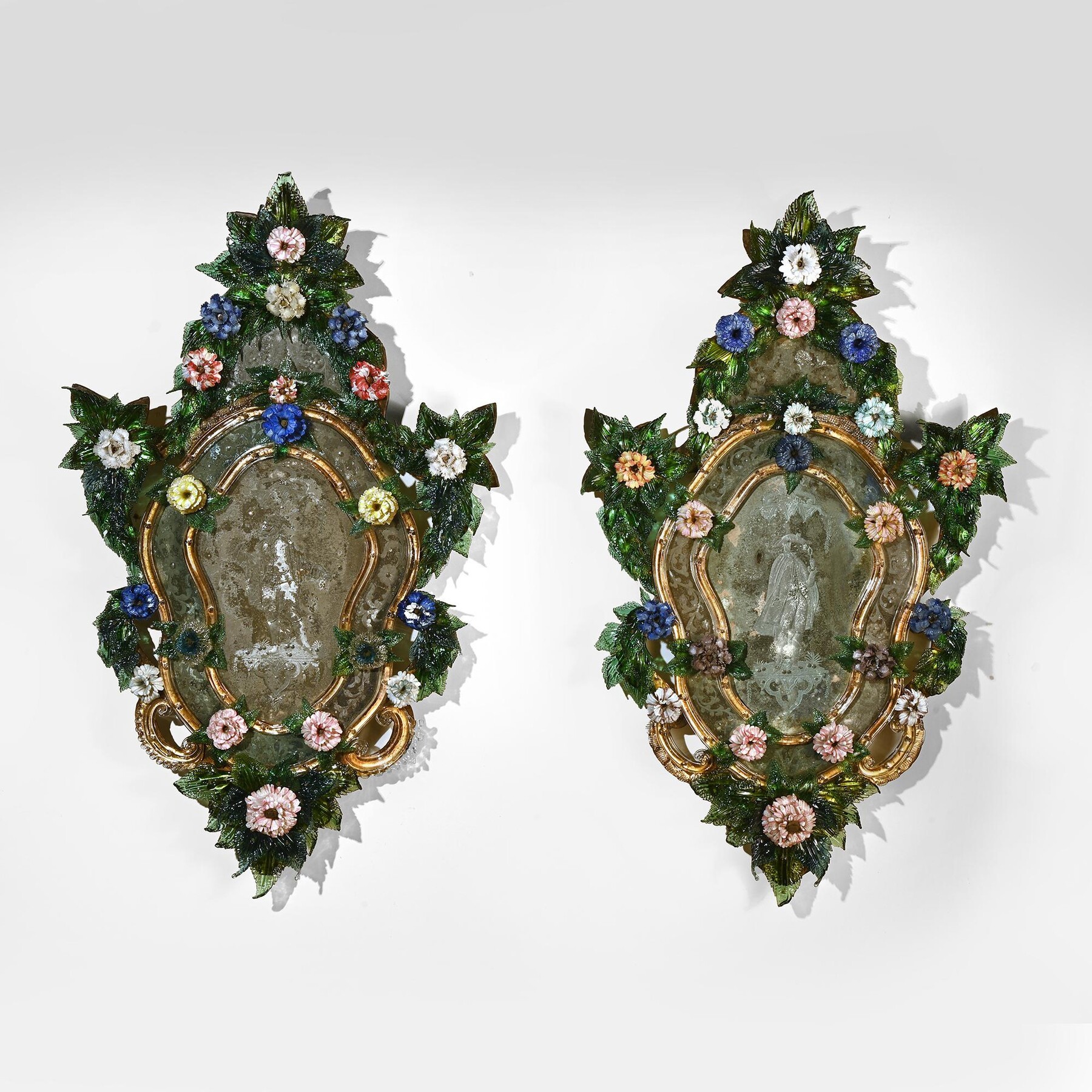
Pair of 18th Century Venetian Murano Glass Mirrors