


Antique Shaving Mirrors
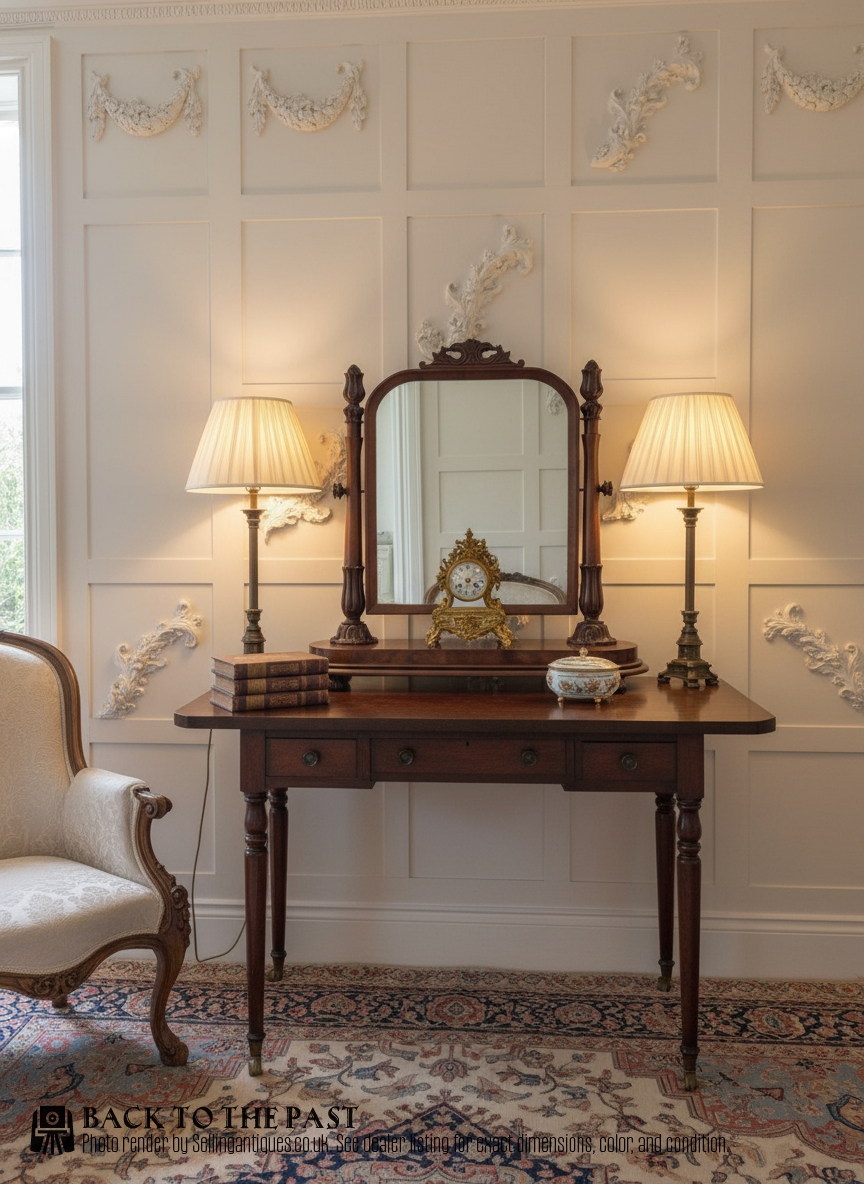
A small tilting mirror on a stand or box base, made for shaving and dressing at a washstand or dressing table.
What They Are
Small tilting mirrors on stands and box bases came into general domestic use in the 18th century, once plate glass was affordable in modest sizes. They served for shaving and dressing at a table or washstand, and free-standing adjustable versions multiplied through the 19th century as bedroom and dressing-room furniture grew more specialised.
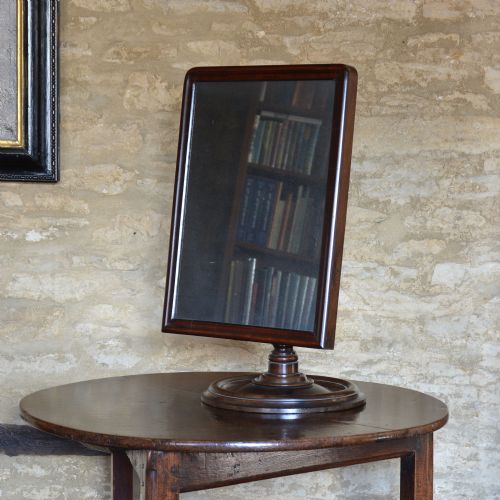
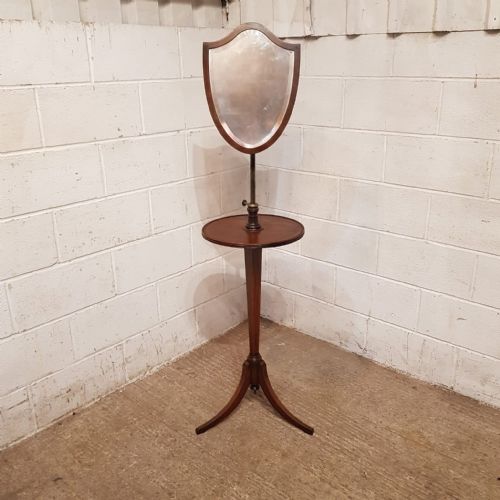
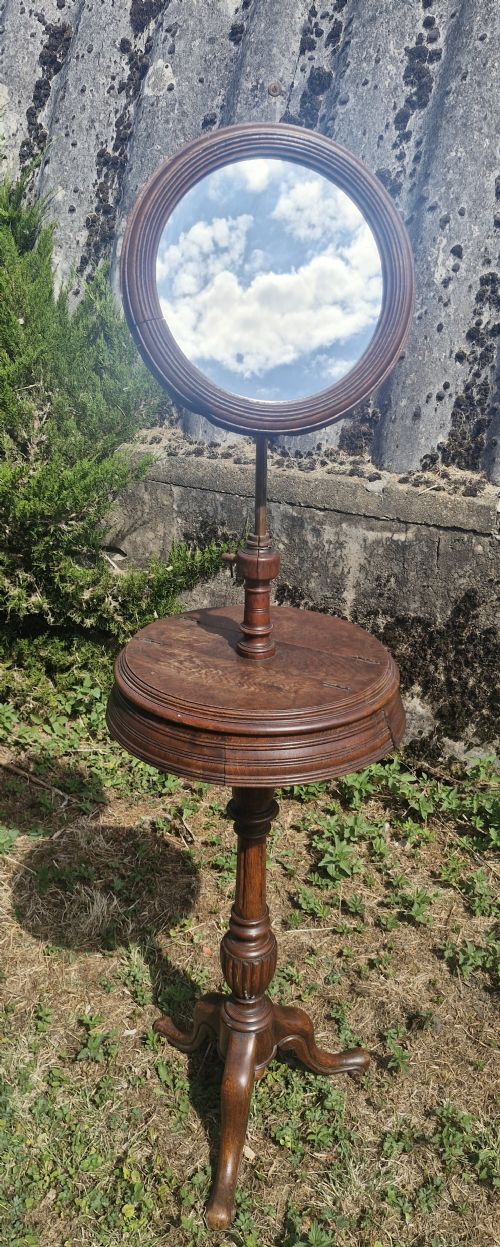
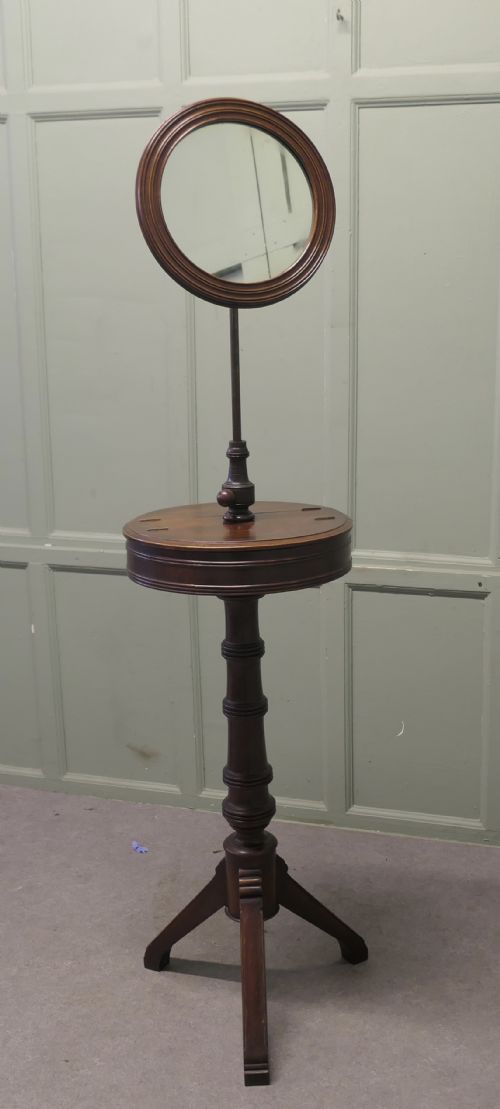
The version you'll meet most often is a mahogany-framed mirror on an adjustable stand. Mahogany and the word "stand" tie at 23 titles each out of 68, which is about as close as an archive comes to naming the default form. "Adjustable" appears in 12 titles, tripod bases and telescopic stems twice each.
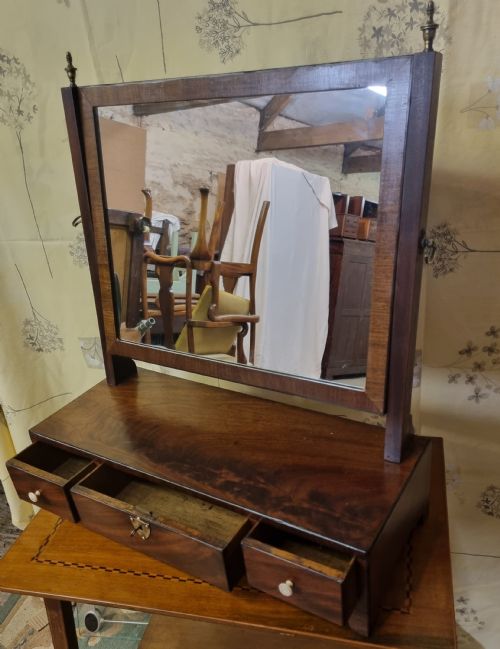
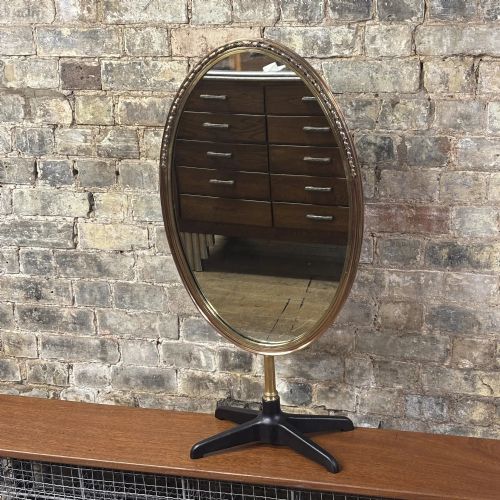
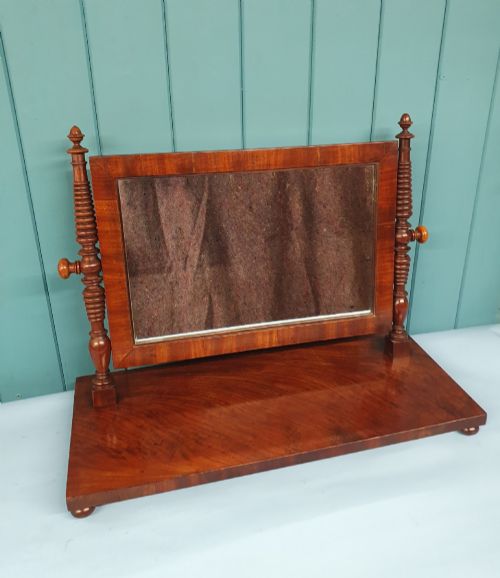
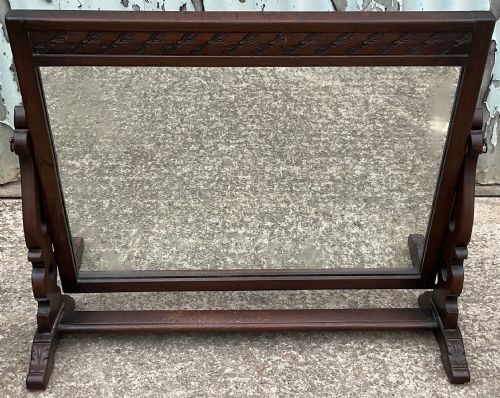
Alongside those sit the toilet and dressing mirrors, swinging between uprights on a shallow box base that sometimes carries drawers. Nine titles say "toilet", eleven say "dressing", and this branch is rising in current stock. Brass and metal frames account for a sixth, including iron and brass, copper fittings and a chrome 1930s piece.
Smaller groups: folding campaign and travelling mirrors in walnut and mahogany, a handful of listings; and a scattering of Continental and non-mahogany work, a Swedish birch vanity mirror, a Dutch marquetry swing mirror, satin birch, oak, ebonised. Dating runs 1800 to 1940, though nearly half the archive is dated only to a century or a reign.
Where The Range Splits
Timber does the first sorting. Mahogany dominates and carries the upper end, with walnut, satin birch, Swedish birch, Dutch marquetry and ebonised examples holding their own distinct places. Oak sits lower. What's worked into the frame and base matters as much: carving, inlay, paint, serpentine outlines and marquetry all cluster above the plain forms.
Mechanism separates a stand from a mirror that merely stands. Pieces described as adjustable or telescopic sit above fixed frames, and the highest-placed piece in the sample is a 19th-century mahogany telescopic shaving mirror. Scale pulls the same way, with titles saying "large" or "unusually large" reaching high in the range.
Names barely feature. The maker field returned nothing across 68 listings, so no cabinetmaker or retailer stands behind the category. Where a title does carry a name or a specific origin, it tends to sit in the upper half. Folding campaign and travelling mirrors, by contrast, sit near the bottom.
Retail Price Guide 2026
Typical UK retail prices for shaving mirrors, calculated from the Sellingantiques database of over a million retail prices indexed since 2003. This retail price guide relies exclusively on Sellingantiques data; no external sources or auction records are used, so the figures do not describe the wider market.
Dating on Sellingantiques runs from 1800 to 1940. The latest is a brass shaving table mirror put at 1940.
The Antique Shaving Mirrors Glossary
- Toilet mirror
- A dressing mirror, usually swinging between uprights on a small box or drawered base. Nine titles in the archive use the term.
- Shaving stand
- A free-standing or table-top support carrying the mirror at head height. The commonest form in this category.
- Adjustable
- The mirror tilts, or the stem raises and lowers. Named in 12 of the 68 titles.
- Box base
- A shallow chest, sometimes fitted with drawers, forming the platform of a toilet mirror.
- Serpentine
- A base or frame with a waved front outline, used on two Georgian toilet mirrors here.
- Skeleton
- An open frame with no solid base, so the uprights show through. One Georgian example has passed through.
Frequently Asked Questions
How many shaving mirrors come up for sale?
Only about five a year reach the market on Sellingantiques, from an archive of 68 listings in total.
The spread is wide: 47 different dealers have listed one. Almost nobody carries them as a speciality, which is why stock arrives in ones and twos rather than runs.
What wood are they usually made from?
Mahogany is the commonest material named, appearing in 23 of the 68 titles.
After that the field opens out. Walnut turns up on folding campaign mirrors, and there are satin birch, oak and ebonised examples, plus a Swedish birch vanity mirror and a Dutch marquetry swing mirror.
Which periods do these mirrors come from?
The dated field runs from 1800 to 1940, with 28 listings carrying a clean year. The 1940 piece, a brass shaving table mirror, is the latest thing in the archive.
Where decades are given they gather in the second half of the 19th century and around 1900. Nearly half the listings, though, are dated only to a century or a reign, with "19th Century" the single largest label at 15.
Are shaving mirrors ever signed by a maker?
Rarely. Across 68 listings, not one produced a maker's name that more than a single dealer echoed.
A few titles carry a name or a specific origin instead, among them a scientific optical mirror by a London instrument maker and two mirrors given as attributed to Brot.
Do listings give the size of the mirror?
Seldom. One listing in 68 states a size at all, and that one gives 24 inches.
Dimensions are something a buyer has to seek out separately, since titles and descriptions in this category tend to lead on timber, form and period.
What are campaign shaving mirrors?
Folding portable mirrors made to travel, in walnut and mahogany. Four titles use the phrase "campaign kit" or "folding campaign", with two more described as travelling shaving stands.
They account for a handful of listings and sit near the bottom of the range.