
Antique Toilet Mirrors
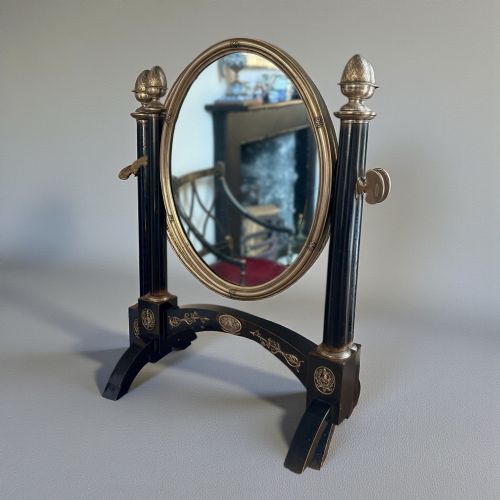
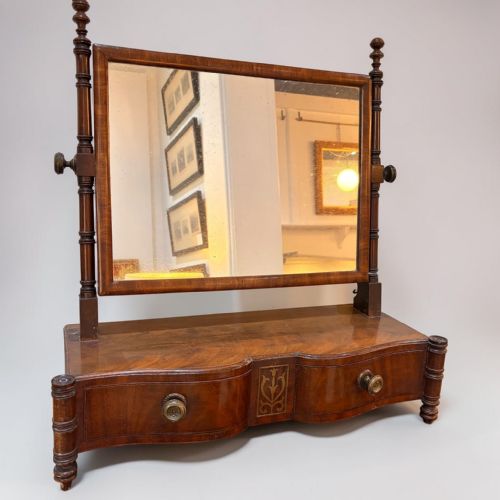
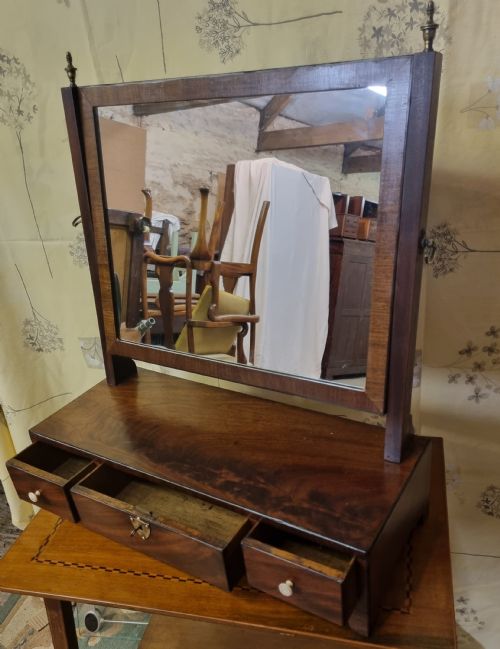
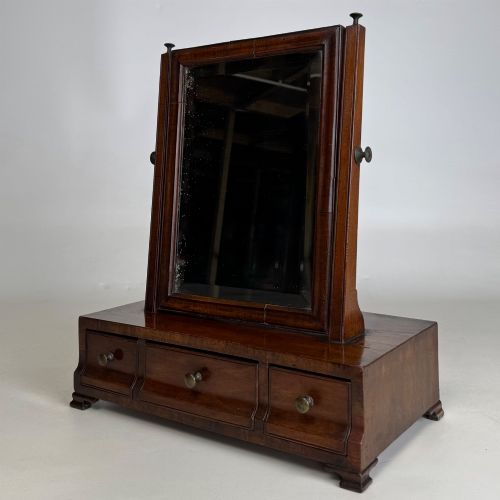
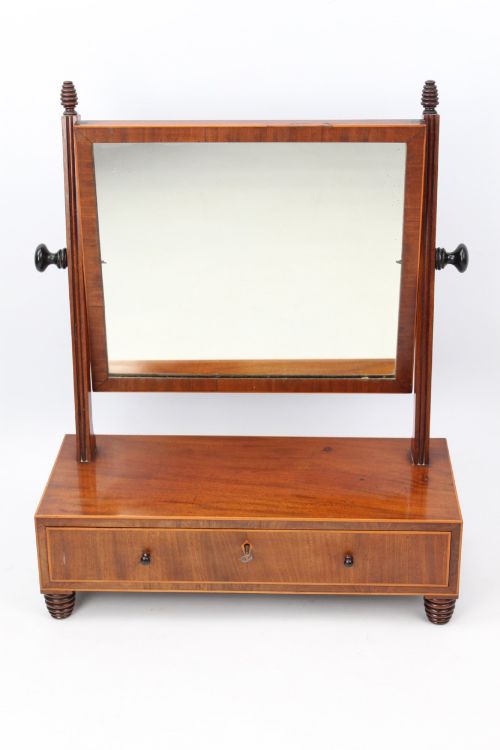
A small mirror that swings between two uprights on a dressing table or chest, usually raised on a shallow drawered base that held combs, pins and cosmetics.

Antique Toilet Mirrors
The name is the period one: a small tilting mirror made to stand on a dressing table or chest, used for dressing, shaving and hairdressing. Titles on Sellingantiques often give the same object two names at once, "toilet or dressing table mirror", so the two vocabularies describe one thing. Small mirrors of this kind appeared in Britain in the late 17th and early 18th centuries, once plate glass came in usable sizes.
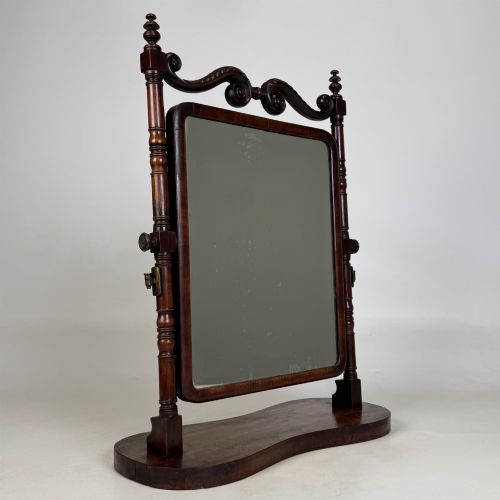
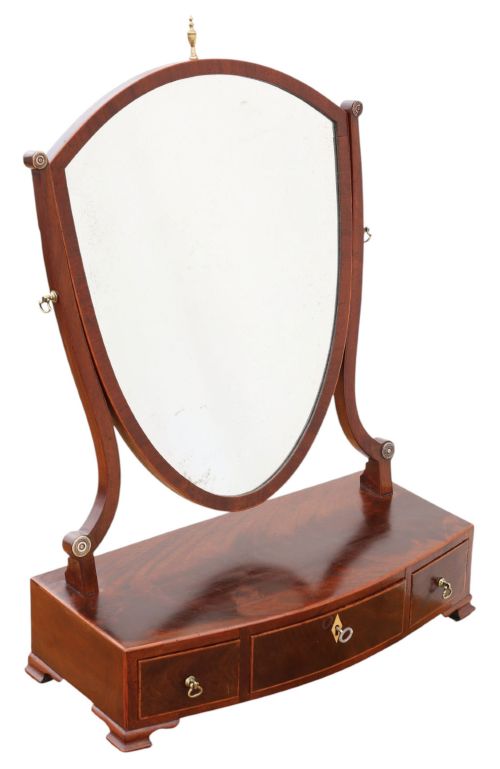
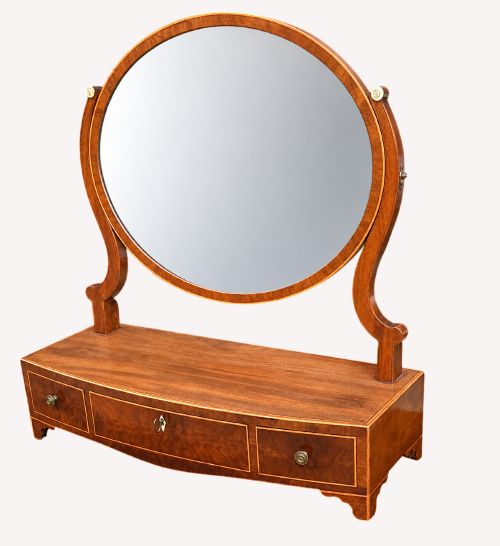
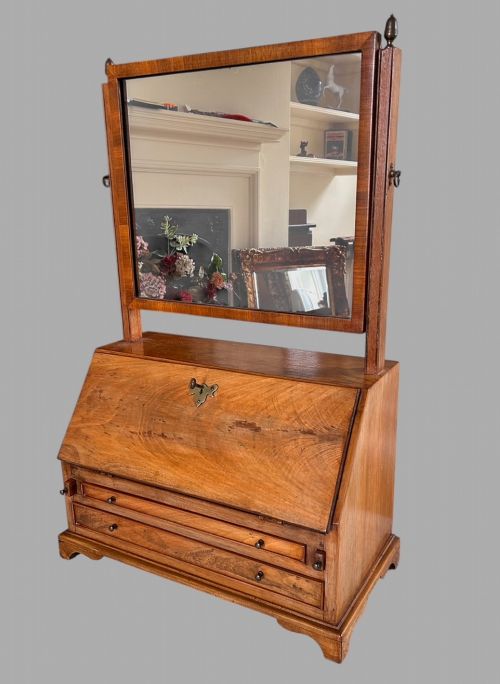
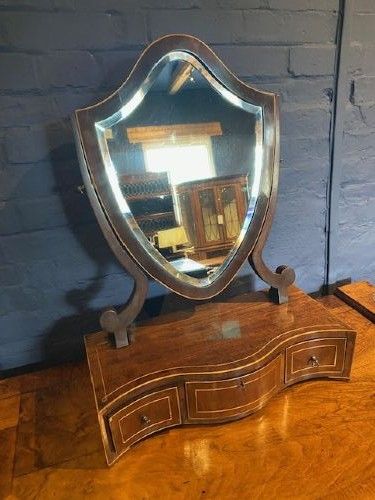
The version you'll meet most often is English and mahogany: a Georgian or Regency swing frame on a box or platform base with one to three small drawers. Mahogany runs through 267 of 516 titles, with "Georgian" in 114 and George III in 60. Plates and base fronts come rectangular, oval, shield or serpentine.
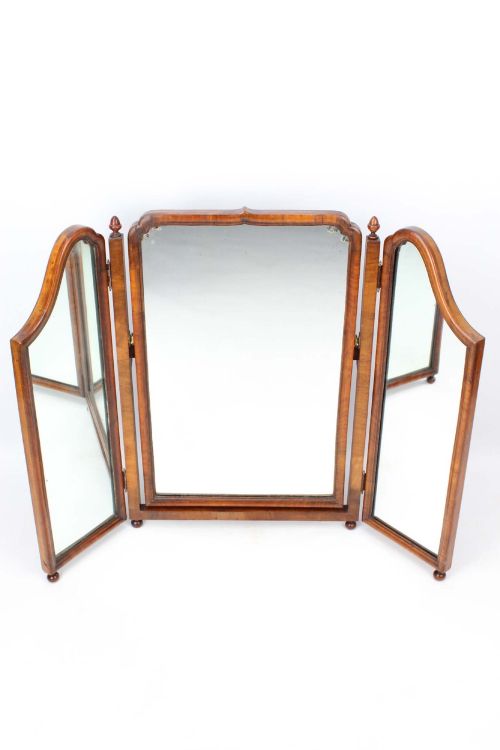
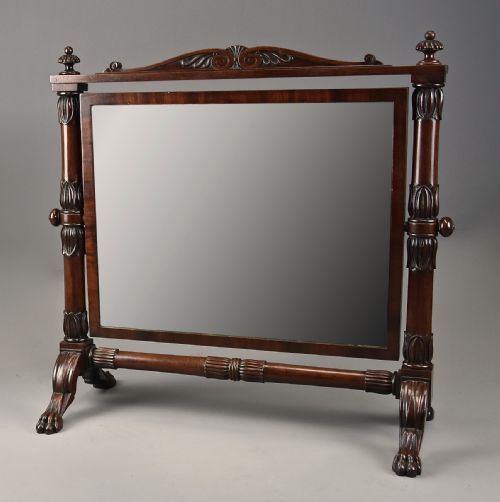
Walnut is the distant second at 72 titles, taking in George I and George II pieces, burr walnut, burr elm and laburnum. Victorian and Edwardian dressing mirrors form another group, often turned or carved, sometimes three-drawer, with a run of table-top cheval frames. Oak appears only twelve times.
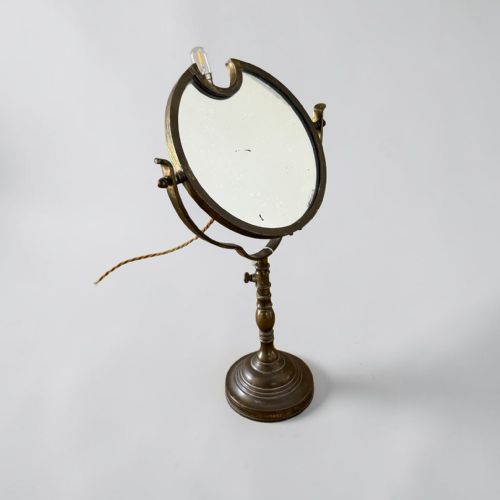
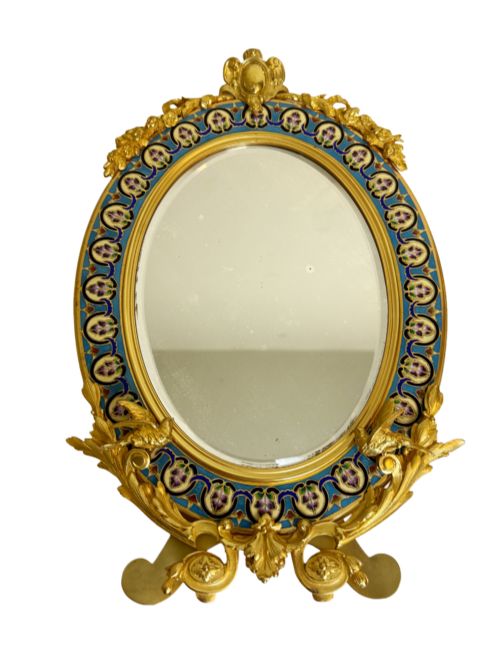
Away from the hardwood mainstream sit gilt metal, cast bronze, ormolu, giltwood, japanned and painted mirrors, and a scattering of Continental and colonial work: French, Dutch marquetry, Italian, Swedish birch, Anglo-Indian teak and padouk, Chinese Qing hardwood. Dates in the archive run 1700 to 1930, though only 113 listings carry a clean year and the rest sit under era labels.

Where The Range Splits
Shape in the base does more work than anything else. Serpentine fronts, named in 36 titles, and bowed or barrel fronts cluster in the upper half of the range, while flat-fronted boxes sit lower. Fitting matters alongside shape: three-drawer bases and the handful of bureau-fitted mirrors, where the base is a miniature writing fitment, sit at the very top.
Timber pulls in the same direction. Early walnut, Queen Anne and George I and II work, burr walnut, burr elm and laburnum sit above the mahogany mainstream, and within mahogany the flame-figured and Cuban pieces are named where they occur. Satinwood, harewood, kingwood, rosewood and padouk turn up in higher-placed titles too.
Then decoration. Inlay appears in 19 titles as stringing and crossbanding, and the more worked surfaces, Dutch marquetry, japanning and chinoiserie, giltwood, ormolu mounts and champlevé, appear disproportionately near the top. Scale counts a little: "large" outnumbers "small" two to one in the titles.
Antique Toilet Mirrors Retail Price Guide 2026
Typical UK retail prices for toilet mirrors, calculated from the Sellingantiques database of over a million retail prices indexed since 2003. This retail price guide relies exclusively on Sellingantiques data; no external sources or auction records are used, so the figures do not describe the wider market.
Dated toilet mirrors on Sellingantiques run from 1700 to 1930, the early end an walnut mirror, the late end oak Arts and Crafts.
The Antique Toilet Mirrors Glossary
- Swing frame
- The plate pivots between two uprights so it can be tilted; "swing" is named in 59 titles.
- Box base
- The shallow drawered box the uprights rise from, sometimes an open plinth or platform instead.
- Serpentine front
- A base front with a double curve, the single most common shaped form in the archive at 36 titles.
- Shield plate
- A shield-shaped glass, sometimes echoed in the frame; it turns up only two or three times across the whole sample.
- Skeleton mirror
- A frame with no solid base, just supports and feet. Three examples in the archive.
- Waterfall
- A stepped or tiered base form, named in a couple of titles.
Antique Toilet Mirrors: Frequently Asked Questions
What timber are they usually made from?
Mahogany, in half the titles on Sellingantiques: 267 of 516. Walnut is second at 72, and oak appears only twelve times.
Beyond those, satinwood, rosewood, kingwood, harewood, laburnum, burr elm and padouk are named where they occur, generally in higher-placed listings.
How old are most of these mirrors?
The dated field runs from 1700 to 1930, but the ends are thin: the earliest rests on a single early walnut mirror, the latest on a 1930 oak Arts and Crafts piece and a walnut Art Deco one.
The bulk sits under era labels rather than years. Georgian accounts for 109 entries, 18th Century 84, 19th Century 74, Regency 41, Victorian 35 and Edwardian only 15.
Titles are often more specific than the date field, naming George I, George II, George III, George IV or William IV.
Why are they called toilet mirrors?
It's the period term for a small mirror on a stand for the dressing table, from the days when a lady's or gentleman's toilet meant dressing and grooming.
Dealers use toilet mirror and dressing table mirror for the same object, frequently in one title. Dressing appears in 210 titles, dressing table in 129.
What is a cheval toilet mirror?
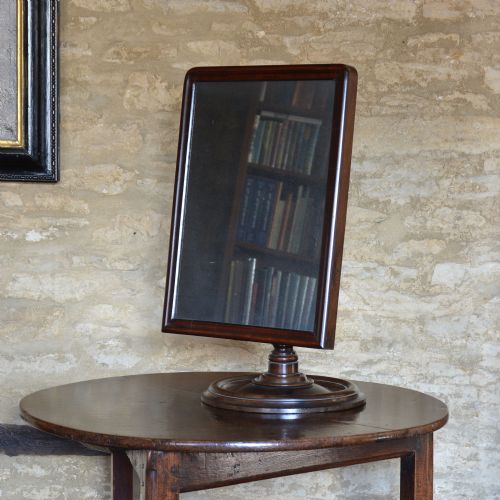
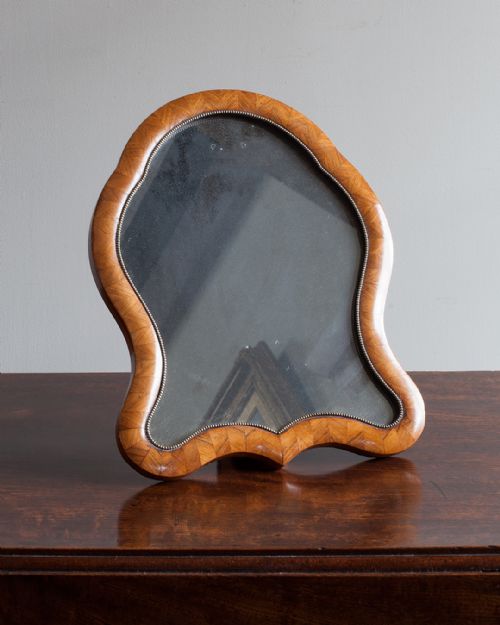
A mirror standing in its own free-standing frame rather than swinging from a box base, made here at table-top scale. Thirteen titles use the term.
One of the odder examples in the archive is a Chinese Qing cheval inlaid with mother of pearl.
Are Continental examples common?
No. English hardwood pieces dominate, and everything else is scattered well under a tenth of the archive.
French mirrors number about ten, with a small run of Dutch marquetry. Italian, Swedish birch, Russian and Vienna, Anglo-Indian teak and padouk examples are single sightings.
Which unusual forms turn up in this category?
Rarely, but they exist: a commode seat mirror, a boot maker's mirror, a gentleman's travelling shaving mirror, a telescopic shaving mirror on a stand, a hand-held ebonised double-sided mirror and a miniature dressing mirror.
Bureau-fitted mirrors, where the base works as a small writing fitment, appear a handful of times and sit at the very top of the range, one of them black lacquered and Queen Anne.