
Antique Dressing Mirrors
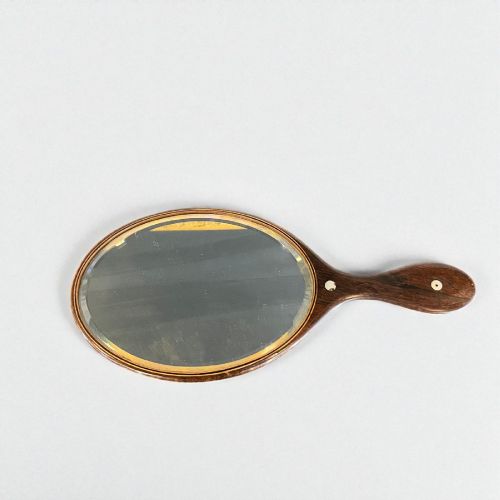
A looking-glass made to be used while dressing: a small tilting plate on a table or chest, or a full-length one swung between posts on the floor.

Antique Dressing Mirrors
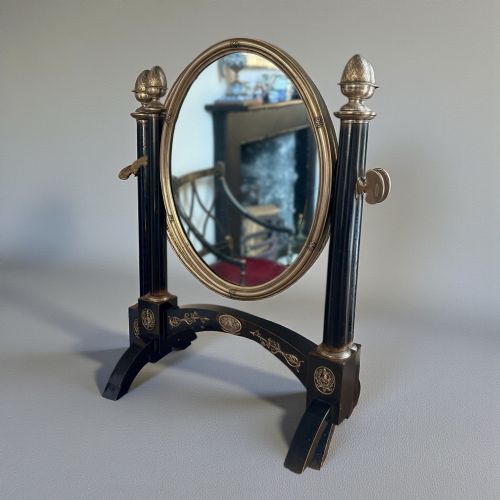
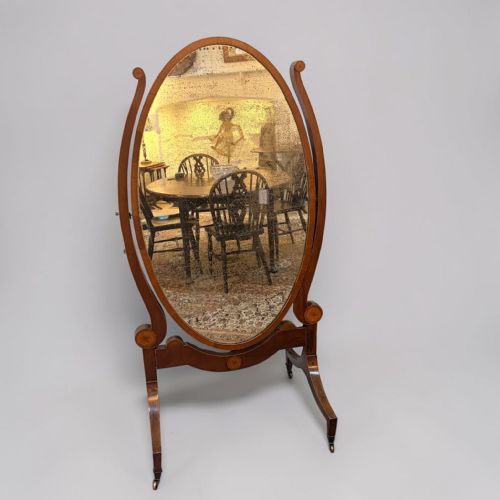
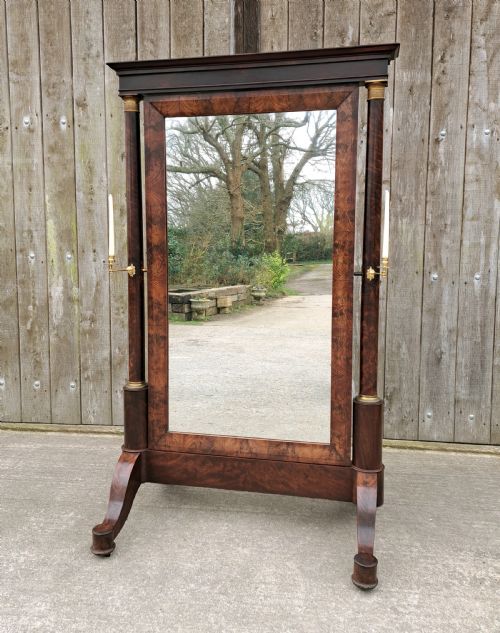
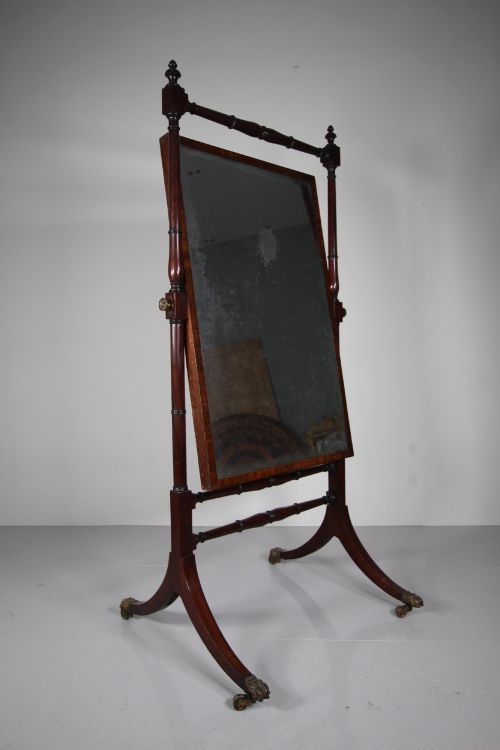
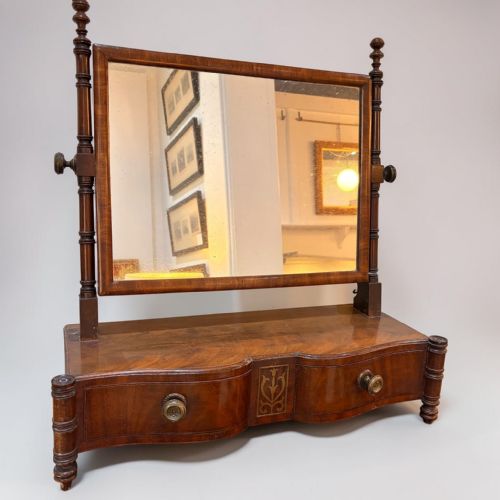
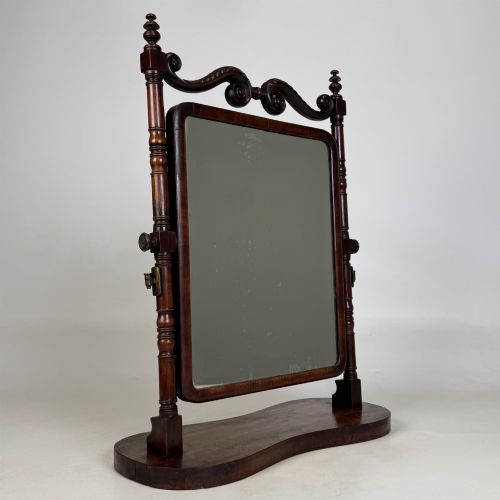
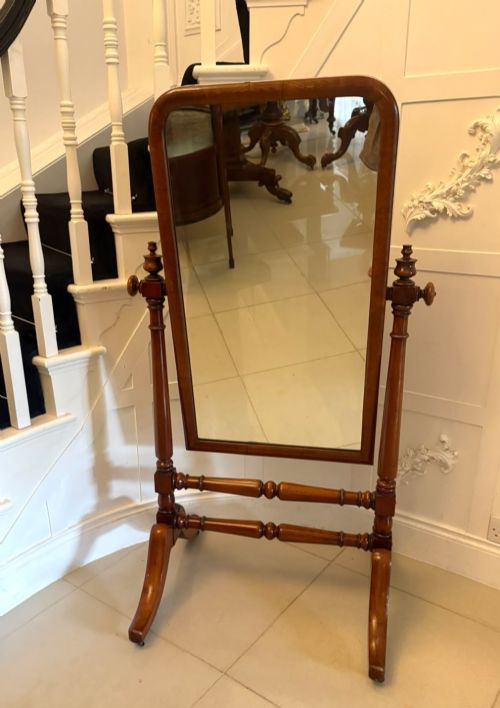
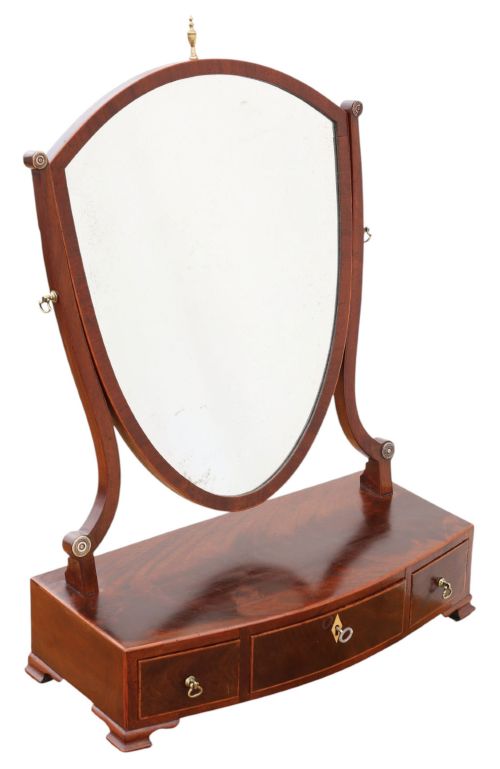
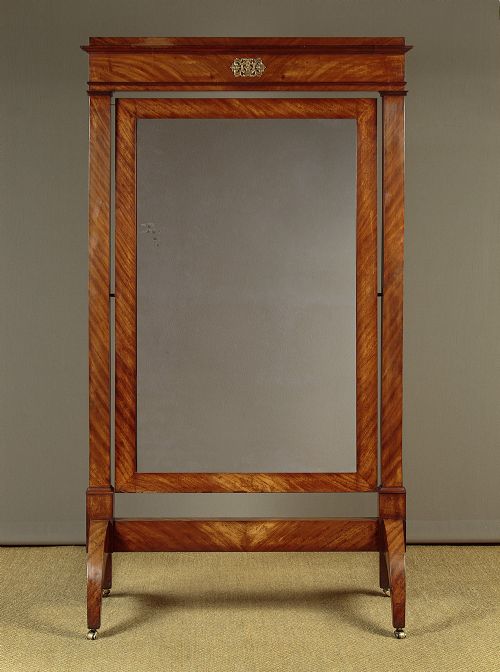
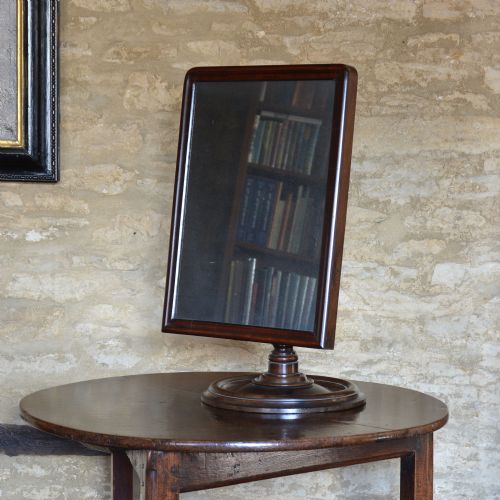
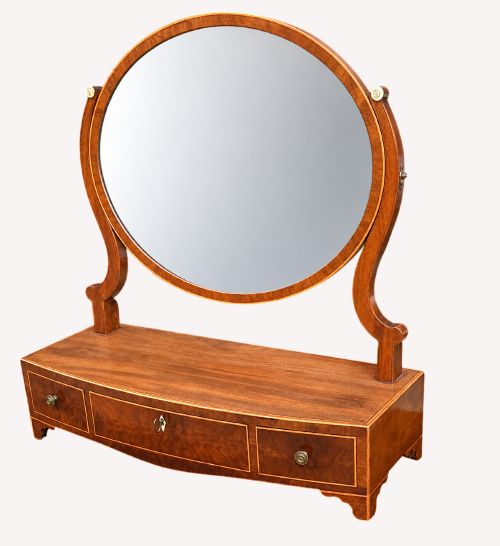
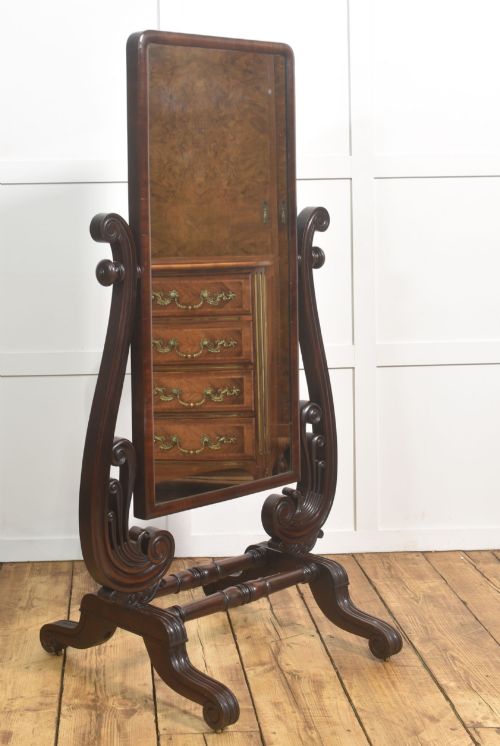
Two things sit under the heading. The first is the small table or toilet mirror, a plate pivoted on side uprights above a shallow drawered box that once held combs and pins. The second is the cheval, a larger plate swung between two posts on its own floor-standing frame, which followed later in the 18th century once bigger plates could be made.
The table version dominates. Mahogany runs through nearly half the titles on Sellingantiques, with walnut behind it and oak a good way back, and the Victorian and Georgian mahogany toilet mirror on a two or three drawer base is the single description you'll meet most. Bow, serpentine and shield fronts turn up throughout that group. Cheval mirrors account for roughly a fifth, and they weigh more heavily in what's currently listed.
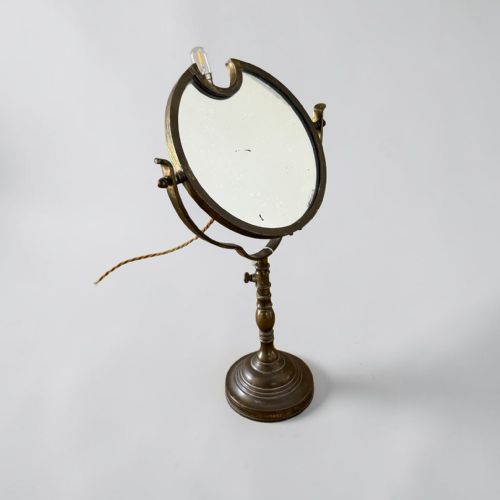
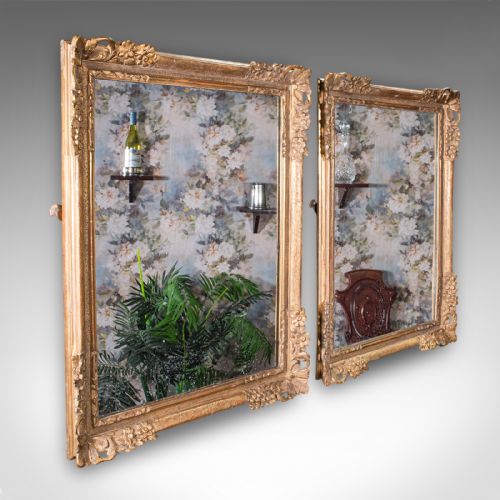
Beyond the wooden frames there's a steady minority of metal ones: gilt, brass, silver, bronze, nickel-plated and chrome frames on easel backs or struts, made to prop on a surface. Continental pieces make up under a tenth, French much the largest part of that, with Dutch marquetry, Italian giltwood, Swedish birch and Anglo-Indian examples appearing singly.
Dating is loose by dealer habit rather than accident. The dated field runs 1700 to 1960, but era labels do most of the work, and 19th Century is the largest bucket of all, ahead of Georgian, Victorian and Regency. George III is the most-cited monarch. Where decades are given they gather in the second half of the 19th century, with a second group in the 1920s bringing art deco, lacquer and chinoiserie triptychs.
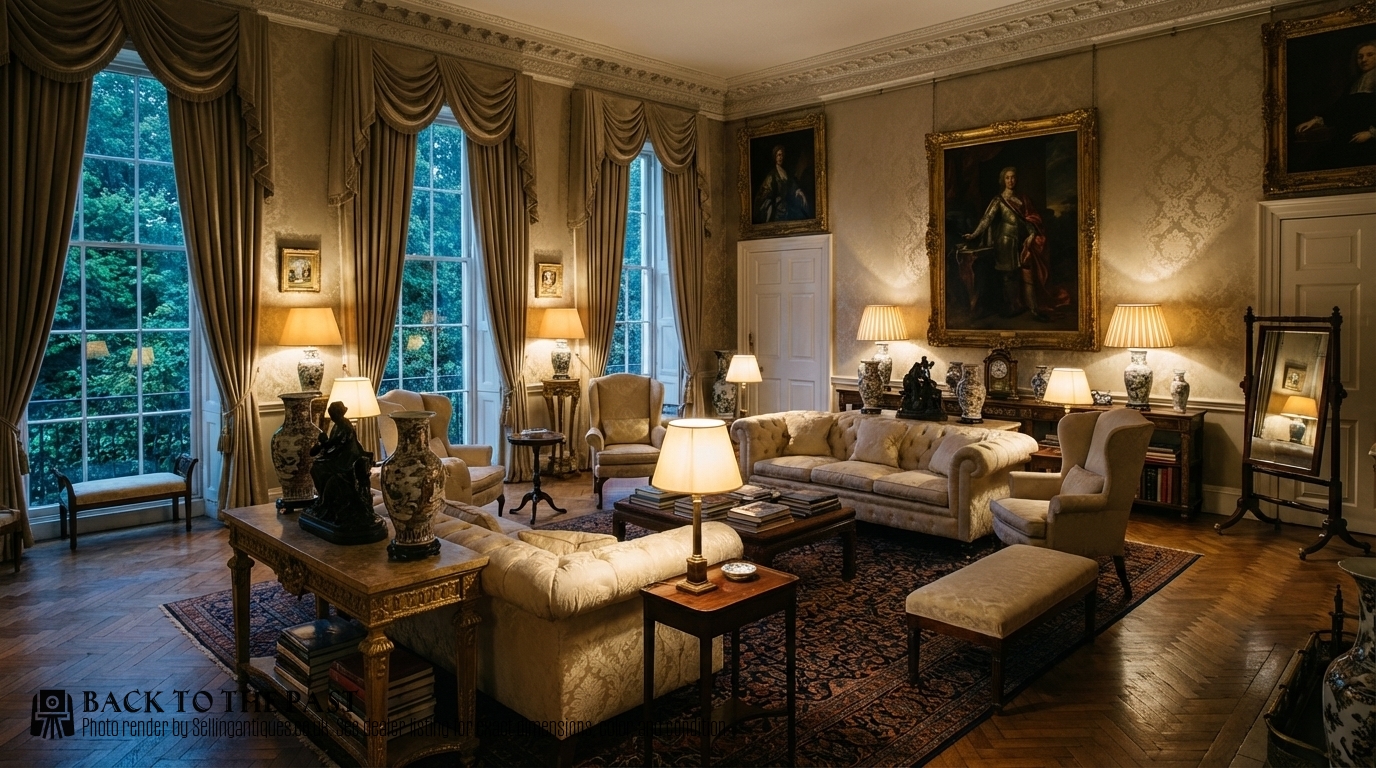
Where The Range Splits
Size does more than anything else. The top of the range is populated almost entirely by floor-standing pieces: cheval, leaner, pier and full-length forms, one English oak mirror at 6ft 7in, a French leaner at 207 x 104cm, a six-foot pine example. 'Large' and 'tall' recur in those titles, while 'small' and 'miniature' sit at the other end, along with a doll's mirror and a miniature mahogany one from around 1860.
Then timber and surface. Plain mahogany and walnut fill the lower reaches; satinwood, burr walnut, amboyna, kingwood, rosewood, padouk, Cuban mahogany and flame mahogany appear higher up. Decoration pushes in the same direction, with inlay, marquetry, carving, gilding, japanning and painted work clustering above the plain frames.
The base matters on the table mirrors. A serpentine or bow front with three drawers sits well above a plain rectangular platform, and inlaid or carved bases follow the same pattern. Pairs are unusual enough to be worth noting: two country-house cheval mirrors, and a pair of double-sided bronze-framed cheval mirrors at the very top.
Antique Dressing Mirrors Retail Price Guide 2026
Typical UK retail prices for dressing mirrors, calculated from the Sellingantiques database of over a million retail prices indexed since 2003. This retail price guide relies exclusively on Sellingantiques data; no external sources or auction records are used, so the figures do not describe the wider market.
Cheval comes from the French for horse. A cheval mirror stands on its own legs, so it needs no wall.
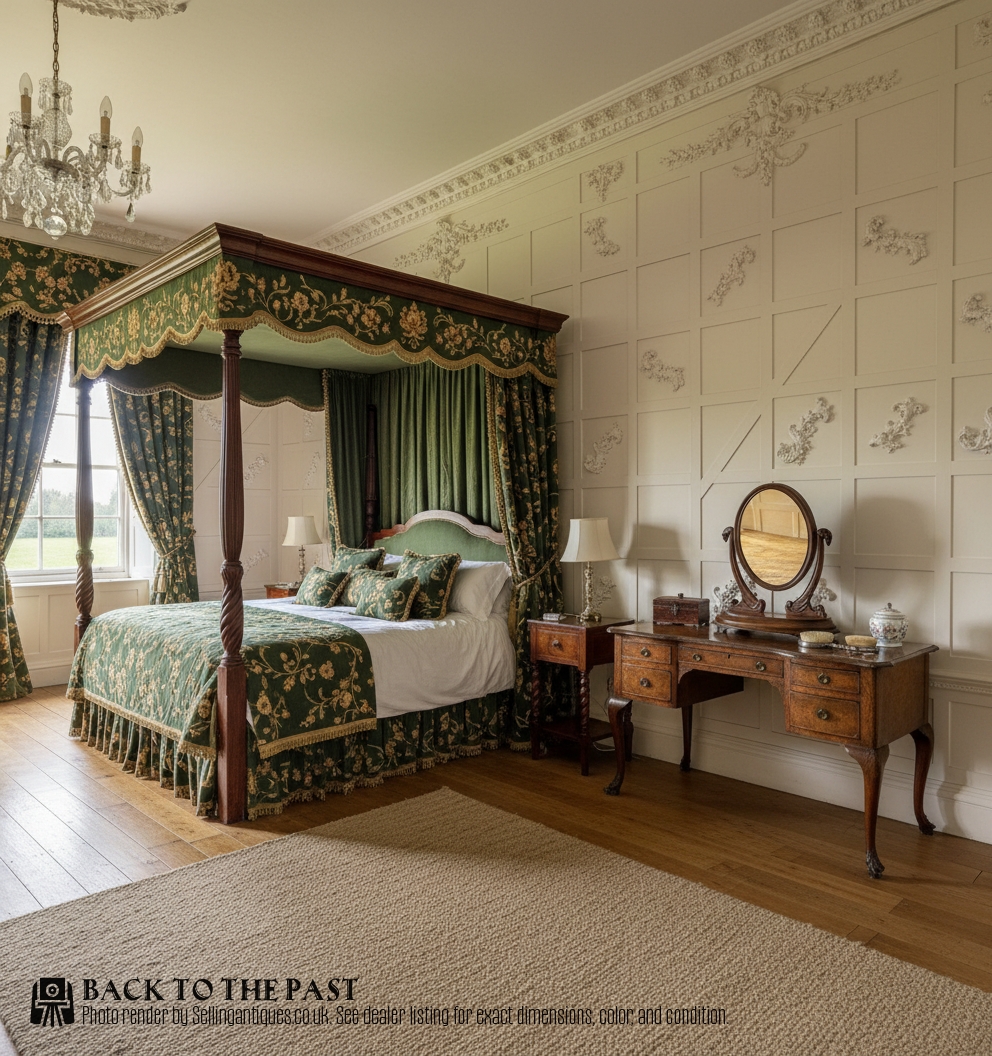
Gillows
The Antique Dressing Mirrors Glossary
- Toilet mirror
- The old name for a small dressing mirror standing on a table or chest. It appears in 168 titles, often paired with 'dressing' in the same line.
- Cheval
- A floor-standing mirror swung between two uprights on its own frame. Used in 217 titles, and the word that marks out the larger end of the category.
- Swing mirror
- Any plate pivoted on side supports so it can be tilted to the user. It describes the action rather than the form, so it turns up on table and floor pieces alike.
- Platform base
- The shallow drawered box that the uprights of a table mirror stand on. Listings commonly count one to three drawers, and the front may be bow, serpentine or plain.
- Easel back or strut
- A hinged rear support that props a frame upright on a surface, common on the metal and silver-framed examples.
- Triptych
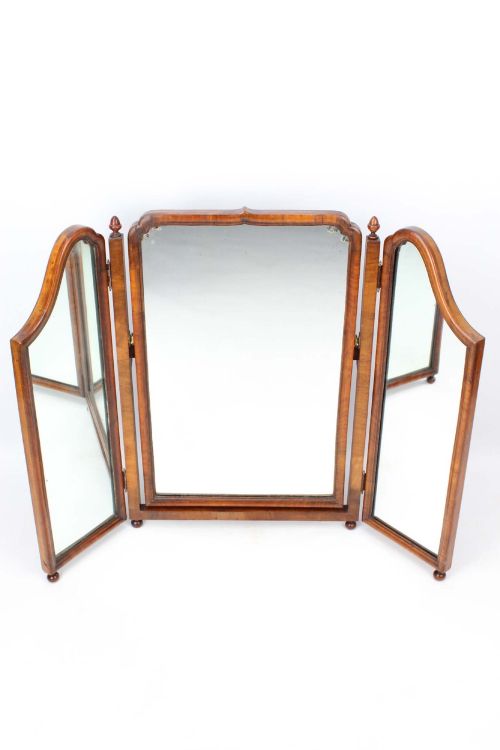
- Three hinged plates, the sides angled inward. Twenty titles use it, mostly on pieces from 1900 to 1930.
- Skeleton frame
- A slender open frame with no solid backboard, met on several 19th-century mahogany examples.
Antique Dressing Mirrors: Frequently Asked Questions
What's the difference between a toilet and a cheval mirror?
A toilet mirror is the small one that stands on a table or chest, usually with a drawered box beneath the uprights. A cheval stands on the floor on its own frame.
Both swing on side supports. The words 'dressing', 'toilet', 'vanity' and 'swing' get used interchangeably in titles, and many pieces are listed under two of them at once.
Which wood is most common?
Mahogany, by a wide margin. It appears in 517 titles, with walnut in 132 and oak in 42.
Above those sit the figured and exotic timbers: satinwood, burr walnut, amboyna, kingwood, rosewood, padouk and flame mahogany. Those are the frames that reach the upper half of the range.
How old are most of these?
The dated field runs 1700 to 1960. Only 431 of 1,192 listings give a clean year, so most are placed by era instead.
19th Century is the biggest single label at 208, then Georgian, Victorian, Regency, 18th Century and Edwardian. Where decades appear they cluster in the 1860s and 1880s, with a second group in the 1920s.
Are dressing mirrors usually signed or stamped?
No. The category is effectively unsigned, and a labelled or stamped piece is unusual.
Gillows is the only name that carries across more than a couple of dealers, and it comes up as an attribution more often than anything else.
How many turn up for sale?
About 116 a year on Sellingantiques, and 252 different dealers have offered one.
That spread tells you it's a form almost every general furniture dealer handles rather than a specialism.
Do unusual forms ever appear?
They do, once or twice each. Campaign and travelling shaving mirrors, a bootmaker's mirror, gents' outfitters and shop dressing mirrors, a marble-based one, and mirrors combined with a bureau or a jewellery cabinet.
Origins get odd at the edges too: a Chinese Qing hardwood and mother-of-pearl cheval, a Swedish birch vanity mirror, a Black Forest carved lime wood table mirror.