
Regency Mirrors
Wall and dressing glasses in the Regency taste, framed in gilded wood and gesso or in figured mahogany, made for the pier between windows, the space above a chimneypiece, or the bedroom floor.
What They Are
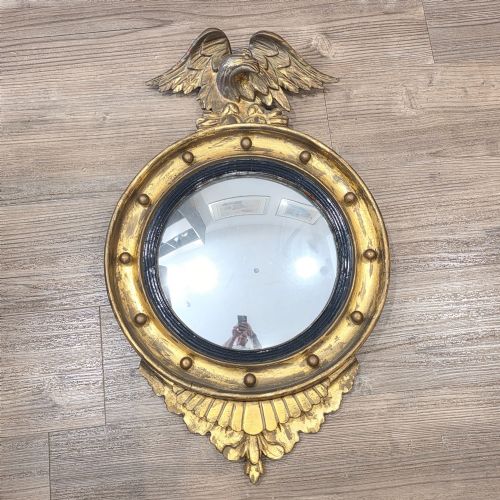
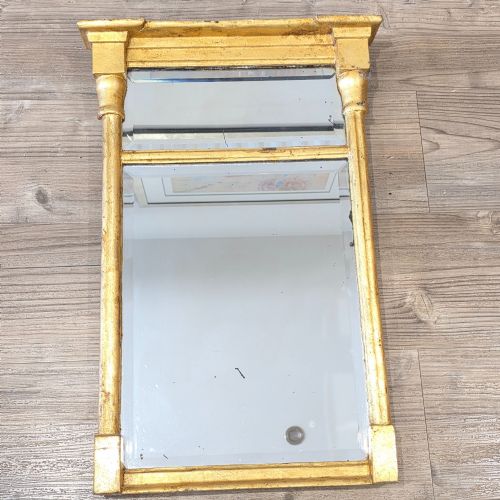
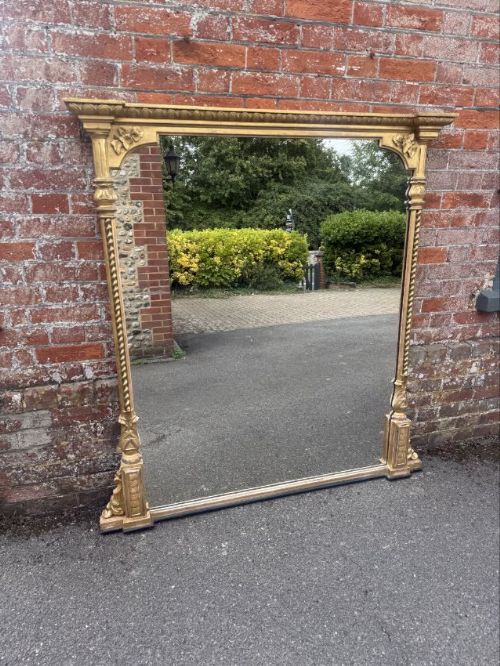
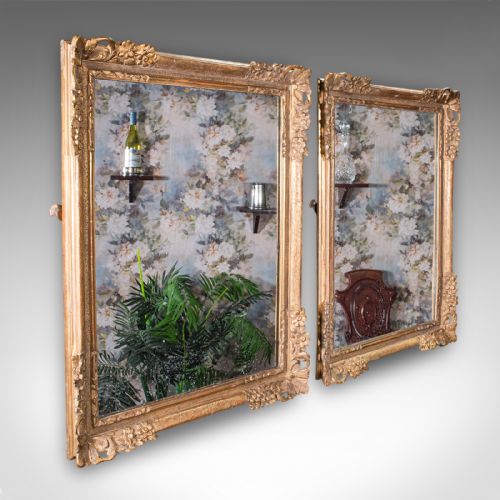
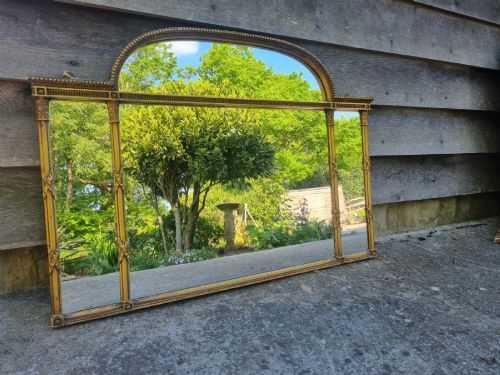
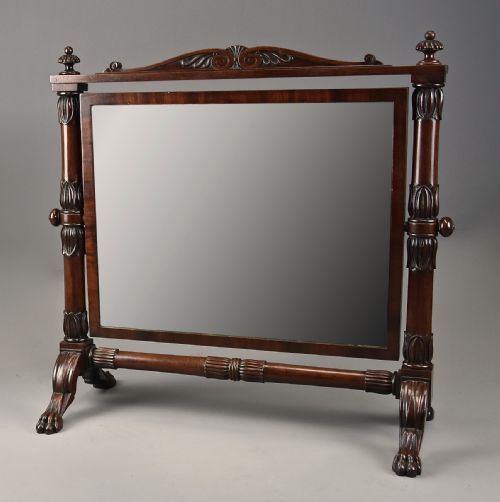
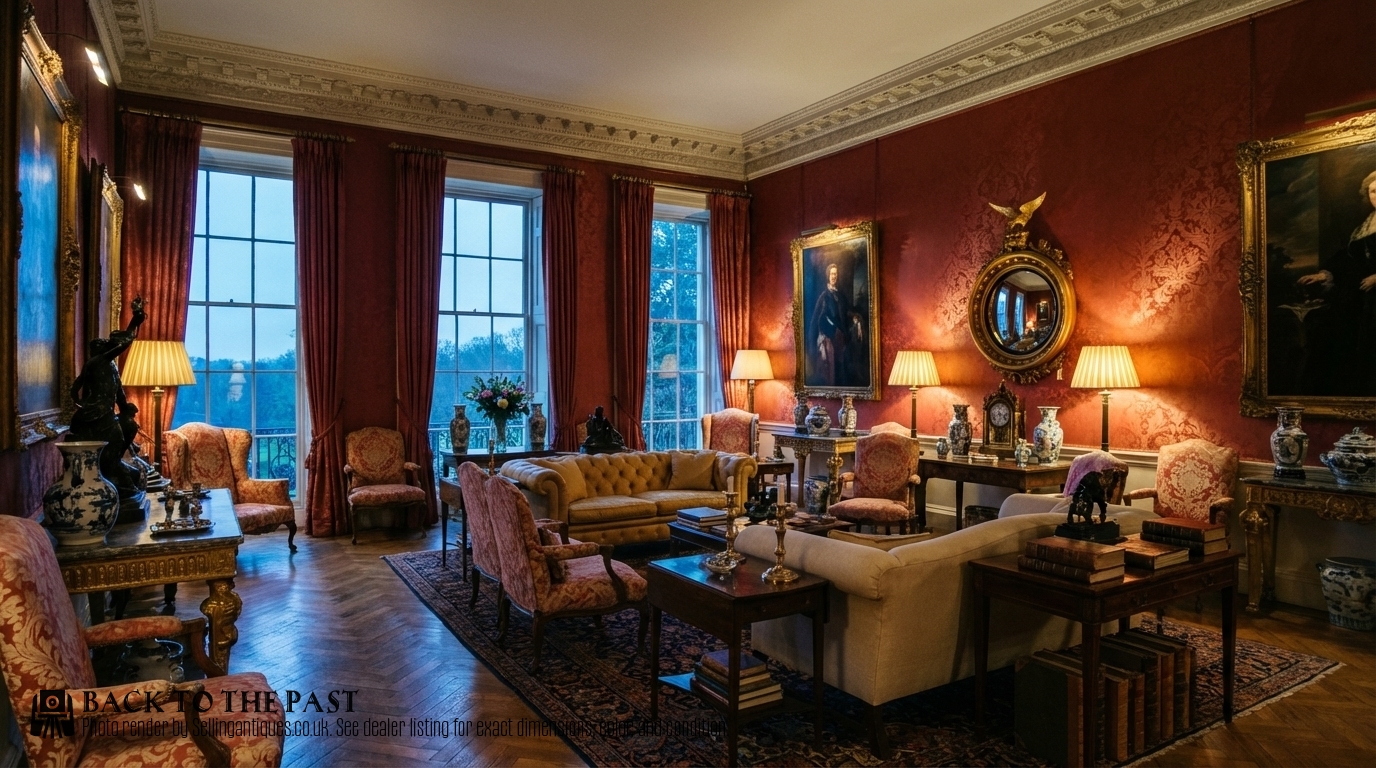
Mirrors in this taste belong to the early nineteenth century, when better plate glass and gilded softwood or gesso frames put large wall glasses into ordinary rooms. Four forms settled into domestic use and they are the four you meet on Sellingantiques: the circular convex plate, the tall pier glass, the wide overmantel, and the free-standing or swing mirror for dressing.
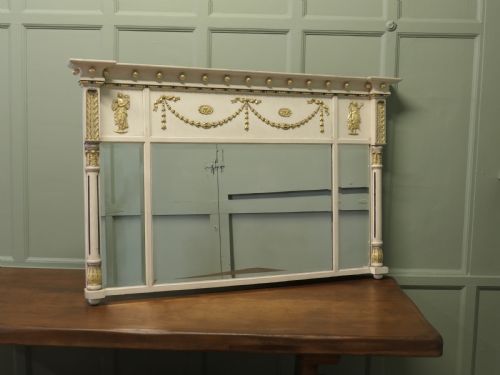
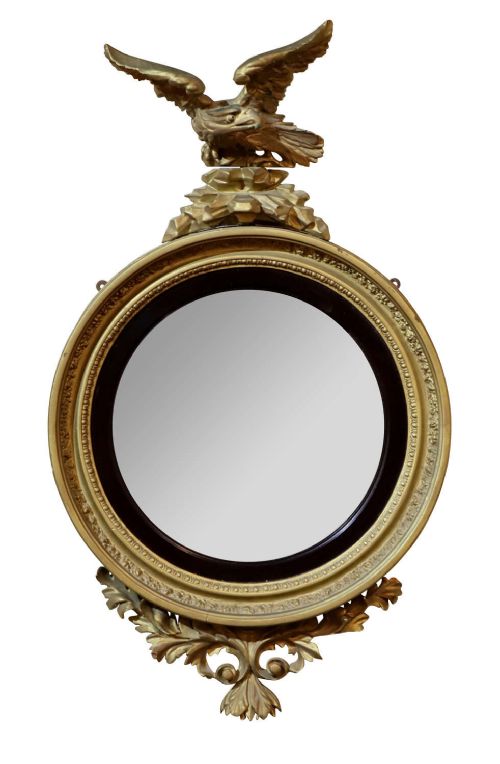
Gilt dominates. The word appears in well over half the 1,377 titles, giltwood in a further block of them, and inside that the circular convex plate is the single most recognisable thing in the category, running to about a fifth of listings. Pier glasses take roughly one in eight. Overmantels take about a fifth once you merge the two spellings dealers use, and often come divided into two or three plates by columns.
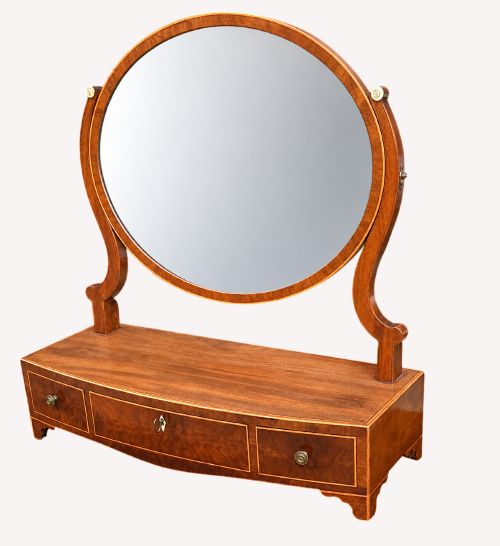
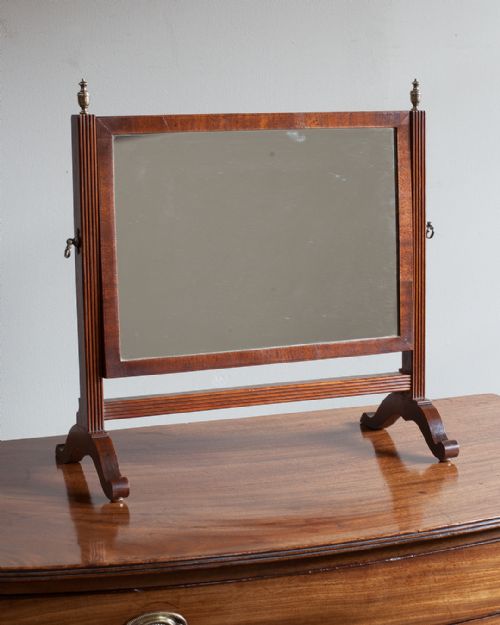
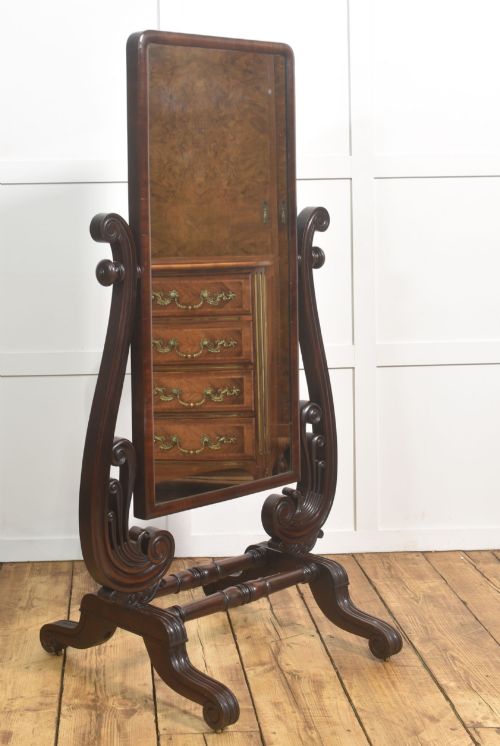
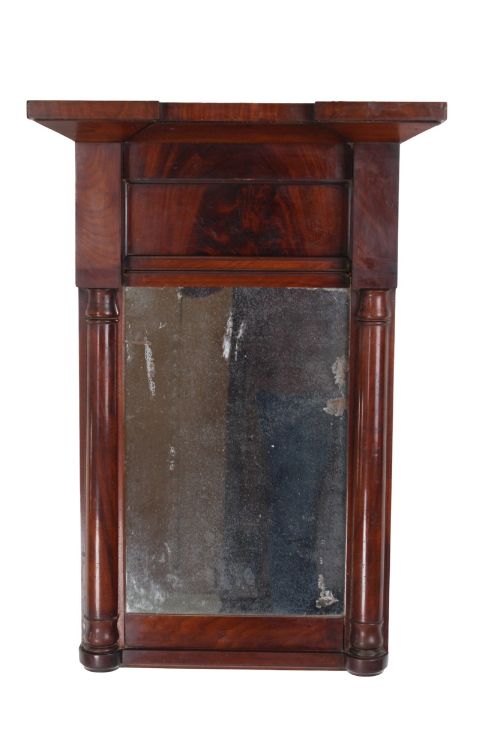
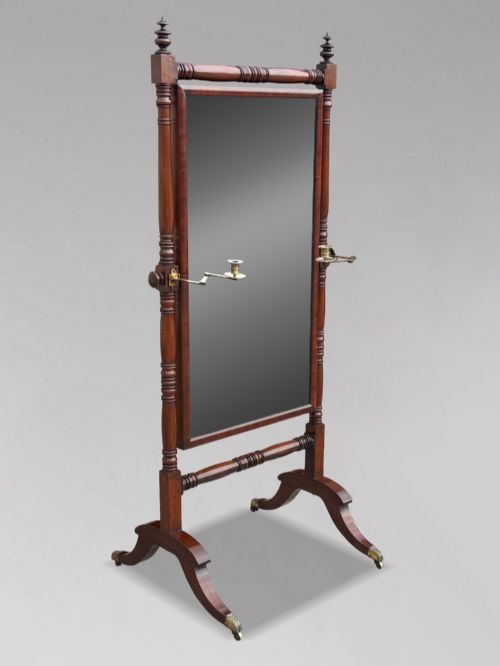
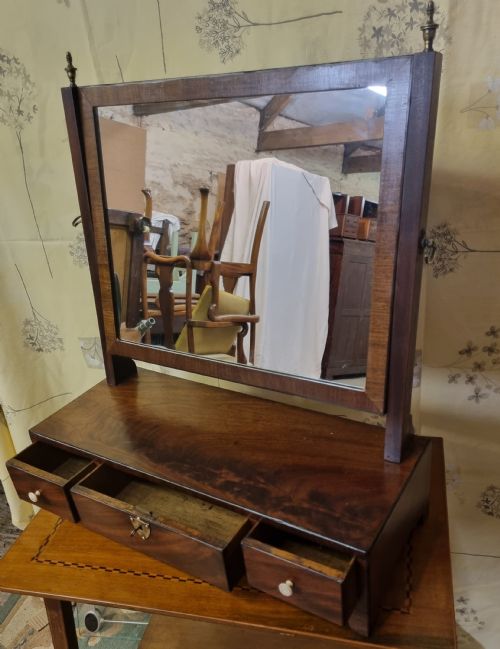
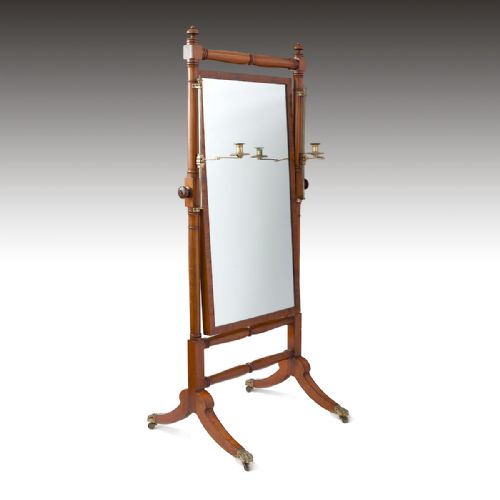
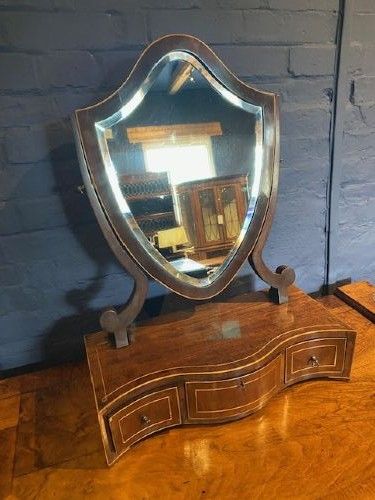
Timber is the other half of the story. Mahogany runs through the archive, usually as a cheval swinging between uprights or a small dressing or toilet glass on a drawered base, with rosewood a lesser strand. English pieces are the norm; Irish, Scottish, Italian, French and Anglo-Indian examples turn up only a handful of times each.
The word Regency in a title often describes taste rather than the year of making. The dealers' own dated field names the period itself far more often than a year, and only 249 listings carry a clean date at all. Those that do run from 1800 to 1960, clustering early but with a real tail in the 1880s, 1890s, 1900s and 1920s, so period glasses and later revival work come back in the same search.
What Moves The Range
Size does most of the work. Large appears in around 211 titles and sits at the top of the range, and height gets quoted only for the giants: seven feet, five feet, 195cm, a convex plate measured at 69 inches. Small and miniature cluster at the other end.
After scale, it is how the ornament was made and what it shows. Carved giltwood recurs among the highest-priced frames, while titles naming gesso, plaster gilt or timber gilt sit lower. Figural crests lift a frame too: the eagle surmount turns up in 36 titles, and one-off dolphins, a hippocamp, lion masks, rams' heads and a ho-ho bird appear disproportionately in the upper half.
Two other things separate the ends. Titles specifying original mercury glass or original plate recur among the higher pier and convex mirrors, and pairs, particularly of oval gilt, girandole and convex glasses, sit well above their single equivalents. Against that, Regency style, Regency design and Regency revival with a late Victorian or Edwardian date gather in the lower part.
Retail Price Guide 2026
Typical UK retail prices for regency mirrors, calculated from the Sellingantiques database of over a million retail prices indexed since 2003. This retail price guide relies exclusively on Sellingantiques data; no external sources or auction records are used, so the figures do not describe the wider market.
A small convex glass was once called a sorcerer mirror. The old name turns up three times in the archive; the plain word convex, three hundred.
Gillows
The Regency Mirrors Glossary
- Convex
- A circular outward-curving plate, often called a bullseye. Three hundred titles use the word, making it the most identifiable single form in the category.
- Pier glass
- A tall narrow wall mirror made for the pier of wall between two windows, or to hang above a console table.
- Overmantel
- A wide mirror for above a chimneypiece. Dealers spell it overmantle about as often as overmantel, and a further 34 titles split it as over mantle.
- Cheval
- A free-standing floor mirror swinging between two uprights. It runs to 114 titles, most of them mahogany.
- Triple plate
- An overmantel divided into three glasses by columns or pilasters. Named in 35 titles.
- Girandole
- A mirror fitted with candle arms, in 19 titles, several of them convex. A small convex glass is also called a sorcerer, though only three titles use that older name.
Frequently Asked Questions
What is a convex Regency mirror?
A circular plate curving outward in a gilt frame, often called a bullseye. It is the most common single form in the category, in about a fifth of listings.
Many carry an eagle surmount, and some are fitted with candle arms, which makes them girandoles. Pairs of them recur, and they sit above the single equivalents.
Overmantel or overmantle: which is right?
Both spellings run through the archive in near-equal numbers, 156 titles one way and 139 the other, with another 34 splitting it as over mantle.
The form is the same either way: a wide mirror for the wall above a chimneypiece, frequently divided into two or three plates by columns or pilasters.
Are all Regency mirrors from the Regency period?
No. The word in a title often describes taste rather than date of making. Only 249 of the 1,377 listings carry a clean year, and those run from 1800 to 1960.
Dates cluster early, but there is a visible later group in the 1880s, 1890s, 1900s and 1920s. Titles reading Regency style, Regency design or Regency revival belong to that tail.
Which timbers were used for dressing mirrors?
Mahogany dominates, in 229 titles, most often as a cheval or as a small dressing or toilet glass on a drawered box base. Rosewood appears in a smaller group.
Gilded frames outnumber timber ones across the category as a whole, but the free-standing and swing mirrors are largely a timber branch.
Do these mirrors carry maker's names?
Rarely. One name recurs across the whole archive, Gillows, from four dealers, so this is effectively an anonymous trade.
Where it does appear it comes as an attribution or a stamp noted in the title, and it is the exception rather than a pattern.
How many turn up on Sellingantiques each year?
Around 137 are listed in a year, and 229 different dealers have handled one, which makes this a form almost every general furniture dealer touches at some point.
Alongside the four standard forms, the archive holds one-offs: a double-sided hand mirror, a mirrored corner shelf, a shop's retail dressing mirror, a robing mirror called a Psyche, and a quatrefoil glass.