
Antique Cheval Mirrors
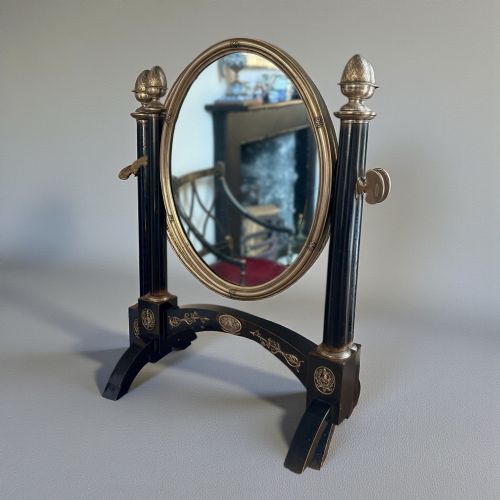
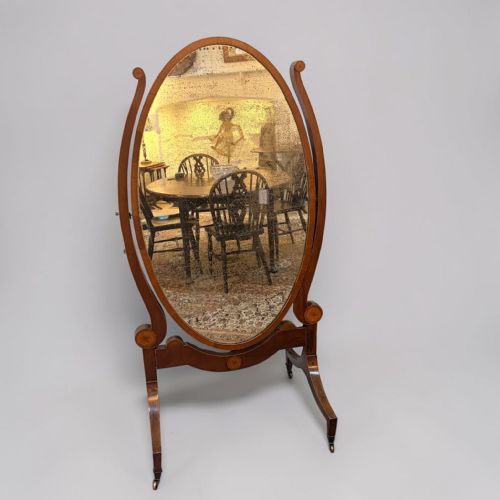
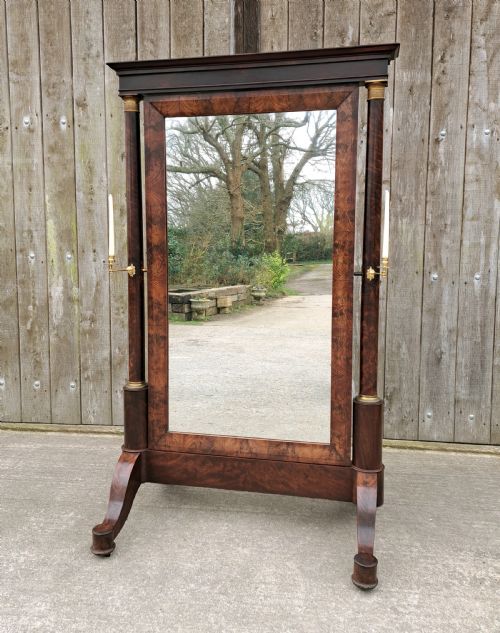
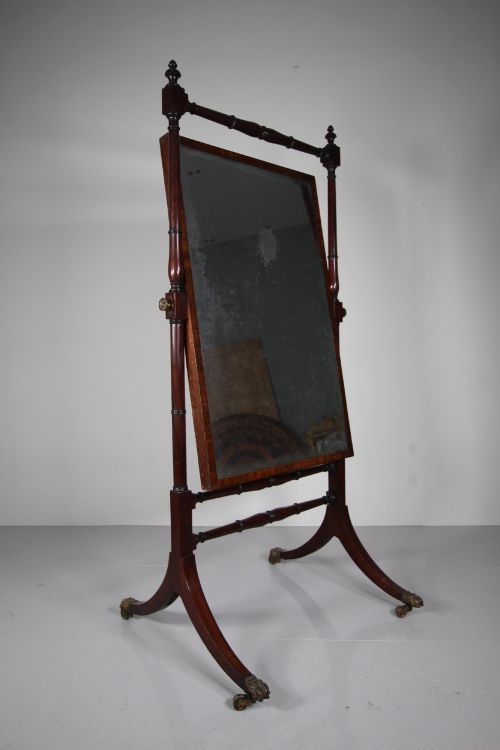
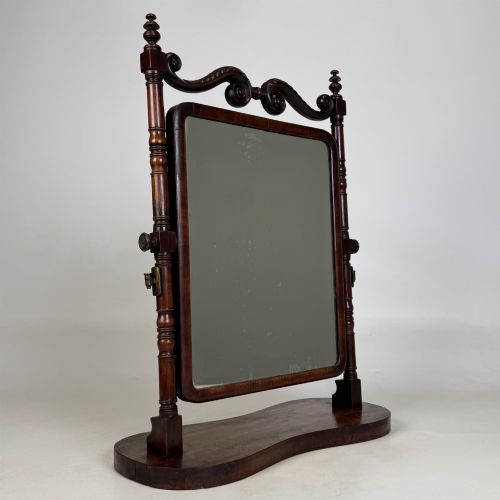
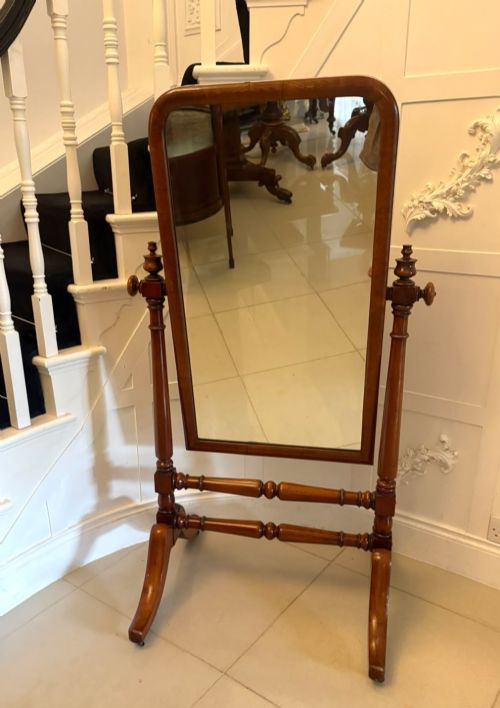
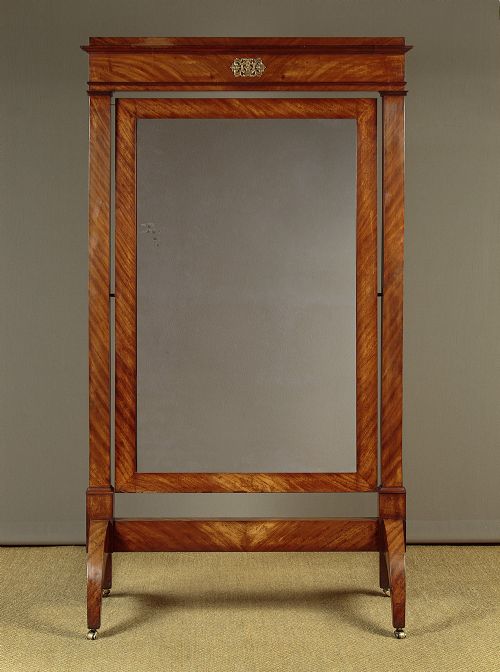
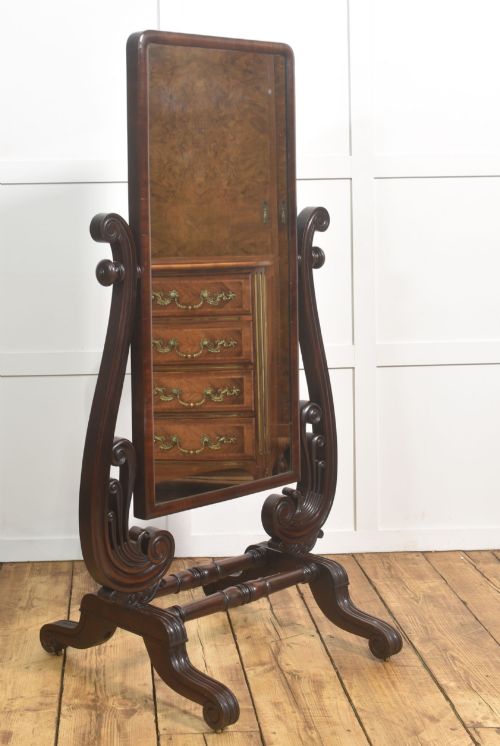
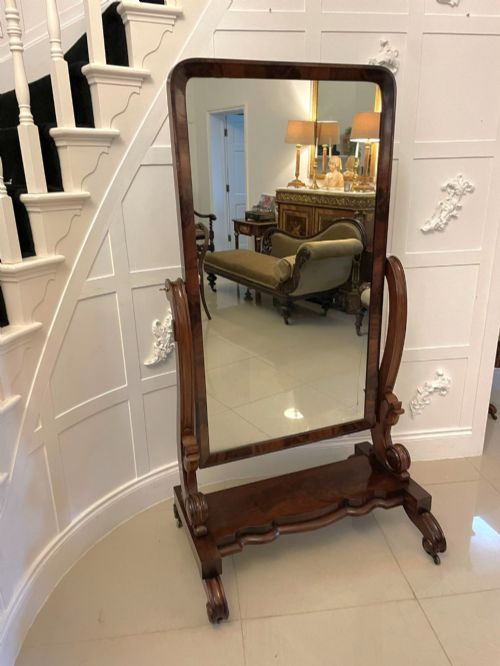
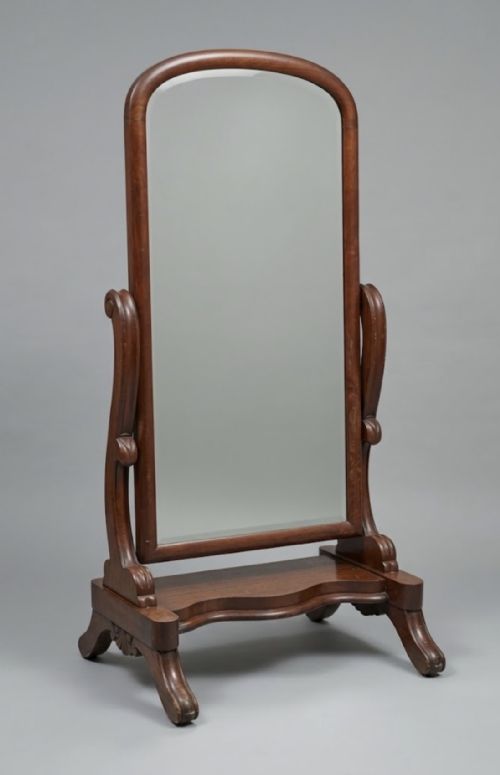
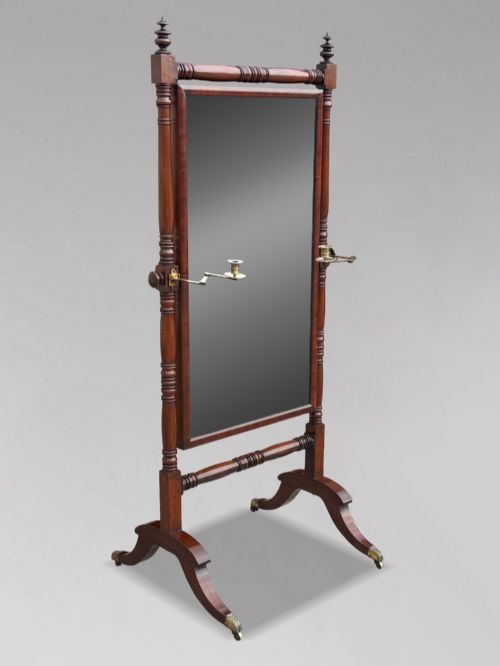
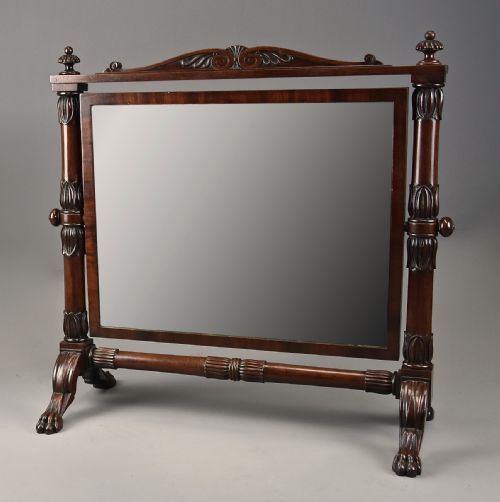
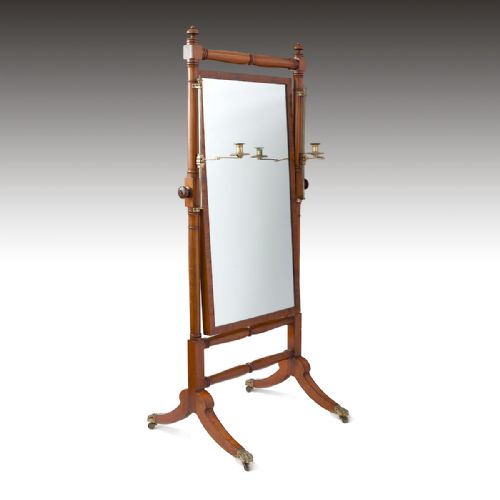
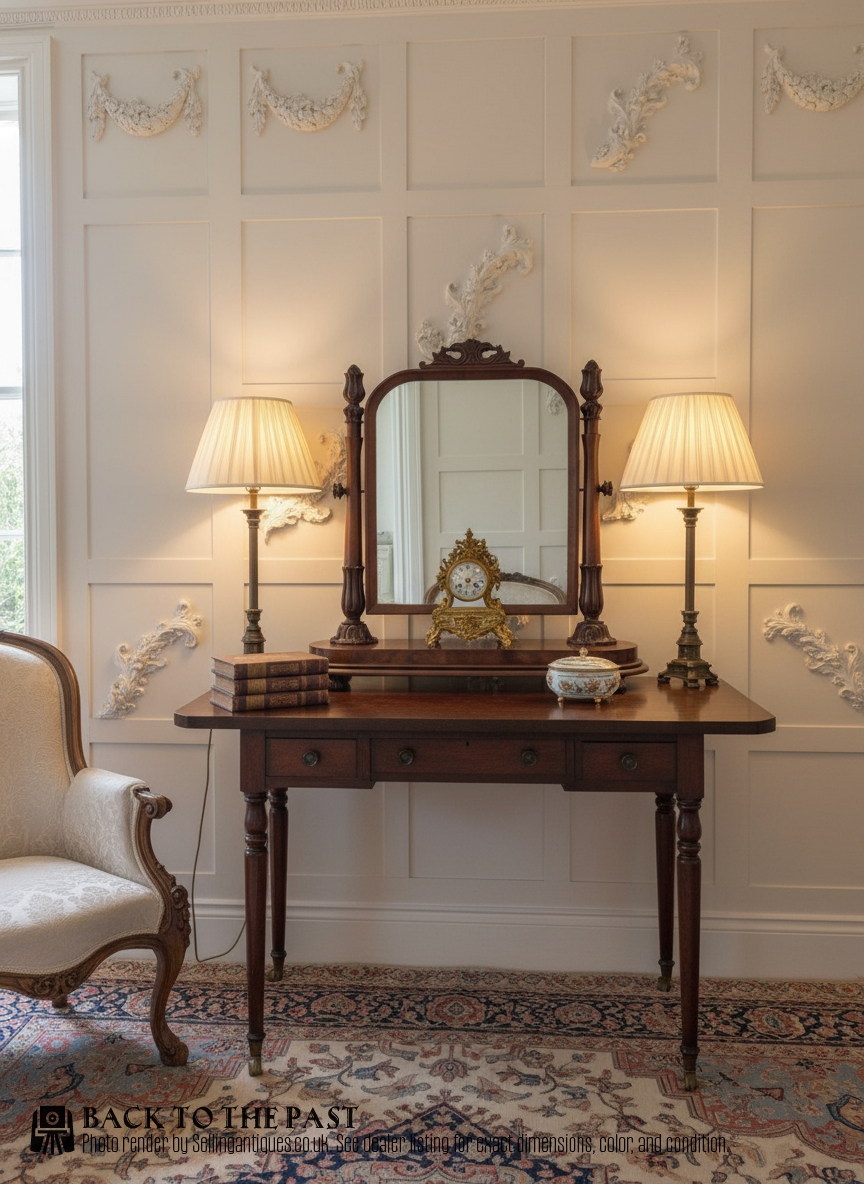
A cheval mirror is a dressing glass swung on side pivots between two uprights on a free-standing base, tiltable, often on castors, made so a person could see a full figure.
Antique Cheval Mirrors
The form came out of Britain and France in the later 18th century, once plate glass could be made large enough to reflect a whole figure. It answered a dressing-room need that fixed wall glasses and small table swing mirrors couldn't. The name comes from the French for horse, after the trestle stand.
The piece you'll meet most often is mahogany and 19th or early 20th century. Mahogany appears in half of the 928 titles on Sellingantiques, with walnut and oak the two other regular woods, and brass, gilt, painted, japanned and metal frames scattered through. Titles are usually plain: Victorian, Edwardian or Regency mahogany cheval mirror, and nothing more.
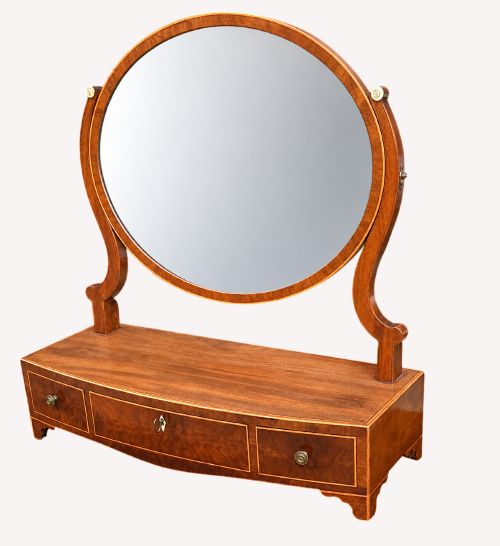
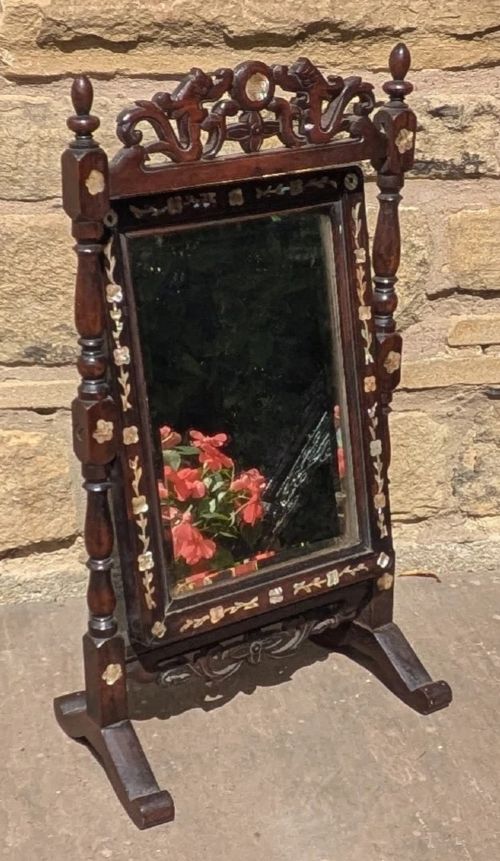
The heading covers two things. The full-length floor-standing glass on trestle uprights dominates, but around a fifth of the archive is smaller table-top or dressing-table swing mirrors, described as toilet mirrors or as of cheval form, and those make up a much larger share of what's currently for sale.
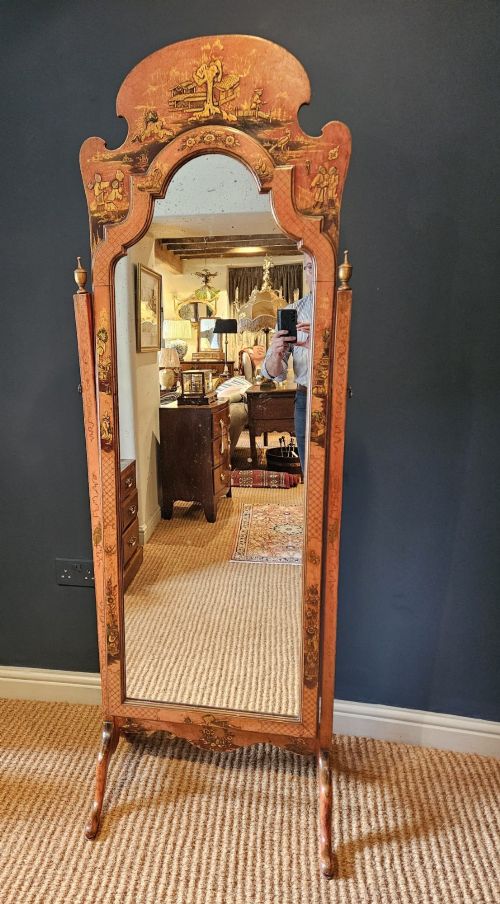
Two other groups turn up steadily. The 1920s and 30s revival accounts for about a fifth, with Queen Anne style walnut and Art Deco frames repeating; the 1920s alone is the busiest decade in the record. Inlaid Sheraton-revival and carved or gilded pieces form a smaller upper band, and roughly one in twenty is Continental, mostly French.

Where The Range Splits
Timber and figure do most of the sorting. Satinwood, marquetry, birds-eye maple, burr elm and burr walnut sit in the upper reaches, while plain oak and the 1920s walnut frames cluster low. Decoration works the same way: inlay, marquetry, carving and gilding push a frame upward, and fifty titles use the word inlaid.
Scale separates the two halves of the heading. Large, tall and full-length glasses run above the table-top and toilet mirrors, which occupy the lowest band, and a few titles go as far as small or miniature. Height is stated in a title only once in the whole sample, so scale is usually left to those words.
Dating counts too. Regency, William IV and Georgian pieces concentrate in the upper half, while Edwardian and 1920s work fills the lower. An attributed workshop lifts a piece markedly, and pairs are close to unheard of, with only two in the sampled run, both at the very top.
Antique Cheval Mirrors Retail Price Guide 2026
Typical UK retail prices for cheval mirrors, calculated from the Sellingantiques database of over a million retail prices indexed since 2003. This retail price guide relies exclusively on Sellingantiques data; no external sources or auction records are used, so the figures do not describe the wider market.
Around ninety-four cheval mirrors are listed on Sellingantiques each year, and 187 different dealers have handled one.
Gillows
The Antique Cheval Mirrors Glossary
- Cheval
- A mirror swung between two uprights on a free-standing frame. The word comes from the French for horse, after the trestle stand it sits on.
- Toilet mirror
- The small table-top swing glass, often on a base with drawers. Twenty-eight titles use the word, usually for pieces sold under the cheval heading.
- Swing mirror
- Any glass pivoted on side screws so the tilt can be altered. Some titles use it interchangeably with cheval.
- Bevelled plate
- Mirror glass with an angled ground border. Listings write it as bevel edge or bevelled.
- Triptych
- A cheval with hinged side wings, also written as triple plate. Only a handful of titles carry it.
- Robing mirror
- An alternative name for the large dressing-room cheval glass. Psyche is the French term, used once in the archive.
Antique Cheval Mirrors: Frequently Asked Questions
Why are small table mirrors listed as cheval?
The heading is used broadly. A table-top or dressing-table swing mirror pivoted between two uprights shares the cheval action, so dealers describe it as a cheval or of cheval form.
Those smaller glasses run to roughly a fifth of the archive and a larger share of current stock. Words like toilet, dressing, table and swing in a title usually signal one.
What wood are they usually made from?
Mahogany, in half of the 928 titles on Sellingantiques. It's closer to a defining term than a variant.
Walnut follows, then oak. Beyond the timbers there are brass, gilt, painted, japanned and metal-framed examples scattered through the record.
Which periods turn up most?
Victorian, Edwardian and Regency labels lead the titles, and the dated field runs from 1750 to 1960. The largest single bucket is a vague nineteenth century, so a good slice of the archive is dated only to a hundred-year span.
At decade level the 1920s is the busiest in the whole record, ahead of every Victorian decade. Eighteenth-century dating is uncommon, and anything after the 1930s is exceptional.
Are cheval mirrors ever found in pairs?
Almost never. Two entries in the whole sampled run are pairs, and both sit at the very top of the range.
How common are they on the market?
About 94 are listed in a year on Sellingantiques, and 187 different dealers have handled one.
That spread means the form sits across the general trade rather than with a few specialists, so the same plain mahogany description recurs from many different sellers.
Do any unusual examples appear?
A few. The record holds a Chinese Qing cheval in hardwood and mother of pearl, a Breton oak frame, a Swedish Art Deco birds-eye maple one and a ribbed metal example, each appearing once.
There's also a small trade thread running through: gentlemen's outfitters, a bootmaker's mirror, shop and studio glasses, distinct from the bedroom pieces that make up the bulk.