

Antique Hand Mirrors
A group of antique mirrors listed under the "hand" heading, where the word usually points to the work in the frame - hand-carved, hand-painted, hand-beaten - rather than a handle to hold.
Antique Hand Mirrors
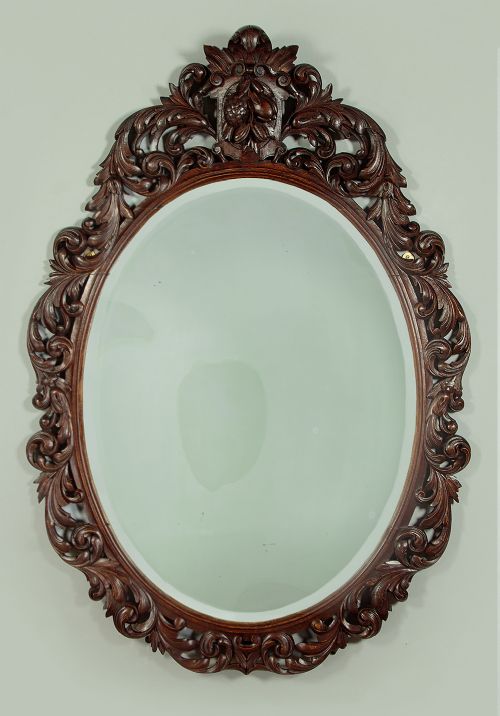
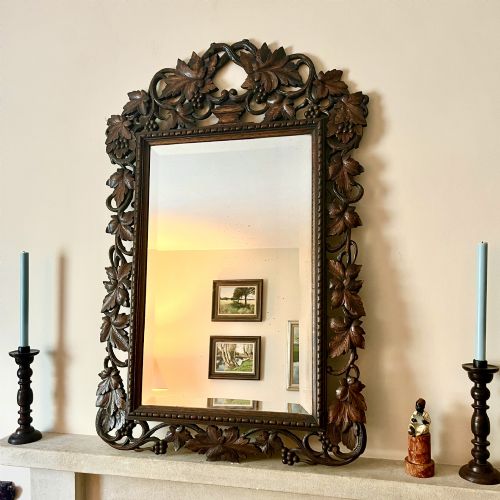
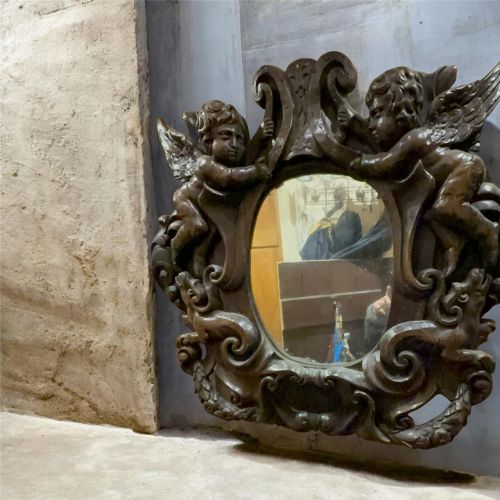
The heading covers two different things. In practice the larger part is framed wall mirrors whose titles advertise handwork: "carved" appears in 27 of the titles and "painted" in 27, with "wall" in 21. Oval frames are named in 9, oak in 9. So the piece you are most likely to meet hangs on a wall.
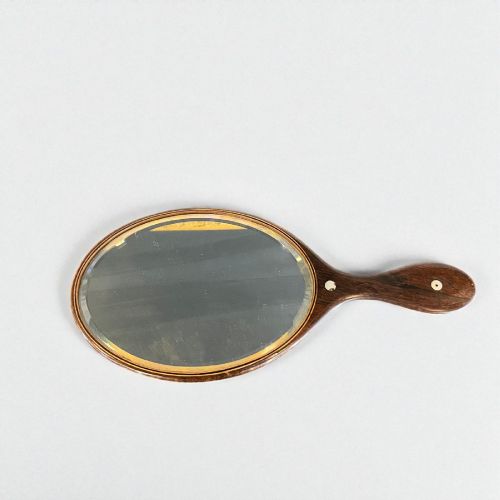
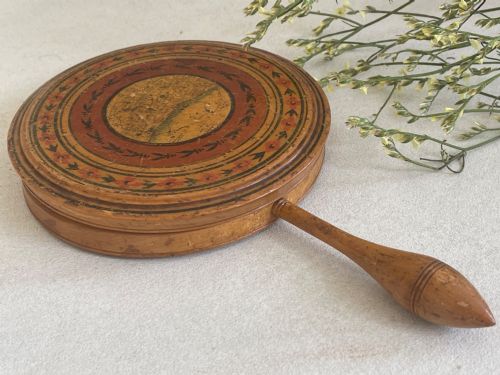
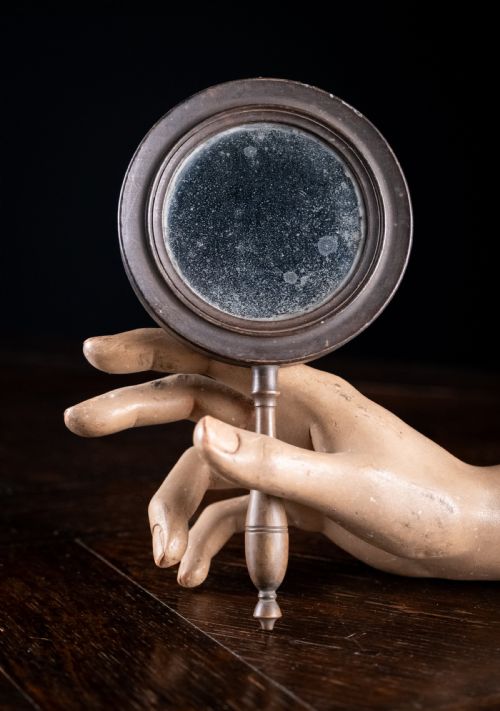
The true hand-held mirror is here too, just in smaller numbers: silver, tortoiseshell, bronze and ebonised vanity and double-sided mirrors, a few inches across, roughly a dozen across the samples. Silver examples carry a hallmark year, which makes them the easiest pieces in the category to date closely. Small mirrors with handles were dressing-table equipment in Europe from the 18th century onward.
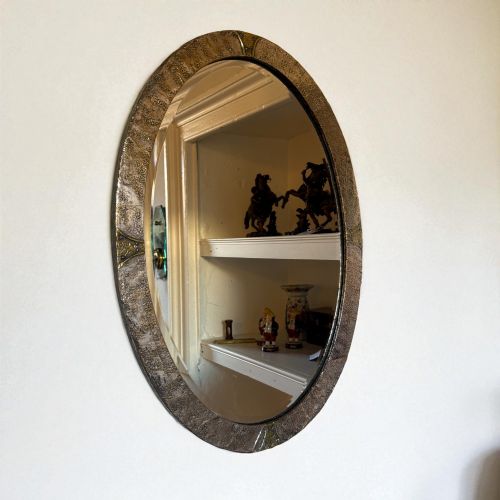
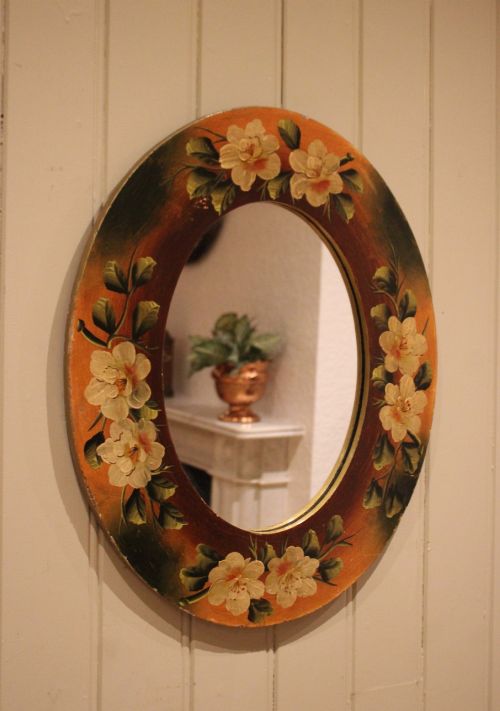
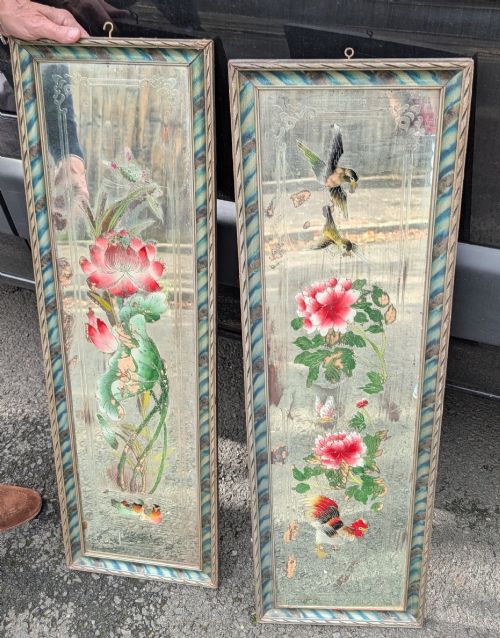
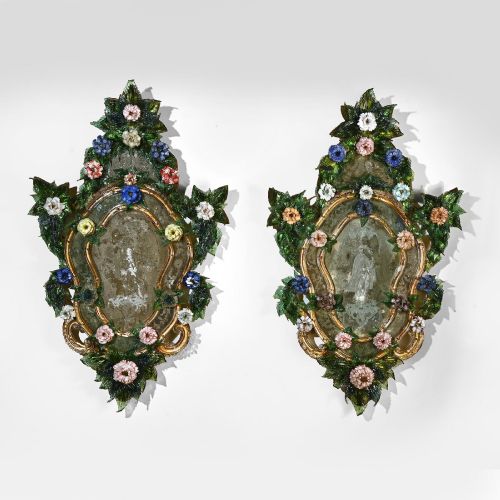
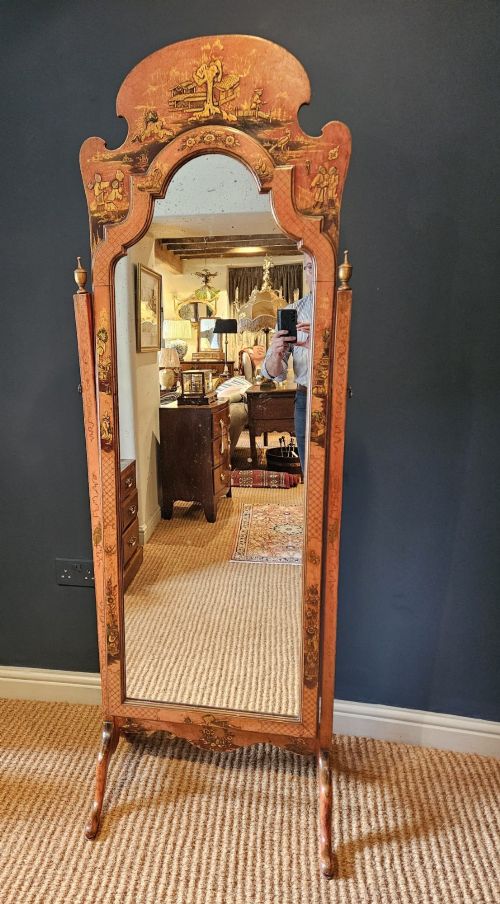
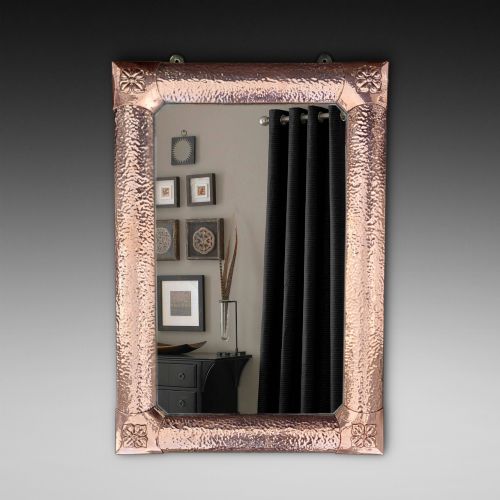
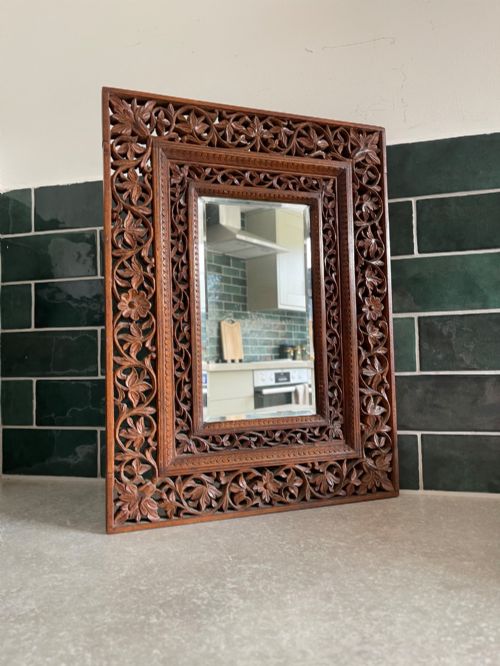
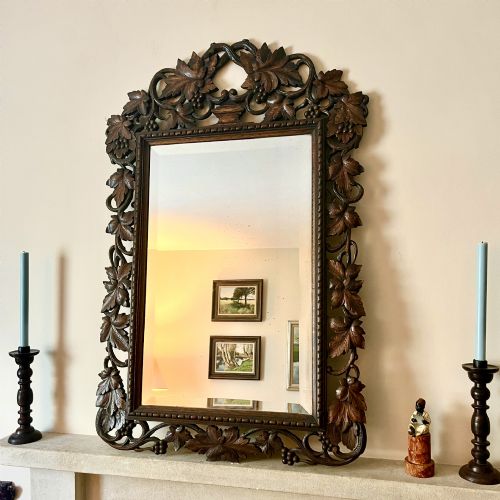
Behind the two main groups sit the carved wood and gesso frames - oak, walnut, limewood, giltwood, several Black Forest - and hand-painted work spanning Regency pier glasses, gypsy mirrors, reverse-painted glass and Kashmiri panels. Arts and Crafts beaten copper and brass makes up roughly one in eight, with hammered and repoussé frames. A scattering of North Indian, Syrian mother-of-pearl, Anglo-Indian teak, Chinoiserie and Japanese pieces turns up throughout.
Dating runs from 1800 to 1930, with 50 of 110 listings carrying a clean year. The single biggest entry is the untidy "19th Century", used 24 times, so much of the dating is a century rather than a date. Decade clusters fall around 1900, the 1920s and the 1910s. Three listings reach into the 18th century. Around 11 come to market in a year on Sellingantiques, spread across 67 different dealers.
What Sets Them Apart
Carving is the clearest divider. A plain carved oak frame sits at the bottom of the range; dragons, eagles, mythical birds and Black Forest birds of prey sit at the top. What is carved matters as much as how deeply, and the same holds for surface: giltwood, water-gilded and gesso frames run well above darkwood and plain oak.
Glass counts for a great deal. Listings that specify an original plate, an original mercury plate or hand-silvered bevelled plates occupy the upper half of the range, because a replaced plate takes away the one part of the mirror that cannot be recut by hand.
Scale and number do the rest. "Large" recurs at the upper end - large hand-painted, large carved oak, a large Arts and Crafts dragon and dolphin frame, a large cheval - while miniature, petite and small gather at the bottom. Sets are unusual, and pairs of pier mirrors, Regency giltwood ovals and sets of four octagonal painted mirrors all sit above comparable singles.
Antique Hand Mirrors Retail Price Guide 2026
Typical UK retail prices for hand mirrors, calculated from the Sellingantiques database of over a million retail prices indexed since 2003. This retail price guide relies exclusively on Sellingantiques data; no external sources or auction records are used, so the figures do not describe the wider market.
19th Century is the period label used most on Sellingantiques for these, with the 1900s next and the 1920s third.
The Antique Hand Mirrors Glossary
- Hand-held mirror
- A small mirror with a handle, made for use at a dressing table. The minority form under this heading.
- Hand-painted
- Decoration applied by brush to the frame, or in some cases to the glass itself, as with reverse-painted panels.
- Pier glass
- A tall narrow mirror made to hang on the pier of wall between two windows. Pairs turn up.
- Overmantel
- A wide mirror made to sit above a fireplace. Also spelled overmantle in listings.
- Mercury plate
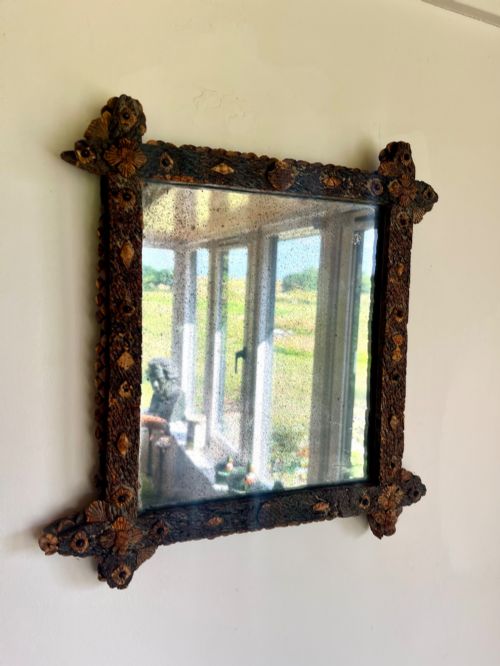
- Early tin-mercury silvered glass, often greyish and speckled with age. Named in titles when it survives.
- Repoussé
- Metal raised into relief by hammering from the reverse, the usual treatment on the beaten copper and brass frames here.
Antique Hand Mirrors: Frequently Asked Questions
Are these mirrors held in the hand?
Some are. Small silver, tortoiseshell, bronze and ebonised vanity and double-sided mirrors appear across the samples, about a dozen of them, usually a few inches across.
More often the word describes the making. "Carved" and "painted" each appear in 27 titles, and "wall" in 21, so the framed hanging mirror dominates the heading.
How old are they?
The dated field runs from 1800 to 1930, and 50 of the 110 listings carry a clean year. Three reach back into the 18th century.
The largest single period entry is "19th Century", used 24 times, with "Victorian" used 6 times. Much of the dating here is a century rather than a date.
Decade-level entries cluster around 1900, the 1920s and the 1910s.
What materials do the frames come in?
Carved oak, walnut, limewood, giltwood and gesso account for a large share, several of them Black Forest work. Oak alone is named in 9 titles.
Beaten and hammered copper and brass make up the Arts and Crafts group, roughly one in eight. Wrought iron, cork, painted silk and mother-of-pearl inlay each appear as one-offs.
Which makers are found on them?
None. A pass through the descriptions for maker names returned nothing that holds up as a category.
What identifies a piece instead is the work and the material: the subject of the carving, the gilding, the type of metal, and on silver hand mirrors the hallmark year.
Do sets and pairs come up?
They do, but rarely. Two listings of four octagonal hand-painted wall mirrors appear, along with pairs of pier mirrors, pairs of Regency giltwood ovals and a pair of Indian mirrored sconces.
Multiples sit above comparable singles across the range.
Where were they made?
The bulk is European, with Regency pier glasses, Black Forest carving and Arts and Crafts copper running through the samples.
Non-European pieces turn up across a wide spread but in ones and twos: Japanese bronze, North Indian, Kashmiri, Syrian Damascus mother-of-pearl and Anglo-Indian teak.