
Georgian Mirrors
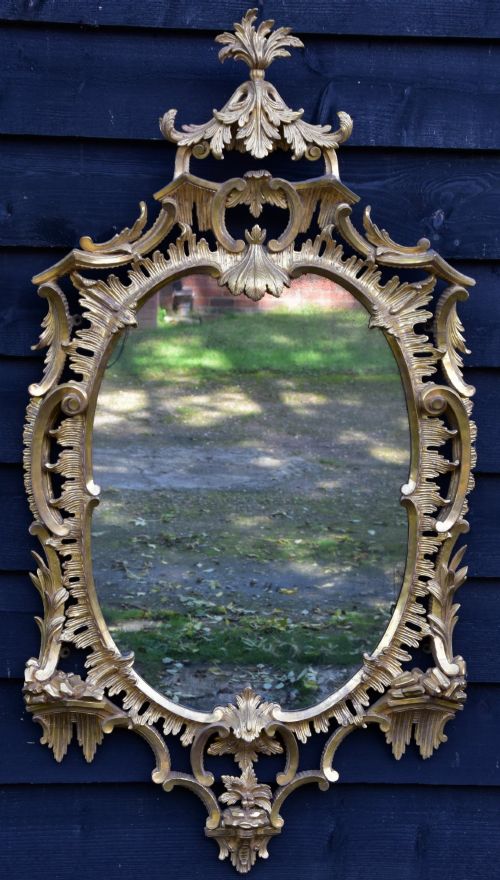
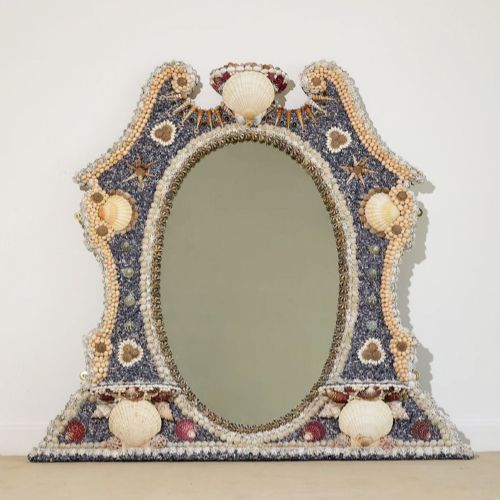
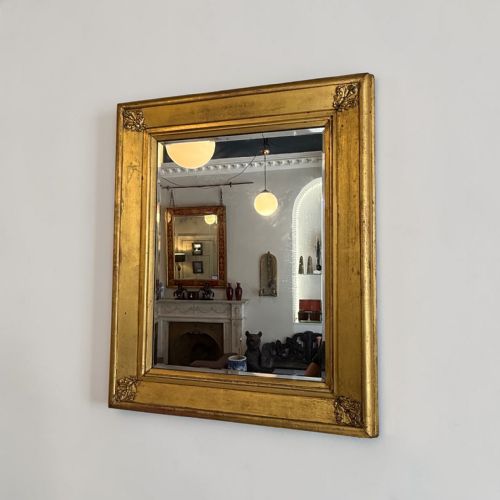
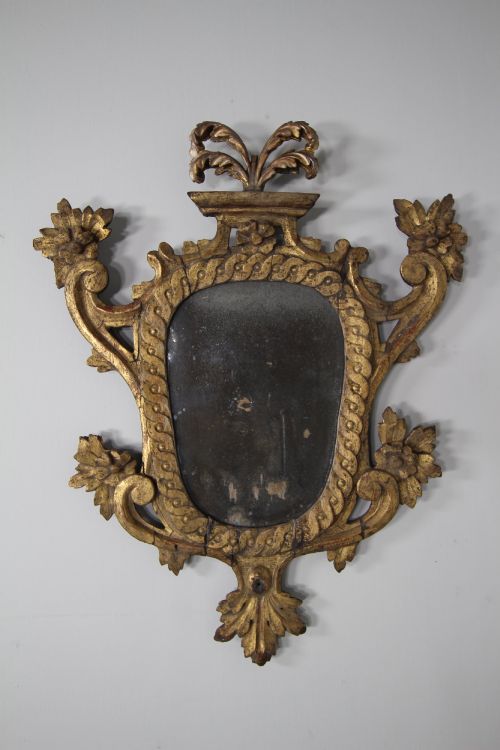
Wall and dressing mirrors in the Georgian taste, from small fret-cut mahogany frames and swing dressing glasses on drawer boxes up to carved giltwood pier and overmantel mirrors made for fixed positions in a room.
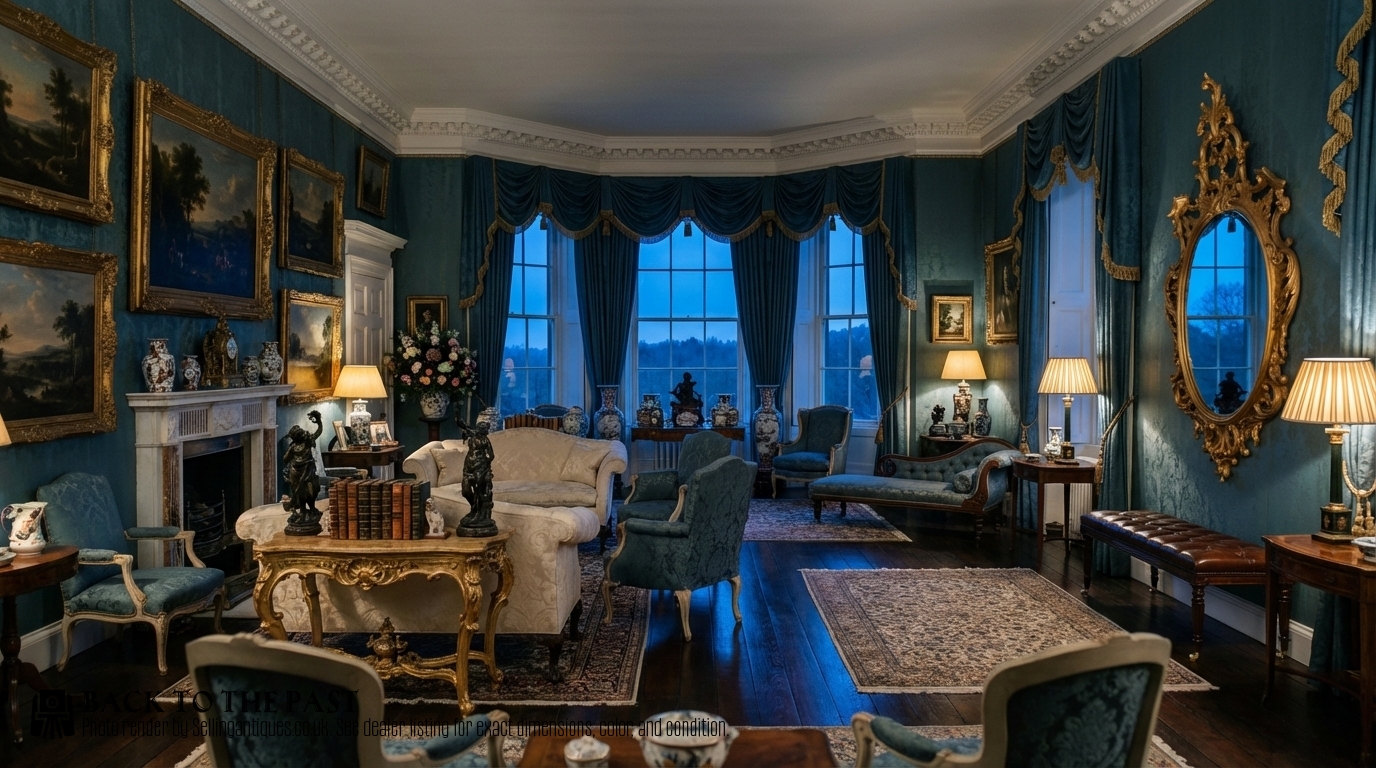
Georgian Mirrors
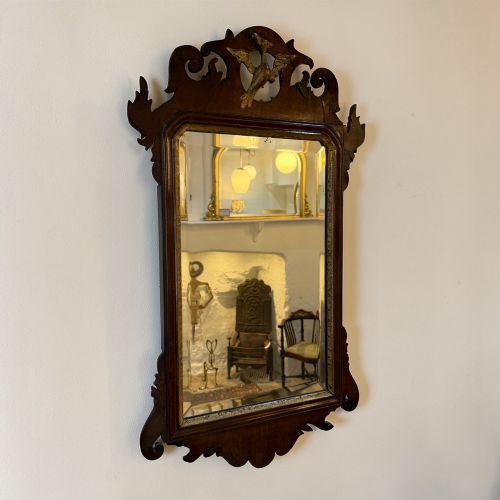
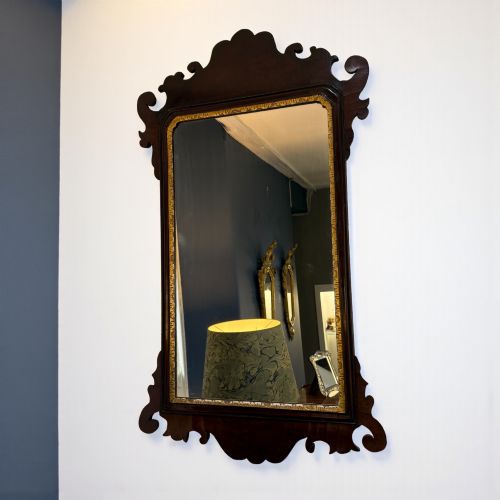
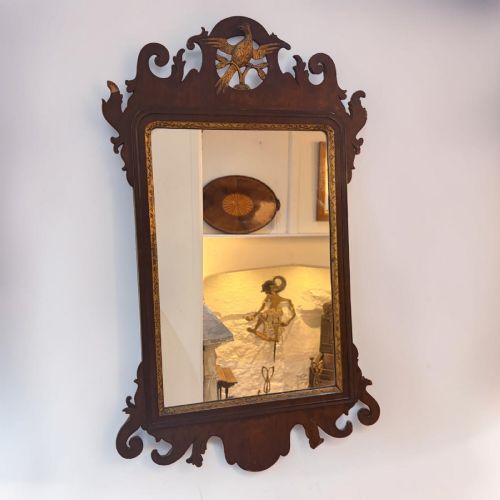
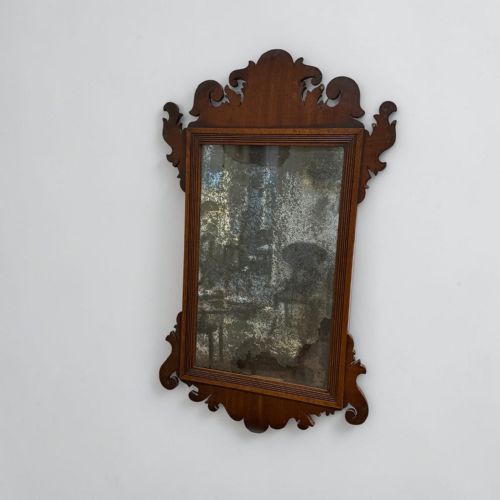
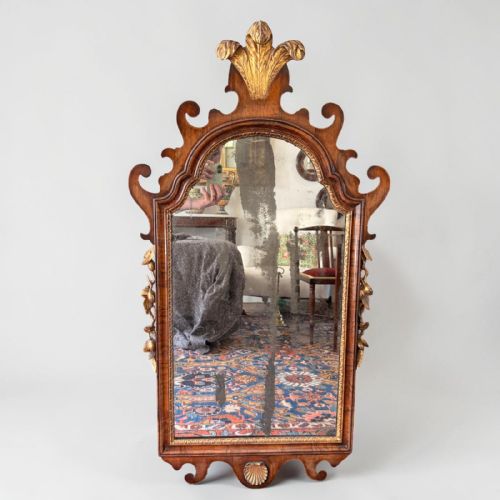
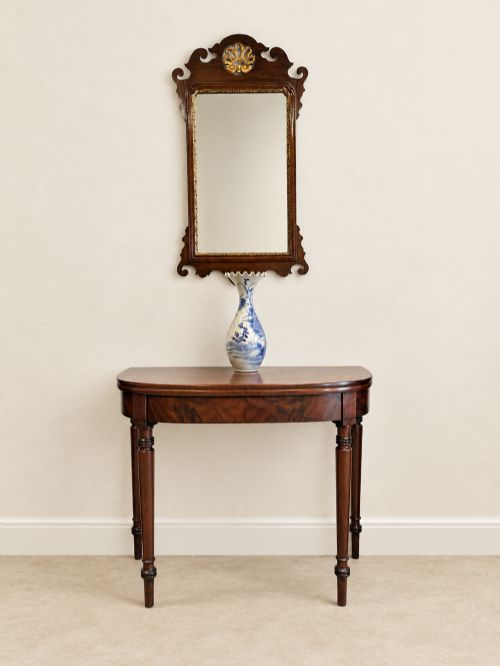
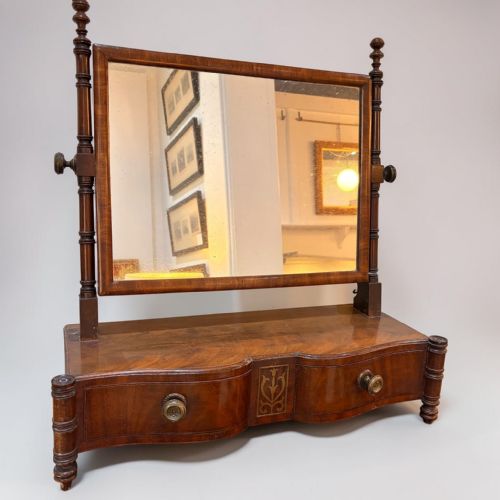
Two forms share the floor. The mahogany dressing or toilet mirror is the commonest single object: a swing plate on a small box base, usually drawered, with serpentine, bow or shield fronts named in titles. Beside it sits the wall-hung fret-cut frame, with its pierced scrolled skirt and crest.
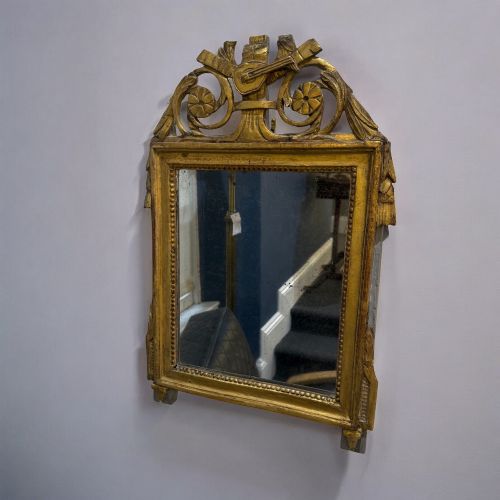
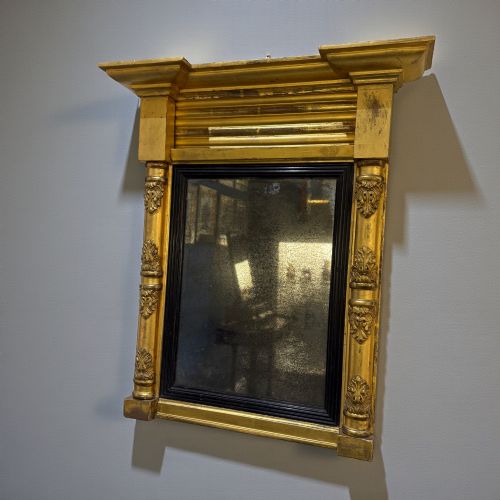
Timber frames dominate. Mahogany is the single most common word in the whole category, in 339 of 1,076 titles, ahead of any shape or period term, with walnut some way behind. Running alongside them is a gilded population: carved giltwood, parcel gilt and gilt gesso wall and overmantel mirrors, which take up much of the upper range.
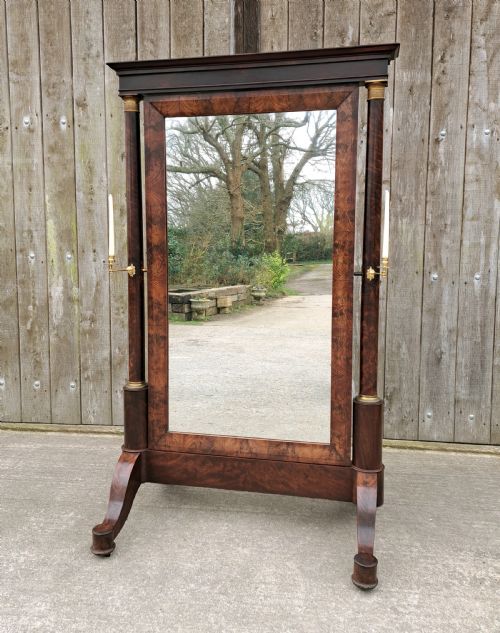
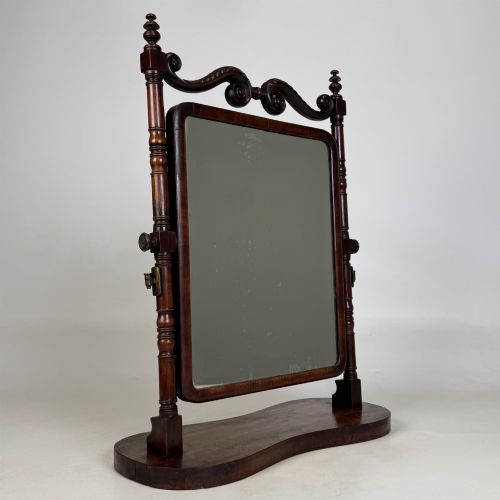
Smaller branches fill out the rest. Convex circular plates in deep gilt mouldings, some eagle-mounted, some with candle arms; and cheval mirrors, full-length glasses swinging in a floor frame on sabre legs and castors. Both forms became common in the Regency years, as looking-glasses grew cheaper and plate supply improved.
Read the date field carefully. Only 217 of the 1,076 listings carry a clean year, and those spread from 1700 to 1930. The rest are dated by style word alone, most often just "Georgian", and a visible minority of titles say "Georgian style" or "Georgian Revival" outright, with dealer dates in the 1880s, 1900s and 1920s.
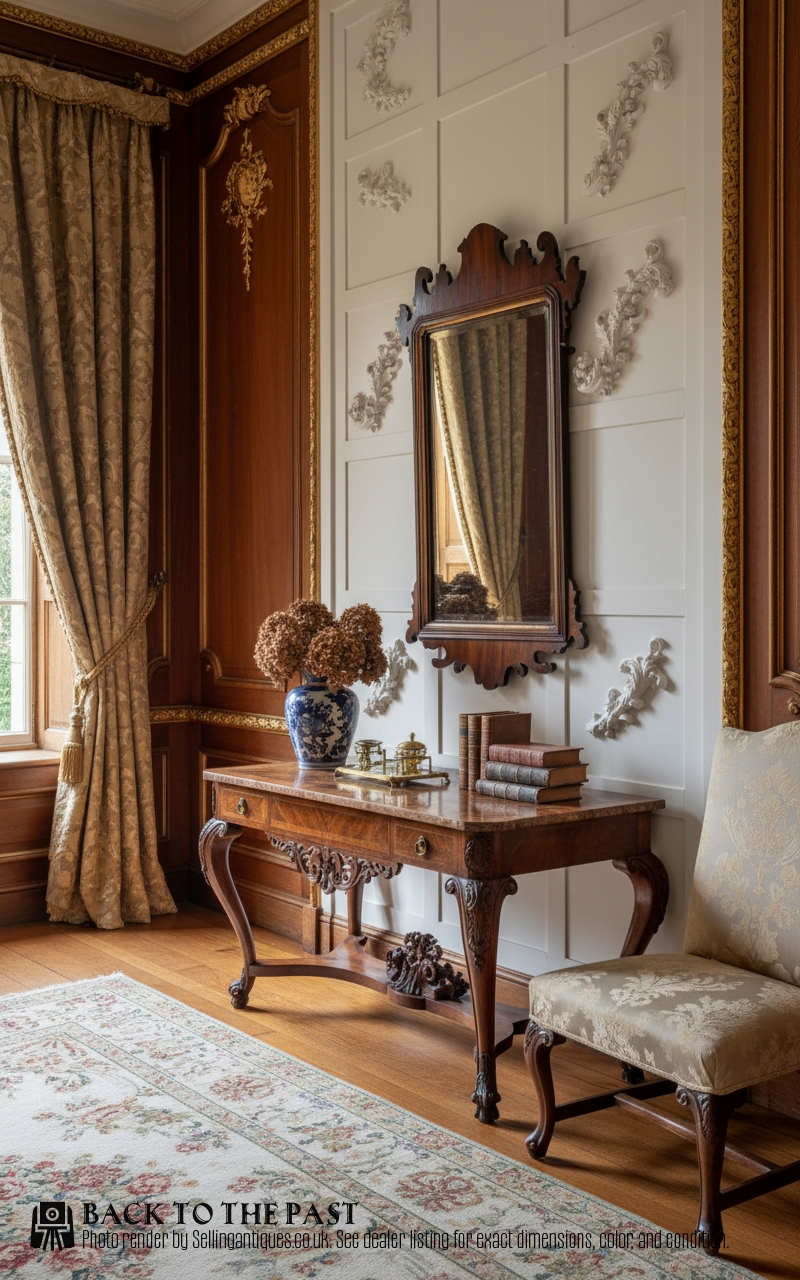
Where The Range Splits
Gilding and carving lead. The upper end of the sampled range is almost entirely carved giltwood and gilt gesso, while the plainest mahogany and walnut dressing mirrors sit at the bottom. Scale pushes the same way: large appears in 89 titles against small in 38, and the biggest stated pieces reach a 4ft-diameter circular giltwood mirror, a 69-inch convex and 6ft wall mirrors.
Pairs run right through the range, with 35 titles offering two and one a set of three. Pairs of giltwood, girandole and oval mirrors occupy much of the highest sampled band, so two matching frames stand apart from one good one.
Period against revival is the other divide. Titles reading "Georgian style" or "Georgian Revival", dated 1880 to 1930, sit through the lower and middle bands. Original glass counts too: dealers single out original plate, mercury glass and foxed mercury plate in the title. So do the uncommon timbers, with satinwood, harewood, burr maple, pollard oak, yew, olive wood and laburnum appearing only once or twice each and sitting higher.
Georgian Mirrors Retail Price Guide 2026
Typical UK retail prices for georgian mirrors, calculated from the Sellingantiques database of over a million retail prices indexed since 2003. This retail price guide relies exclusively on Sellingantiques data; no external sources or auction records are used, so the figures do not describe the wider market.
The largest to pass through Sellingantiques include a four-foot circular giltwood mirror, a 69-inch convex, and wall mirrors of six and five feet.
The Georgian Mirrors Glossary
- Toilet mirror
- A small swing mirror on a table-top box base, often with drawers. Used interchangeably with dressing mirror in these titles.
- Overmantel
- A wide mirror for above a fireplace. Dealers spell it both ways in near-equal numbers, overmantel in 51 titles and overmantle in 44, so a search on one spelling misses about half the population.
- Pier glass
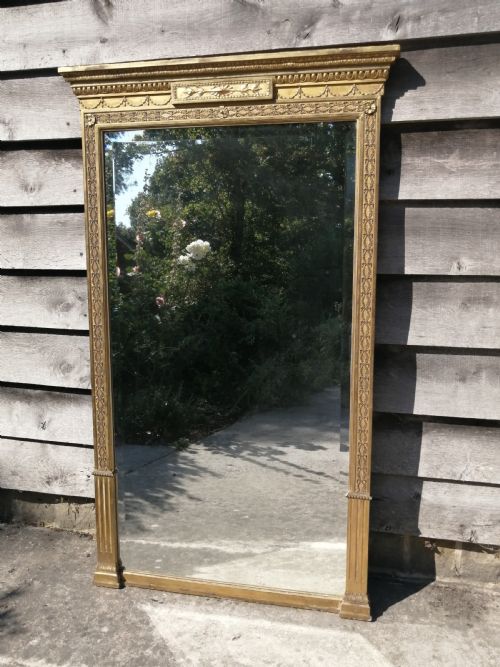
- A tall mirror made to hang on the pier of wall between two windows.
- Fretwork
- A frame with a pierced, saw-cut outline, typically a scrolled skirt and crest.
- Parcel gilt
- Partly gilded, usually a gilt moulding or slip against a plain timber frame. Giltwood, by contrast, is carved wood gilded overall.
- Ho-ho bird
- A stylised long-tailed bird perched on the crest of a fret-cut or gilt frame. It turns up often enough that dealers name it in the title.
Georgian Mirrors: Frequently Asked Questions
What is a toilet mirror?
A small swing mirror on a box base made to stand on a table top, commonly with one to three drawers below. Dressing mirror means the same thing, and the two words are used interchangeably in these listings.
It is the commonest single object in the category. Mahogany examples run through the archive, with serpentine, bow-front and shield-shaped plates all named in titles.
Why are so many dated only "Georgian"?
The date field is often a style label rather than a year. Only 217 of 1,076 listings carry a clean year, and 300 say simply "Georgian".
Where clean years do appear they run from 1700 to 1930. That is a 230-year spread inside a category named for one dynasty, and the later end is where the revival pieces sit.
Which woods turn up in the frames?
Mahogany above all, in 339 of the titles, then walnut. Both are used for the fret-cut wall frames and for the drawer bases of dressing mirrors.
Rarer timbers surface once in a blue moon. Satinwood, harewood, birds-eye maple, pollard oak, yew, olive wood and laburnum each appear only once or twice across the whole archive, and they sit higher in the range.
Are Georgian Revival copies sold in this category?
Yes, and titles usually say so, reading "Georgian style" or "Georgian Revival". Dealer dates for these cluster in the 1880s, 1900s and 1920s.
They are a visible minority of the listings and sit through the lower and middle bands rather than the top.
How common are convex mirrors?
Convex appears in 67 titles, a small branch of the category. Sampled examples include eagle-mounted frames, girandoles carrying candle arms and versions with an ebonised slip, and they are mostly labelled Regency.
The largest stated in a title reaches 69 inches.
How many come up for sale?
Around 112 Georgian mirrors are listed on Sellingantiques in a year, and 243 different dealers have handled one.
That makes it a category almost every general furniture dealer touches at some point, which is part of why the descriptions vary so much in what they name.
Non-English pieces are the real exception: Italian, French, Venetian, Swedish, Dutch, Anglo-Indian and Chinese reverse-painted examples appear as isolated pieces, against 56 titles that say English.