
Antique Swing Mirrors
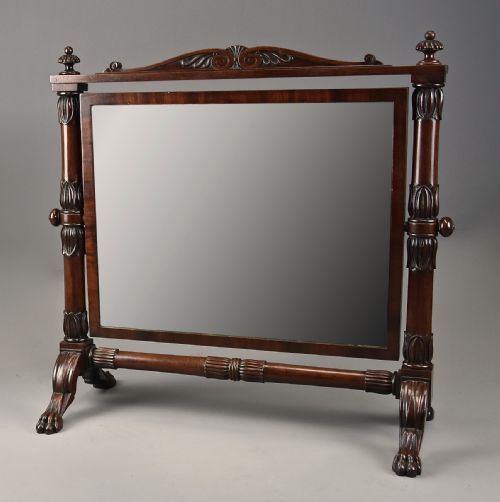
A swing mirror is a plate hung on pivots between two uprights so it tilts, made to stand on a dressing table or, in its taller form, on the floor.
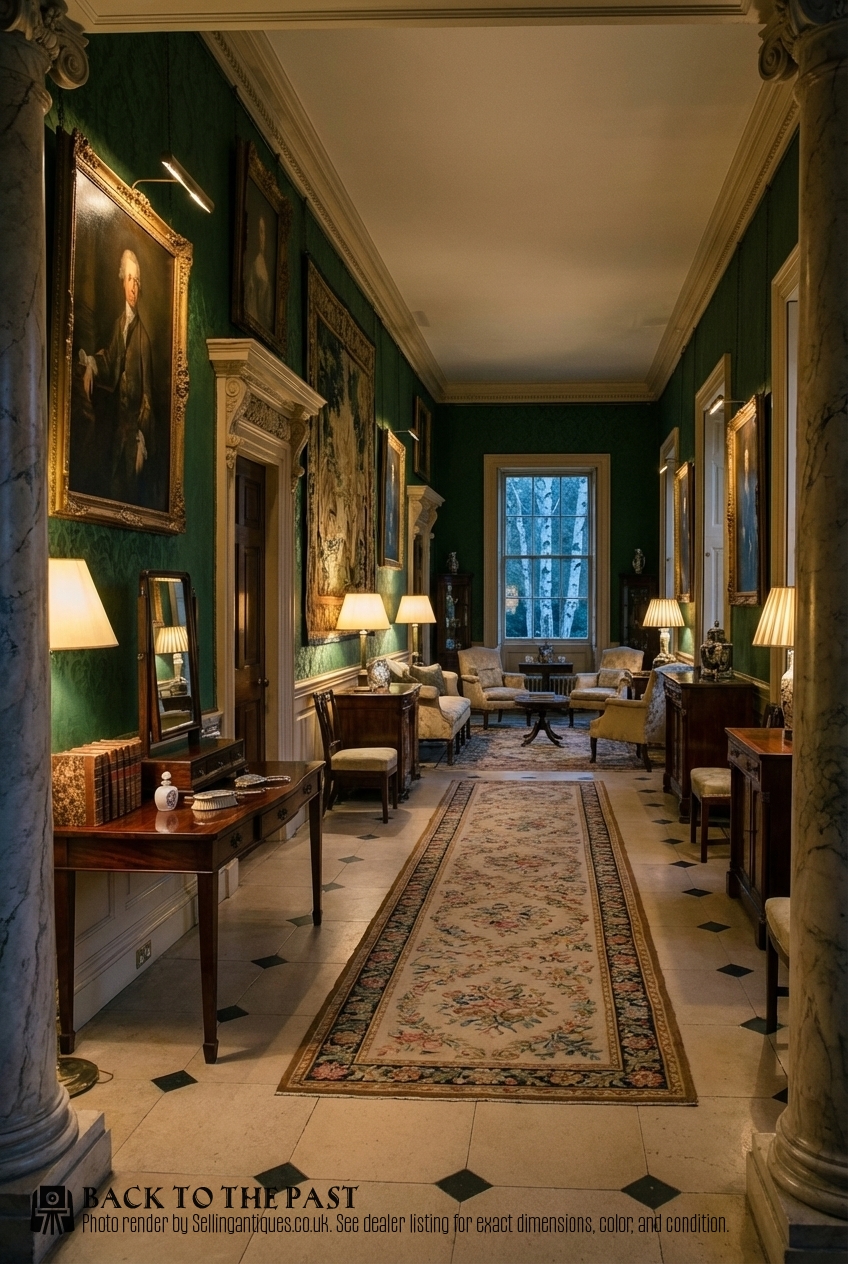
What Is A Swing Mirror?
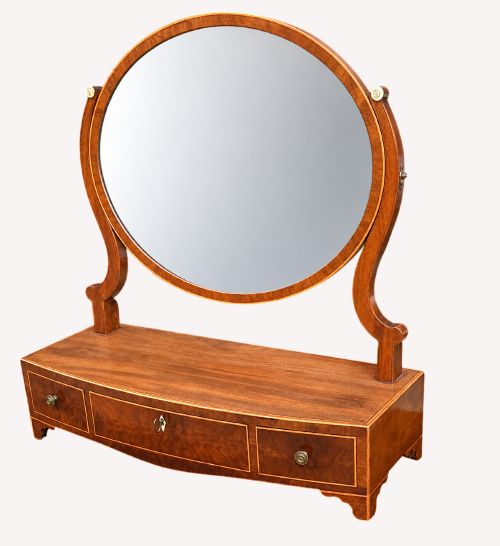
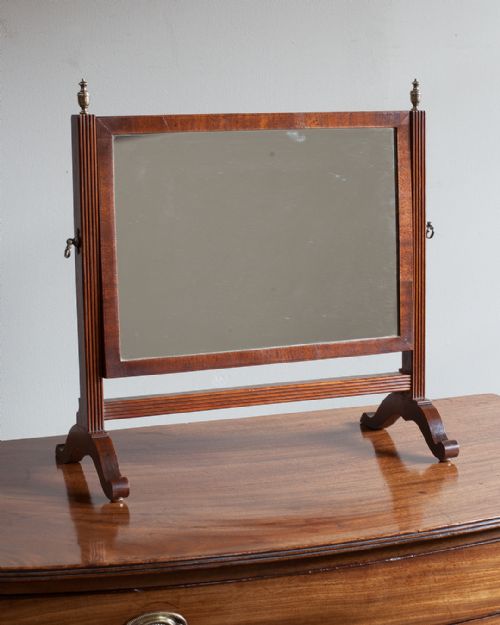
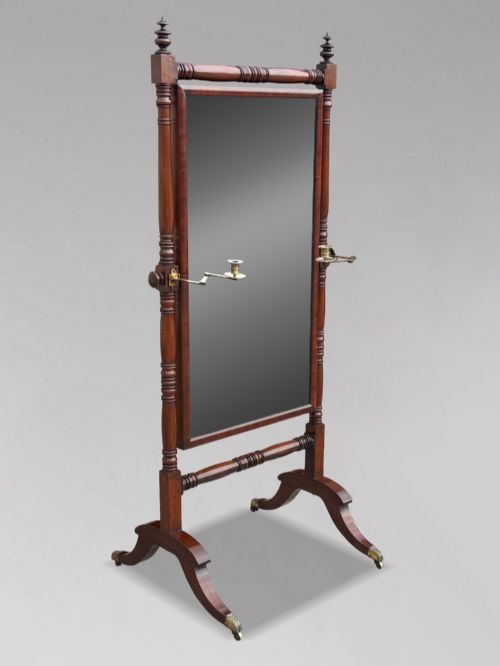
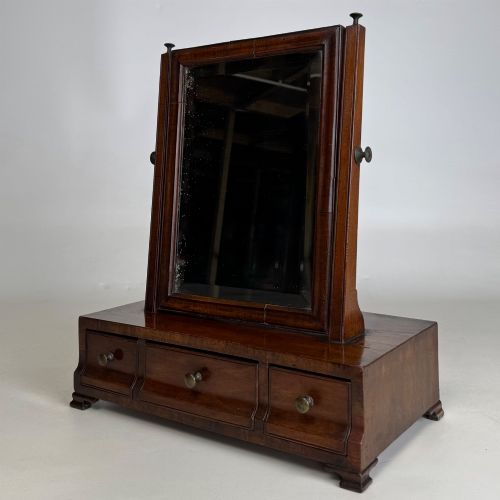
The tilting plate is the whole idea. Mirrors mounted on pivots between uprights appeared with the domestic looking-glass in the late 17th and early 18th centuries, first as small dressing or toilet mirrors for a table top, later as full-length cheval mirrors once large plates could be made. Both let a seated or standing user angle the glass to catch the light.
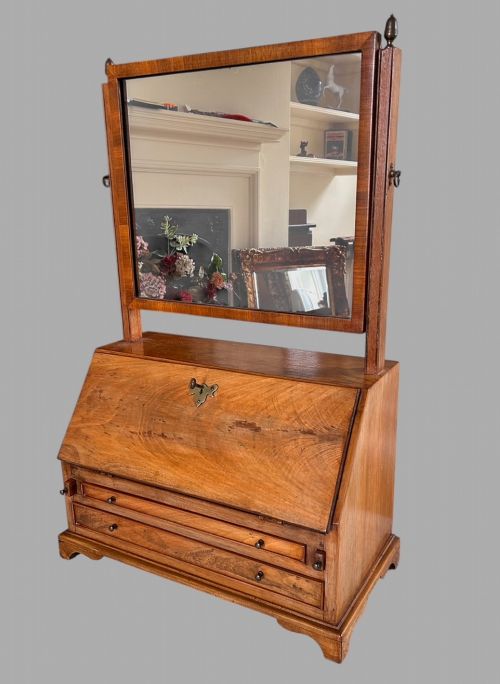
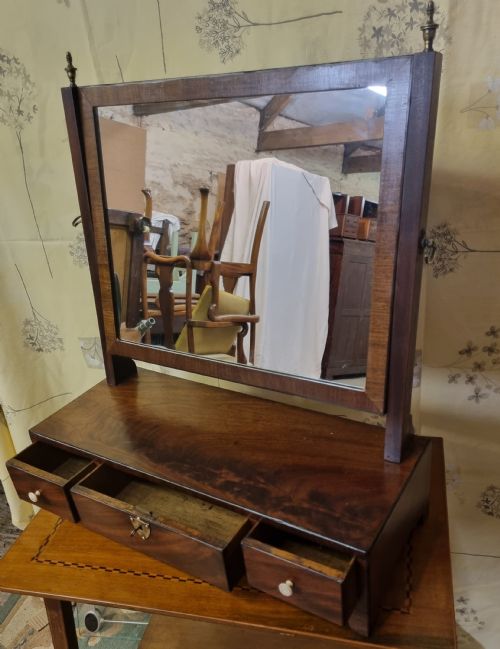
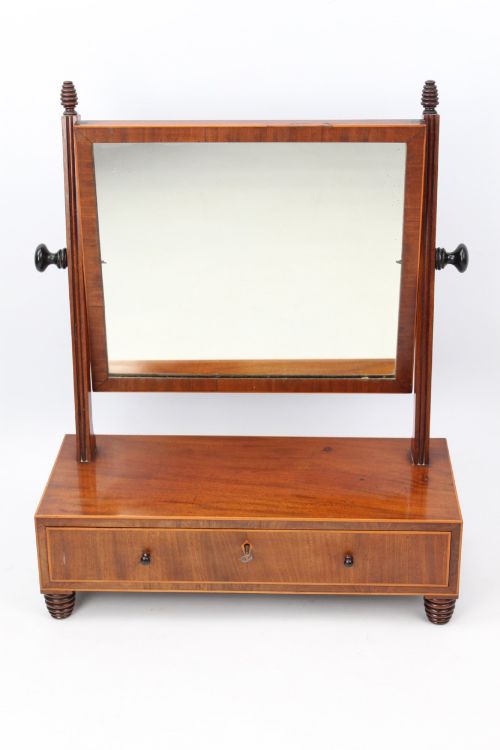
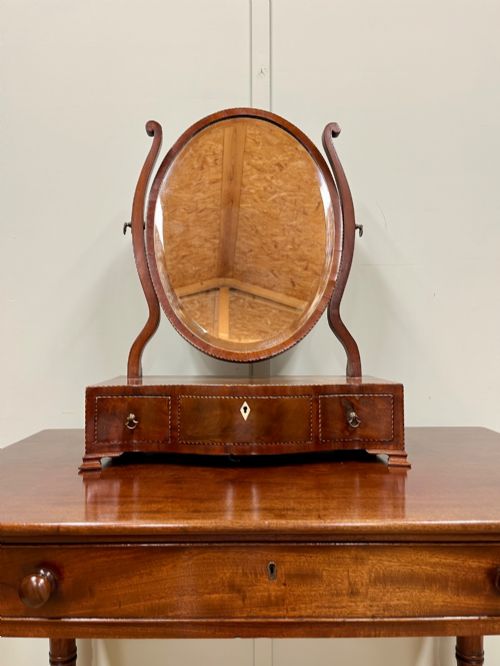
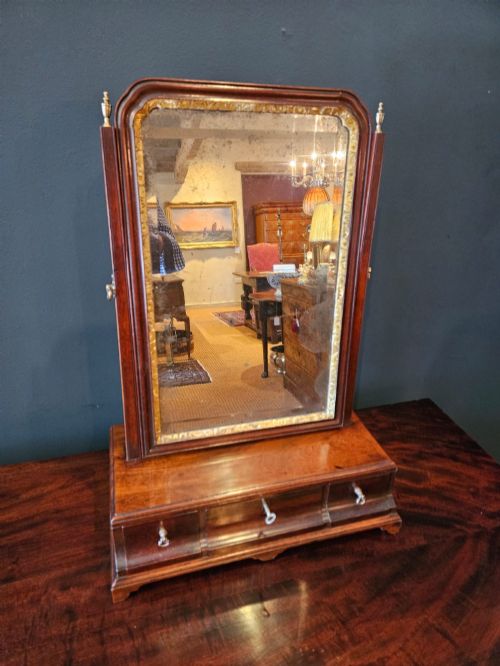
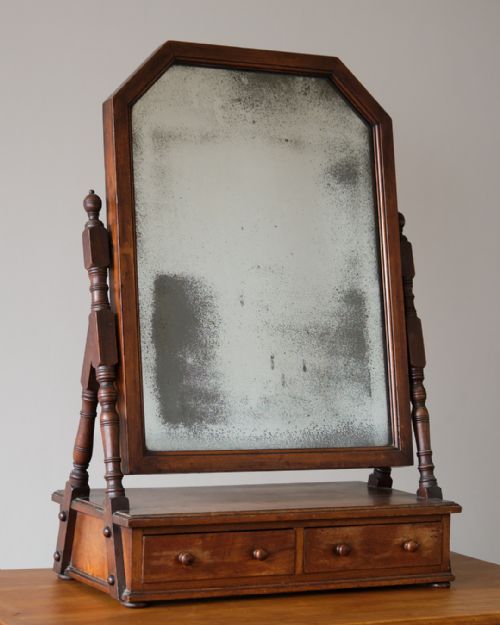
The version you are most likely to meet is small and mahogany. Mahogany appears in 196 of 348 titles on Sellingantiques, and words like dressing, dressing table and toilet run through nearly half of them. Under the plate sits a shallow box base, plain or with one to three little drawers, and drawer counts get named in titles as often as the timber does.
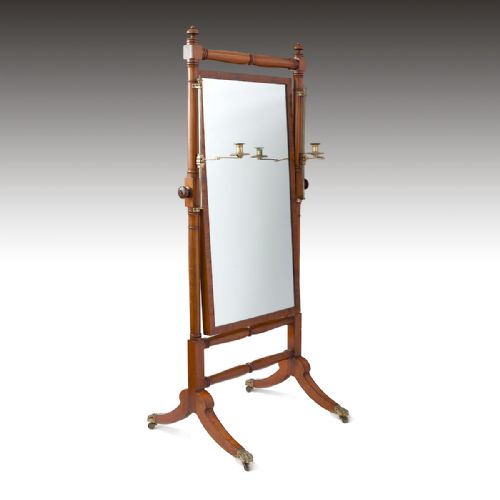
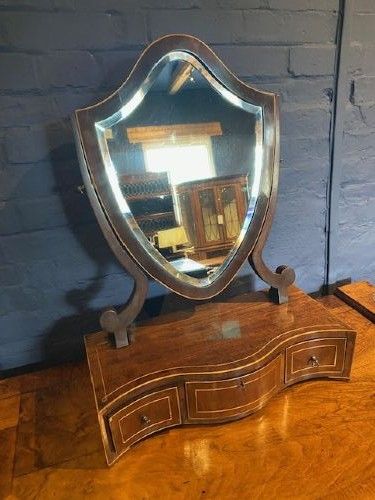
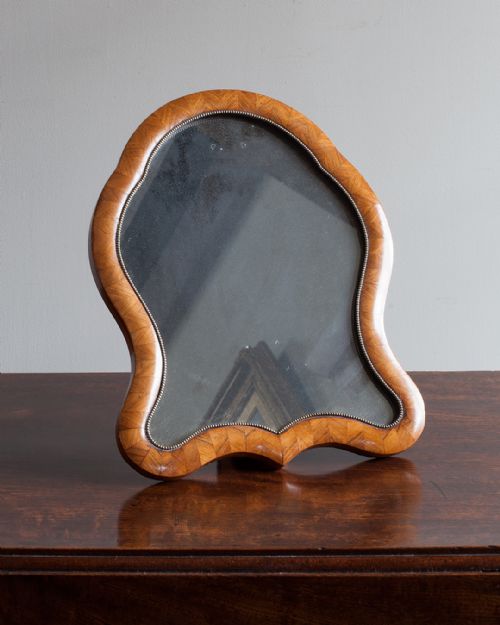
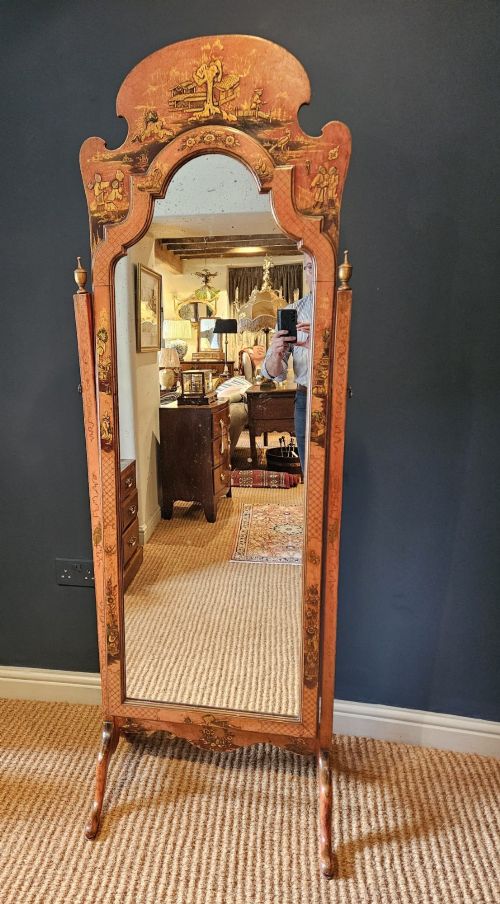
Cheval and other floor-standing forms are a real branch but a smaller one, around one title in nine, sometimes called a platform or pedestal mirror. Shaped work makes up another recognisable slice: serpentine and bow-fronted bases, oval and shield-shaped plates. Walnut is the next timber after mahogany, then oak, with satinwood, rosewood, burr maple, teak, painted, lacquered and giltwood examples scattered through.
Dating is loose, and the labels tell you so. Dealers' own dates run from 1750 to 1940, but only 80 listings carry a clean year. The commonest label is simply 19th Century, used 69 times, and Georgian covers reign names from Queen Anne and George I through to William IV, so read it as roughly 1720 to 1830 rather than a date.
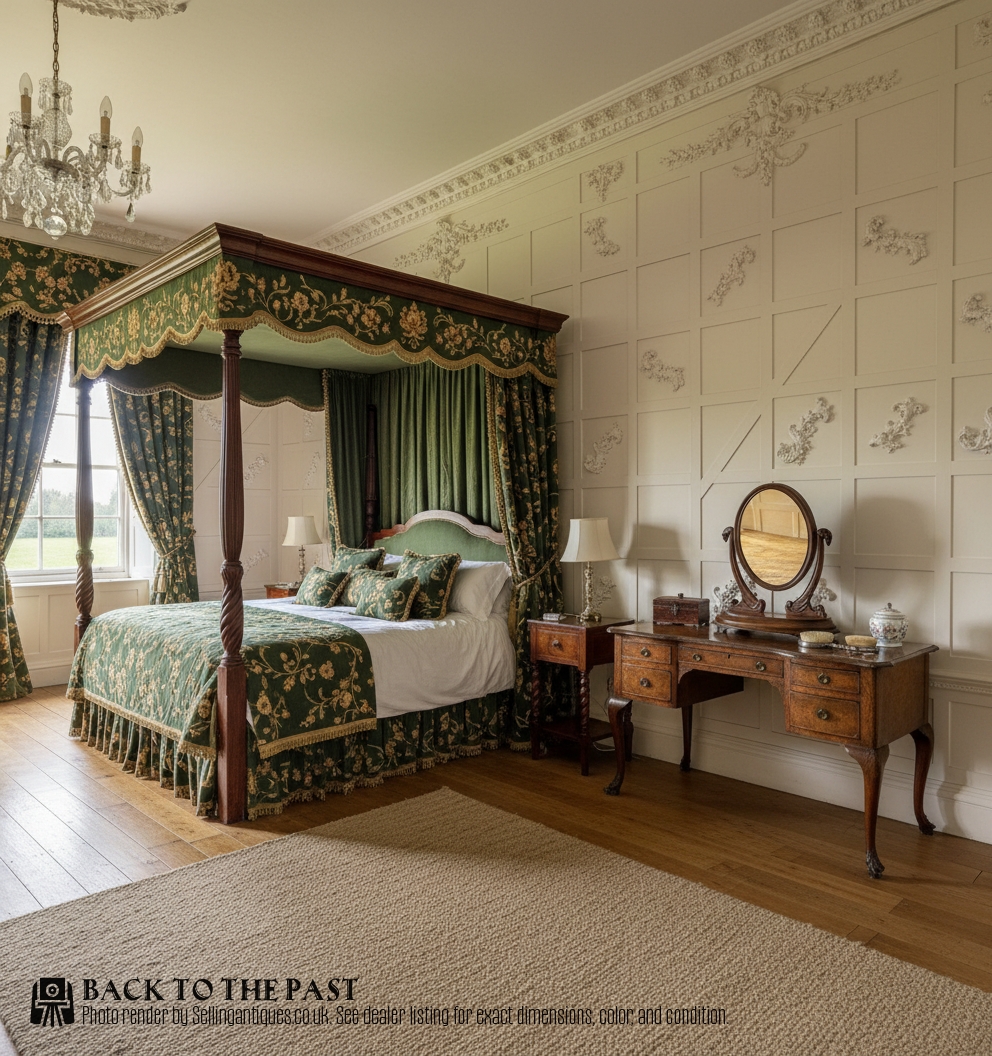
Top And Bottom
Timber and figure do most of the separating. Plain mahogany fills the lower half of the range, and the upper reaches are where satinwood, satin birch, harewood, laburnum, kingwood, padouk, burr walnut and flame-grain or figured mahogany turn up. The same form in a patterned timber sits in different company altogether.
Shape costs money. Serpentine, bow-fronted, barrel-fronted and oval pieces cluster well above the plain rectangular ones, and so does applied decoration: inlay, carving, parcel gilding, marquetry. Dutch marquetry examples appear only a handful of times and occupy the very top, alongside a black-lacquered mirror with a miniature bureau base.
Then there is sheer size and what the base does. Large appears in 35 titles against small in 9, and the cheval and platform forms concentrate high in the range while small table-top mirrors gather at the bottom. Bases climb too, from none, to one drawer, to three or four, and on to bureau and jewellery-cabinet fitments.
Retail Price Guide 2026
Typical UK retail prices for swing mirrors, calculated from the Sellingantiques database of over a million retail prices indexed since 2003. This retail price guide relies exclusively on Sellingantiques data; no external sources or auction records are used, so the figures do not describe the wider market.
Swing mirrors have been listed on Sellingantiques since 2009.
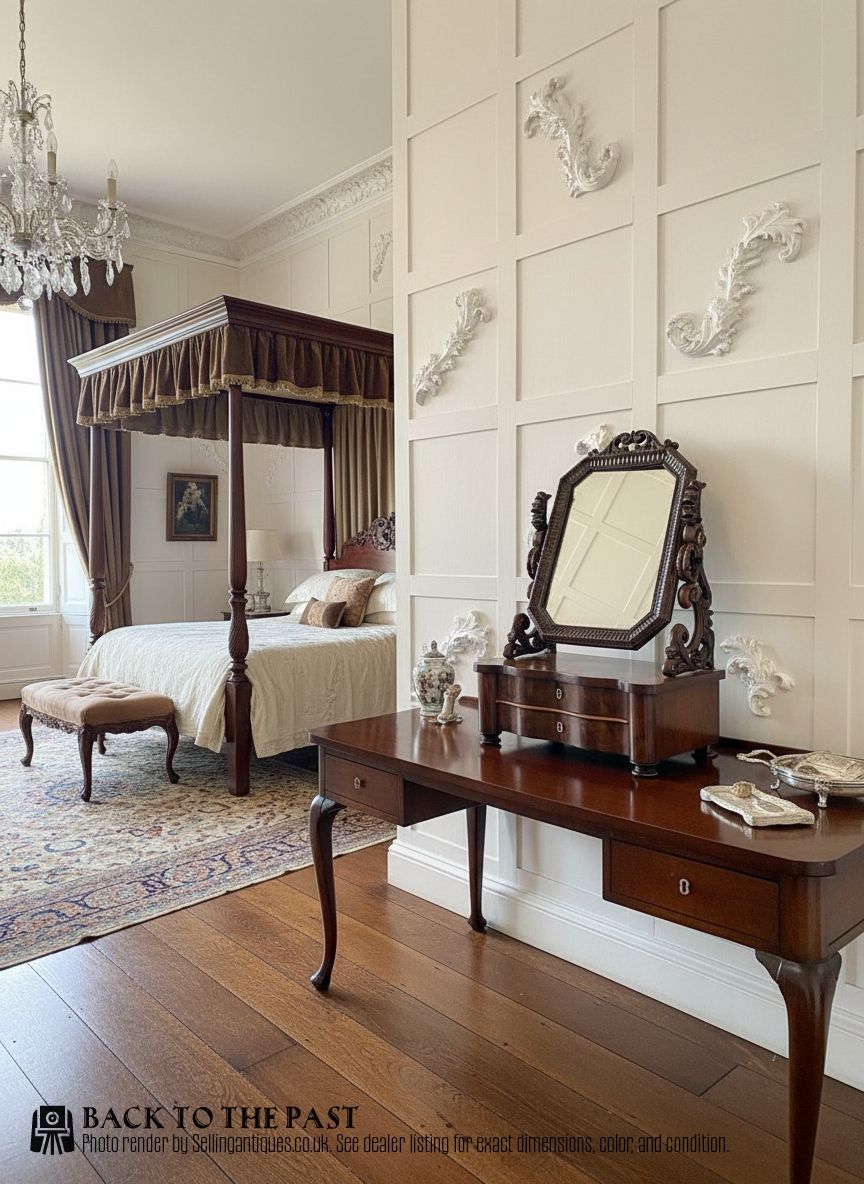
The Antique Swing Mirrors Glossary
- Toilet mirror
- The trade term for a small table-top dressing mirror, used in 107 titles and interchangeable with dressing mirror or vanity mirror.
- Box base
- The shallow drawered case under the plate, the commonest support on the table-top form, written as boxbase, box mirror or box dressing mirror.
- Cheval
- A tall floor-standing mirror swinging in a freestanding frame, named in 40 titles and often paired with the word mahogany.
- Swing frame
- The two uprights and the pivot screws that let the plate tilt. Several titles say swing frame outright.
- Serpentine
- A front that waves in and out, usually on the drawer base rather than the frame; 15 titles use the word.
- Shield shape
- A plate narrowing to a point at the base, in the late 18th-century taste. Oval is the other shaped plate you meet.
Frequently Asked Questions
What does toilet mirror mean?
It is the old trade name for a small dressing mirror that stands on a table top. Dealers use it in 107 of the titles on Sellingantiques.
Dressing mirror, dressing table mirror and vanity mirror all describe the same thing. The wording shifts from dealer to dealer, not the object.
Are most swing mirrors mahogany?
Mahogany is close to a default, appearing in 196 of 348 titles. Walnut is next at 36 titles, then oak at 9.
Everything else comes in ones and twos: satinwood, satin birch, rosewood, kingwood, burr maple, harewood, pine, teak, plus painted, lacquered, giltwood and brass-framed pieces.
Is a cheval mirror a swing mirror?
Yes. A cheval swings on pivots in a freestanding frame, the same principle as the table-top form scaled up to full length.
It is a minority of the category though, about one title in nine. Some dealers list the type as a platform, pedestal or floor-standing mirror instead.
How should I read the word Georgian here?
As a wide span. Reign names in the titles cover Queen Anne, George I, George II, George III, George IV and William IV, so Georgian is doing about a century's work.
Only 80 of 348 listings give a clean year. The single most-used label is 19th Century, which leaves the century unnarrowed.
What sizes do these come in?
The category stretches a long way for one idea. A miniature dressing mirror and a full-length pitch pine cheval both belong to it.
Large appears in 35 titles, small in 9. Only one title gives a measurement at all.
Do unusual examples turn up?
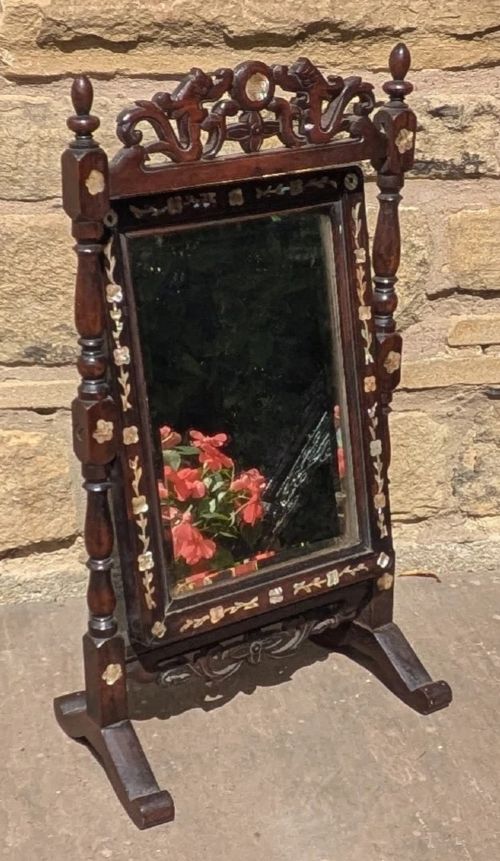
They do, and they are what makes the archive interesting. A Gothic Reform Oregon pine mirror, a Swedish birch vanity mirror, a Chinese Qing hardwood and mother-of-pearl cheval, an Anglo-Indian teak colonial mirror.
Continental work runs through as a small but persistent minority: Dutch marquetry, French brass and champleve, Italian Venetian painted and giltwood.
Around 34 swing mirrors are listed on Sellingantiques in a year, and 139 different dealers have handled one.