





Antique Cushion Mirrors
A cushion mirror is a wall looking-glass whose frame swells outward in a deep, pillow-like convex moulding around the plate, made to hang in a domestic room.
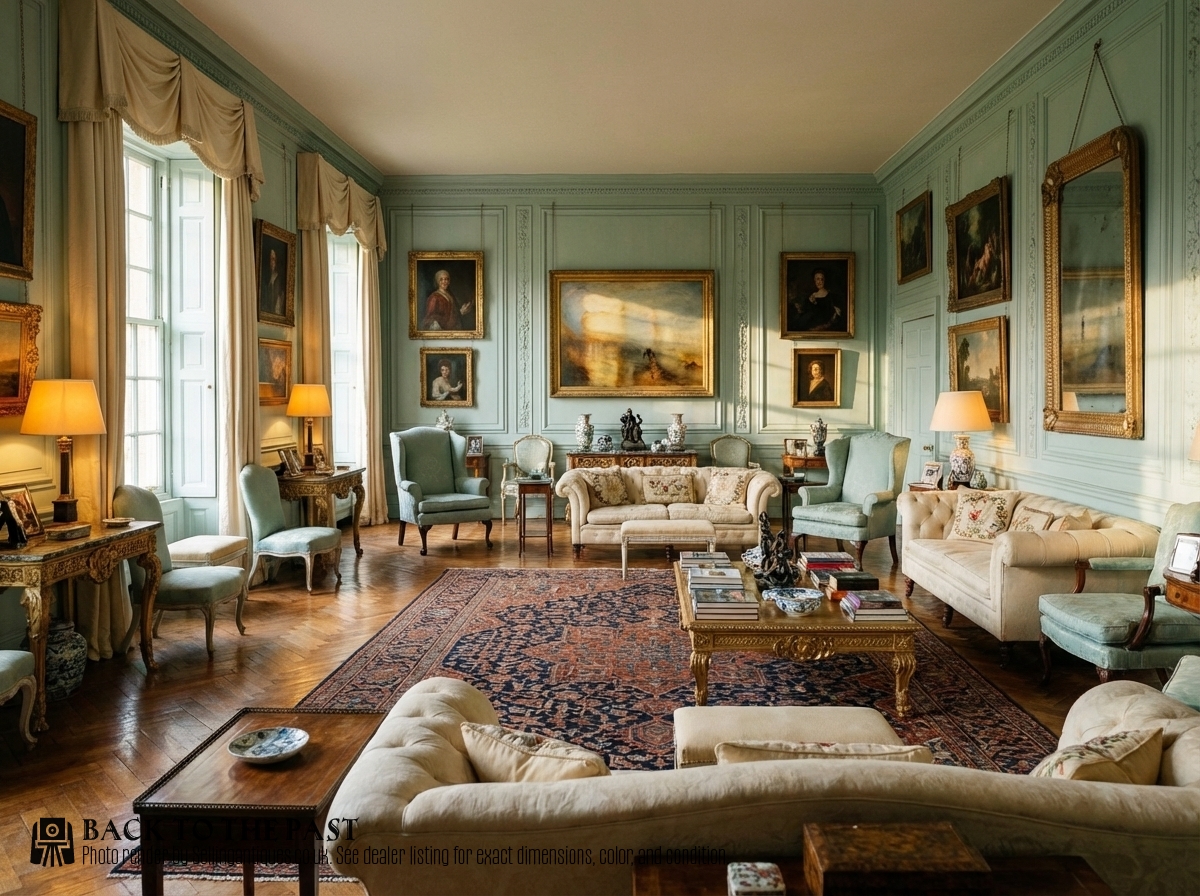
Antique Cushion Mirrors
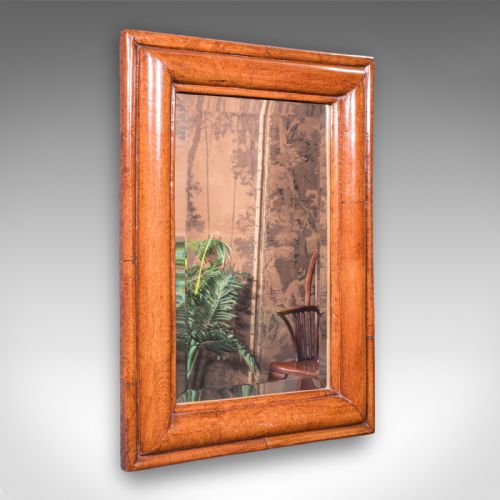
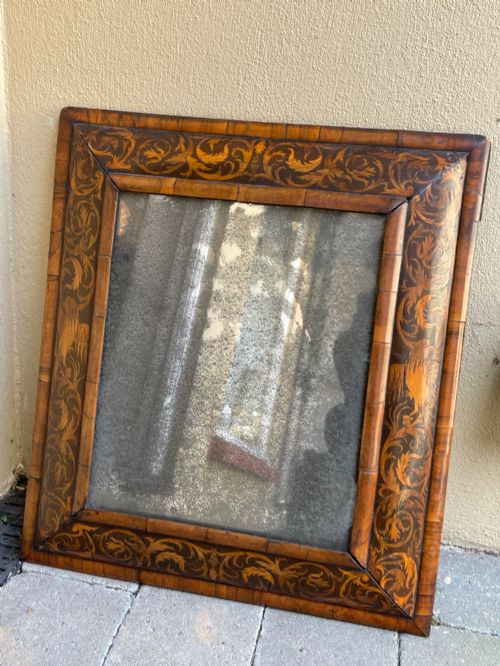
The name describes a profile, not a period. The frame is built up as a deep convex moulding that bulges outward around the glass, so the border reads as a pillow of timber, gesso or metal rather than a flat surround. It became the standard shape for domestic looking-glasses in northern Europe in the later 17th century, when veneered frames were built to carry the small, costly plates then available, and the profile was reworked repeatedly through the 19th century.
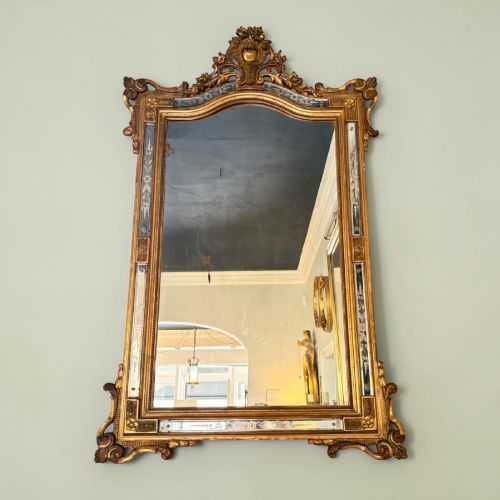
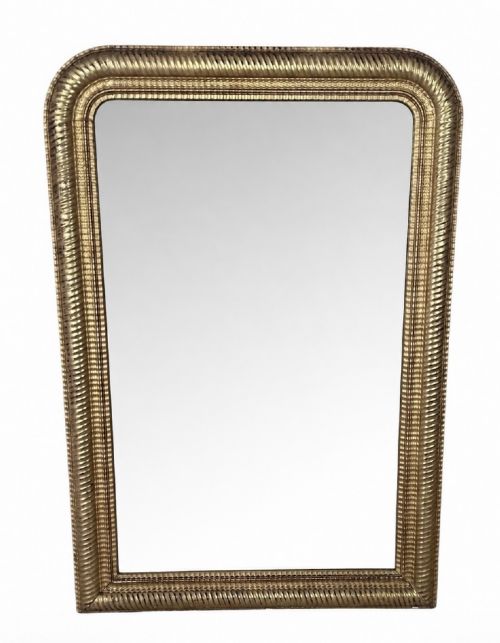
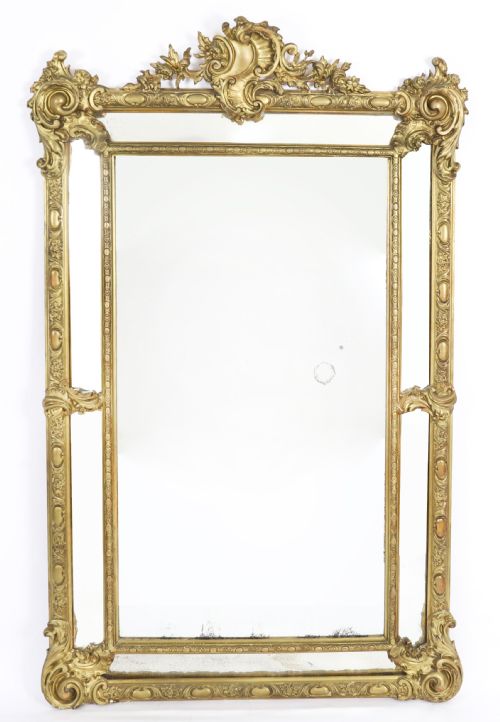
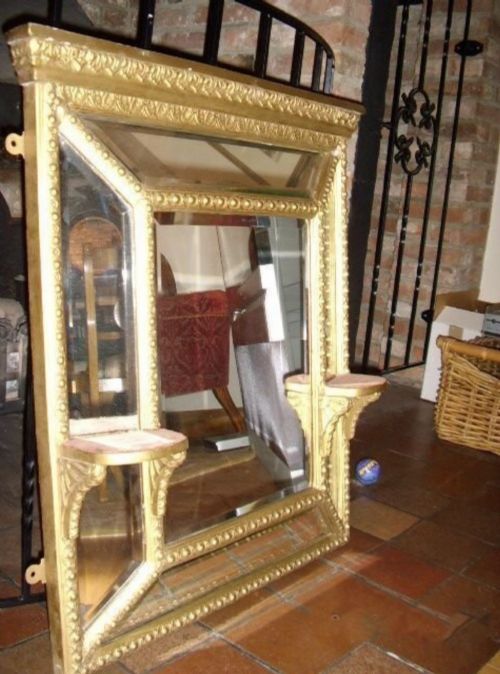
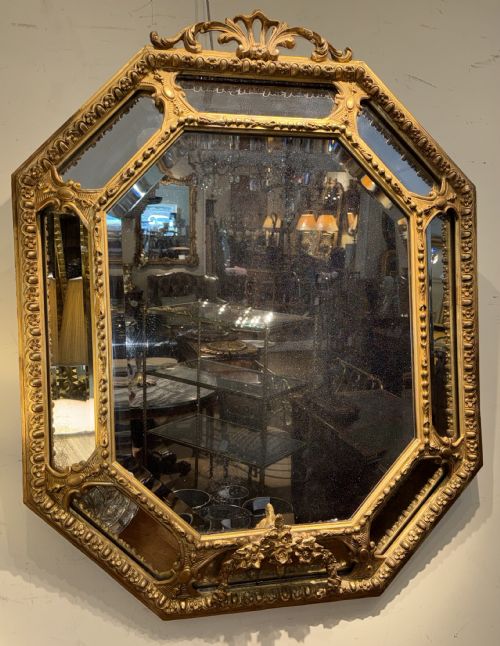
Two very different things share the heading. One is the 17th and 18th century veneered timber frame in walnut, olive wood, yew, laburnum, oyster work and marquetry. The other, and the one that dominates, is the 19th-century Continental frame of carved wood over gesso, finished gilt, silvered or painted. French appears in around two fifths of titles on Sellingantiques, carved wood and gesso in roughly a quarter each.
So the likeliest encounter is a large French carved wood and gesso frame, gilt or painted, dated to the 1860s or 1870s. Those two decades carry more listings than any others. Large qualifies about a third of titles, and overmantel and near floor-standing sizes turn up alongside small hanging mirrors, with stated dimensions running from 39cm up to 169cm.
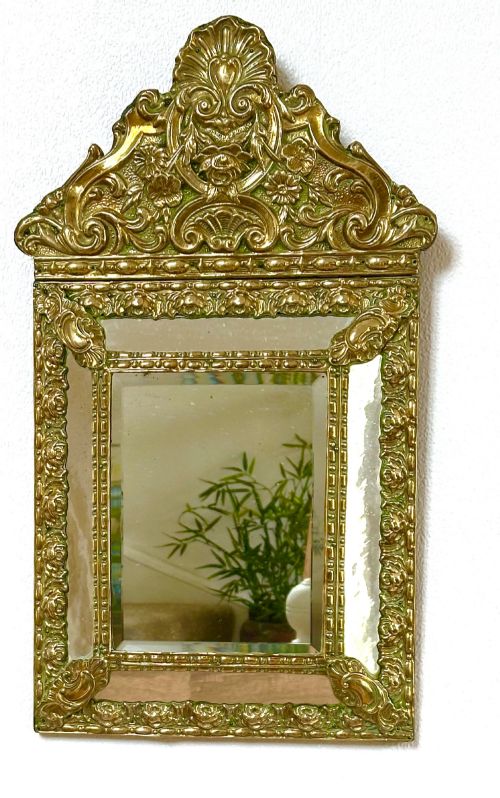
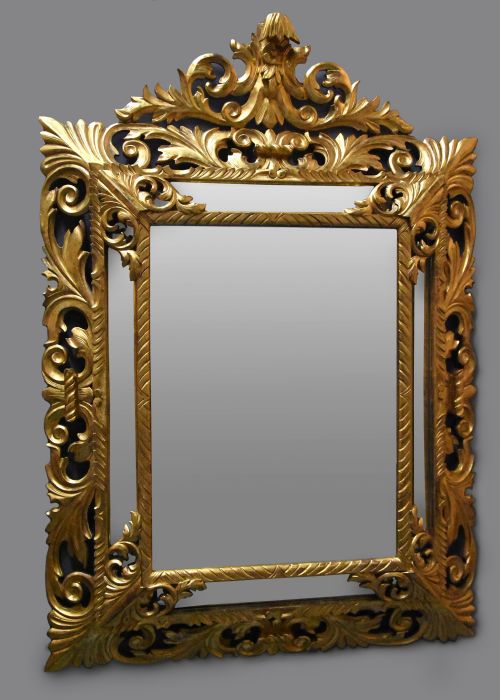
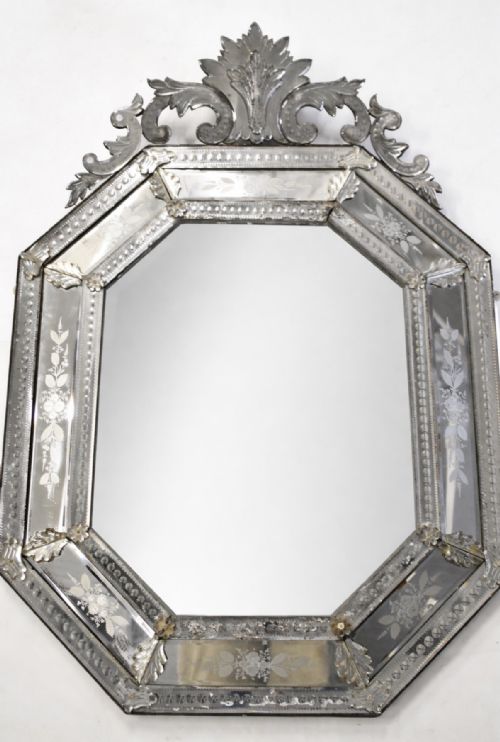
Smaller strands sit around that centre. Repoussé and pressed brass frames, mostly Dutch, Flemish and French, form a quiet minority. Venetian and Italian giltwood and engraved-glass examples are few but reach the upper end. English 19th-century oak, rosewood, mahogany and ebonised frames fill out the domestic middle and lower ground.
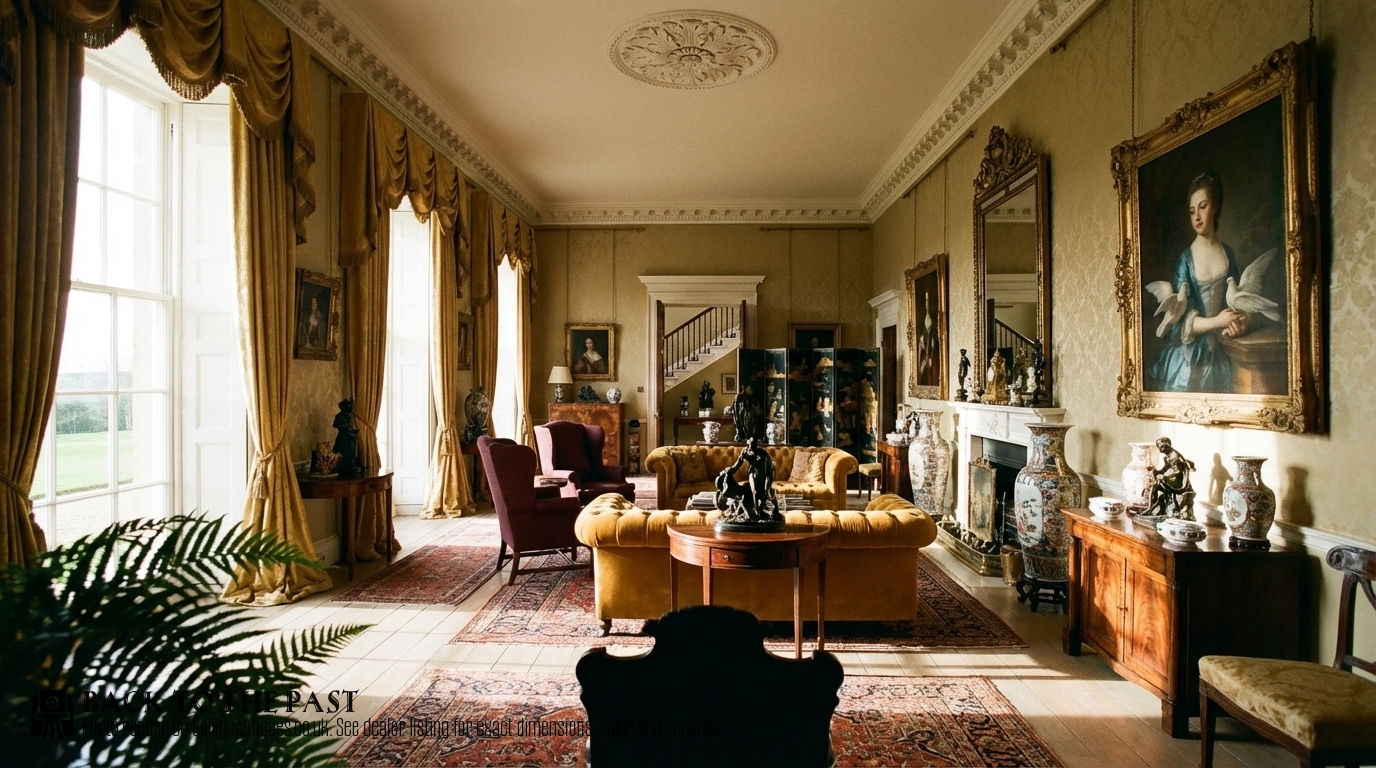
Where The Range Splits
Age does most of the work. The William and Mary, Queen Anne and early Georgian veneered timber frames hold the top of the range, and a walnut frame with marquetry inlay sits at the head of that group. The 17th and 18th century material is thin against the 19th-century bulk, which is part of why it sits where it does.
Within the timber frames, the veneer is the argument. Oyster-cut branchwood laid in concentric rings, burr walnut, seaweed marquetry and figured timbers such as yew, laburnum, olive wood and birdseye maple all sit above plain walnut. What has survived original counts too: titles flag an original plate, original cresting, original gilt or original parcel-gilt, and those flags push a frame upward.
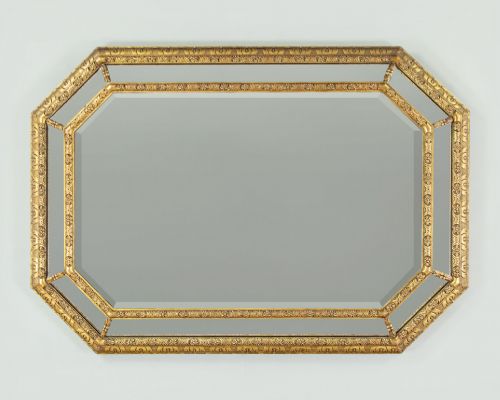
On the 19th-century French and Italian frames it comes down to scale and the ambition of the carving. Large and overmantel sizes sit higher than small hanging mirrors. Shaped tops, rope-twist mouldings and ribbed or deeply modelled gesso separate the decorative frames from the ones dealers describe as plain.
Antique Cushion Mirrors Retail Price Guide 2026
Typical UK retail prices for cushion mirrors, calculated from the Sellingantiques database of over a million retail prices indexed since 2003. This retail price guide relies exclusively on Sellingantiques data; no external sources or auction records are used, so the figures do not describe the wider market.
The earliest cushion mirrors on Sellingantiques are walnut, olive wood, laburnum and oyster-veneered frames put at around 1690 to 1700; the latest are Venetian, dated 1930.
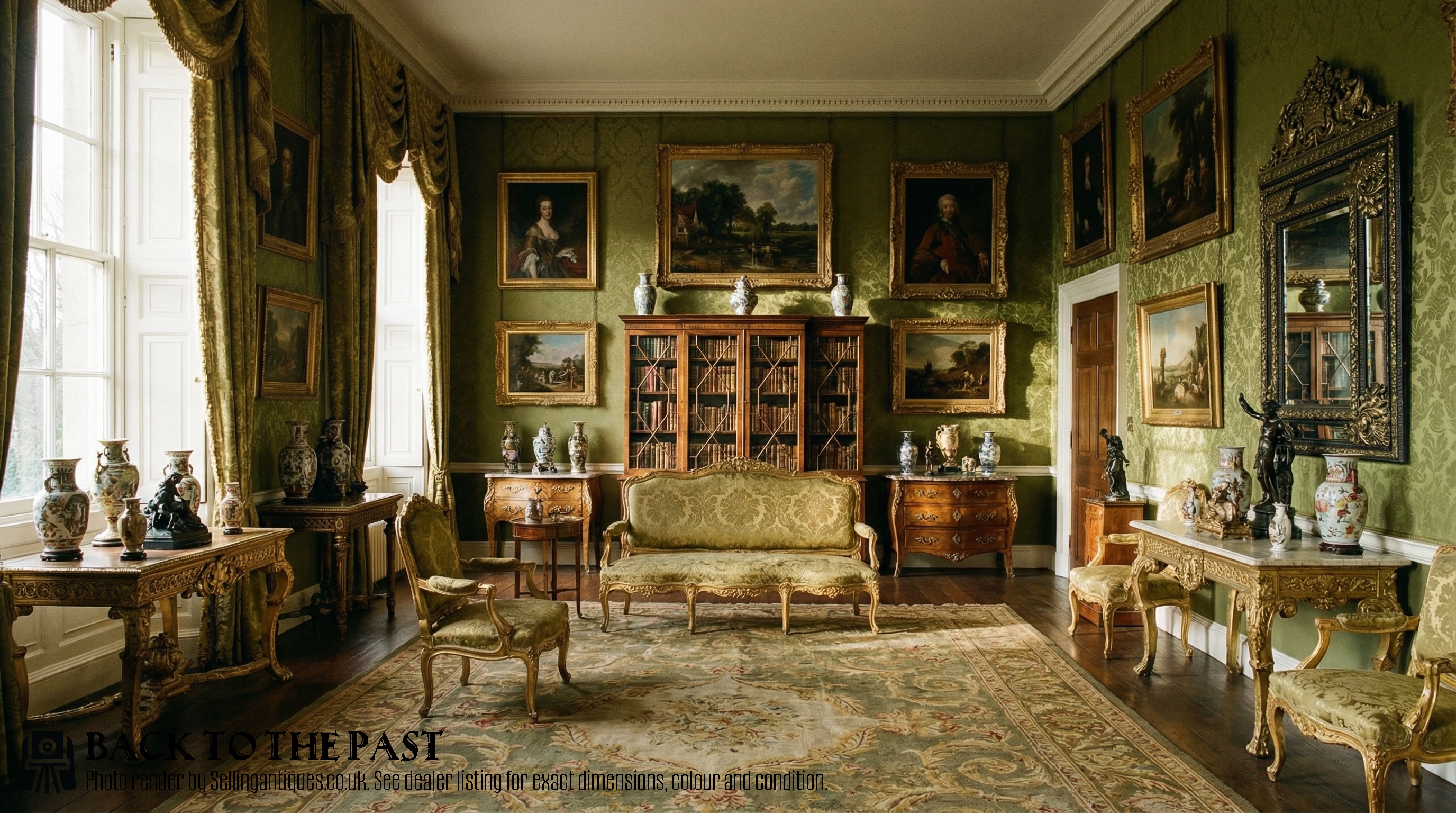
The Antique Cushion Mirrors Glossary
- Cushion frame
- The deep convex, pillow-like moulding that swells outward around the plate and gives the type its name.
- Carved wood and gesso
- The standard 19th-century Continental build: a carved timber carcass, a chalk-and-glue ground laid over it, then gilding, silvering or paint. Around a fifth of titles pair the two words.
- Overmantle
- A mirror made to sit above a chimneypiece, generally wide. Appears in a handful of titles and marks the larger end of the scale.
- Oyster veneer
- Cross-cut sections of small branchwood laid as concentric rings, seen on walnut, laburnum and yew frames.
- Repoussé
- Sheet metal, usually brass, hammered into relief from behind. Named on Dutch and Flemish frames in particular.
- Distressed painted
- A deliberately worn or rubbed paint finish on gesso frames. It's a dealer's description of an intended look, not a fault.
Antique Cushion Mirrors: Frequently Asked Questions
What period do most cushion mirrors date from?
The dated field runs from 1700 to 1930, and the 19th century carries the weight of it. Where dealers commit to a decade, the 1860s and 1870s together outnumber every other decade.
A large group is dated only to "19th Century" and nothing narrower, so a hundred-year span is all some listings offer. Earlier timber frames described as c.1690 to c.1700 are present but thin on the ground.
Are cushion mirrors French or English?
Both, and more besides. French appears in around two fifths of titles, almost all of them 19th-century carved wood and gesso frames, gilt or painted.
Titles also name Dutch, Flemish, Italian, Venetian, Florentine, English and Continental origins. Flemish and Florentine are the rarest, and the single Florentine reference is given only as a probability.
Which woods were used for the frames?
Walnut leads the timber frames, often as burr or with marquetry inlay. Oyster-cut laburnum, yew and olive wood turn up on the earliest pieces.
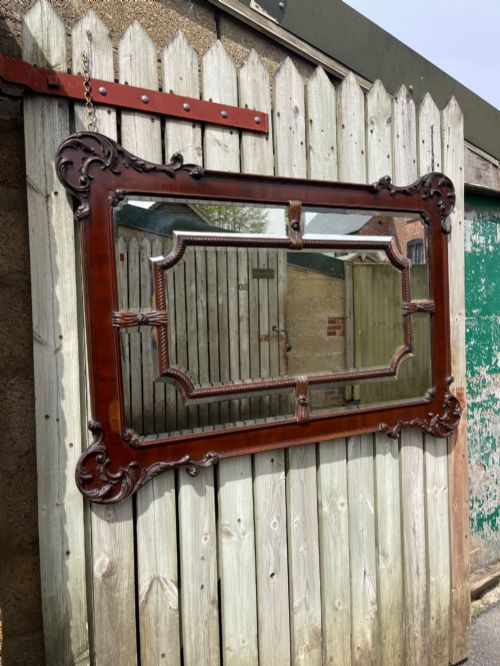
Beyond that the archive names birdseye maple, burr maple, rosewood, ebony, mahogany, oak and scrubbed oak, several of them only once or twice.
How big do cushion mirrors get?
Sizes run from small hanging mirrors up to overmantels and one described as a floor mirror. Where dimensions reach the title, they range from 39cm at the small end to 169cm at the large.
Large qualifies about a third of the titles listed on Sellingantiques, so scale is a defining feature of the category rather than an exception.
What are metal cushion mirror frames made from?
Brass is the common one, worked as repoussé, where sheet metal is hammered into relief from behind, or pressed into shape.
The archive also holds toleware, copper, silvered repoussé and a brass-and-tortoiseshell combination. They form a consistent but small strand against the timber and gesso majority.
Do many dealers handle this category?
Eighty-eight different dealers have listed cushion mirrors on Sellingantiques, and roughly twenty-eight come to market in a year.
That spread means the category isn't held by a few specialists. It also means descriptions vary in style, and dating between a title and the dated field is sometimes inconsistent.