




Antique Triptych Mirrors
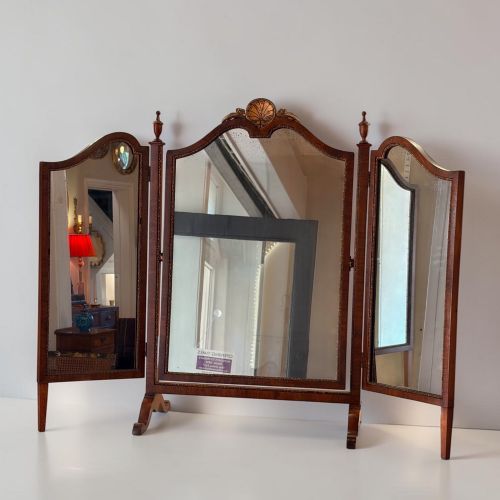
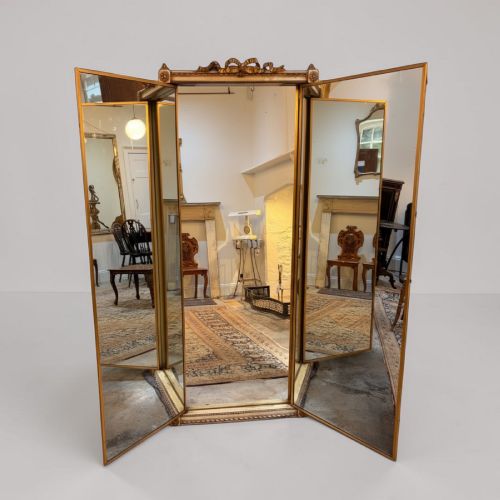
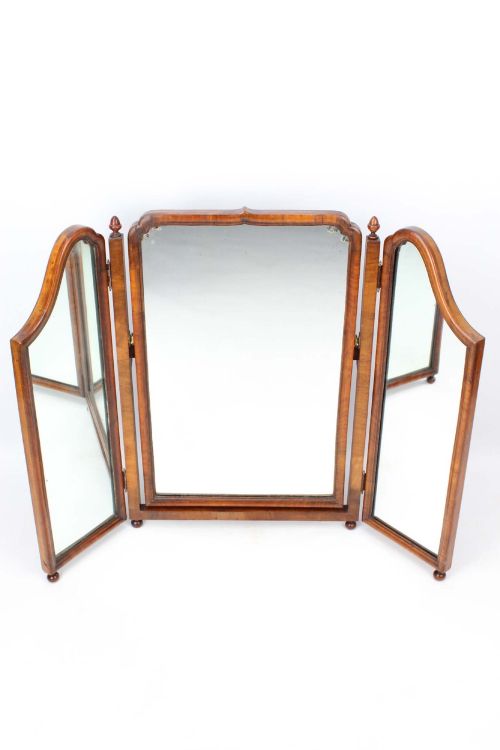
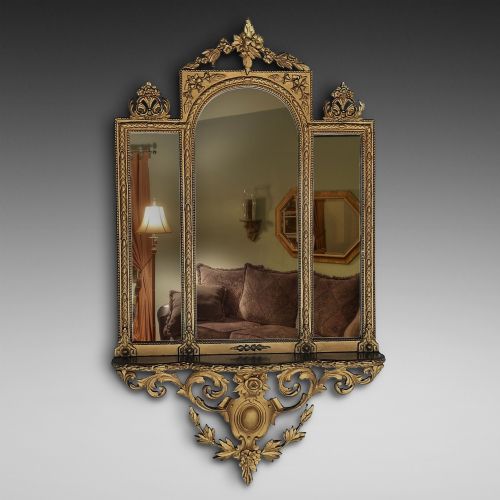
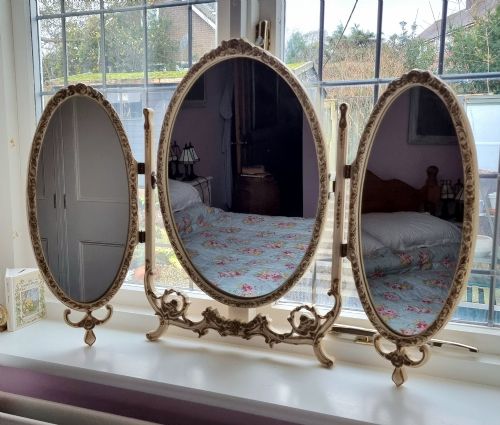
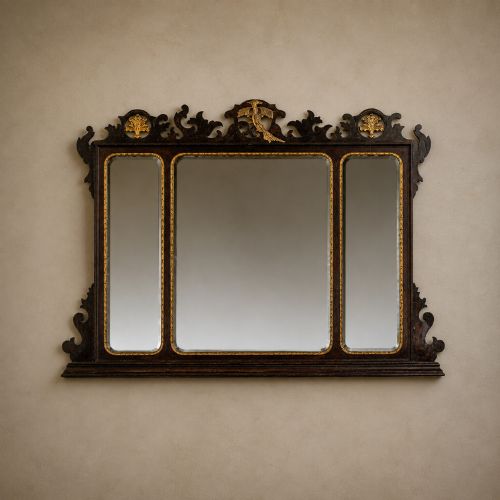
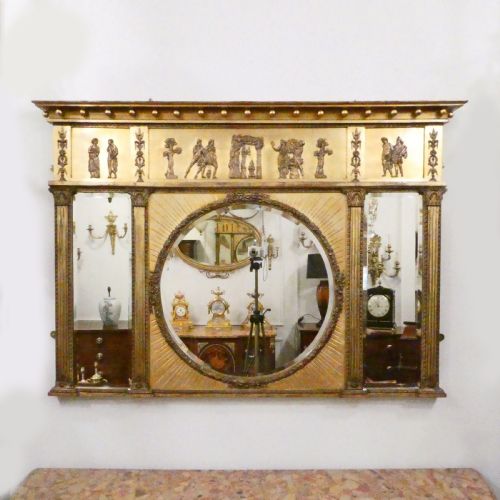
A triptych mirror is a three-panelled mirror, a central plate with two flanking plates, made either to fold on a dressing table or to hang across the wide space above a fireplace.

Antique Triptych Mirrors
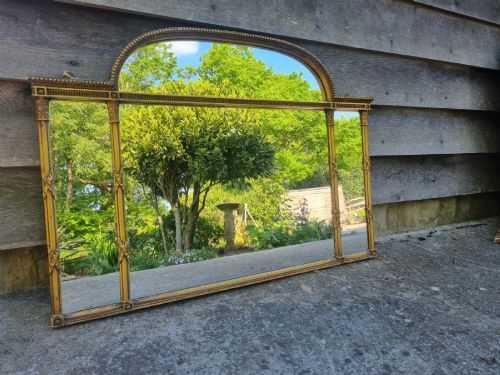
Two quite different objects share the name. One is the folding three-part dressing mirror that stands on a chest or table, so the sitter can see the sides and back of the head. The other is the fixed three-compartment overmantel, made to hang above a chimneypiece where a single plate of that width was costly.
Both go back to the late eighteenth century and stayed in production through the nineteenth and into the twentieth. On Sellingantiques the two forms split the category almost equally: a quarter of titles say "dressing", and a third use overmantel or overmantle between the two spellings.
The dressing mirrors run to mahogany and walnut, often described as folding, swing or tilting. The hanging form is where giltwood, gilt gesso and Regency vocabulary sits, along with the word "large". Beyond those two poles come brass, silver, japanned chinoiserie, ebonised and painted frames, plus French, Italian and Venetian pieces turning up as one-offs.
Dating is uneven. Where a clean year is given it runs from 1870 to 1930, and the 1920s is the best-represented decade, which is part of why so much of the archive is dressing-table work. A quarter of listings are pinned no more tightly than "19th Century", with Regency, Victorian and Edwardian used as period labels rather than dates.
Where The Range Widens
Surface does most of the separating. Carved and gilded frames, giltwood and gilt gesso, sit through the upper half of the range, while plain mahogany and walnut dressing mirrors take the lowest sampled positions. Silver, japanned chinoiserie, ebonised-and-gilt and damask-covered examples appear too, though the two silver dressing mirrors sit far apart, so material alone doesn't settle it.
Then depth of ornament. The highest sampled titles reach for ho-ho birds and squirrels, acanthus columns, friezes, cresting and neoclassical decoration. The lowest name only the timber and the function, and nothing else.
Scale and origin pull in the same direction. Large and good-size overmantels appear well up the range, and "small" or "neat-sized" is described as readily as large. Italian, Venetian, French and Irish attributions cluster in the upper part of the sample, as do the few titles naming a French maker.
Antique Triptych Mirrors Retail Price Guide 2026
Typical UK retail prices for triptych mirrors, calculated from the Sellingantiques database of over a million retail prices indexed since 2003. This retail price guide relies exclusively on Sellingantiques data; no external sources or auction records are used, so the figures do not describe the wider market.
About eight triptych mirrors are listed on Sellingantiques each year, yet 54 different dealers have listed one.
The Antique Triptych Mirrors Glossary
- Overmantel / overmantle
- Made to hang above a fireplace. Both spellings are used in roughly equal numbers, so a search on one misses much of the other.
- Dressing table mirror
- The standing folding form, set on a table or chest rather than hung on a wall.
- Giltwood
- Carved wood surfaced with gold leaf. Thirteen titles use the word, nearly all on the hanging form.
- Gilt gesso
- A moulded plaster ground laid over wood and then gilded. Titles write it as "gilt gesso" or "carved wood & gesso".
- Compartmental
- An overmantel divided into fixed sections by columns or pilasters rather than by hinges.
- Ho-ho bird
- A carved crested bird used on the cresting of some overmantels, and one of the motifs named at the top of the range.
Antique Triptych Mirrors: Frequently Asked Questions
Why are triptych mirrors spelled so many ways?
Across the titles the word appears four ways: triptych, tryptic, trio and "3 panel". Dealers write it as they know it.
The hanging form doubles the problem, split almost evenly between overmantel and overmantle. No single search term reaches the whole category.
How many come up for sale?
Around eight a year come to market on Sellingantiques, so it is not a form you meet in quantity.
Yet 54 different dealers have listed one. It is a mirror almost every dealer handles occasionally and almost none stocks in depth.
Which form is more common, folding or hanging?
They share the category almost equally. Twenty-four of 95 titles say "dressing" and 13 say "dressing table", making the folding mirror the commonest single object.
The hanging three-compartment overmantel matches it in numbers, with 33 titles between the overmantel and overmantle spellings.
What woods and finishes turn up?
Mahogany appears in 11 titles and walnut in nine, mostly on the folding dressing mirrors. Gilt and giltwood account for a further batch, concentrated on the hanging form.
A persistent minority sits outside both. Brass, silver, japanned and chinoiserie decoration, ebonised-and-gilt Art Deco, white painted gilt, and one frame covered in damask fabric.
Are these mirrors mostly Regency?
Regency is the busiest period label, in 19 titles and 11 entries in the dated field, and it travels with the giltwood overmantels.
The clean-year dates tell a different story. They lean early twentieth century, with the 1920s the best-represented decade, and sample titles push back to a "circa 1850" and a "c. 1830".
What does cheval mean on a triptych mirror?
A cheval mirror stands on its own floor frame rather than on a table or a wall.
Three sampled titles combine cheval with triptych, so the three-panel arrangement occasionally arrives at floor height instead.