


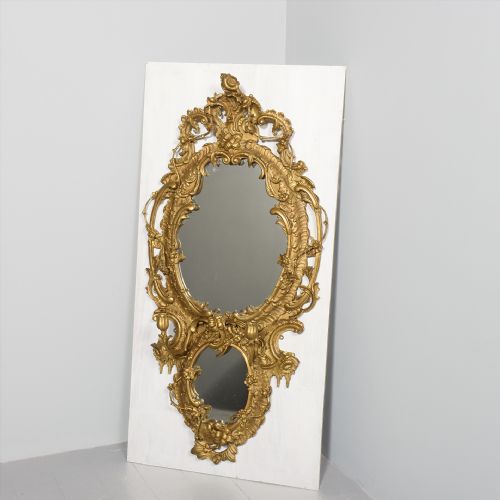
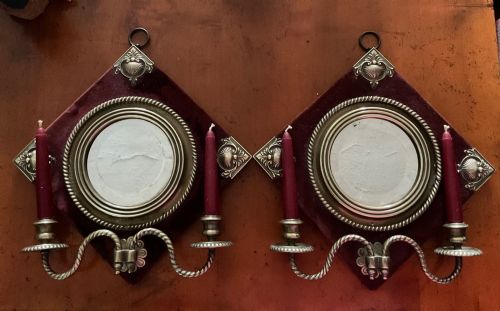
Antique Girandoles
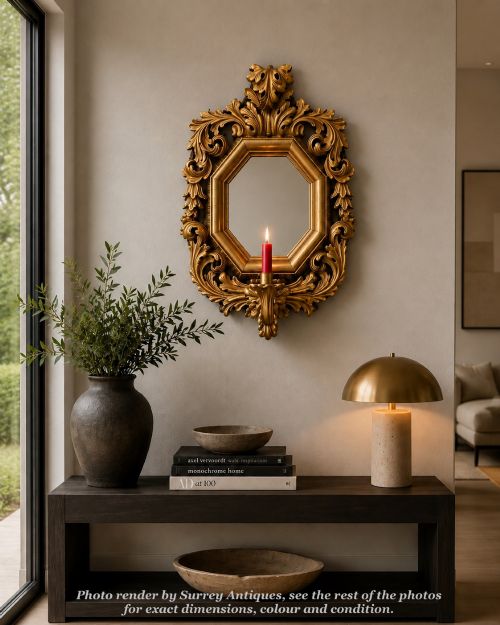
A girandole is a wall mirror fitted with candle branches, so the plate throws the candlelight back into the room.

What Is A Girandole?
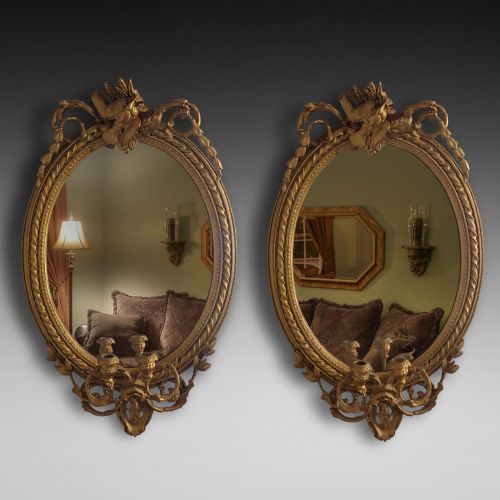
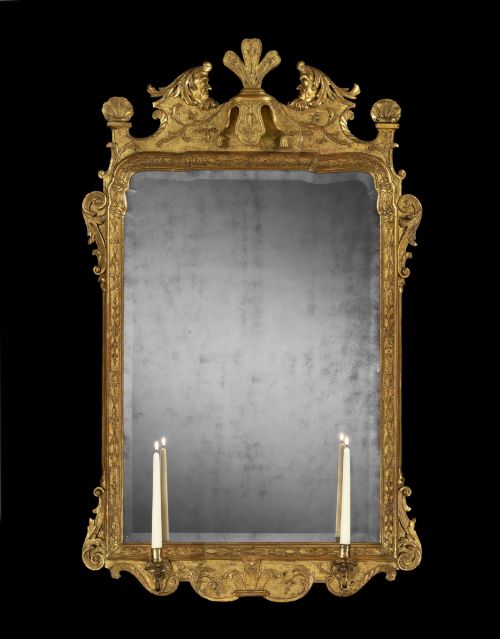
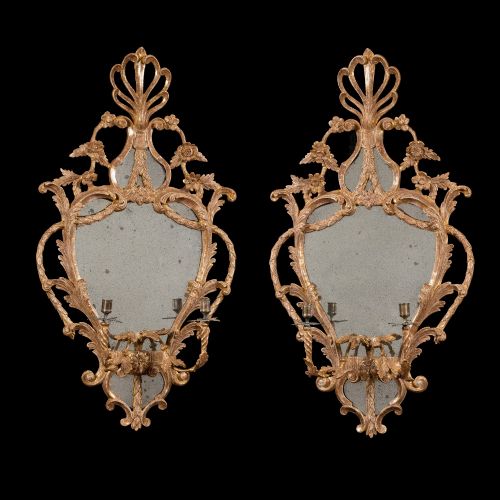
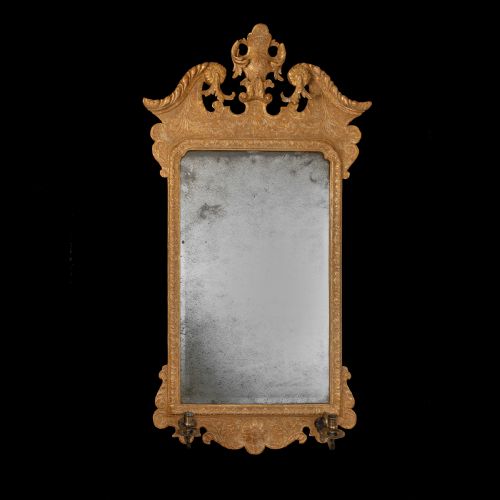
A mirrored plate in a frame, with one, two or three sconce arms projecting from it, hung on the wall and commonly sold as a matched pair. The form settled in Europe in the 18th century and stayed in production through the 19th, revival after revival.
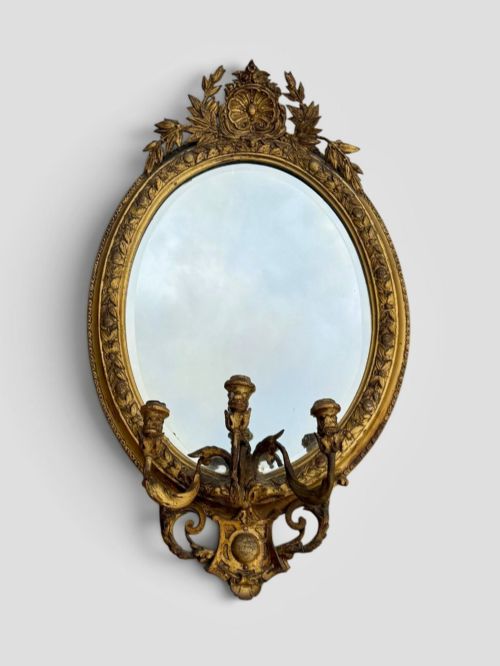
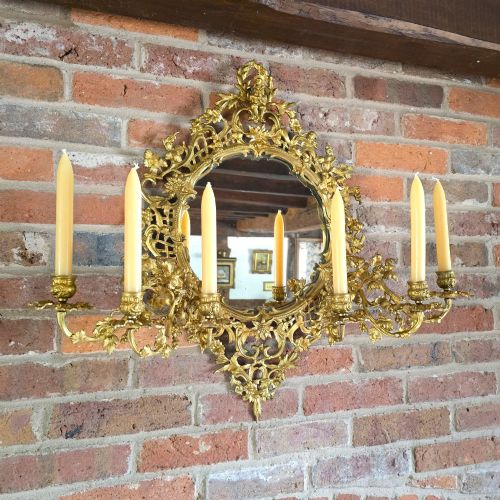
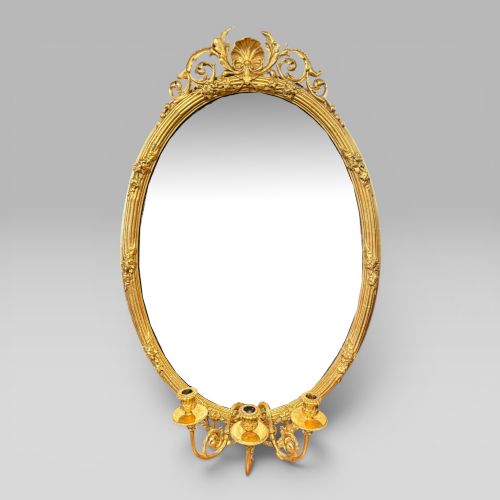
The frame is overwhelmingly gilded. Giltwood, gilt gesso and gilded composition dominate the titles on Sellingantiques, with a smaller run of cast brass, bronze and ormolu frames alongside them. Plates are oval about as often as they are round.
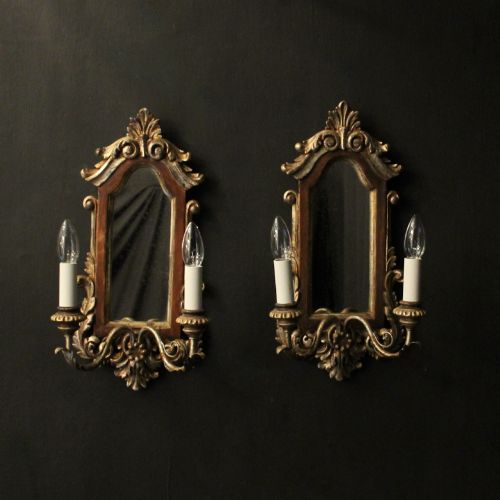
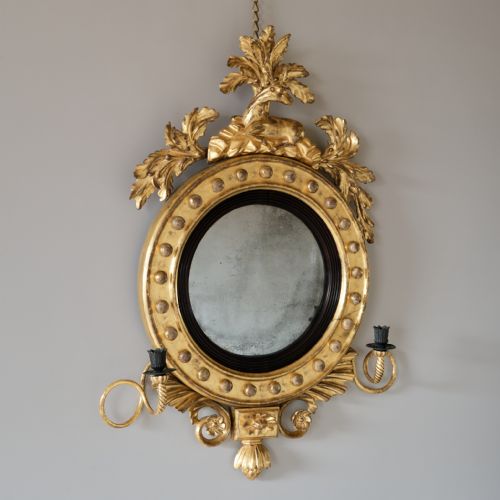
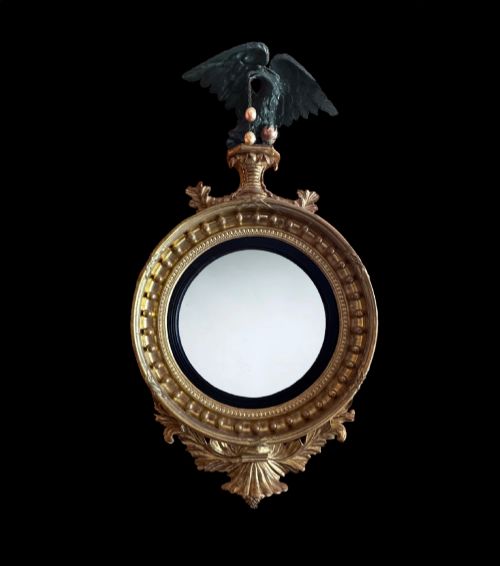
The single largest group is the gilded wood or gesso oval, usually a pair. Behind it sits the Regency convex plate in a circular gilt frame, roughly a sixth of the archive but a third of what is listed now, sometimes with a carved eagle or dragon crest above. Italian, Venetian and Florentine giltwood pairs turn up throughout, several of them 1920s and 1930s revivals.
Dating skews to the 19th century, with the vague "19th Century" label, Regency and Victorian all overlapping. Only a handful of listings are called 18th Century, and Georgian examples sit at the top of the range. Note that dealers spell it three ways, girandole, girondelle and girondole, and many title the object simply as a gilt wall mirror.

Where The Range Splits
Carving against moulding is the first divide. Frames described as carved cluster at the top, and gilt composition or plaster ornament sits lower. Both end up gilded, so the difference is in how the ornament was made rather than how it looks from across a room.
Pairs carry more weight than singles, and dealers say so plainly, marking a lone piece as single in the title. Period depth works the same way: George I, II and III and Regency titles occupy the highest end, while 1920s and 1930s Florentine and Regency-style pairs sit through the middle.
Scale and ornament finish the picture. Large is a word that appears often, and the biggest piece with a stated size in the archive, a Regency convex mirror, sits at the very top. Named crests do the same job. Eagles, a dragon, a deer, putti, Neptune, Bacchus, and one pair with birds and butterflies.
Retail Price Guide 2026
Typical UK retail prices for girandoles, calculated from the Sellingantiques database of over a million retail prices indexed since 2003. This retail price guide relies exclusively on Sellingantiques data; no external sources or auction records are used, so the figures do not describe the wider market.
19th Century is the period label used most on Sellingantiques for girandoles, with Regency next and Victorian third.
The Antique Girandoles Glossary
- Girandole
- A wall mirror with candle branches attached. Also spelled girondelle and girondole in titles here, so one spelling alone won't find everything.
- Sconce
- The candle-holder itself, sitting on the projecting arm. Titles use both candle sconce and wall sconce.
- Branch or arm
- The projecting candle support. Titles specify 2 branch, 3 branch, twin arm, triple arm and six branch.
- Convex
- An outward-curving circular plate that gives a wide, reduced reflection. It appears in around a third of titles across the archive.
- Gesso
- A moulded plaster-like ground laid over wood and then gilded, carrying the ornament rather than the wood beneath.
- Water gilded
- Gilding laid on a wetted bole ground, which can then be burnished. Rare wording in this category, used once.
Frequently Asked Questions
How many girandoles come up for sale?
About nineteen a year come to market on Sellingantiques, and 87 different dealers have listed one at some point.
That spread tells you something. It's a form almost every mirror dealer handles occasionally, rather than anyone's specialism.
Are girandoles usually sold in pairs?
Pairs are the common way they come. The word appears in a large share of titles, and matched pairs sit at the top of the archive.
Singles do turn up, and dealers tend to flag them in the title so there's no confusion.
What period do most examples date from?
The dated field runs from 1750 to 1930. The single most-used label is the vague "19th Century", followed by Regency and Victorian, three overlapping ways of describing much the same thing.
Only eight listings are called 18th Century. There's a tail of 1920s and 1930s revival pieces at the other end, several of them Florentine or Regency-style pairs.
Why do so many listings say convex mirror?
The circular convex plate in a gilded frame is closely tied to the Regency period in Britain, and it makes up a good slice of the archive.
It's more prominent in current stock than in the sold record, so a browse now will show more of them than the archive would suggest.
Are all girandole frames gilded wood?
Most of what appears is gilding on wood or gesso, sometimes over moulded composition instead of carving.
Metal frames make up a smaller steady group. Cast brass turns up in fifteen titles, with bronze and ormolu appearing only a few times each, plus one hand-beaten Arts and Crafts brass frame.
Do Italian girandoles appear on the site?
Italy is the recurring foreign origin. Venetian, Florentine and Italian giltwood pairs appear across the whole range of the archive.
Several of the Florentine ones are 1920s and 1930s revival pairs rather than earlier work.