

Antique Inlaid Mirrors
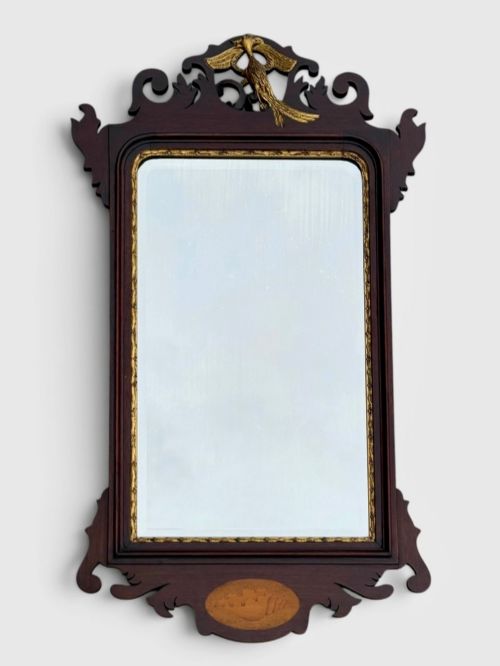
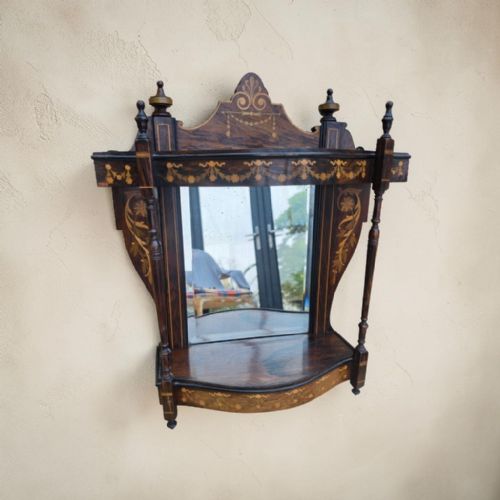
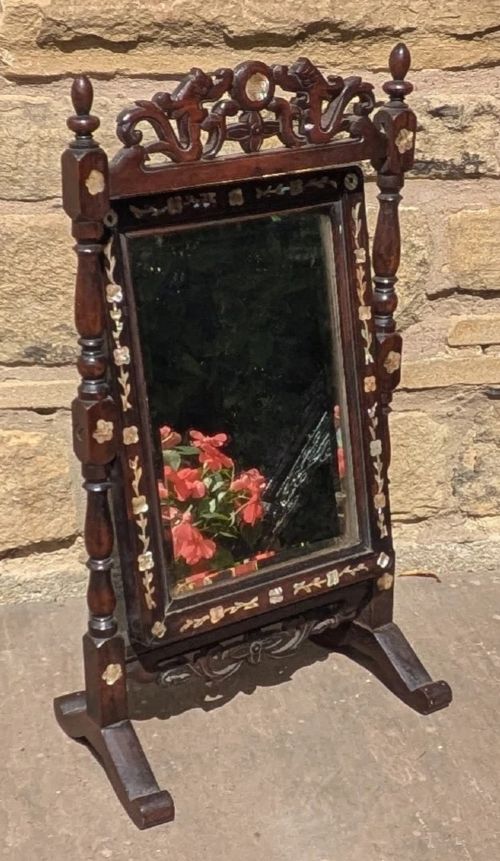
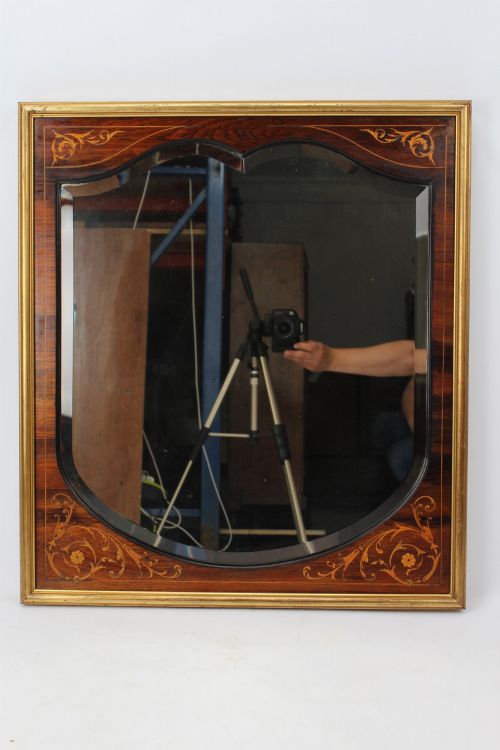
A wooden-framed mirror decorated with inlay rather than carving or gilding, made to hang on a wall, stand on a dressing table or swing full-length on the floor.
What Are Inlaid Mirrors?
Inlay means setting contrasting material into a wooden ground: boxwood and ebony lines, shaped veneer panels, brass, bone or mother-of-pearl. It has been used on mirror frames since the 17th century, and became a standard way of decorating domestic looking-glasses once plate glass and veneered carcasses brought framed mirrors within ordinary reach.
Mahogany is close to being the default. It is named in 143 of the 301 titles on Sellingantiques, with walnut, rosewood and satinwood behind it, and single appearances for olive wood, cherrywood, harewood, burr yew and macassar ebony. Around 31 inlaid mirrors are listed a year, spread across 121 different dealers.
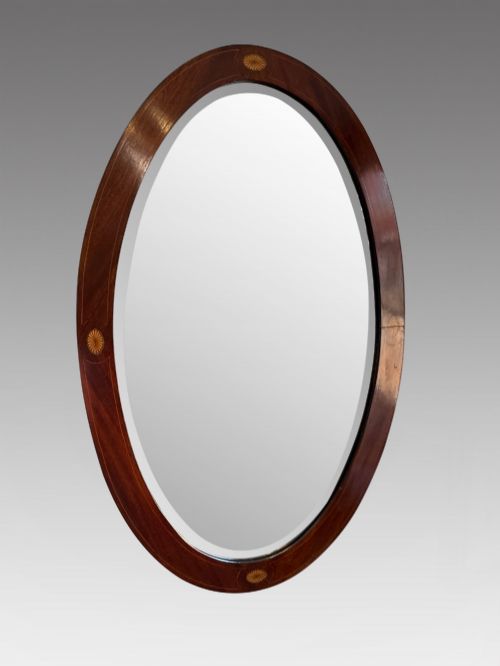
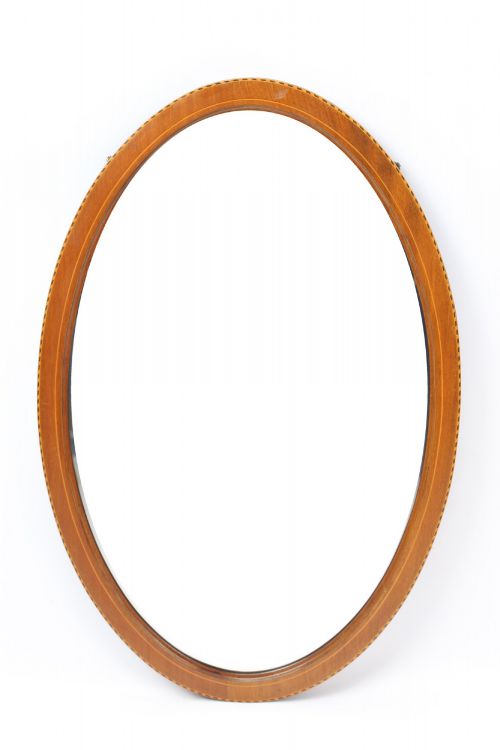
The version you are most likely to meet is an Edwardian inlaid mahogany wall mirror, often oval and often with bevelled glass. Edwardian sits in 74 titles, wall mirror in 62, oval in 35, and the combination recurs almost word for word.
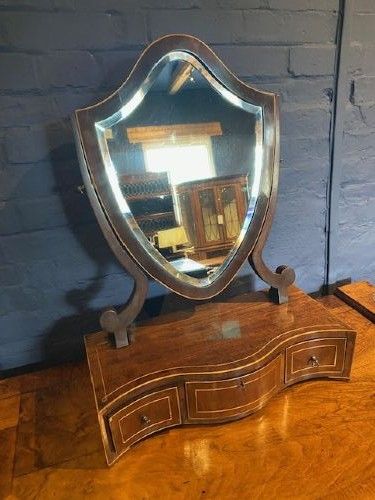
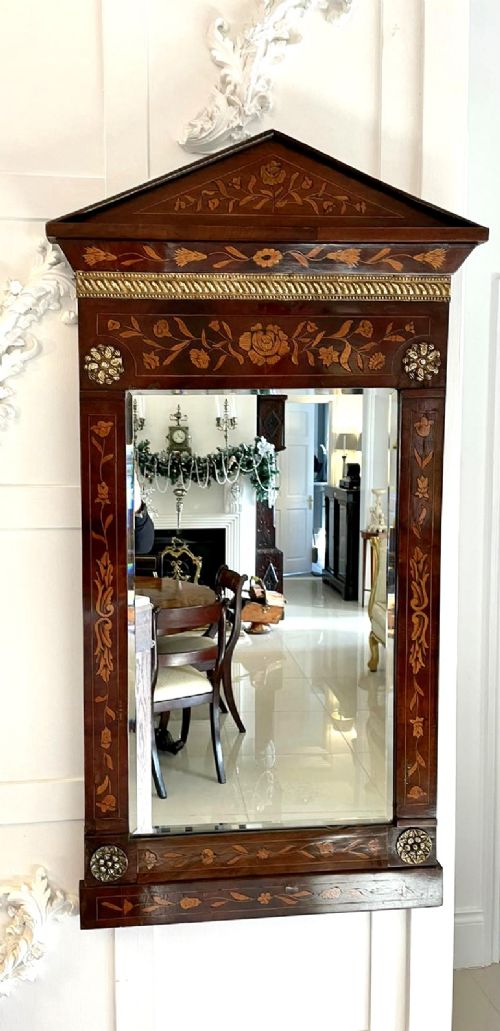
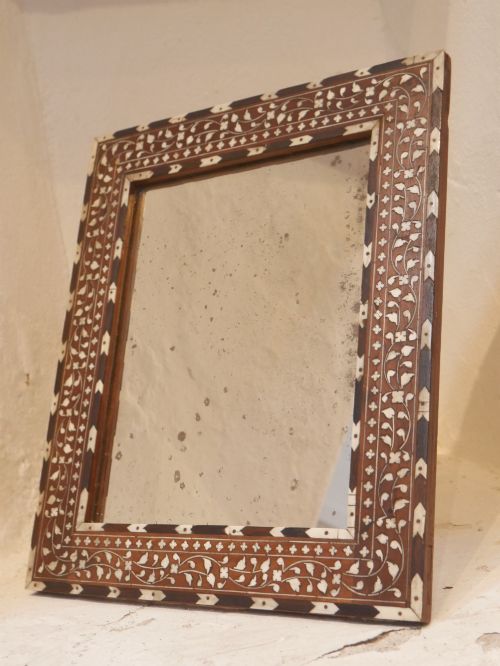
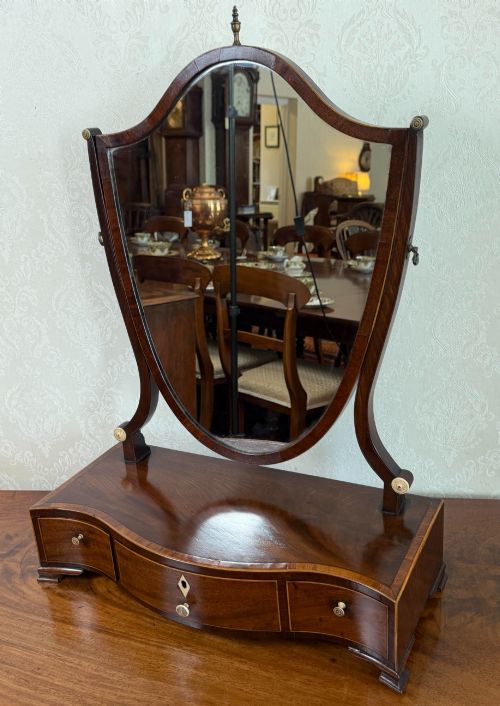
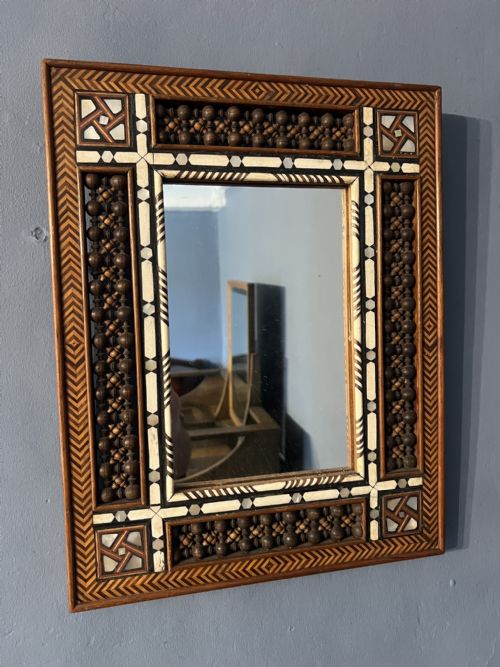
Beyond that, the category splits by form. Wall and overmantel mirrors, including pier glasses, make up roughly a third to two-fifths. Full-length cheval mirrors run to 47 titles. Toilet and dressing-table swing mirrors, some on box or drawered bases, account for about a quarter. Marquetry pieces, Dutch marquetry among them, are about one in ten, and brass- and shell-inlaid Eastern frames form a smaller distinct strand, with the Indian town of Hoshiarpur named in 13 titles.
What Sets Them Apart
Form does most of the work. Standing cheval mirrors dominate the upper reaches of the range, while the small hanging and toilet mirrors sit at the bottom, with the repeated Edwardian mahogany oval anchoring it. Scale follows the same line: large appears in 24 titles, and the tallest sampled piece is described as eight feet.
Then the inlay itself. Marquetry, built from shaped veneer into patterns or pictures, clusters in the upper half; plain line inlay on an otherwise unadorned frame clusters at the lower end. Timber matters alongside it, with satinwood, rosewood and figured walnut recurring higher up while mahogany spans the whole range.
Dating separates two groups that can look alike. Titles reading George III style or Georgian style with a date around 1900 are revival work, and they sit apart from frames dated to the period itself. Pairs also carry weight: pair appears in 9 titles, and pairs of pier, Hoshiarpur, walnut and Georgian mirrors sit above comparable singles.
Retail Price Guide 2026
Typical UK retail prices for inlaid mirrors, calculated from the Sellingantiques database of over a million retail prices indexed since 2003. This retail price guide relies exclusively on Sellingantiques data; no external sources or auction records are used, so the figures do not describe the wider market.
Edwardian is the period label used most on Sellingantiques for inlaid mirrors, with 19th Century next and 1900s third.
The Antique Inlaid Mirrors Glossary
- Cheval mirror
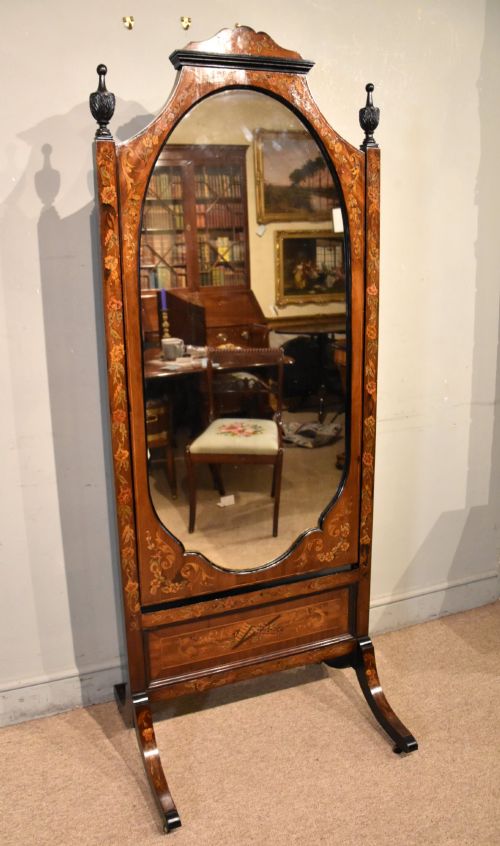
- A full-length mirror swinging between two upright posts on feet, free-standing on the floor.
- Toilet mirror
- A small swing mirror for a dressing table, often raised on a box or drawered base.
- Overmantel
- A wide mirror made to hang above a fireplace. Listings here spell it both ways, and overmantle is used slightly more often.
- Pier glass
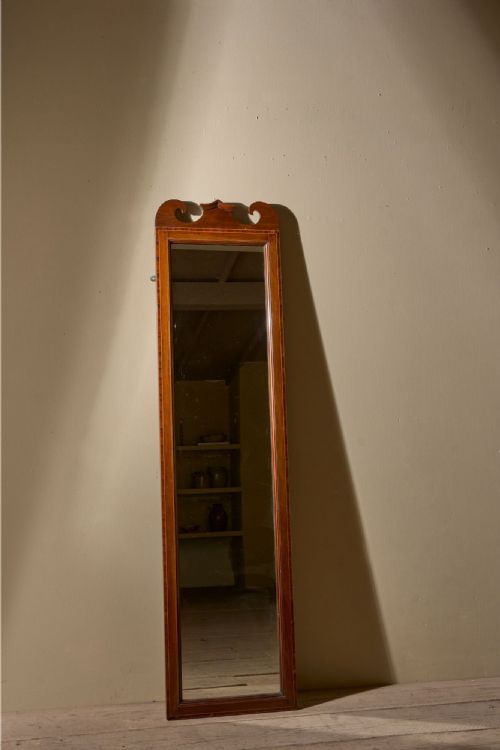
- A tall narrow wall mirror for the pier of wall between two windows. Some dealers write it as peer glass.
- Stringing
- Fine lines of contrasting wood let into a frame, described in listings as string inlay.
- Hoshiarpur
- A north Indian centre associated with brass- and bone-inlaid frames, named in 13 titles.
Frequently Asked Questions
What wood are inlaid mirrors usually made from?
Mahogany, in most cases. It is named in 143 of 301 titles, more than every other timber put together, with walnut, rosewood and satinwood as the main alternatives.
Rarer grounds turn up once each: olive wood, cherrywood, beech, Oregon pine, fruitwood, maple, amboyna, harewood, burr yew and macassar ebony.
Which period do most of these come from?
The dealer-entered dates run from 1800 to 1930. Edwardian is the largest single label, followed by the loose 19th Century and 1900s, then Georgian, Victorian and Regency.
Much of the dating is approximate rather than exact. 19th Century, 1800s, 1890s and 1920s are ranges, not years, and 109 listings carry a clean single year.
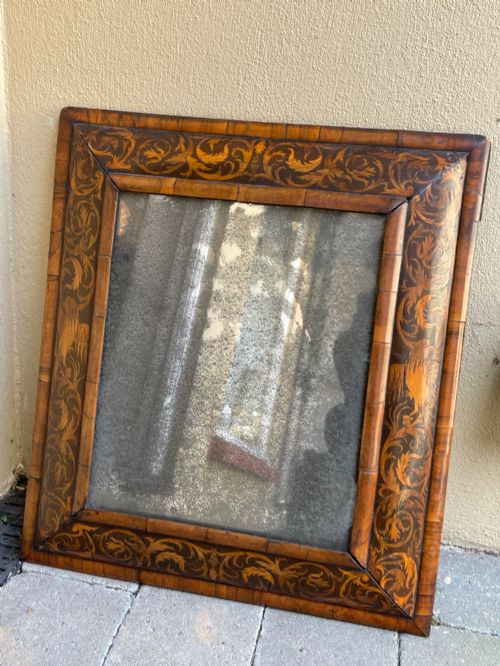
A few pieces sit outside that span altogether, including William and Mary cushion mirrors given c.1690 and c.1695.
Is inlay always wood?
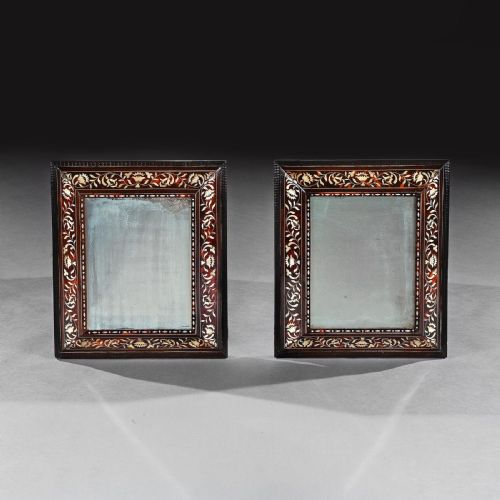
No. Brass appears in 17 titles, and mother of pearl, bone, ivory and tortoiseshell all show up in the archive, along with boulle and Tunbridge ware mosaic.
The Eastern frames account for much of the non-wood inlay, Hoshiarpur brass and bone work among them.
What is the difference between marquetry and stringing?
Stringing is fine lines of contrasting wood let into the frame, and it does the decorating on a great many of the plainer Edwardian mirrors.
Marquetry is built from shaped pieces of veneer forming patterns or pictures. It appears in 31 titles, Dutch marquetry among them, and sits higher in the range than line inlay.
Why are cheval mirrors priced above wall mirrors?
Size and form. Cheval mirrors are full-length and free-standing, and at 47 titles they account for most of the upper reaches of the range.
Small wall and toilet mirrors occupy the lowest positions, with the repeated Edwardian inlaid mahogany oval the most common of them.
Do any unusual forms turn up in this category?
A few, each appearing once. A shaving stand, an Edwardian Last Look Mirror, a folding olive-wood travel mirror from Sorrento and a triptych cheval.
There is also a table-top cheval combined with a jewellery cabinet, and a pair of Spanish Colonial tortoiseshell enconchado mirrors from Peru or Mexico.