


Antique Console Mirrors
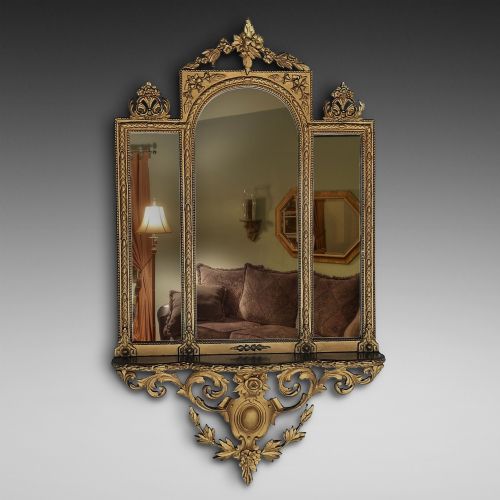
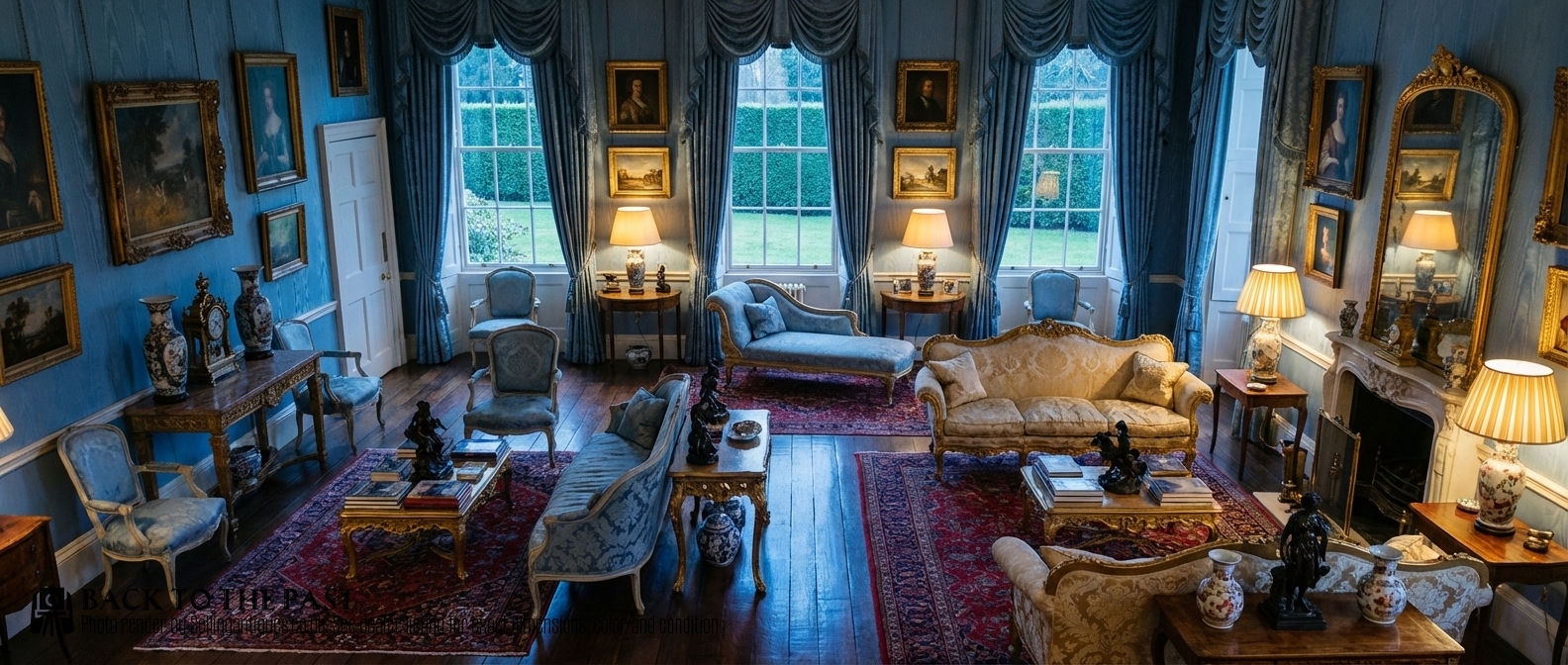
A console mirror is a tall wall or pier glass made to hang above a console table, throwing light back into the room from the wall between windows.
What Are Console Mirrors?
The form grew out of the later 17th and 18th centuries, when a mirror was hung on the pier of wall between two windows or above a side table to bounce candlelight back into the room. Tall, narrow proportions and gilded frames followed from that placing, and the type carried on in quantity through the 19th century.
What you'll meet most often on Sellingantiques is a French gilt or giltwood tall wall or pier mirror of the 19th century. Gilt appears in 28 of 66 titles and French in 24, with giltwood and carved wood close behind. Trumeau turns up as a recurring French sub-form, alongside Rococo and Empire frames.
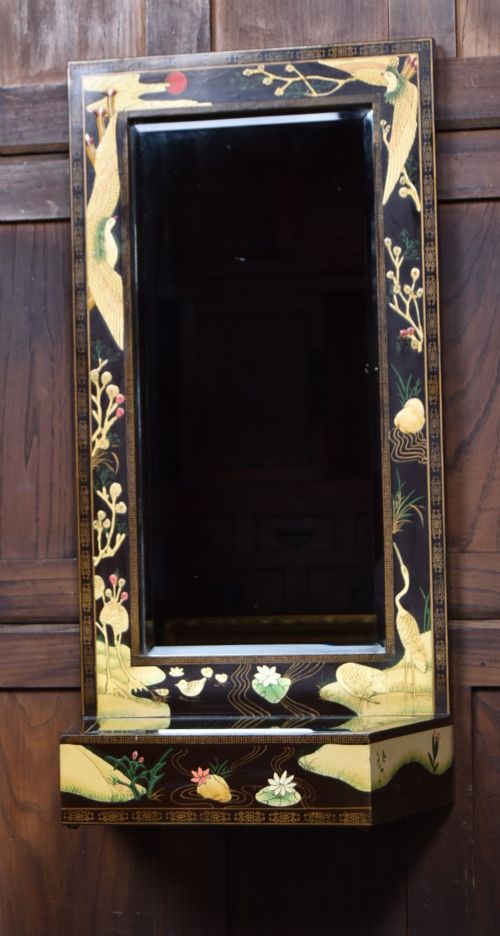
English pier and overmantel glasses, Regency through Victorian, make up around a quarter. A smaller run has no gilding at all: oak, walnut and ebonised frames, including Gothic oak and Arts and Crafts examples. Italian giltwood appears three times, Swedish once.
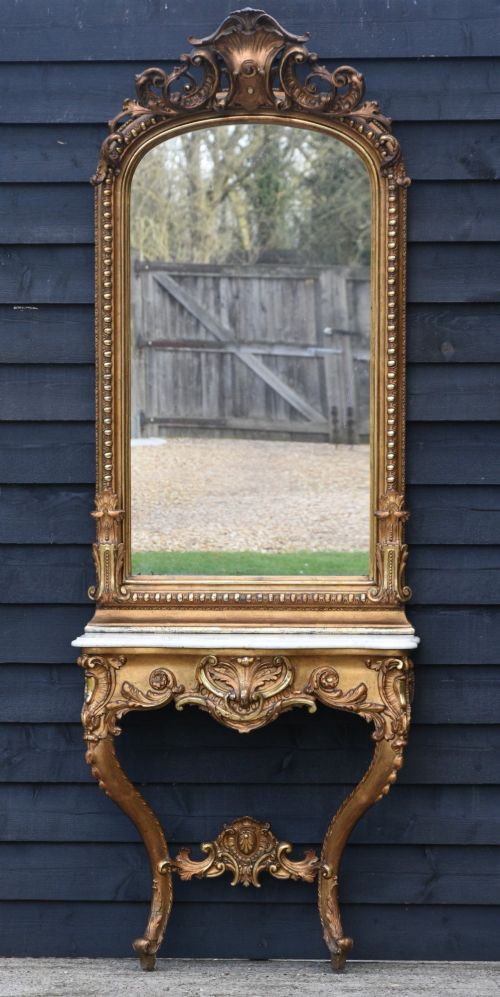
Roughly one listing in seven is not a mirror on its own but a mirror sold with its matching console table. Dating is broad rather than precise: 32 of the 66 listings say only "19th Century", and just 22 carry a clean year, running 1800 to 1930 with a cluster of seven in the 1920s.
Where Value Sits
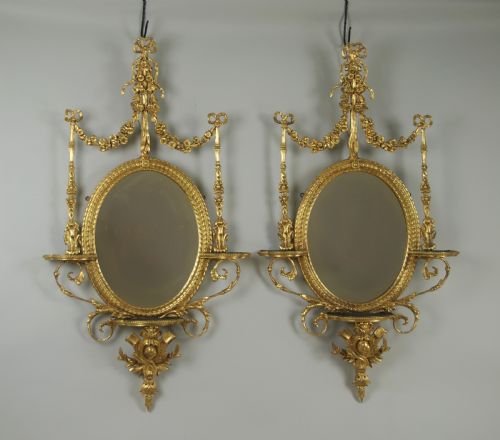
Completeness does more than anything else. A mirror still with its console table sits at the upper part of the range, and so do pairs: two Empire pier mirrors, two giltwood console mirrors, a gilt mirror with its matching wall brackets. Single mirrors run through the middle and lower part.
After that it's the frame itself. Deeply carved and properly gilded frames lead, and the titles say so plainly: solid carved gilt wood, carved wood and gesso, water gilded. Painted frames and the ones described as shabby gilt sit lower. Carved appears in 12 titles, gilded in eight.
Scale pushes upward too. Large appears in a quarter of titles, and the tallest stated heights in the archive are a mirror at 167cm and one described as very tall at 8 feet. Marks are the one thing almost absent: two titles in the whole archive claim a stamp or an attributed pattern, and both sit near the top.
Retail Price Guide 2026
Typical UK retail prices for console mirrors, calculated from the Sellingantiques database of over a million retail prices indexed since 2003. This retail price guide relies exclusively on Sellingantiques data; no external sources or auction records are used, so the figures do not describe the wider market.
About one console mirror listing in seven on Sellingantiques is a mirror with its console table, sold together. Four listings are pairs or bracket sets.
The Antique Console Mirrors Glossary
- Pier mirror
- A mirror for the pier of wall between two windows. Pier appears in 19 of the 66 titles, often used alongside console for the same shape.
- Overmantel
- A mirror set above a fireplace, also spelled overmantle in these listings. Dealers use it interchangeably with pier and console.
- Giltwood
- Carved wood surfaced with gold leaf. Written both as one word and as gilt wood across the titles, with no difference in meaning.
- Trumeau
- A French tall panel mirror, often with a painted or carved panel set above the glass. A recurring sub-form in the French listings.
- Gesso
- The chalk-and-size ground moulded and carved under the gilding, named in one French title. Water gilding lays the leaf over it so it can be burnished.
- Ebonised
- Timber stained and polished black, seen on several walnut-framed examples in the non-gilt run.
Frequently Asked Questions
How many console mirrors come up each year?
Around five a year on Sellingantiques, spread across 29 different dealers over the life of the archive.
No single dealer holds the form. It arrives one or two at a time, from wherever a house clearance or a container turns one up.
Are French examples the most common?
France dominates the origins named in titles, appearing in 24 of 66. Italy turns up three times, Sweden exactly once.
The rest are English pier and overmantel glasses, Regency through Victorian, or carry no origin in the title at all.
What does "19th Century" mean in these listings?
It's a broad bracket rather than a dating. Half the archive is filed that way, with a further four as Victorian, two Regency and one Circa 1880.
Only 22 listings carry a clean year. Some titles give a circa date, C.1830 or C.1860 or C.1920, that the dated field doesn't always repeat.
Do console mirrors come with the table?
About one in seven does. Titles like "Painted Console Table and Mirror" and "Italian Carved Giltwood Console Table & Mirror" describe a matched set sold together.
Those sets cluster in the upper part of the range. Mirrors on their own make up the bulk of what's listed.
Are there 20th-century console mirrors?
Yes. The dated field runs to 1930, and the 1920s are the one 20th-century concentration with seven listings.
They include a gilt wood Art Deco overmantel and two entries titled simply "Console and Mirror".
Which frames aren't gilded?
Under a fifth of the archive. Oak, walnut and ebonised frames appear throughout, including Victorian carved Gothic oak and a golden oak Arts and Crafts console mirror.
Some combine finishes, such as burr walnut with ebonised mouldings. Parcel gilt covers frames gilded only on selected areas.