
Antique Georgian Mirrors
Georgian mirrors are English looking glasses of the 18th and early 19th centuries, made to tilt on a dressing table, hang between windows, or fill the wall above a fireplace.
What Are Georgian Mirrors?
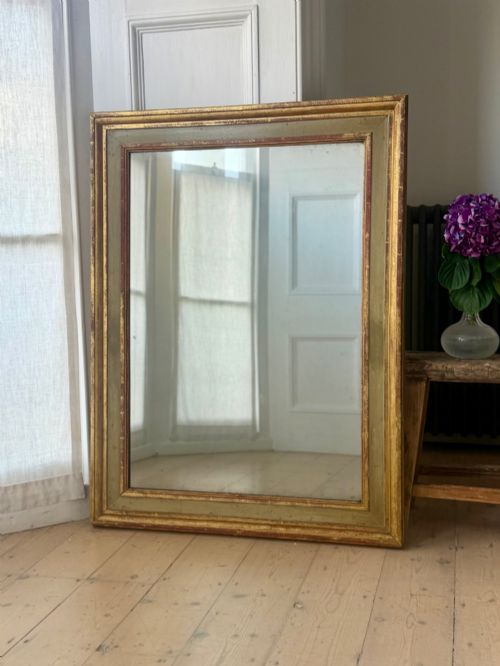
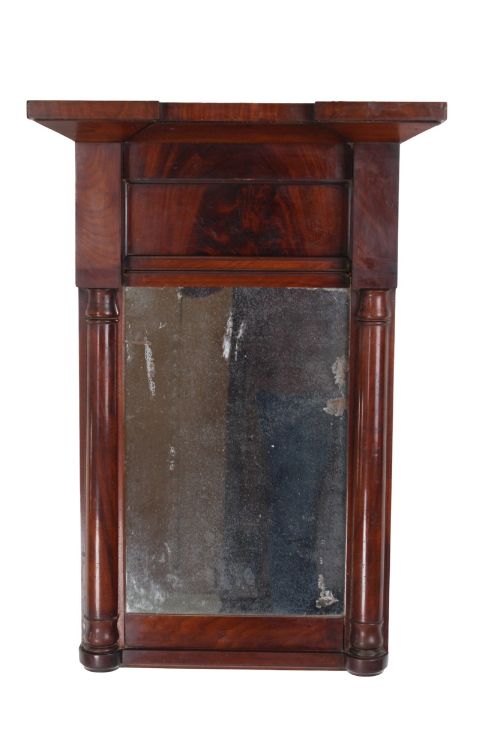
The heading covers two families that sit side by side. One is timber-framed: mahogany in roughly a third of titles, walnut in a further slice. The other is gilded: gilt, giltwood, parcel gilt and gesso between them account for a comparable share. Function is named in the title more often than style, so wall, dressing, toilet, pier, cheval and overmantel do most of the sorting.
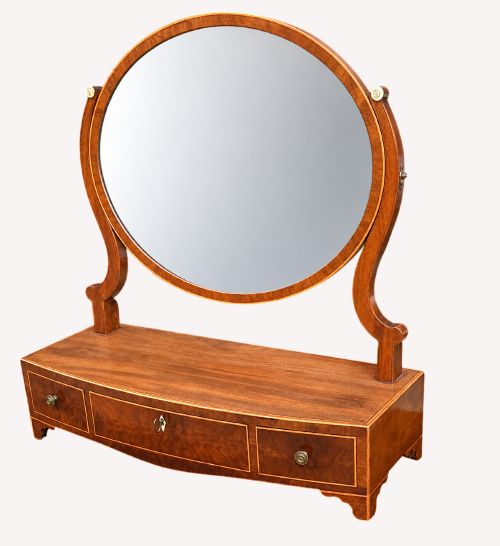
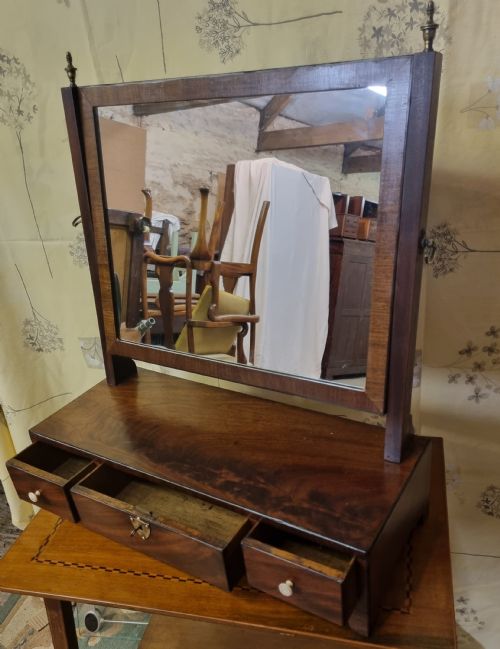
The single commonest thing in the group is the mahogany swing dressing or toilet mirror on a small box base with drawers. Titles repeat the formula almost word for word, and serpentine, bow-front and three-drawer bases turn up throughout. These cluster in the lower third of the range.
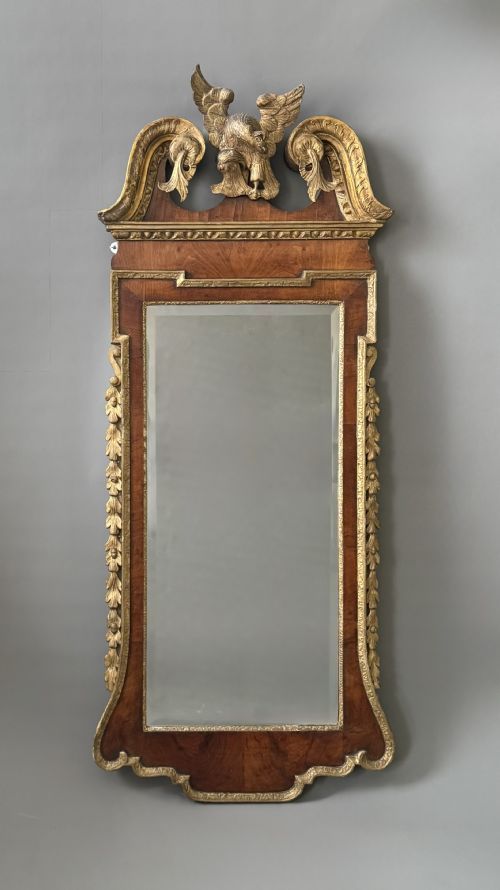
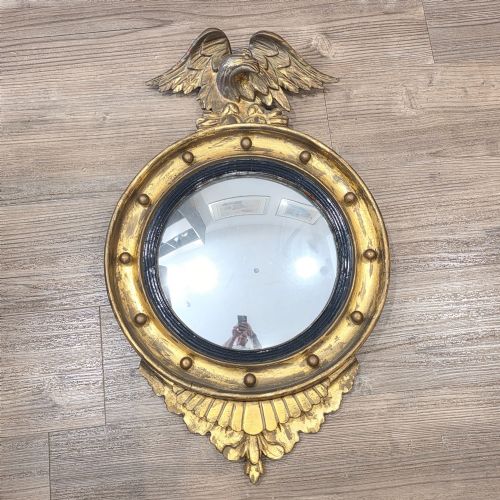
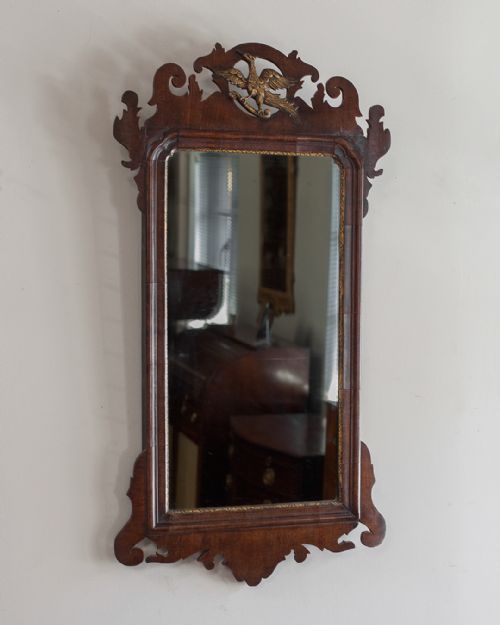
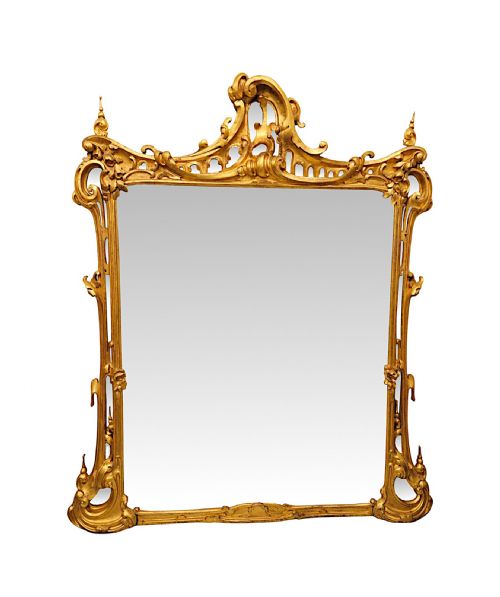
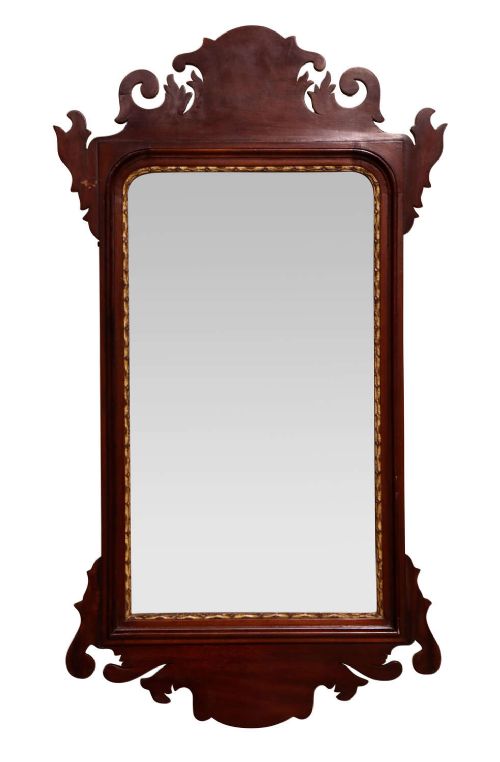
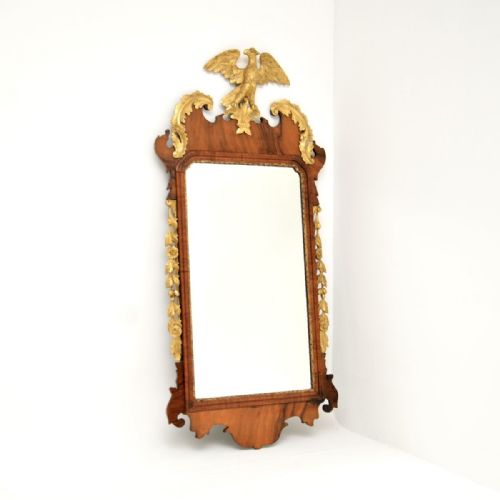
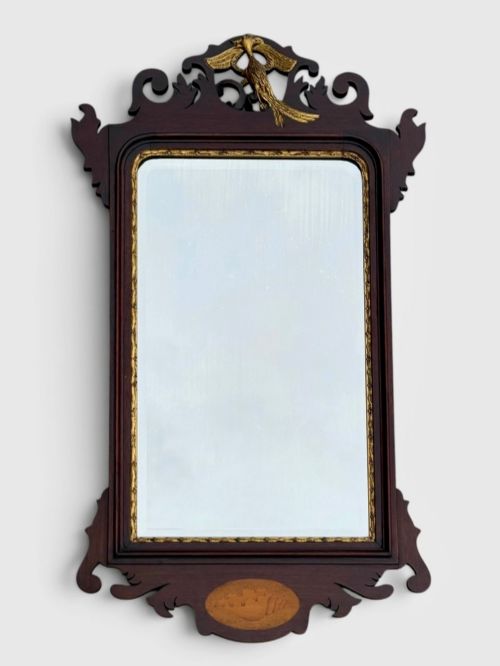
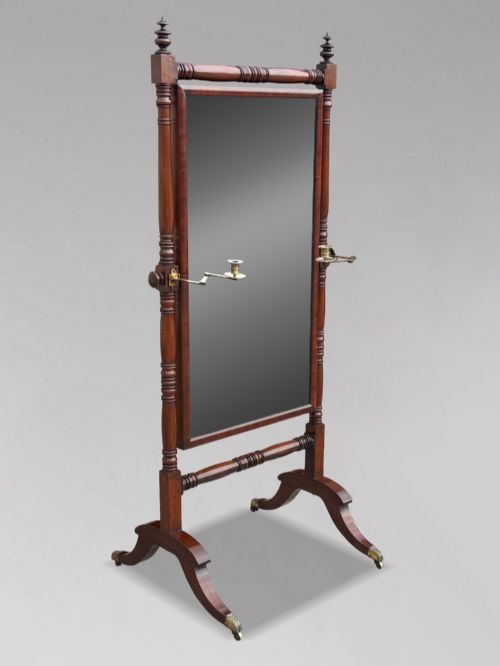
Above them sit the carved giltwood and gesso wall, overmantel and pier glasses, about a quarter of the category and most of its upper reaches. Then fret-cut mahogany and walnut wall mirrors, often with a long-tailed ho-ho bird in the crest; convex plates in gilt rings, some with eagles or candle arms; and cheval glasses swinging in a floor-standing frame.
Dealer-entered dates run from 1700 to 1930, so a category named for one reign covers more than two centuries of making and copying. Georgian Revival and Georgian-style pieces of about 1880 to 1930 are dated inside the category rather than kept out of it, and only a fifth or so of listings carry a clean year at all. The rest sit under broad labels: Georgian, 19th Century, 18th Century, Regency.
What Sets Them Apart
Gilding and carving carry the top of the range. Carved giltwood and gesso frames concentrate in the upper half, while plain mahogany dressing mirrors fill the bottom. Scale works the same way: large appears in far more titles than small, and the pieces that state their size outright, 4ft circular giltwood, a 5ft carved gilt overmantel, 6ft mirrors, a 69-inch convex, sit at the top. Miniatures sit at the other extreme.
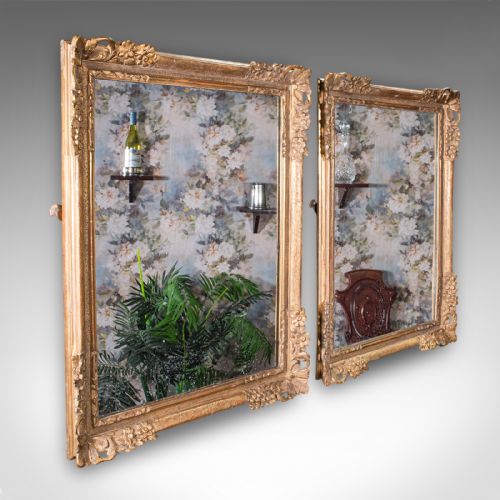
Pairs matter more than the difference in number suggests. Sampled pairs of giltwood, oval, girandole and border-glass mirrors, along with one set of three, sit far above comparable singles. Original survives as a claim in title after title too: original glass, original mercury plate, original gilt, original gold leaf, foxed mercury plate. That claim pushes a piece upward.
Period beats revival plainly. Titles carrying style or revival, and the Georgian-style pieces dated 1880 to 1930, sit well below period-dated giltwood and fretwork of the same form. Named origin lifts as well: Scottish, Irish, Italian, French, Dutch, Swedish and Anglo-Indian all appear in titles, with the Irish giltwood among the highest priced.
Retail Price Guide 2026
Typical UK retail prices for georgian mirrors, calculated from the Sellingantiques database of over a million retail prices indexed since 2003. This retail price guide relies exclusively on Sellingantiques data; no external sources or auction records are used, so the figures do not describe the wider market.
Georgian is the period label used most on Sellingantiques for these mirrors, with 19th Century next and 18th Century third.

The Antique Georgian Mirrors Glossary
- Toilet mirror
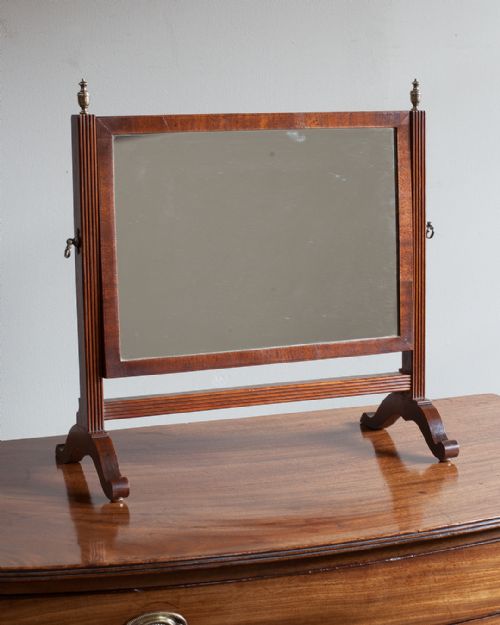
- A small tilting dressing glass, usually on a box base with drawers. Named in over a hundred titles, and often interchangeable with dressing mirror.
- Pier glass
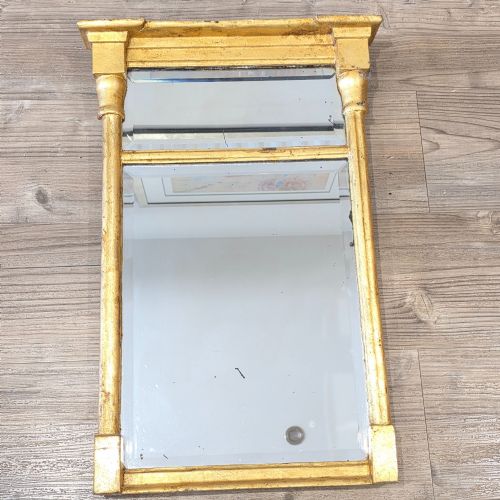
- A tall narrow mirror made for the wall pier between two windows. The word appears on its own and as the full phrase.
- Overmantel
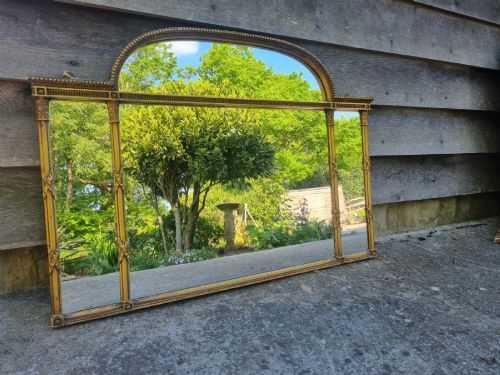
- A broad mirror designed to sit above a fireplace. Spelled overmantle in nearly as many titles as overmantel, and both mean the same thing.
- Cheval
- A full-length glass swinging between uprights in a floor-standing frame. One sampled version rises and falls rather than tilting.
- Parcel gilt
- Partly gilded, with the gold on mouldings or slips and the rest of the timber left plain. Distinct from giltwood, where the whole carved frame is gilded.
- Ho-ho bird
- A stylised long-tailed bird perched in a fret-cut or carved crest. It recurs from the plainest fretwork wall mirrors to carved giltwood overmantels near the top of the range.
Frequently Asked Questions
What is the most common type of Georgian mirror?
The mahogany swing dressing or toilet mirror on a small drawered box base. Mahogany appears in around a third of titles, and dressing, toilet and dressing table between them account for a large block of the rest.
Bases vary: serpentine fronts, bow fronts, two and three drawers. These sit in the lower third of the range.
Why are Victorian and 1920s pieces filed as Georgian?
The dealer-entered dates run from 1700 to 1930. Georgian Revival and Georgian-style work of roughly 1880 to 1930 is dated inside this category rather than excluded from it.
Titles carrying style or revival sit well below comparable period-dated giltwood and fretwork mirrors.
How are these mirrors usually dated?
By label rather than by year. Only 217 of 1,076 listings on Sellingantiques carry a clean date, so most are filed as Georgian, 19th Century, 18th Century, Regency or 1800s.
Those labels are broad and sometimes sit oddly against the title. A piece called Georgian may be filed under Victorian, Edwardian or a later decade. The 1750s is the one decade with a visible cluster of its own.
Does overmantle mean something different from overmantel?
No. Both spellings describe the same thing, a broad mirror made to hang above a fireplace.
They coexist in near-equal numbers, overmantel in 51 titles and overmantle in 44.
What is a convex mirror in this category?
An outward-bulging circular plate, usually set in a gilt ring. Convex appears in 67 titles, making it a small but steady presence.
Some carry an eagle above the frame, and some are girandoles, with candle arms fixed to the ring. One sampled convex measured 69 inches; another had a dragon frame.
Are Georgian mirrors widely available?
Yes. Around 112 are listed in a year on Sellingantiques, and 243 different dealers have handled them.
That makes this one of the most widely stocked mirror groups on the marketplace, with the mahogany dressing mirror doing most of the work at the volume end.