




Venetian Etched Glass Mirror
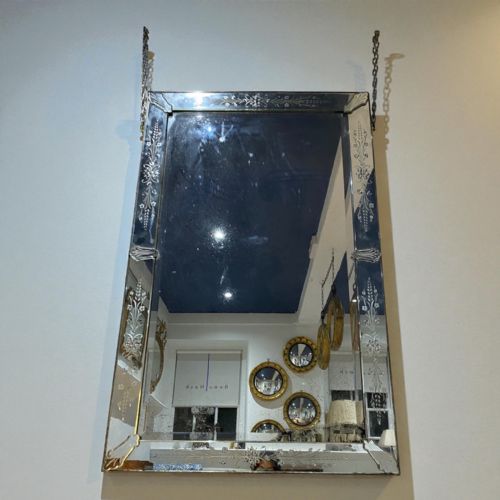
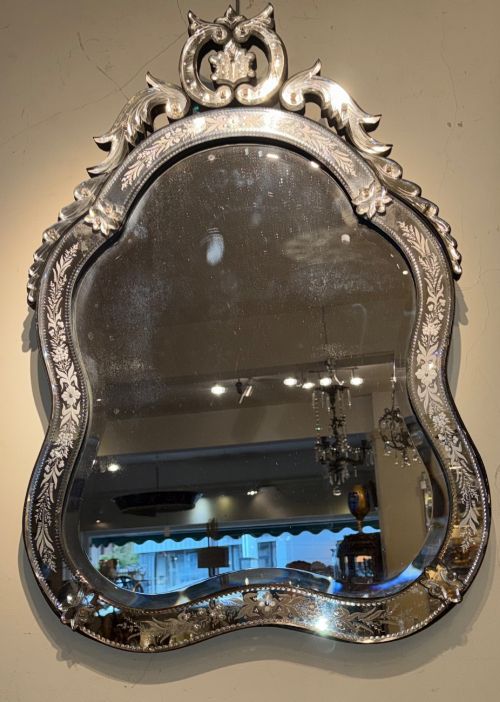
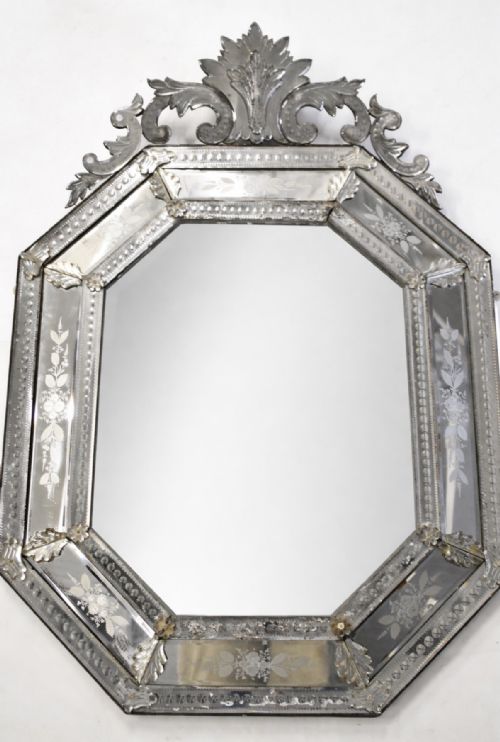
These venetian etched glass mirror examples bring brilliant light and Italian craftsmanship into a room.
Venetian Etched Glass Mirror
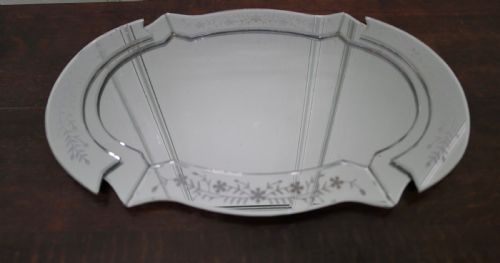
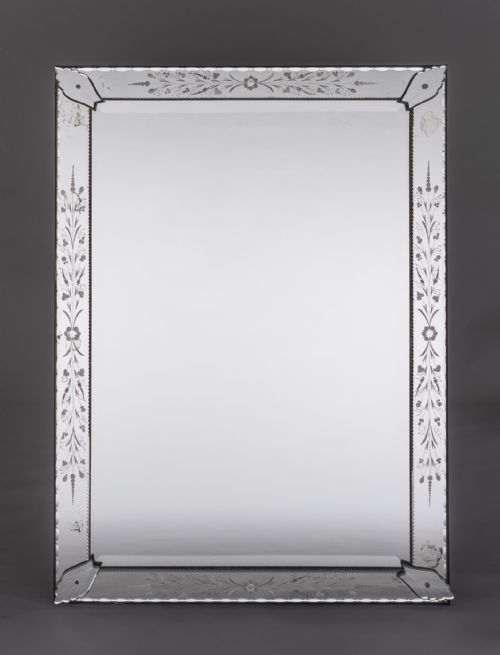
A venetian etched glass mirror combines silvered plates with intricate surface engraving, capturing the decorative traditions of Italy. Collectors searching for a venetian etched glass mirror encounter wall mirrors, overmantles, cushion frames and serving trays.
The pieces on this page span from the eighteenth century through the nineteenth century, the Edwardian era, and into the art deco period of the nineteen thirties and fifties. Wall mirrors and overmantles dominate the selection, alongside occasional pairs and decorative glass trays.
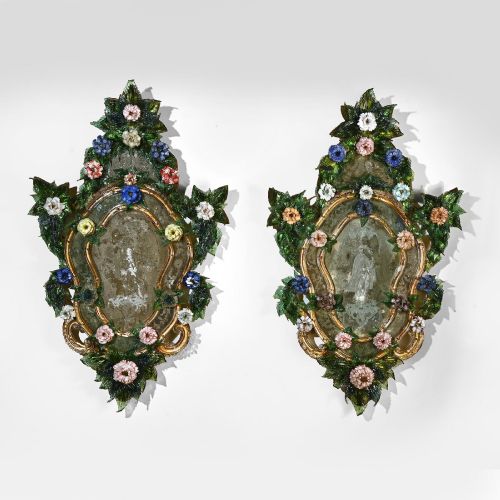
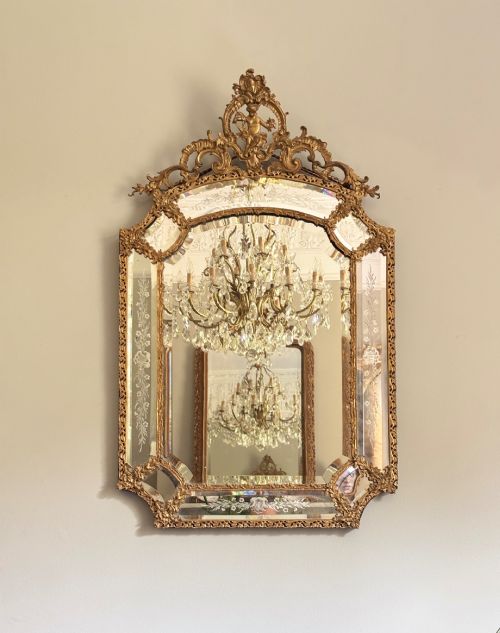
Makers and workshops from Venice and Murano shape this tradition, utilising traditional forms that range from simple bevelled plates to elaborate rococo revivals with polychrome accents, ruby red borders and ebonised frames.
How they were made
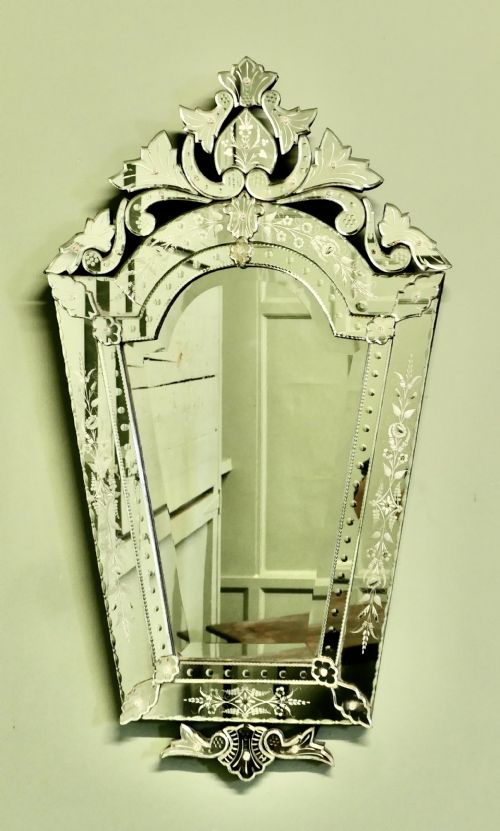
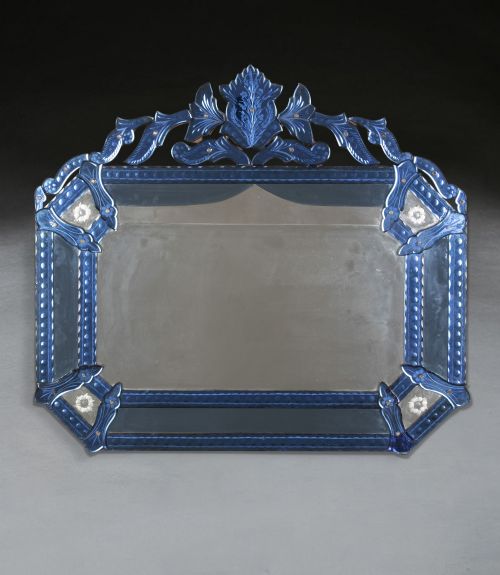
Glassmakers form these pieces using mirrored glass, silvered glass and clear glass plates mounted onto wooden foundations or giltwood frames. Artisans cut and etch floral patterns directly into the glass surface, often incorporating coloured glass borders in blue, peach or ruby red.
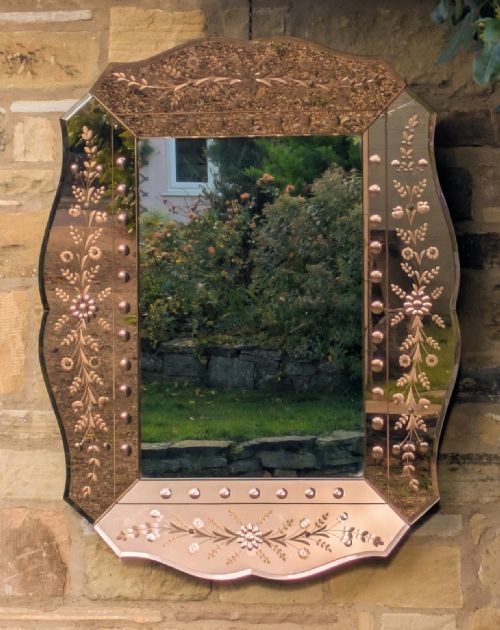
Frames combine carved gilt-wood, metal, ebonised wood and gilt bronze alongside the glass elements. Cushion mirrors feature shaped glass panels secured with decorative glass pins over wooden backs.
Listings feature periods from the eighteenth century to the nineteen fifties, including Edwardian, Victorian and art deco pieces.
What varies in quality
The depth and precision of the surface etching define the artistry of a piece, distinguishing simple linear incisions from deeply carved floral motifs. Superior examples display crisp detail in the cut glass elements and harmonious proportions in cushion frames.
The integrity of the original silvering and the condition of the glass plates influence the character of each piece. Surviving polychrome highlights, giltwood carving and original coloured glass borders elevate the distinction of the work.
The Venetian Etched Glass Mirror Glossary
- Cushion mirror
- A mirror featuring a convex central plate surrounded by angled peripheral glass panels. These sloping outer sections reflect light at multiple angles.
- Overmantle mirror
- A wide horizontal wall mirror designed to hang above a fireplace mantelpiece. They often feature extensive etched decoration across the upper frame.
- Murano glass
- Glass produced on the Venetian island of Murano, renowned for centuries of specialist glassblowing and mirror production. The tradition encompasses coloured glass elements and intricate surface engraving.
- Giltwood
- Timber coated with a thin layer of gold leaf or gesso preparation. It provides a luminous frame for mirrored glass plates.
- Bevelled plate
- A mirror glass plate with edges that are ground and polished at an angle. This technique creates a prismatic border that catches and refracts light.
Venetian Etched Glass Mirror: Frequently Asked Questions
Where should I hang a venetian etched glass mirror?
These mirrors suit principal reception rooms, hallways and bedrooms where natural light can strike the engraved glass surfaces. Placing them opposite a window or lamp maximises the reflective quality and shows off the etched floral details.
Overmantle versions work naturally above a fireplace, while smaller wall mirrors anchor console tables or create focal points in narrower spaces.
How do I clean an antique glass mirror?
Maintenance requires gentle dusting with a soft, dry cloth to protect the delicate surface etching and silvered glass backing. Avoid commercial chemical sprays that might seep behind the glass plates or damage the giltwood and metal frames.
When necessary, use a lightly dampened microfiber cloth with plain water, drying the surface immediately to preserve the historic silvering.
How can I tell an older mirror from a newer reproduction?
Examination of the glass plates often reveals subtle irregularities, hand-cut facets and natural foxing or ageing within the silvered backing. Older examples display traditional construction methods on the reverse, including aged wooden backs and hand-cut fixings.
Stylistic markers such as art deco geometric cuts or nineteenth-century rococo revival carving align with the specific period of manufacture.
What is a cushion mirror?
A cushion mirror is a specific style featuring a raised, rounded profile where flat glass panels are angled towards the central plate. This construction creates a three-dimensional frame entirely made of mirrored glass.
Artisans often secure these glass sections with decorative stars or clips, adding texture and extra reflection to the piece.