
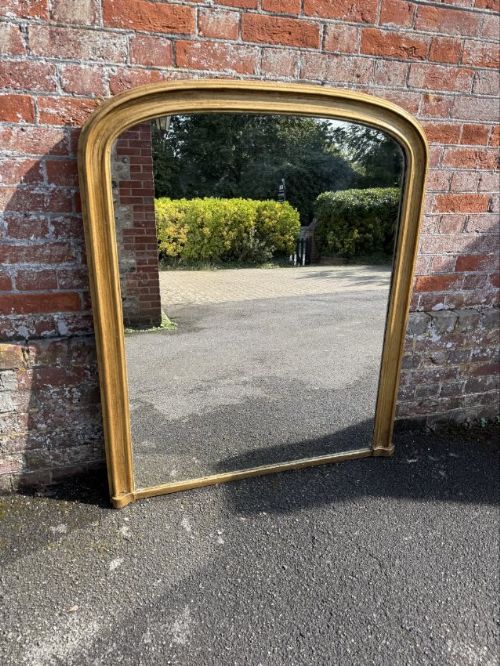
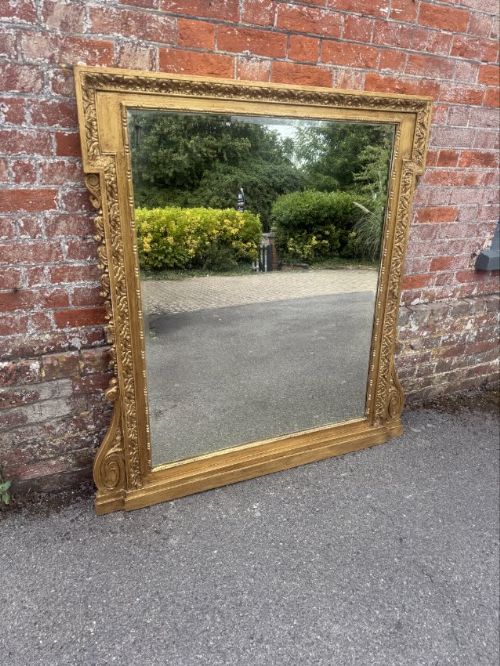
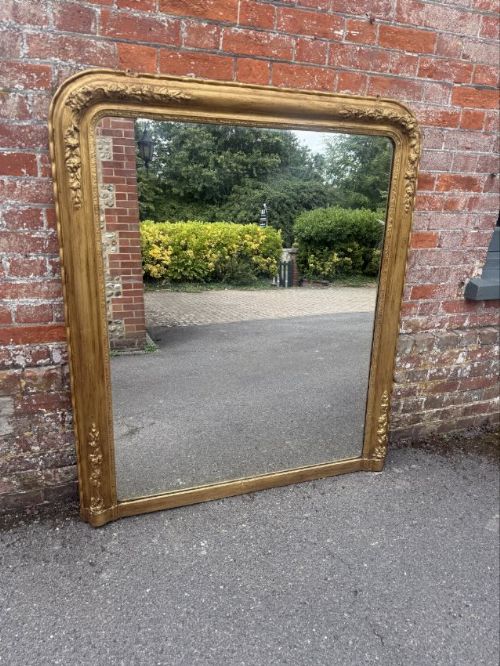
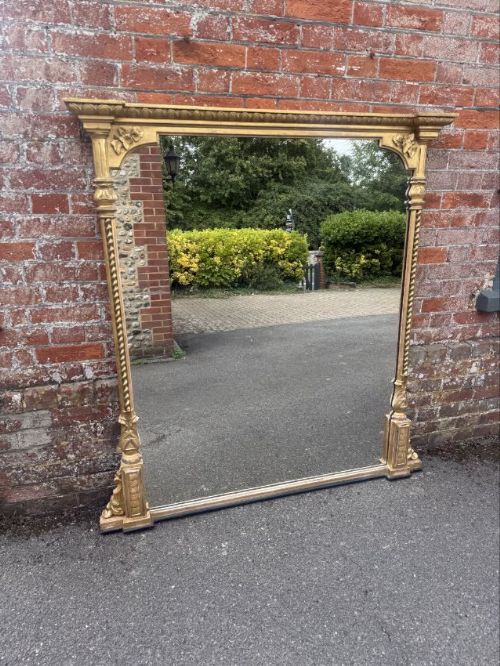


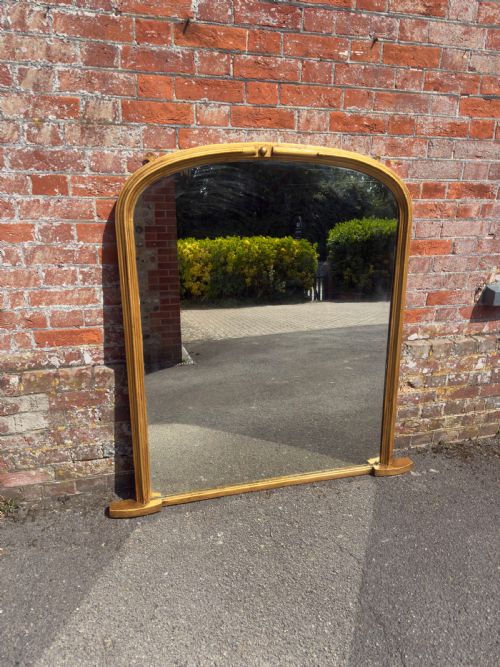
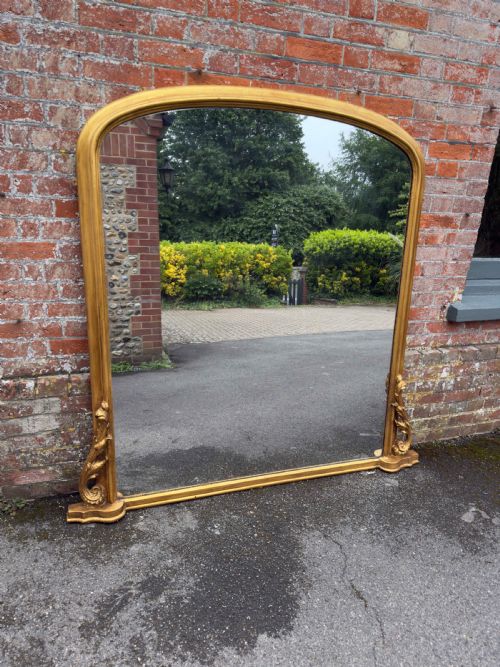


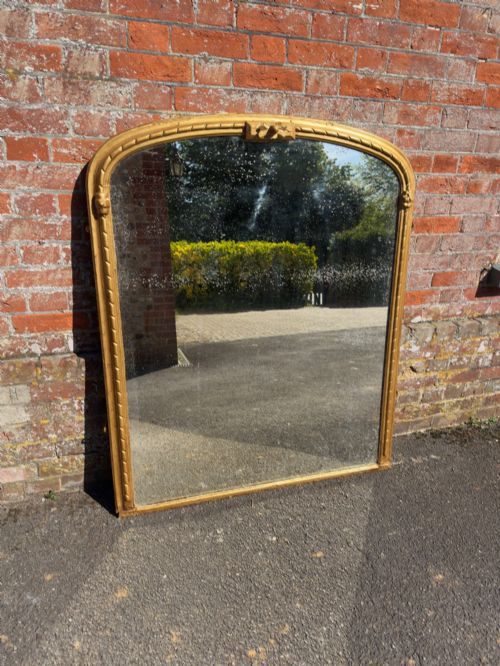
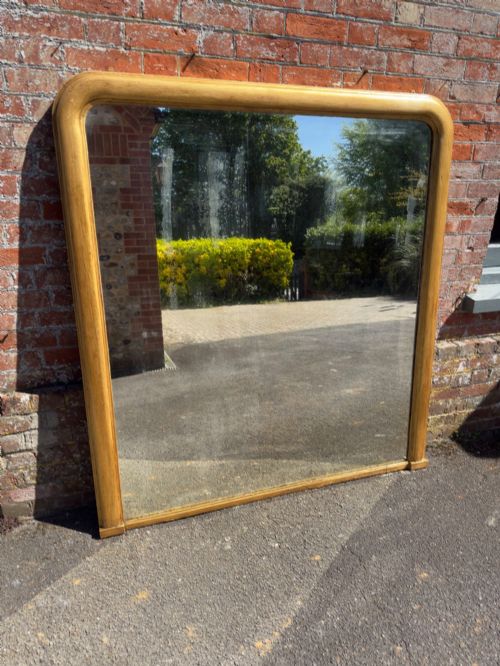
Gesso Fireplace Mirror
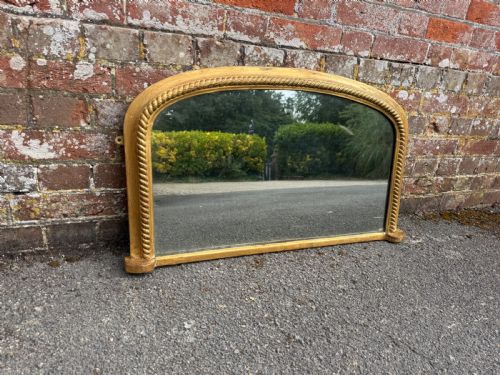
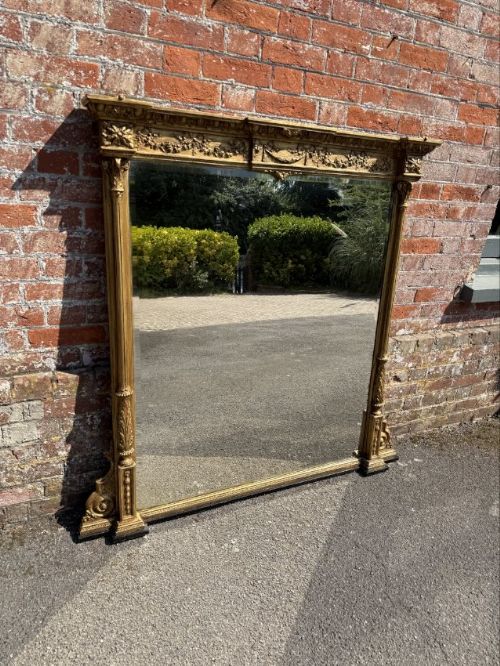
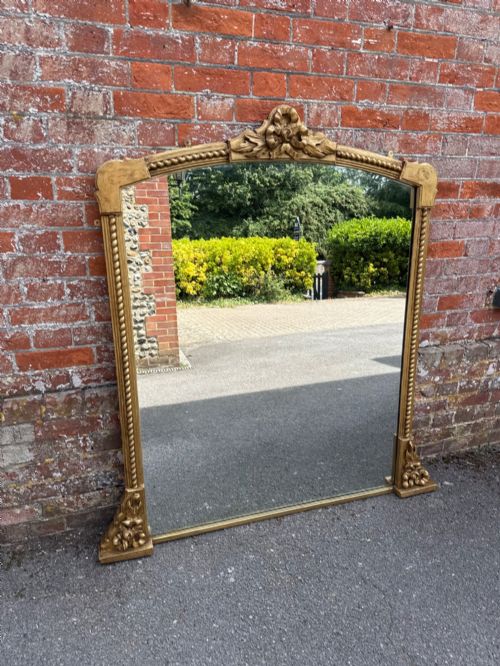
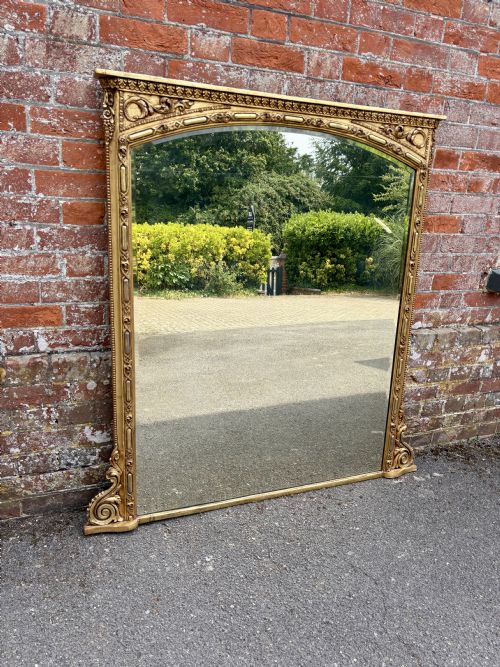
A gesso fireplace mirror brings instant light and historic character to a room, framed in rich giltwood designed to hang above a mantel.
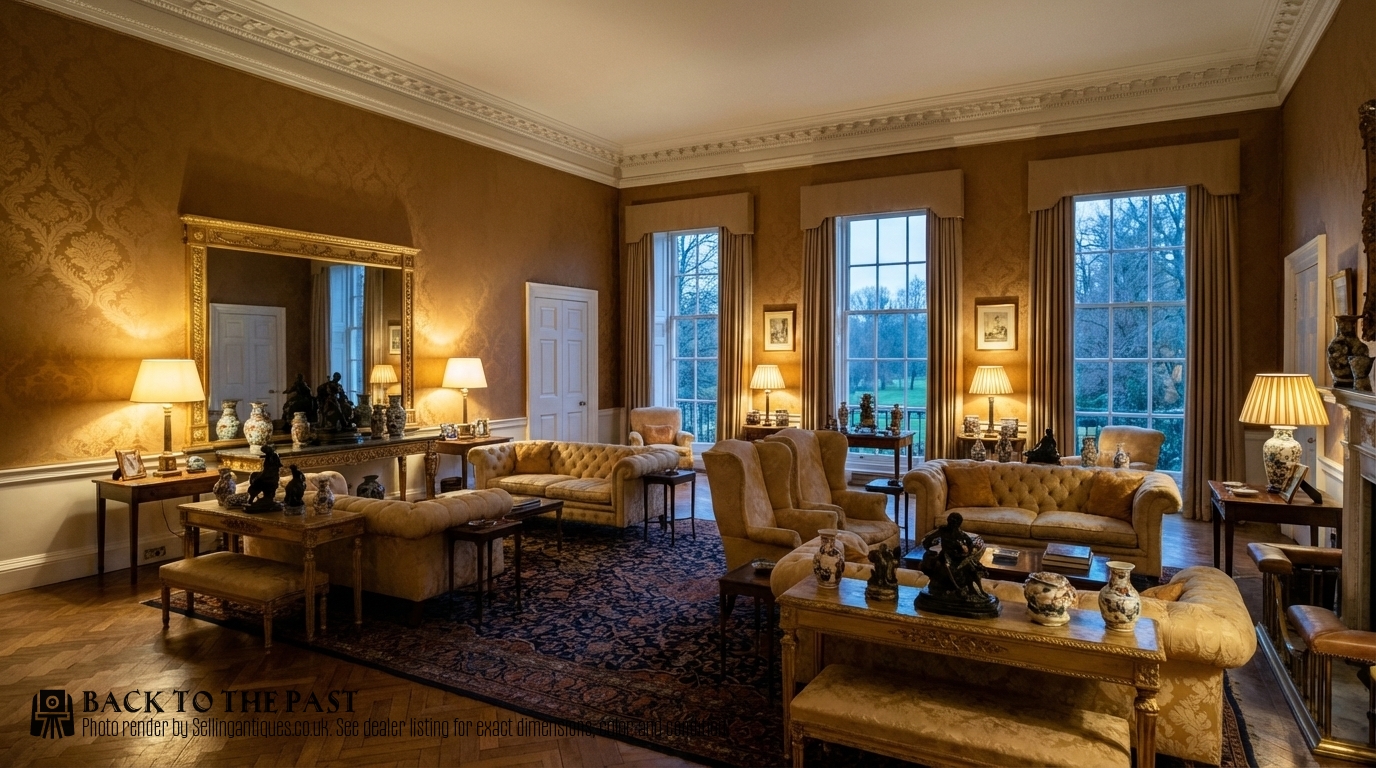
What these gesso fireplace mirrors are
A gesso fireplace mirror is typically a large nineteenth-century overmantel mirror designed to sit directly above a hearth. The pieces found here date from the Victorian era, specifically the eighteen-sixties and eighteen-seventies, reflecting the tastes of English country houses.
Most examples take the form of substantial overmantel mirrors with shaped tops, arched profiles, or ornate frames. Stylistically, they draw on Victorian Rococo Revival and Adam Revival designs, offering grand proportions and decorative impact.
These large mirrors were built to anchor a reception room, reflecting light from windows and fires alike. Their origins lie in English workshops producing heavy wooden frames coated in plaster compositions.
Materials and construction
The foundation of each piece is carved wood, which provides the structural strength needed for such large hanging frames. Over this wooden base, makers applied layers of gesso, a plaster-like mixture that could be smoothed, shaped, and moulded into intricate decorative details.
Many of these frames are finished with gold leaf or giltwood, catching the light with a warm metallic sheen. Alternatively, some variations feature painted surfaces rather than traditional gilding, paired with original glass plates.
Retail Price Guide 2026
Typical UK retail prices for gesso fireplace mirror, calculated from the Sellingantiques database of over a million retail prices indexed since 2003. This retail price guide relies exclusively on Sellingantiques data; no external sources or auction records are used, so the figures do not describe the wider market.
Victorian craftsmen relied on layers of chalk and glue to build up gesso, occasionally hiding tiny brush hairs in the plaster like secret signatures.
What separates the best from the rest
Quality in a gesso fireplace mirror rests on the crispness of the moulded ornament and the depth of the carved wooden substructure beneath the plaster. Finer examples display sharp, well-defined motifs like rope twist borders and elaborate scrolls that retain their original definition without softening.
The choice of surface finish also dictates the character of the piece, with richly applied gold leaf offering a different visual weight compared to simpler painted treatments. Furthermore, the preservation of the original glass plate and the integrity of the heavy wooden frame determine the overall standing of the mirror.
The Gesso Fireplace Mirror Glossary
- Gesso
- A plaster mixture applied over wood to create a smooth surface for gilding or painting. This material allows for intricate relief ornamentation on the frame.
- Giltwood
- Wood that has been coated with gold leaf or gold paint. It provides a luminous surface that defines classical and revival mirror frames.
- Overmantel mirror
- A large mirror specifically proportioned to hang on the wall directly above a fireplace mantel. These pieces often dominate the chimney breast.
- Rope twist
- A carved decorative motif resembling braided cord. It frequently borders the inner or outer edges of Victorian frames.
- Adam Revival
- A neoclassical style drawing on eighteenth-century designs characterised by symmetry and delicate ornamentation. It experienced a strong resurgence during the Victorian period.
Frequently Asked Questions
Where should I hang a gesso fireplace mirror?
These large mirrors are traditionally hung directly above a fireplace mantelpiece where they serve as the visual anchor of the chimney breast. Their generous proportions also suit placement above a low sideboard or along a principal drawing room wall.
Because of their substantial weight, they require secure fixings anchored directly into structural wall studs or masonry. Positioning them opposite a window helps maximise natural light within the room.
How do I identify a Victorian overmantel mirror?
Victorian overmantel mirrors from this period are distinguished by their heavy timber construction and thick applications of moulded gesso. They frequently measure quite large to fit nineteenth-century chimney breasts and often feature shaped, arched, or ornate crests.
Stylistic cues point towards Victorian Rococo Revival or Adam Revival motifs rather than earlier Georgian simplicity. The presence of original mirrored glass with subtle foxing further confirms the age of the piece.
Are these mirrors painted or gilded?
The majority of these pieces feature traditional gold leaf or giltwood surfaces designed to catch and reflect candlelight and firelight. This metallic finish was foundational to high-status nineteenth-century interior decoration.
Occasionally, variations appear with painted wooden frames instead of gilding, offering a softer aesthetic suited to country house interiors. Both finishes rely on the underlying gesso to create a smooth base.
How do I care for antique gesso and giltwood?
Gesso and giltwood frames require gentle handling to protect the brittle plaster composition and delicate surface finishes. Dusting should be done lightly with a dry, soft brush rather than a cloth that might catch on raised details.
Keep these mirrors away from direct sources of heat, such as active fires or radiators, which can cause the wood to expand and the gesso to crack. Avoid all liquid cleaners and chemical polishes on both the frame and the antique glass.