

Gilded Chimney Glass
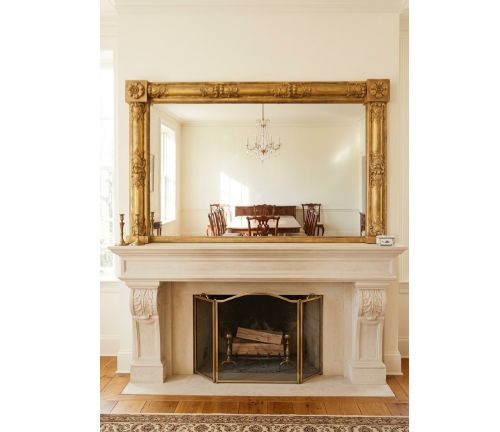
These large gilded chimney glass overmantle mirrors bring scale and reflected light to period interiors.
Gilded Chimney Glass
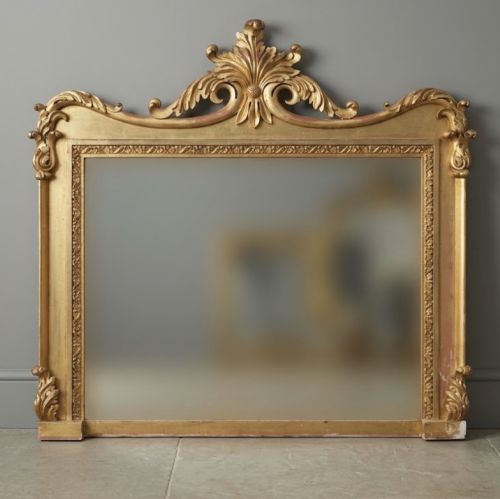
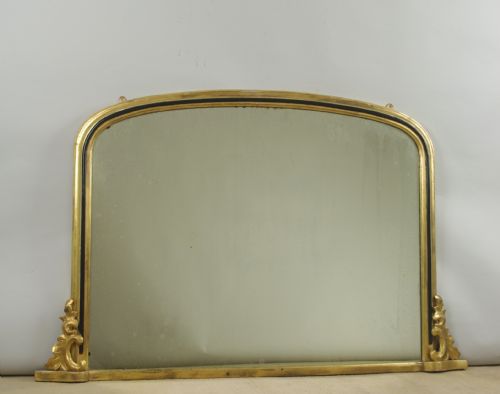
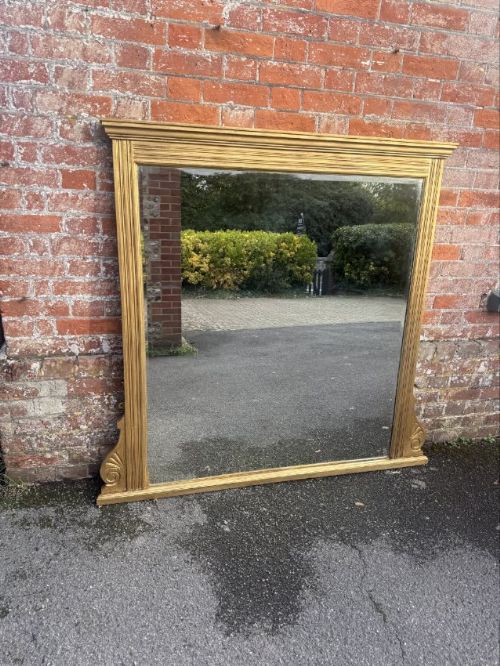
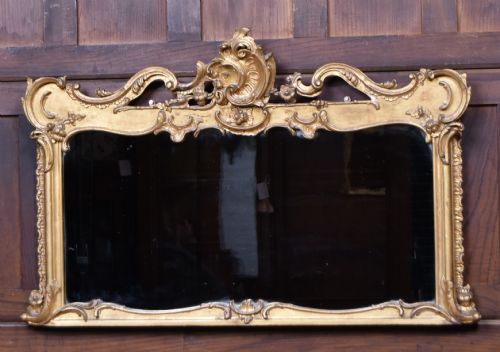
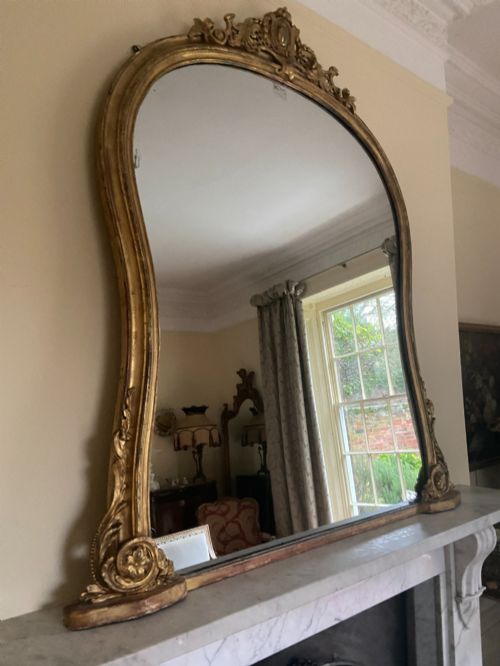
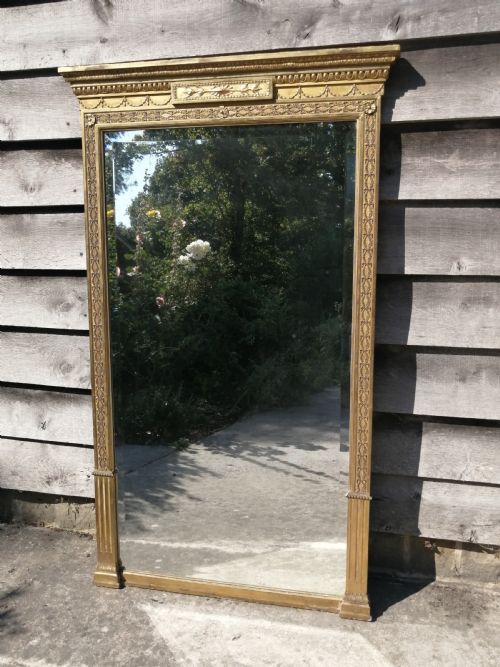
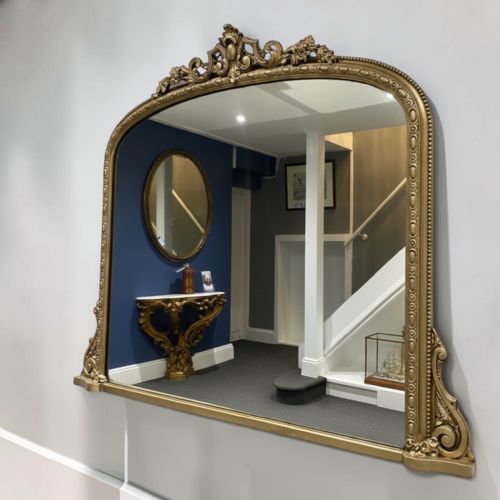
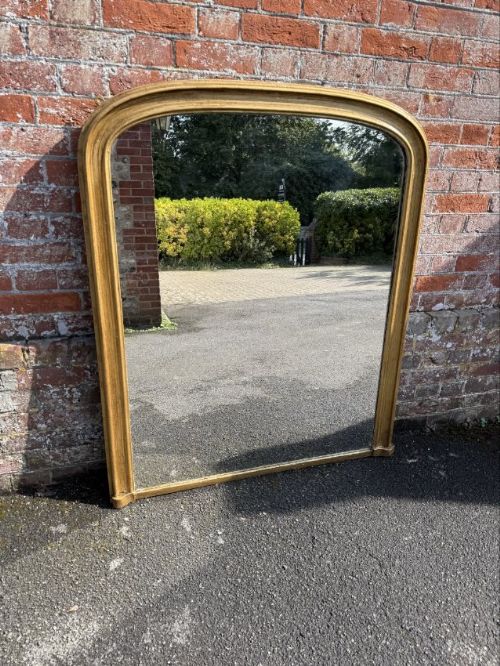
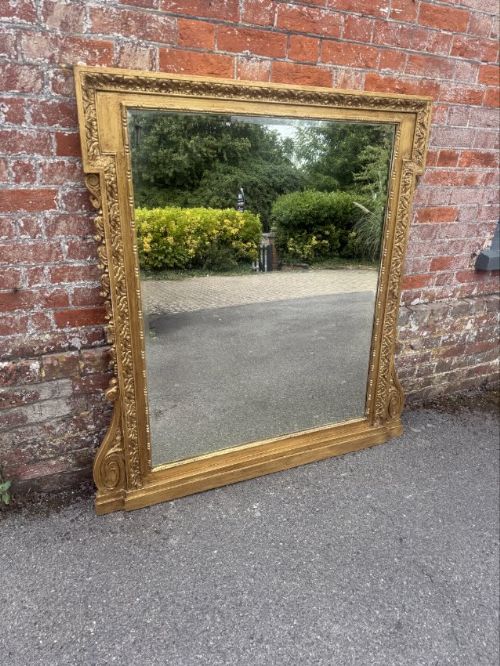
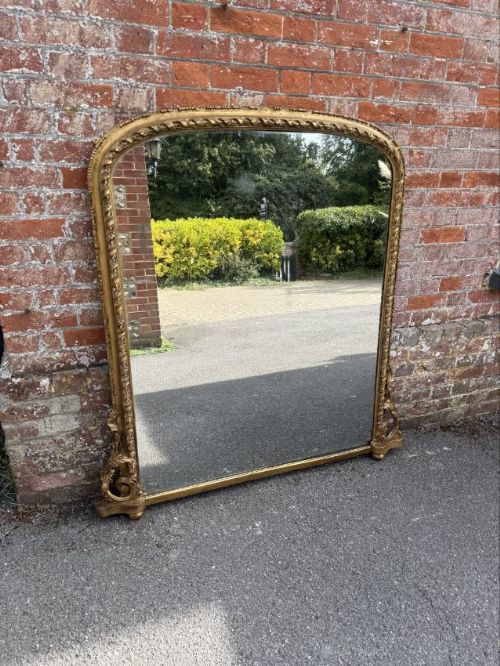
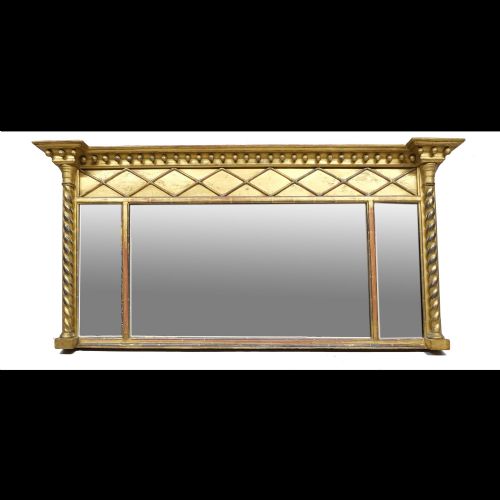
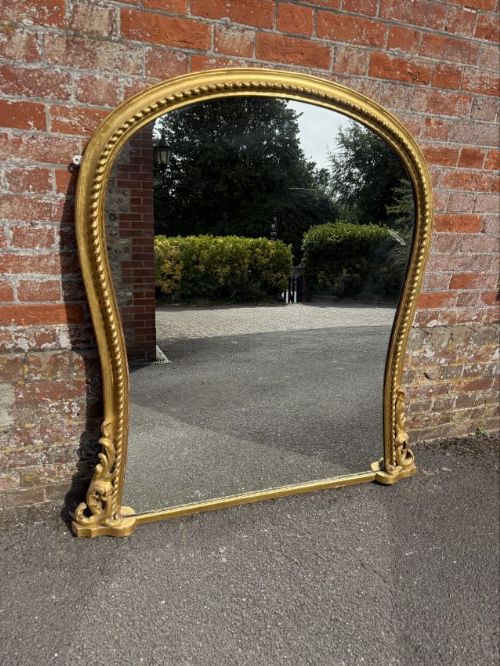
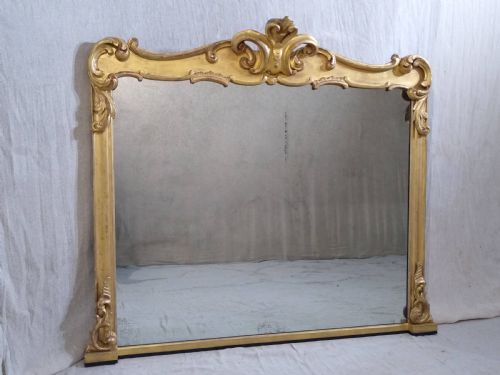
A gilded chimney glass is a large horizontal mirror designed to sit above a fireplace mantel in a formal room. The pieces on this page appear predominantly as overmantel mirrors, wall mirrors, and triptych formats from the Regency, Victorian, and Edwardian periods.
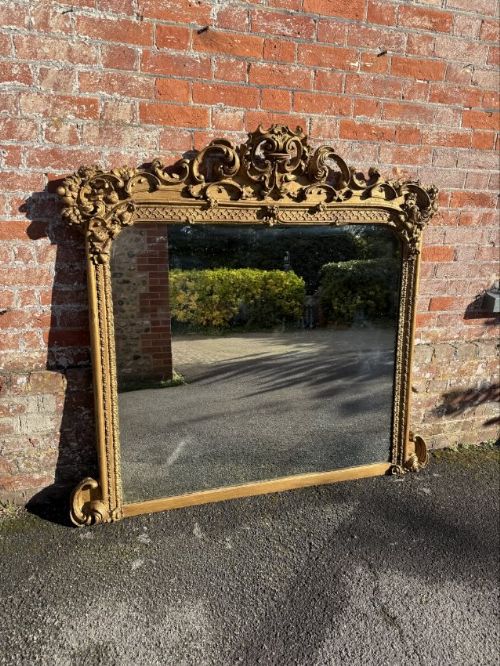
Most examples originate from English workshops of the nineteenth century, though Scottish, Irish country house, and continental pieces also occur. The dominant form is a substantial rectangular or arched top plate framed by decorative mouldings intended to command a chimney breast.
How they were made
Makers constructed the primary frames from carved wood, often oak or pine, applying layers of gesso to build up intricate surface ornamentation such as rope twists, acanthus leaves, and ribbed details. Gold leaf or composition was then laid over the gesso base to achieve the characteristic metallic finish.
Reflecting plates were set within the timber frames, occasionally featuring triple-plate configurations, trumeau panels, or light foxing to the glass surface accumulated through age.
Gilded Chimney Glass Retail Price Guide 2026
Typical asking prices for gilded chimney glass among the pieces listed under this phrase on Sellingantiques today, from the lower quarter to the upper quarter. They describe what is for sale here now, not the wider market.
The listings span the eighteenth century through the Edwardian era, featuring wood, gesso, and gold leaf materials.
What varies in quality
Quality rests in the crispness of the carved wood and gesso relief work, where deeply undercut ornaments and finely rendered motifs like Ho Ho birds demonstrate superior craftsmanship over simpler moulded composition.
The integrity of the original gilding and the character of the mirror plate itself determine the standing of a piece, with untouched surfaces and original mirror glass holding greater distinction.
Ciceri and Co
The Gilded Chimney Glass Glossary
- Overmantel
- A mirror specifically proportioned to hang on the wall directly above a fireplace mantelpiece. These items typically feature wide horizontal dimensions to span the width of the fireplace below.
- Gesso
- A plaster-like mixture applied to wood frames to create a smooth surface for gilding or to be moulded into decorative relief details. It allows for sharp architectural and organic ornamentation.
- Triptych
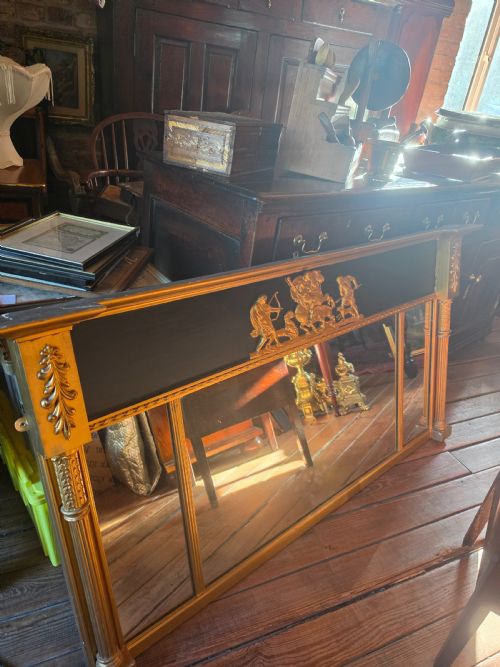
- A mirror divided into three distinct vertical sections or plates, often separated by columns or pilasters. This tripartite division is frequently seen on Regency period examples.
- Foxing
- The natural age-related spots and discoloration that develop within the silvering of antique mirror glass. This degradation creates a soft, speckled patina across the reflection.
- Trumeau
- A decorative wall mirror incorporating a painted panel or artwork directly above the glass plate. These grand-scale pieces originate primarily from Georgian and nineteenth-century neoclassical traditions.
Gilded Chimney Glass: Frequently Asked Questions
Where should a gilded chimney glass be hung?
These mirrors are proportioned to sit centrally on the wall directly above a fireplace mantelpiece, where their generous width mirrors the hearth below.
Positioning the glass at this height also allows the surface to reflect natural light across the room and elevate the visual proportions of the interior space.
How do I identify a Regency period mirror?
Regency pieces often display classical architectural motifs, such as acanthus leaf decorations, columns, and crisp gilding on wood frames.
They tend to emphasise symmetry and clean proportions, frequently appearing in triptych or horizontal formats designed for nineteenth-century rooms.
What causes foxing on antique glass?
Foxing occurs gradually as moisture and air interact with the backing and silvering of the mirror plate over many decades.
This chemical ageing process produces soft, dark spots and a characteristic speckled patina that confirms the deep antiquity of the glass.