

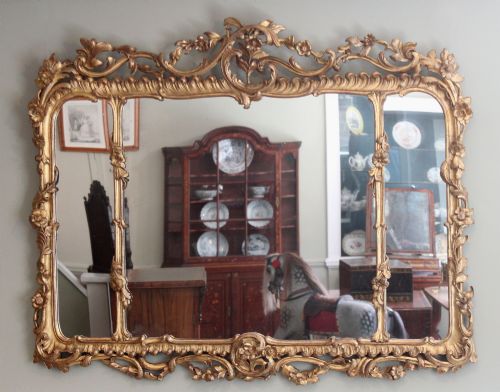


Three Plate Overmantel Mirror
A three plate overmantel mirror brings architectural width and reflecting light above a fireplace, anchoring a room with period proportion.
Three Plate Overmantel Mirror
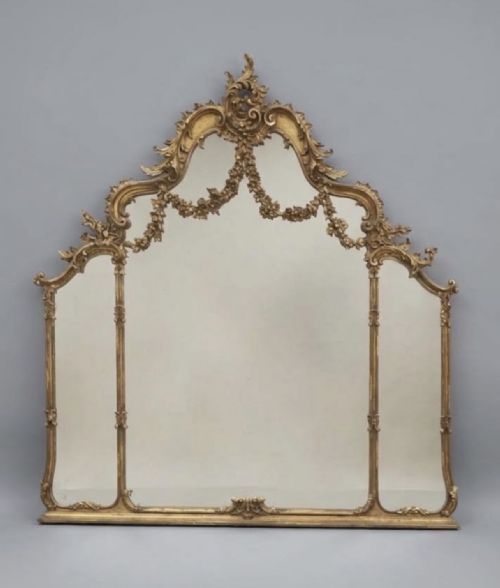
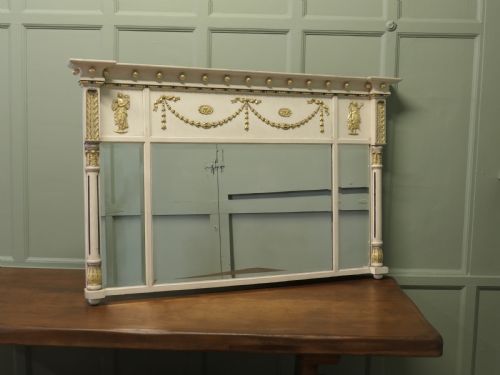
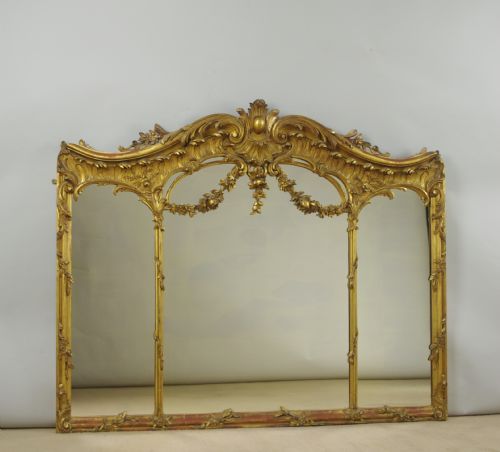
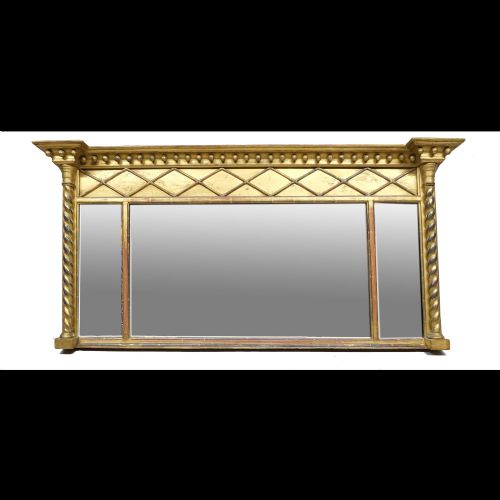
A three plate overmantel mirror is designed to sit horizontally above a fireplace mantelpiece, using a divided glass arrangement to span the width of a chimney breast. These large fixtures bring a room architectural scale and bounce natural light across the interior space. The form appears frequently across the nineteenth century, alongside earlier Georgian and later examples.
The version most commonly met on this page is the Regency giltwood triptych, where three side-by-side mirror plates are set within a single framed structure. Many of these pieces display neoclassical motifs, such as laurel wreaths, griffin friezes, or column supports, while others lean into ornate Rococo revival curves. Makers also utilised mahogany, rosewood, walnut, and satinwood alongside traditional gilt finishes.
Beyond the standard Regency tripartite layout, the selection encompasses George II and Georgian chimney piece mirrors, alongside later Victorian and early twentieth-century interpretations. Overmantel mirrors also function effectively on principal walls as horizontal trumeau panels, extending the perceived dimensions of a room. Surviving examples range from grand scale formats down to smaller proportions suited to modest domestic interiors.
Materials and construction
Makers constructed the primary frames of these mirrors using timber such as pine or hardwood, then applied layers of gesso to build up intricate surface ornamentation. Composition ornament, often called compa, was frequently moulded and affixed to wooden carcases to create repetitive classical details with speed and precision. Giltwood surfaces were achieved by laying gold leaf over bole onto the prepared gesso base, allowing the metal to be burnished to a high shine.
Mirror glass in earlier periods was produced by blowing cylinder glass or casting plate glass, which resulted in subtle imperfections, slight waviness, and depth within the reflection. Frames were joined using traditional cabinet-making methods, and multiple plates were held within internal divisions to prevent structural sagging across wide horizontal spans. Secondary woods on the reverses of these mirrors typically consist of pine or deal support panels.
Three Plate Overmantel Mirror Retail Price Guide 2026
Typical asking prices for three plate overmantel mirror among the pieces listed under this phrase on Sellingantiques today, from the lower quarter to the upper quarter. They describe what is for sale here now, not the wider market.
Some nineteenth-century mirrors still retain the tiny mirrored balls along their cornices, designed to bounce candlelight around the parlour.
Quality and execution
The distinction between ordinary and exceptional examples rests upon the crispness of the carved or moulded ornamentation and the depth of the gilding. High-quality pieces display sharply defined details in the gesso and foliage work, whereas lower-tier production relies on softer, shallower moulding that lacks definition. The handling of the gilt surface, particularly the contrast between matt and burnished areas, signals the skill of the original gilder.
Structural integrity and the originality of the mirror plates elevate a piece within the market. Surviving original glass retains a characteristic softness and silvering degradation that matches the age of the wooden frame, while replaced plates alter the historic integrity. Furthermore, the coherence of the architectural proportions - how the three plates relate in width and height to the overarching frame - determines the visual success of the mirror.
Ciceri & Co. of Edinburgh
The Three Plate Overmantel Mirror Glossary
- Overmantel mirror
- A large horizontal mirror designed specifically to hang on the wall directly above a fireplace mantelpiece. These pieces often repeat the architectural lines of the chimney breast.
- Triptych
- A tripartite arrangement dividing a single frame into three distinct vertical sections or mirror plates. This layout prevents glass from bowing across wide horizontal spans.
- Gesso
- A mixture of chalk or gypsum and size used as a ground for painting or gilding on wooden frames. It can be carved, moulded, or built up in relief layers before finishing.
- Trumeau mirror
- A decorative wall mirror often integrated into wood panelling or positioned between windows. The format sometimes incorporates an upper painted panel or carved relief above the glass.
- Parcel gilt
- A decorative finish where parts of an object are gilded with gold leaf while other areas show painted wood or natural timber grain. This technique highlights specific architectural mouldings.
Three Plate Overmantel Mirror: Frequently Asked Questions
Where should an overmantel mirror be hung?
These mirrors are traditionally positioned directly above a fireplace mantelpiece to reflect light and anchor the room's central hearth. They also function effectively on large blank walls where a horizontal focal point is required.
Because of their substantial width and weight, secure wall fixings tied directly into masonry or heavy timber studs are essential for safe installation.
How do I identify a Regency period mirror?
Regency pieces often feature classical motifs such as reeded columns, ball-detail cornices, laurel wreaths, and gilded finishes. The frames frequently employ a triptych plate layout divided by simple mouldings.
Looking at the construction of the wooden backboards and the composition of the gesso helps confirm the nineteenth-century origins of the piece.
What is the difference between gesso and carved wood?
Carved wood involves shaping the actual timber frame using gouges and chisels to create three-dimensional ornament. Gesso is a liquid plaster mixture applied over a simpler wooden base and built up to receive intricate mouldings.
Many period frames combine both techniques, using carved wooden structural elements supplemented by moulded gesso details.
Can I clean the original mirror plates?
Original mirror glass requires gentle cleaning with a soft, dry cloth to avoid disturbing historic silvering or delicate backing layers. Avoid harsh modern chemical sprays that can seep behind old bevelled edges and cause further degradation.
Embrace the natural foxing and age spots on antique plates as evidence of authenticity rather than trying to achieve a modern, flawless reflection.