


Painted Trumeau Mirror
A painted trumeau mirror combines architectural wall panelling, glass and oil paint into a single decorative scheme designed to anchor a formal interior.
The Form and Origins
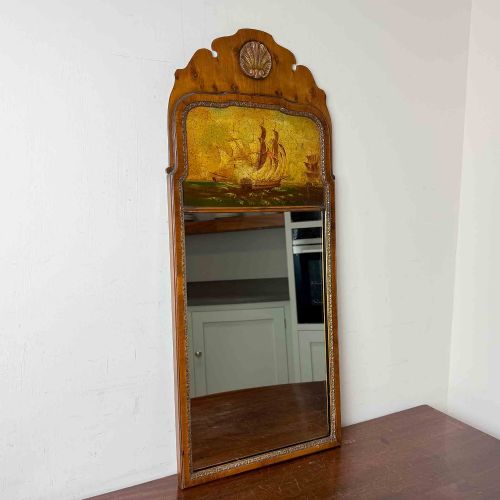
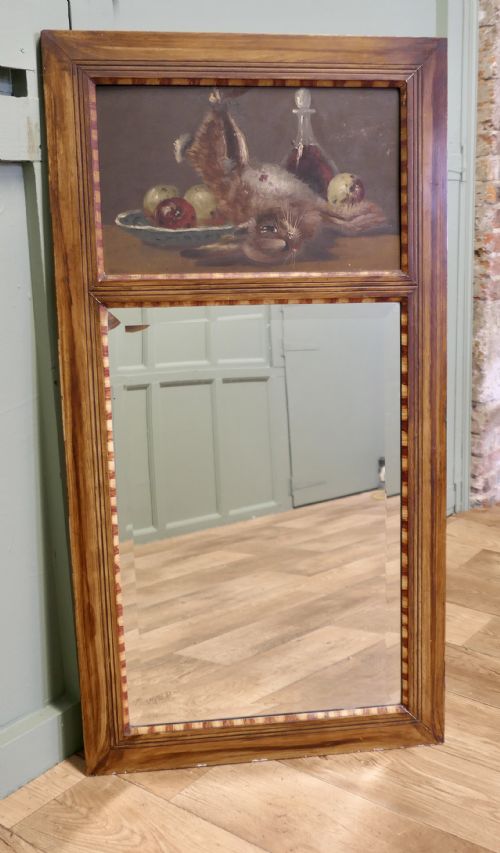
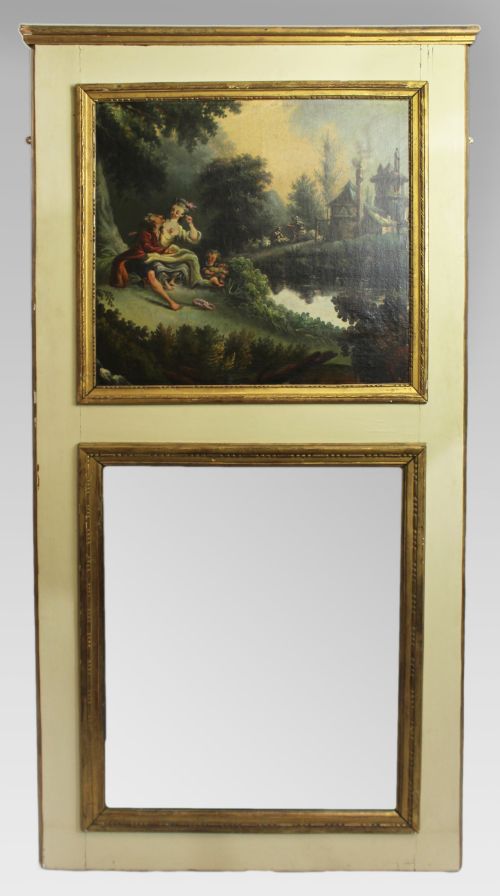
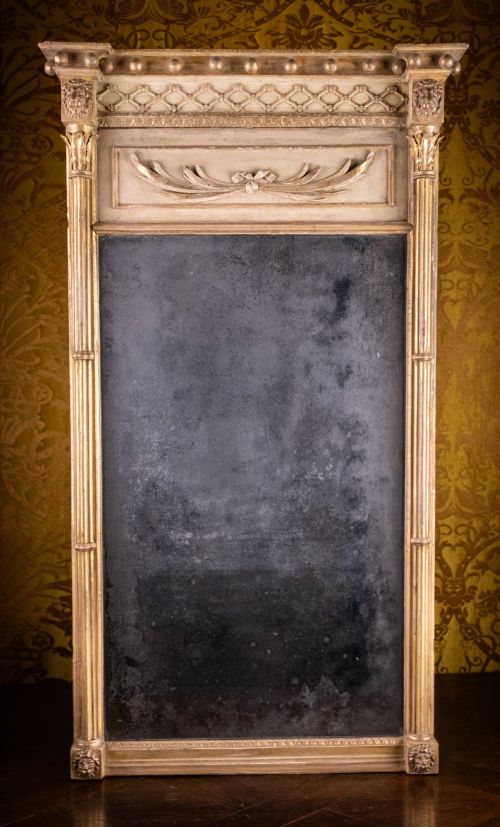
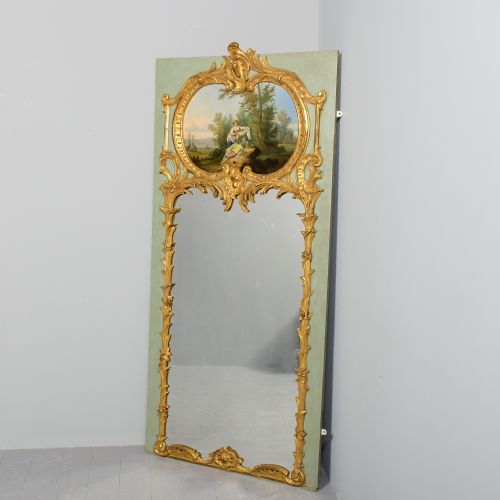
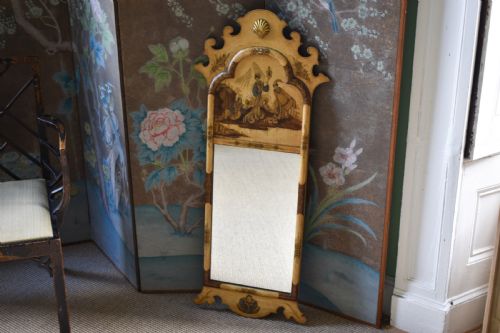
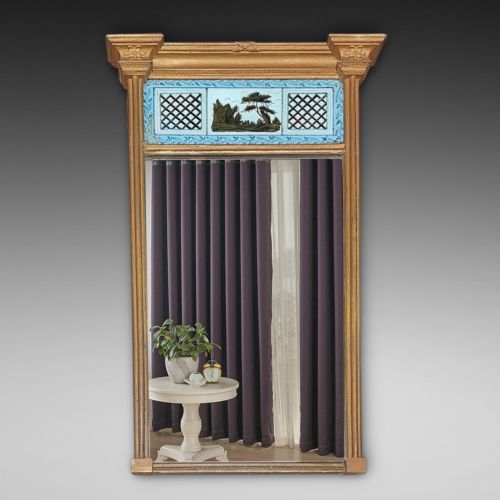
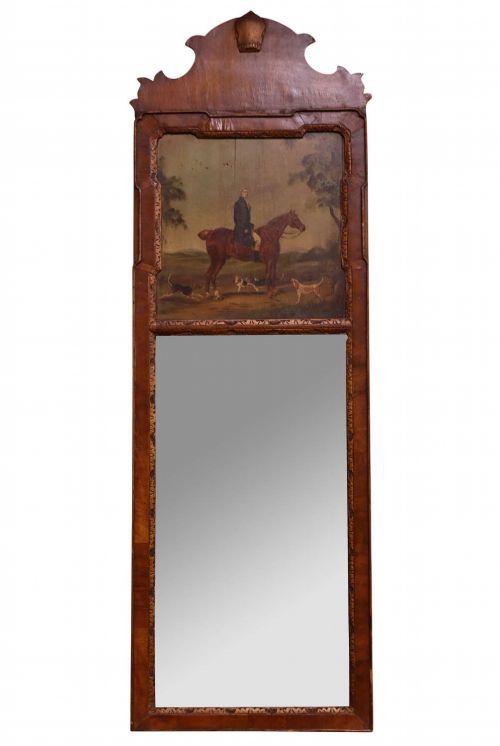
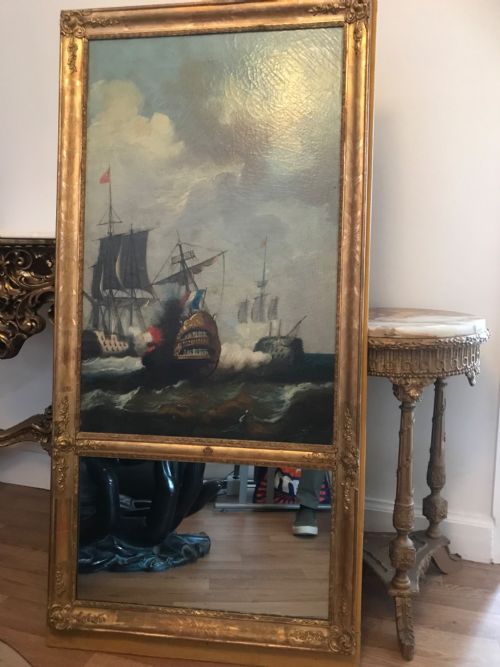
A painted trumeau mirror brings together a vertical wooden frame enclosing a looking glass below and an inset oil painting or canvas above. These pieces emerge predominantly in French provincial and neoclassical styles, spanning the nineteenth century alongside revival periods such as Queen Anne and Louis XVI.
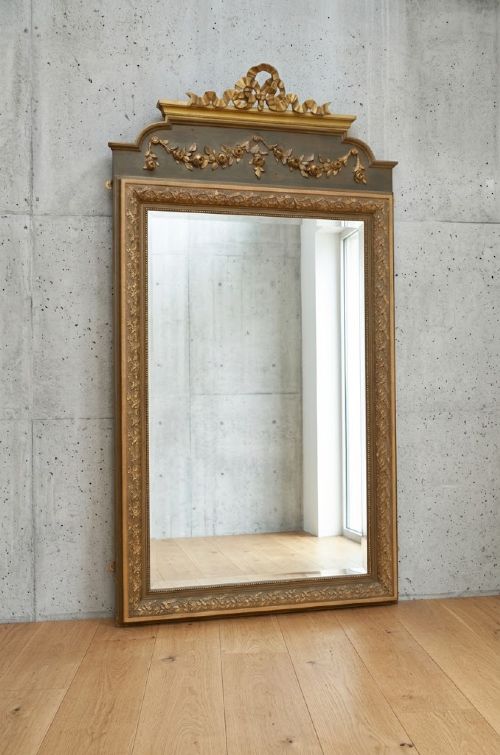
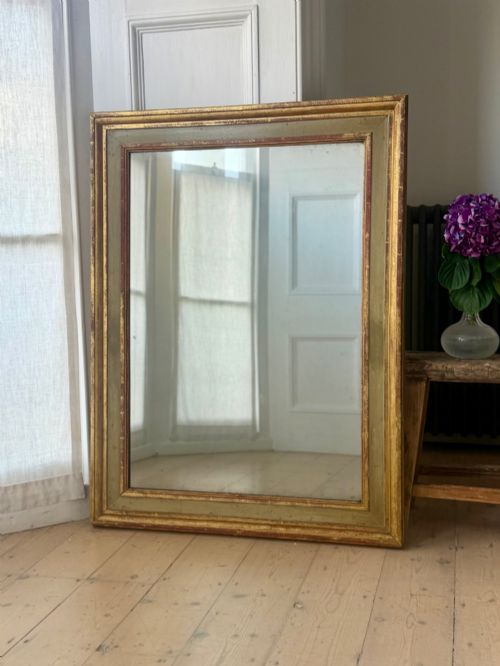
The most common form encountered here is the large overmantel mirror or wall mirror, sometimes accompanied by a matching console table. Makers construct these items using wood, gesso and glass, finished with paint, giltwood and parcel-gilt detailing.
The upper panels feature diverse pictorial subjects rendered in oil paint, ranging from equestrian and religious scenes to classical motifs and still lifes. Such works operate as integrated wall decoration rather than standalone art hung separately on a partition.
Materials and Construction
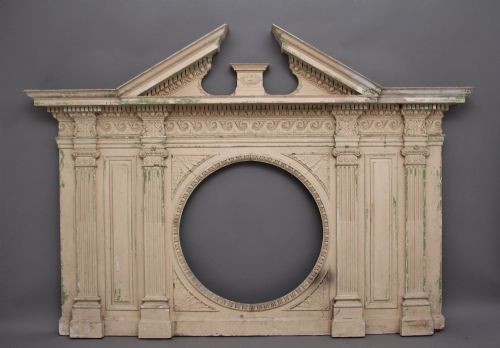
Carpenters build the primary carcass from wood, applying layers of gesso to create crisp relief ornamentation and carved garlands before adding paint or gilding. This plaster-like ground allows for intricate moulding work around the mirror plate and the upper canvas inset.
Painters apply oil paint directly onto canvas or wooden panels set into the upper section of the trumeau. Artisans then integrate silvered or mercury glass plates below, securing the mirror with traditional backing methods inside the primary frame.
Retail Price Guide 2026
Typical UK retail prices for painted trumeau mirror, calculated from the Sellingantiques database of over a million retail prices indexed since 2003. This retail price guide relies exclusively on Sellingantiques data; no external sources or auction records are used, so the figures do not describe the wider market.
Listings feature walnut, giltwood, canvas and gesso across Victorian, Georgian and nineteenth century periods.
Evaluating the Pieces
Quality rests upon the harmony between the painted upper panel and the architectural frame, where finer examples display original oil paintings executed with distinct artistic skill rather than rudimentary brushwork. The depth and crispness of the carved wood and gesso ornamentation further separate standard production from superior craftsmanship.
Surface treatment dictates much of the character, distinguishing untouched historical paint layers and genuine parcel-gilt highlights from later overpainting. The integration of matching elements, such as console tables or undisturbed original mirror plates, elevates the coherence of the piece.
The Painted Trumeau Mirror Glossary
- Trumeau mirror
- An architectural mirror featuring an inset painting or carved panel above the glass plate. These items originated as decorative wall panels for European reception rooms.
- Overmantel mirror
- A large horizontal or vertical mirror designed specifically to hang above a fireplace mantel. These pieces frequently incorporate trumeau styling to draw the eye upward.
- Gesso
- A plaster mixture applied to wood frames to create a smooth surface for gilding and relief carving. Artisans build up this ground before adding paint or gold leaf.
- Parcel-gilt
- A decorative finish where only specific raised portions of a frame receive gold leaf, while the remaining surfaces show painted wood. This technique highlights carved mouldings and details.
- Pier glass
- A tall mirror designed to hang on the narrow pier of wall space between two windows. These pieces reflect natural light deeper into the room.
Frequently Asked Questions
How were trumeau mirrors used?
These mirrors functioned as permanent architectural fixtures set flush into interior wall panelling, often positioned above fireplace mantels or between windows to maximise light and reflection in a room.
The upper oil painting served as a decorative focal point, allowing the mirror to double as framed wall art within formal reception spaces.
Where should I hang a trumeau mirror?
A trumeau mirror suits placement above a mantelpiece or as a standalone wall anchor in a hallway, dining room or drawing room. Large scale versions require substantial wall space to support their vertical proportions.
Pairing a tall pier mirror with a matching console table creates a balanced entryway or living room arrangement.
How do I care for antique painted surfaces?
Dust the carved wood and gesso frame gently with a dry, soft cloth, avoiding commercial chemical cleaners that can degrade aged paint and gilt surfaces.
Protect the oil painting and mirror glass from direct sunlight and excessive humidity to preserve the original nineteenth century materials.