

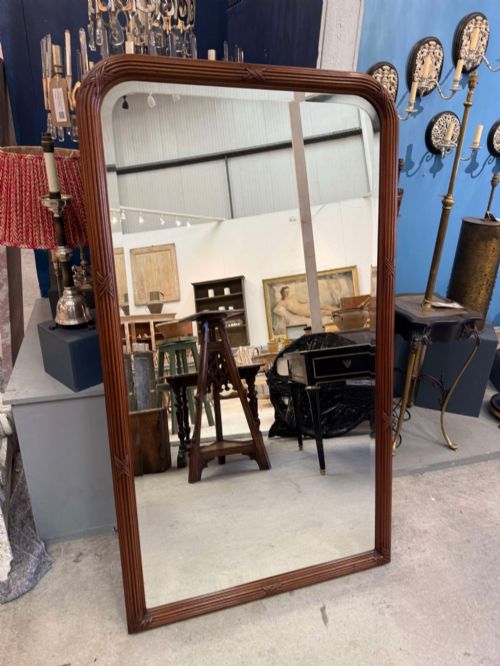
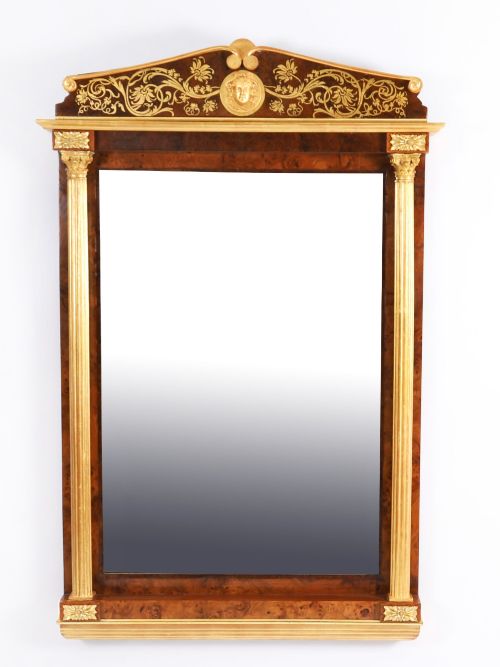
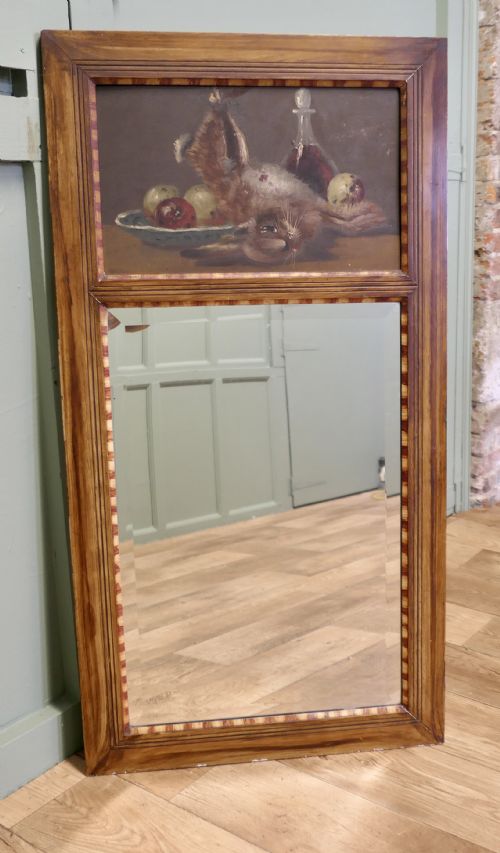
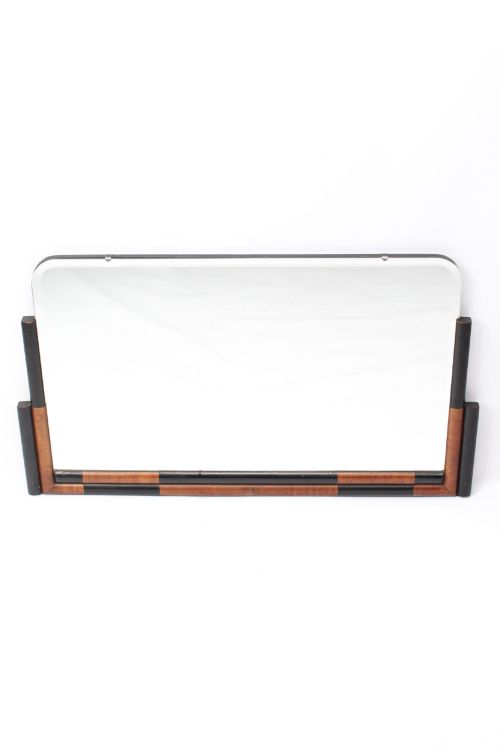


Walnut Overmantel Mirror
A walnut overmantel mirror brings warmth and reflective breadth to a room, designed to sit commandingly above a fireplace.

Walnut Overmantel Mirror
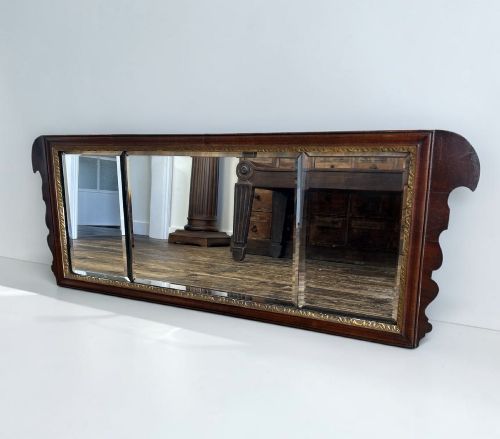
A walnut overmantel mirror is a substantial looking-glass engineered to occupy the wall space directly above a mantelpiece, often featuring arched or rectangular proportions designed to echo architectural hearths.
These pieces emerge most frequently from Victorian workshops and the late nineteenth century, alongside Edwardian variations and earlier Georgian or Regency examples.
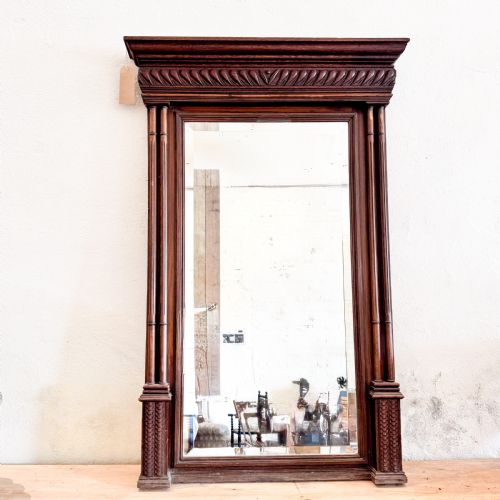
The domestic forms range from simple pillared frames to elaborate triple-plate designs incorporating gilt highlights, parcel gilt details, or inlaid marquetry panels.
How they were made
Cabinetmakers constructed the foundational carcasses from solid timber, frequently applying burr walnut veneers or delicate wood inlay to display the grain's natural figuring.
Many frames incorporate applied giltwood carvings, parcel gilt accents, or brass detailing to contrast with the dark warmth of the polished walnut.
The mirror glass itself was typically bevelled or flat-set, held securely within rebated wooden frames backed by panelled boarding.
Walnut Overmantel Mirror Retail Price Guide 2026
Typical asking prices for walnut overmantel mirror among the pieces listed under this phrase on Sellingantiques today, from the lower quarter to the upper quarter. They describe what is for sale here now, not the wider market.
One versatile nineteenth-century frame listed here was built with such adaptability that it doubled as a domestic bed head.
What varies in quality
The distinction between ordinary and exceptional pieces lies in the depth of the carving and the selection of timber veneers, such as richly figured burr walnut rather than plain stock.
Superior examples display crisp hand-carving on architectural crests and mouldings, whereas lesser items rely on simpler machine-cut profiles or applied composition ornaments.
The integration of secondary materials like original mercury mirror plates, ormolu mounts, or intricate Tunbridge ware marquetry elevates a piece well above standard domestic production.
Liberty & Co.·Gabriel Viardot·Charles Nosotti
The Walnut Overmantel Mirror Glossary
- Overmantel mirror
- A large looking-glass specifically manufactured to hang upon the wall above a fireplace mantel. These items often feature horizontal emphasis or grand arched crests.
- Burr walnut
- A prized timber veneer harvested from the irregular growths of walnut trees. It yields complex, swirling grain patterns highly valued in fine cabinetmaking.
- Parcel gilt
- A decorative technique where specific portions of a wooden frame receive a thin application of gold leaf. This highlights carved motifs against the dark walnut background.
- Trumeau mirror
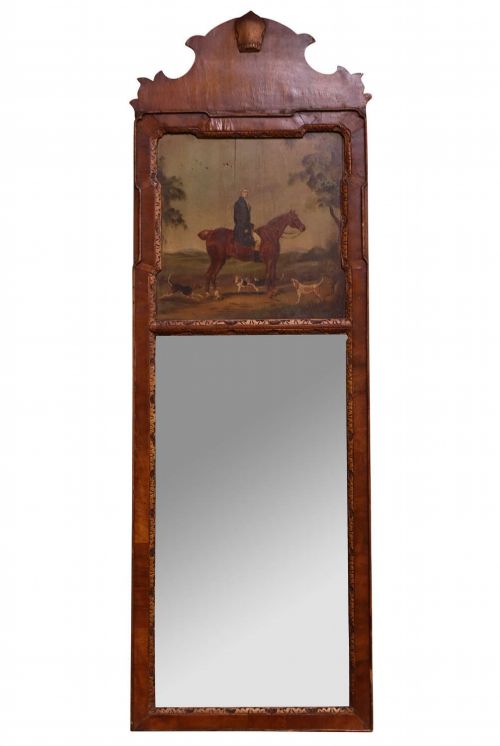
- A decorative wall glass combined with an oil painting or carved panel in the upper section. French examples frequently employ this layout.
- Marquetry
- The art of applying small pieces of veneer to a structure to form decorative patterns or pictures. Victorian makers utilised this on mirror frames and credenzas.
Walnut Overmantel Mirror: Frequently Asked Questions
How do I hang an overmantel mirror?
These mirrors carry significant weight due to their timber frames and heavy glass plates. Secure fixings must anchor directly into solid wall studs or masonry rather than plaster alone.
The lower edge typically rests directly upon the mantelpiece shelf, which bears a portion of the vertical load while wall brackets secure the upper frame against tipping.
Were these always meant for fireplaces?
While manufactured primarily for the wall space above a hearth, many items served double duty as pier glasses placed between tall windows.
Their generous dimensions and reflective properties made them equally suited to grand hallways and principal reception rooms where they could amplify available daylight.
How do I date a walnut overmantel mirror?
Dating relies upon examining the construction methods, framing style, and mirror plate characteristics. Victorian and nineteenth-century examples often feature elaborate carved crests and heavier mouldings.
Later Edwardian and Art Deco iterations display cleaner geometric lines, while Georgian precursors tend towards architectural symmetry and parcel gilt fretwork.
What is the difference between burr walnut and standard walnut?
Standard walnut exhibits a straight, uniform grain pattern derived from the trunk of the tree. It provides a steady, dark brown tone favoured in classical cabinetwork.
Burr walnut comes from a tree growth anomaly, producing dense, swirling patterns that create rich optical movement across the surface of the veneer.