49,633  PAGES BROWSED TODAY PAGES TODAY • 112 ANTIQUES UPLOADED TODAYNEW ARRIVALS
GIFTSNEW
112 ITEMS ADDED TODAY
Sort Order
Items Per Page
Browse Categories
Sort order
Relevant Links
Items per page
ID #SA1236843
FOR SALE
£2,950
Email Phone
Save
Antique French Burr Walnut Parcel Gilt Mirror 19th C 144x89cm
For sale by Regent Antiques
for sale €3,452     $3,747
£2,950
Regent Antiques

Regent Antiques

Sellingantiques Verified Since Sep 2016
Browse dealers 666 items
  • About Us
    We specialise in english and continental furniture, silver, porcelain and decorative items.
  • Trade Associations
    Regent Antiques is a registered member of LAPADA  CINOA
Id #SA1236843
PDF SHARE
SAVE

Antique French Burr Walnut Parcel Gilt Mirror 19th C 144x89cm

19th century
For Sale by Regent Antiques
Description

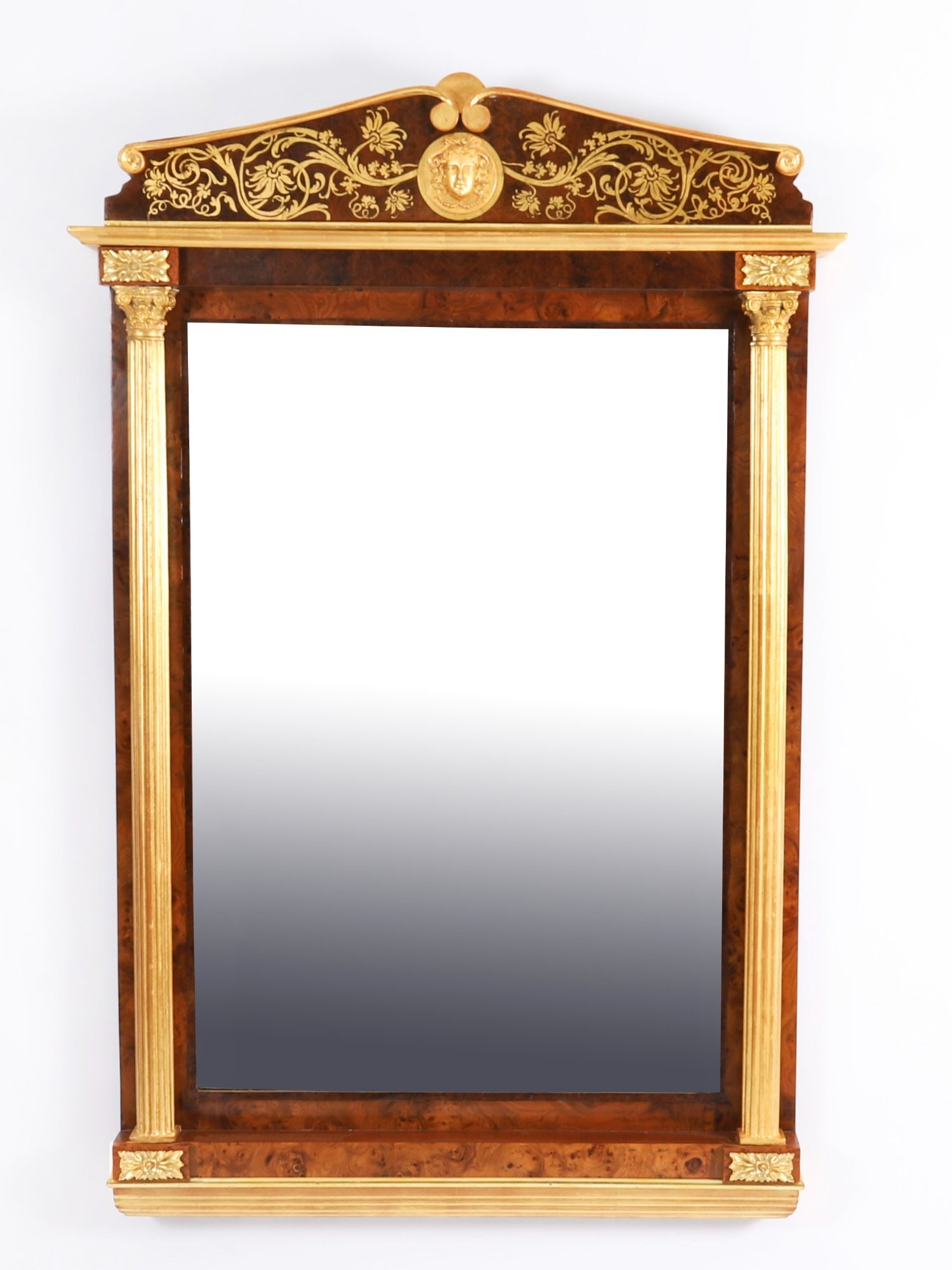
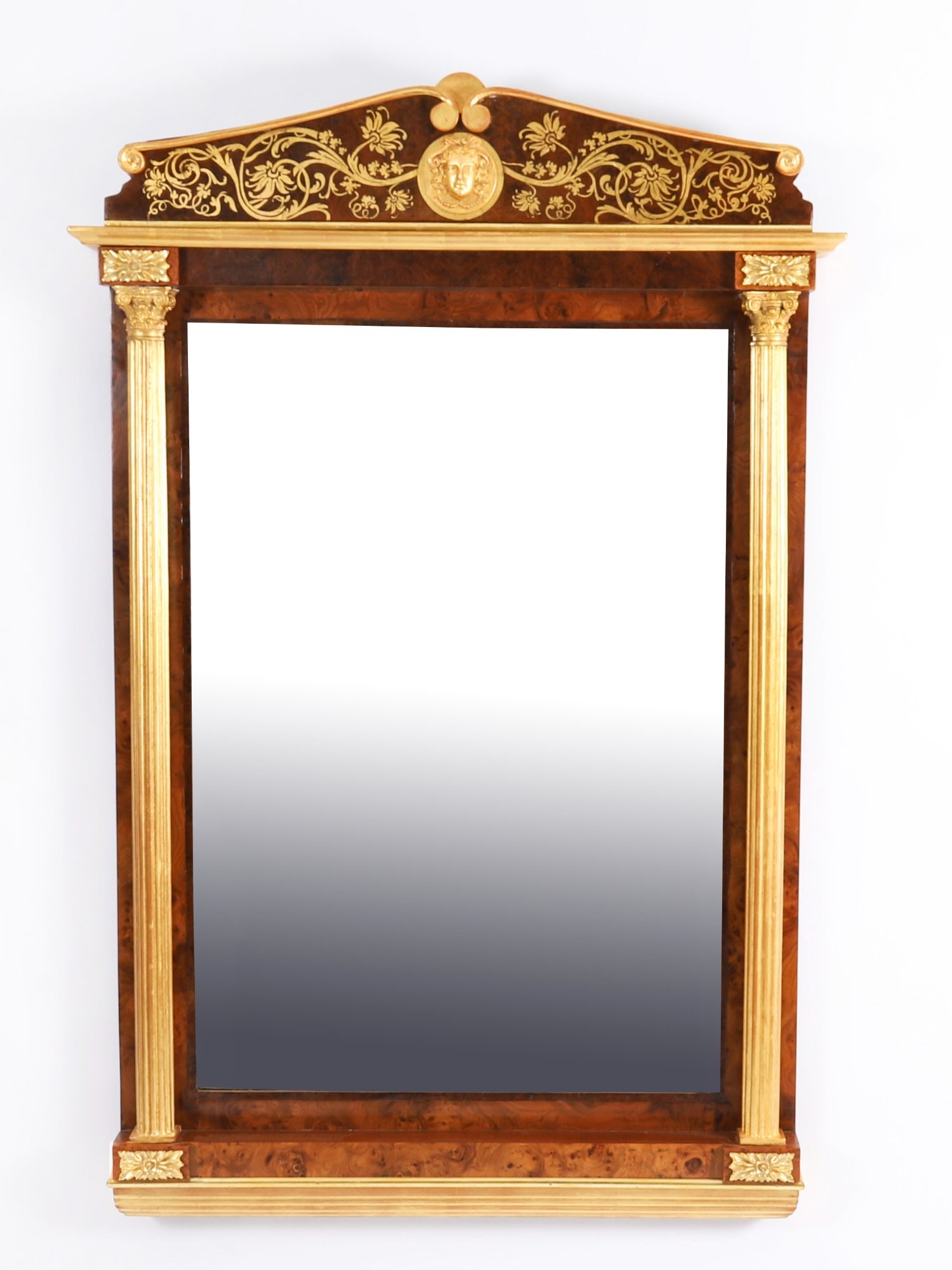
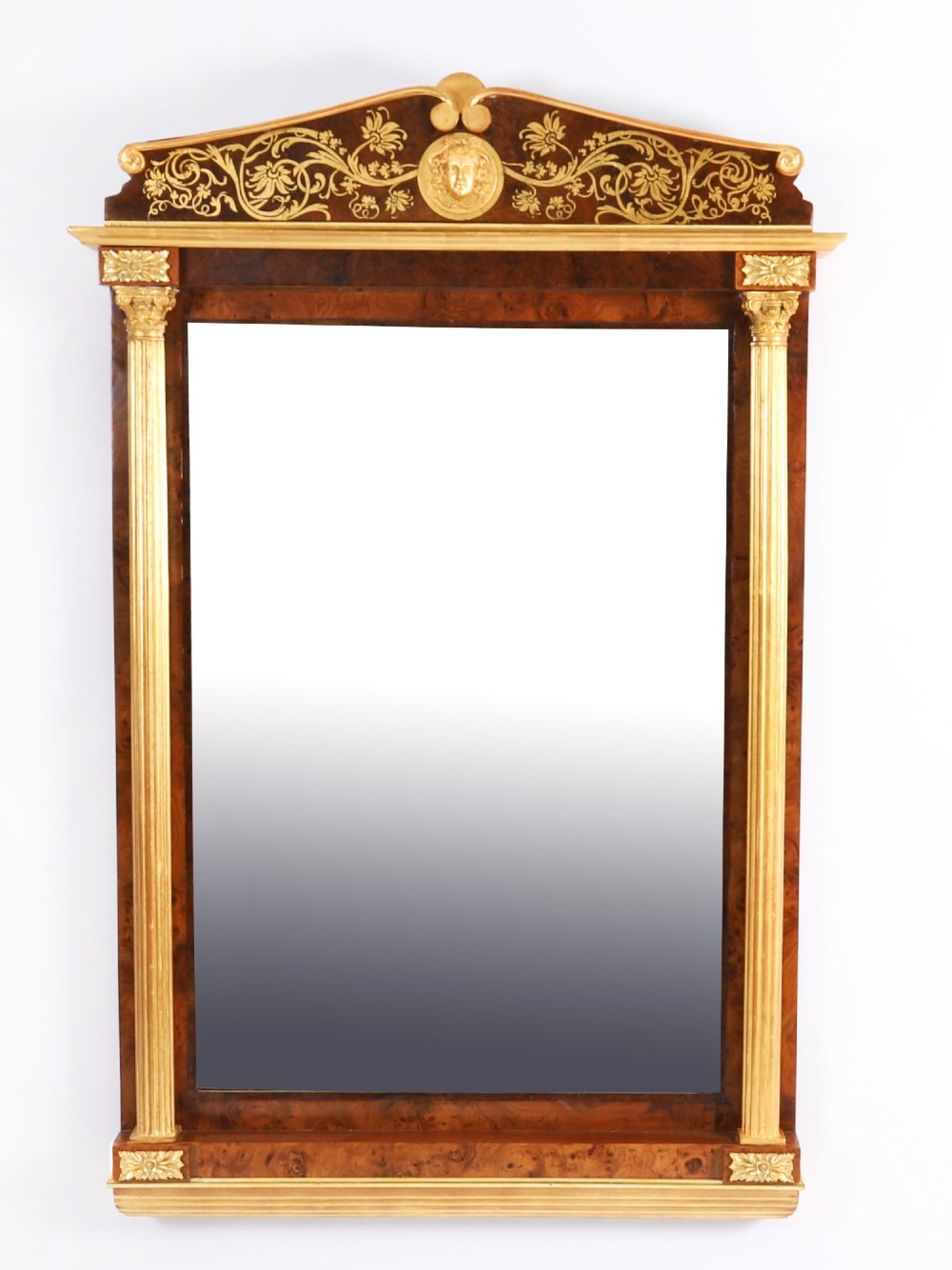
A beautiful Antique French burr walnut and parcel gilt mirror, circa 1880 in date.


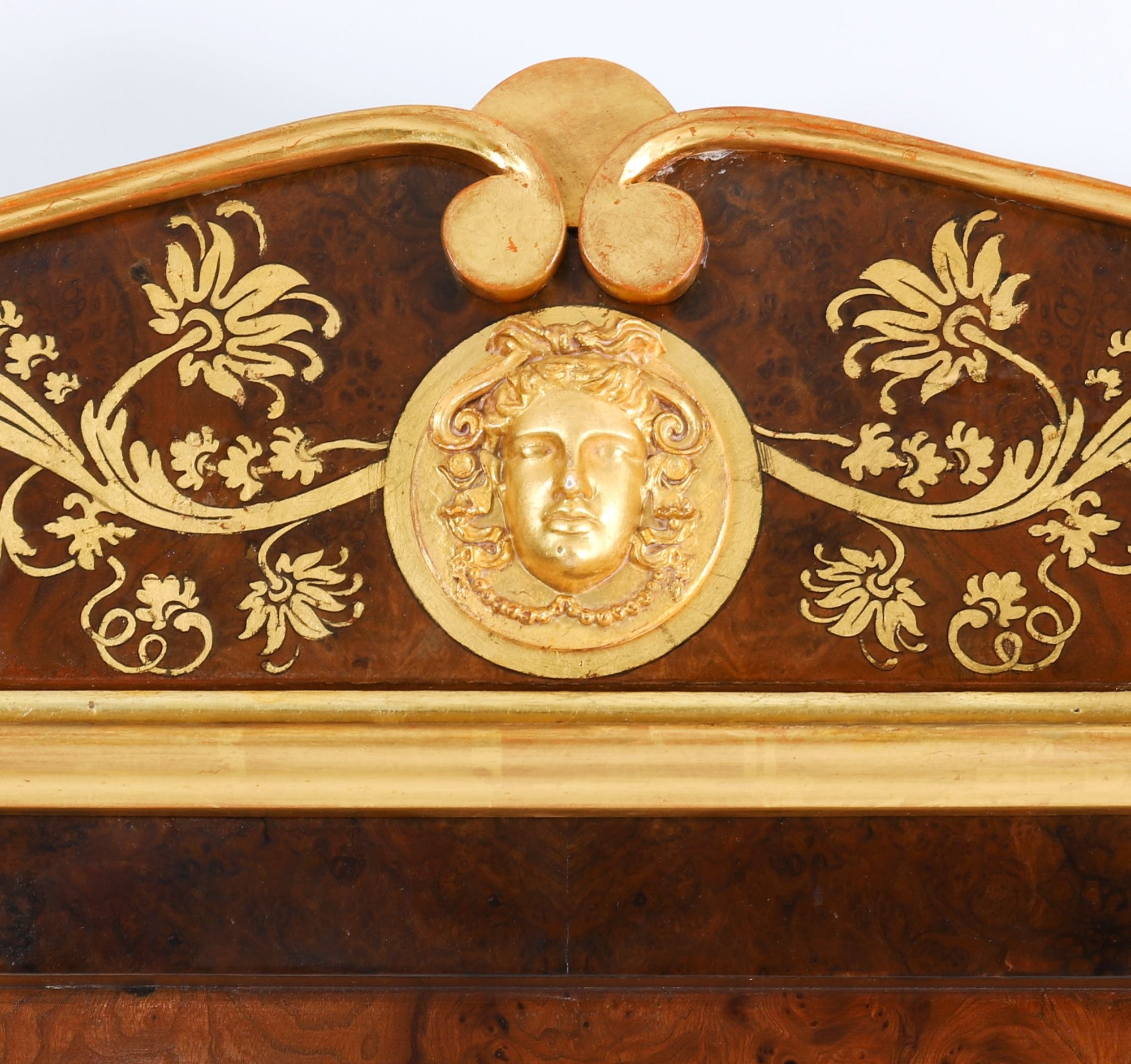
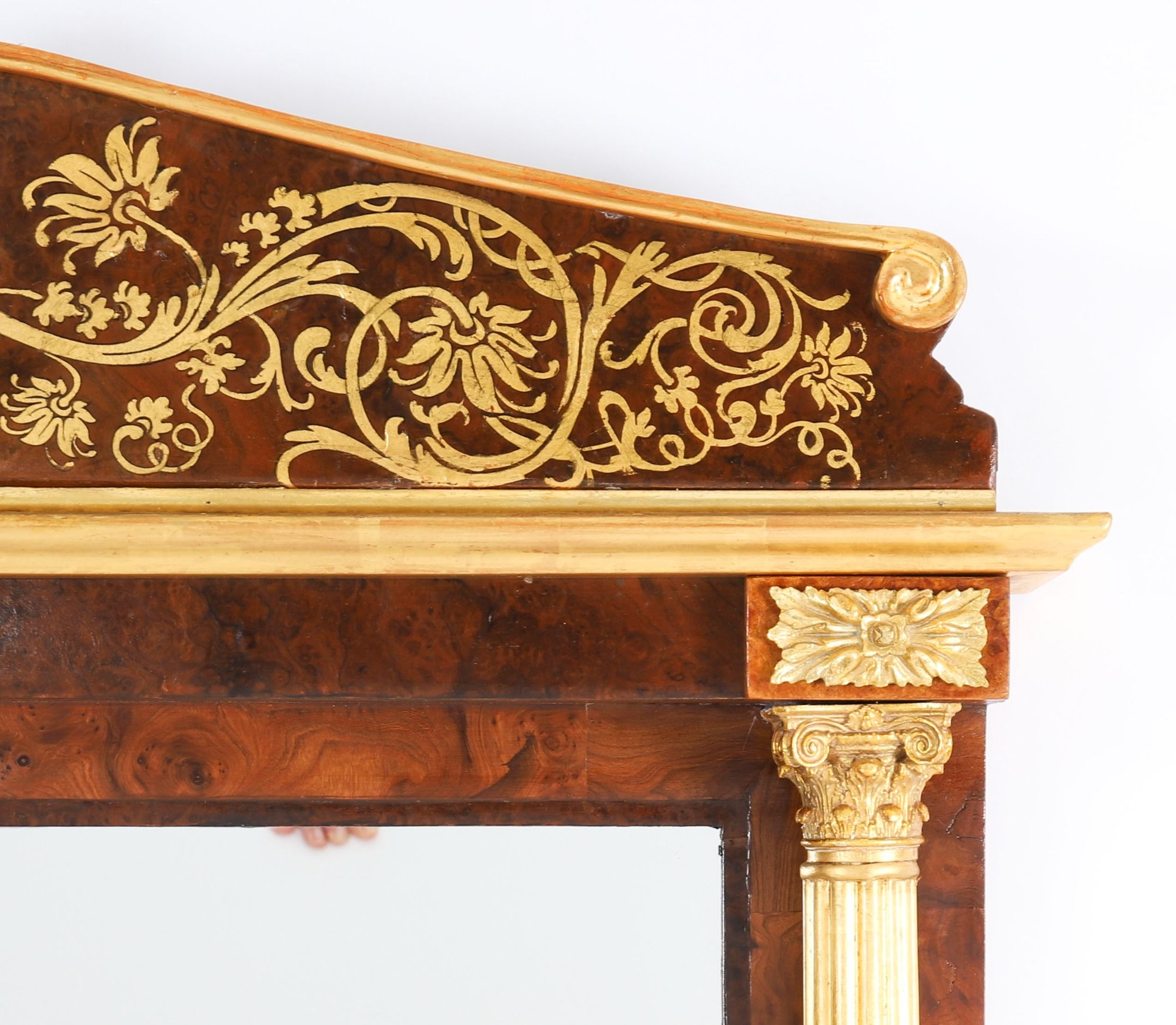
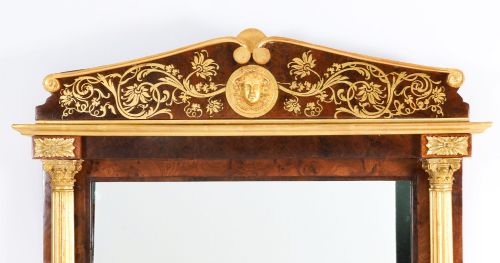
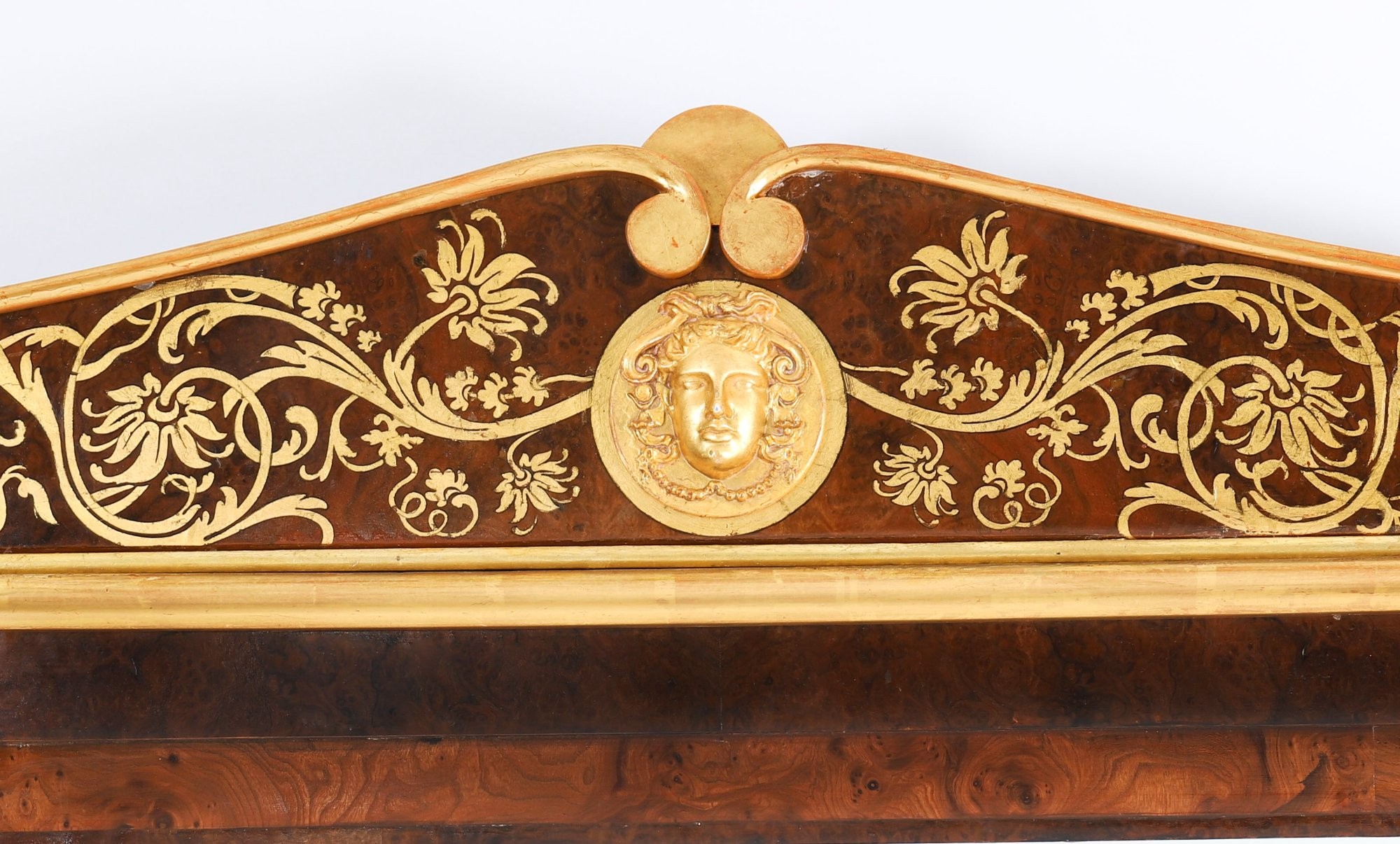
The rectangular mirror features a shaped crest with anthemion, a central gilt masque, and further gilt foliate and floral ornamentation.

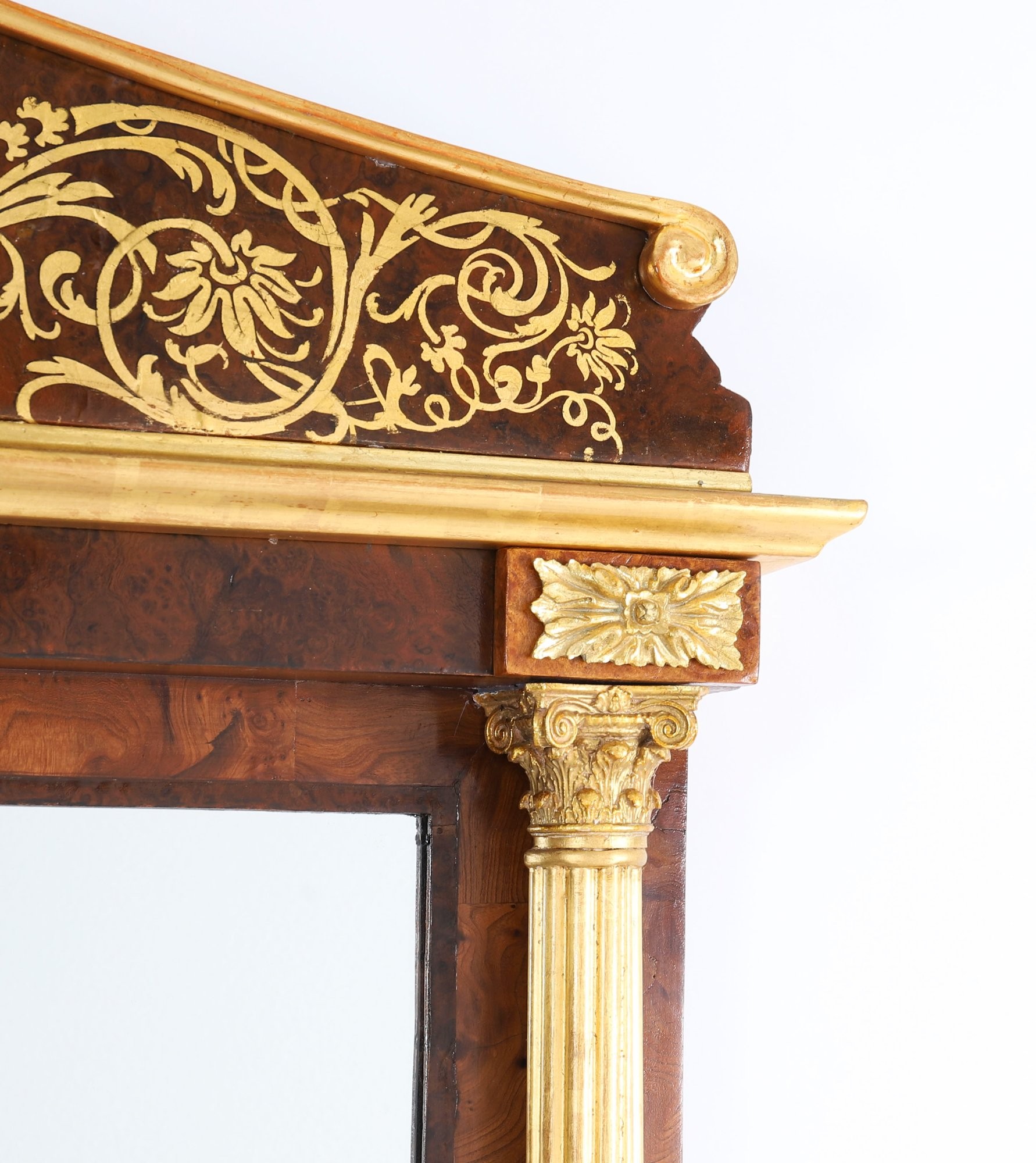
The mirror plate is framed between highly decorative fluted Corinthian columns.


It is certain to make a charming addition to that one special room in your home.

Condition:

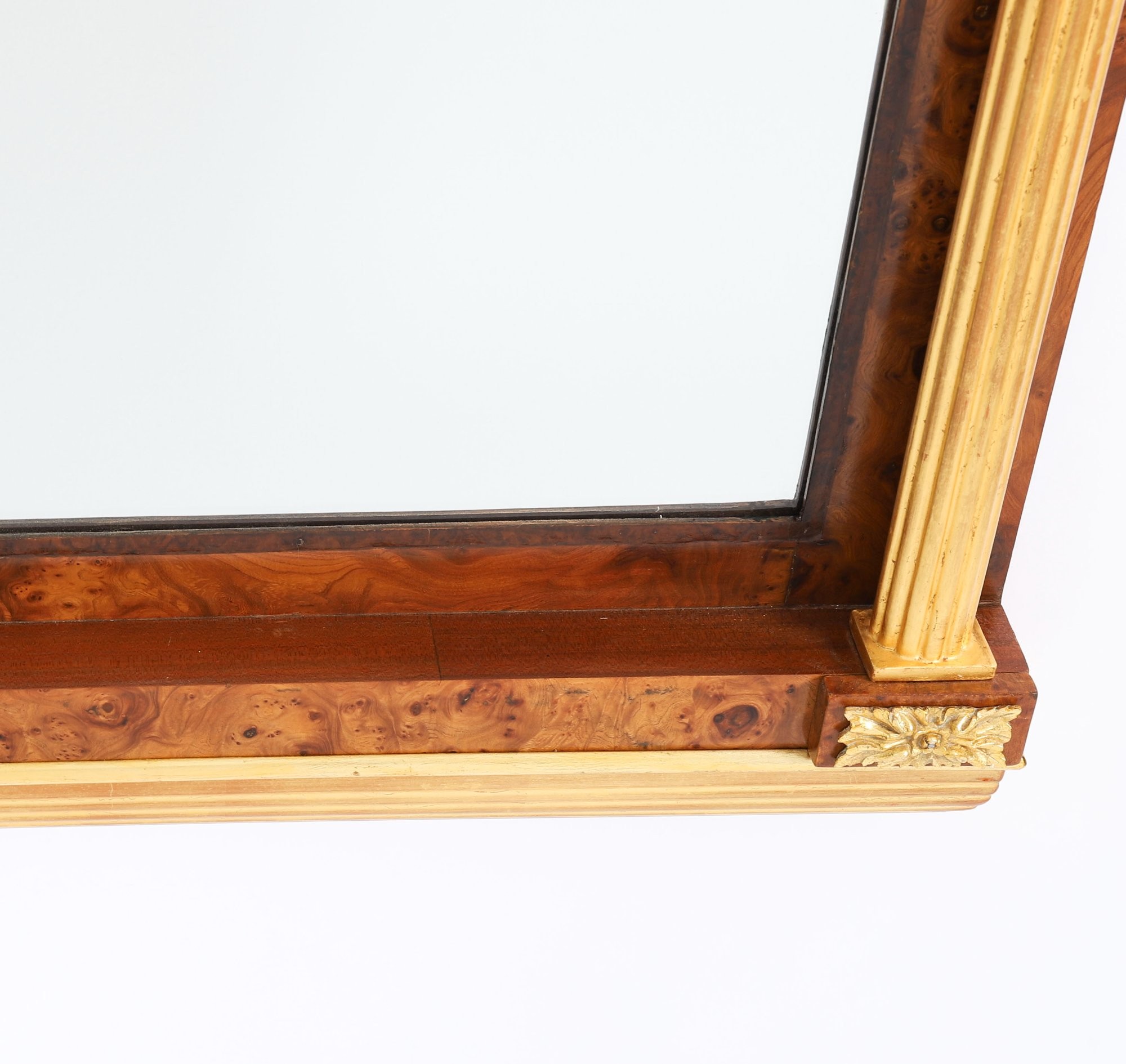
In excellent condition with its original gilding, painting, and patina; please see photos for confirmation

Dimensions in cm:

Height 144 cm x Width 89 cm x Depth 11 cm

Dimensions in inches:

Height 4 foot, 9 inches x Width 2 foot, 11 inches x Depth 4 inches

Mirrors

are commonly used for personal grooming or admiring oneself (in which case the archaic term looking-glass is sometimes still used), decoration, and architecture.

The earliest manufactured mirrors were pieces of polished stone such as obsidian, a naturally occurring volcanic glass. In classical antiquity, mirrors were made of solid metal (bronze, later silver) and were too expensive for widespread use by common people; they were also prone to corrosion. Due to the low reflectivity of polished metal, these mirrors also gave a darker image than modern ones, making them unsuitable for indoor use with the artificial lighting of the time.

The method of making mirrors out of plate glass was invented by 16th-century Venetian glassmakers on the island of Murano, who covered the back of the glass with mercury, obtaining near-perfect and undistorted reflection. For over one hundred years, Venetian mirrors installed in richly decorated frames served as luxury decorations for palaces throughout Europe, but the secret of the mercury process eventually arrived in London and Paris during the 17th century, due to industrial espionage. French workshops succeeded in large-scale industrialization of the process, eventually making mirrors affordable to the masses.

Walnut & Burr Walnut

Walnut is a hard, dense, tight- grained wood that polishes to a very smooth finish. It is a popular and attractive wood whose colour ranges from near white in the sapwood to a dark hew in the heartwood. When dried in a kiln, walnut wood tends to develop a dull brown colour, but when air-dried, it can become a rich purplish-brown. Because of its colour, hardness and grain, it is a prized furniture and carving wood. Walnut veneer was highly priced and the cost would reflect the ‘fanciness’ of the veneer – the more decorative, the more expensive and desirable.

Burr walnut refers to the swirling figure present in nearly all walnut when cut and polished, and especially in the wood taken from the base of the tree where it joins the roots. However, the true burr is a rare growth on the tree where hundreds of tiny branches have started to grow. Burr walnut produces some of the most complex and beautiful figuring you can find.

Walnut "burrs" were often used to make fabulous furniture.  Veneer sliced from walnut burl is one of the most valuable and highly prized by cabinet makers and prestige car manufacturers and is also a favourite material for shotgun stocks.

Inlay was commonly used in the production of decorative burr walnut furniture, where pieces of coloured veneers are inlaid into the surface of the walnut, adding delicate or intricate patterns and designs. Inlays normally use various exotic veneers, but other materials such as mother-of-pearl, brass or bone were also used.

Our reference: A2658x

Physical Dimensions
Height
144cm (56.69")
Width
89cm (35.04")
Depth
11cm (4.33")
Declaration

Regent Antiques has dated this French Burr Walnut Mirror to the 1880s.
Reference Numbers
Sellingantiques Reference
SA1236843
Dealers Internal Reference
A2658x
Description
A beautiful Antique French burr walnut and parcel gilt mirror, circa 1880 in date.


“
The rectangular mirror features a shaped crest with anthemion, a central gilt masque, and further gilt foliate and floral ornamentation.
Regent Antiques
fig 1. A nineteenth-century rectangular French burr walnut mirror featuring gilded fluted pilasters, classical foliate cresting with a central mask motif, and gilt rosettes.
fig 1. Antique French Burr Walnut Parcel Gilt Mirror 19th C 144x89cm

The mirror plate is framed between highly decorative fluted Corinthian columns.


It is certain to make a charming addition to that one special room in your home.

Condition:

In excellent condition with its original gilding, painting, and patina; please see photos for confirmation
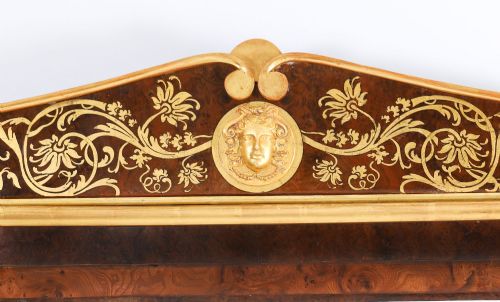
fig 2. A nineteenth-century rectangular French burr walnut mirror featuring gilded fluted pilasters, classical foliate cresting with a central mask motif, and gilt rosettes.
fig 2. Antique French Burr Walnut Parcel Gilt Mirror 19th C 144x89cm

Dimensions in cm:

Height 144 cm x Width 89 cm x Depth 11 cm

Dimensions in inches:

Height 4 foot, 9 inches x Width 2 foot, 11 inches x Depth 4 inches

Mirrors

are commonly used for personal grooming or admiring oneself (in which case the archaic term looking-glass is sometimes still used), decoration, and architecture.
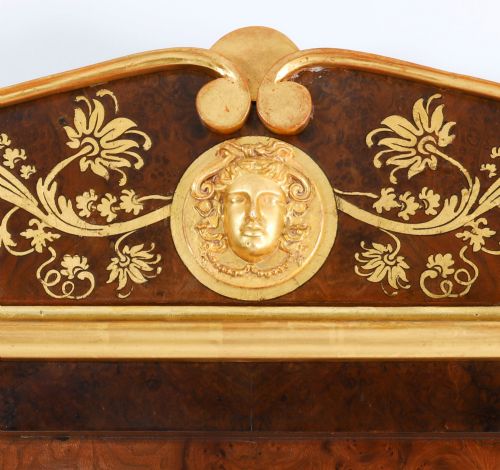
fig 3. A nineteenth-century rectangular French burr walnut mirror featuring gilded fluted pilasters, classical foliate cresting with a central mask motif, and gilt rosettes.
fig 3. Antique French Burr Walnut Parcel Gilt Mirror 19th C 144x89cm

The earliest manufactured mirrors were pieces of polished stone such as obsidian, a naturally occurring volcanic glass. In classical antiquity, mirrors were made of solid metal (bronze, later silver) and were too expensive for widespread use by common people; they were also prone to corrosion. Due to the low reflectivity of polished metal, these mirrors also gave a darker image than modern ones, making them unsuitable for indoor use with the artificial lighting of the time.
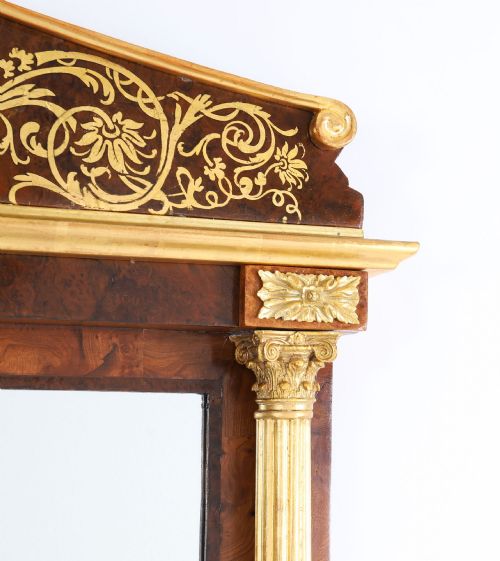
fig 4. A nineteenth-century rectangular French burr walnut mirror featuring gilded fluted pilasters, classical foliate cresting with a central mask motif, and gilt rosettes.
fig 4. Antique French Burr Walnut Parcel Gilt Mirror 19th C 144x89cm

The method of making mirrors out of plate glass was invented by 16th-century Venetian glassmakers on the island of Murano, who covered the back of the glass with mercury, obtaining near-perfect and undistorted reflection. For over one hundred years, Venetian mirrors installed in richly decorated frames served as luxury decorations for palaces throughout Europe, but the secret of the mercury process eventually arrived in London and Paris during the 17th century, due to industrial espionage. French workshops succeeded in large-scale industrialization of the process, eventually making mirrors affordable to the masses.
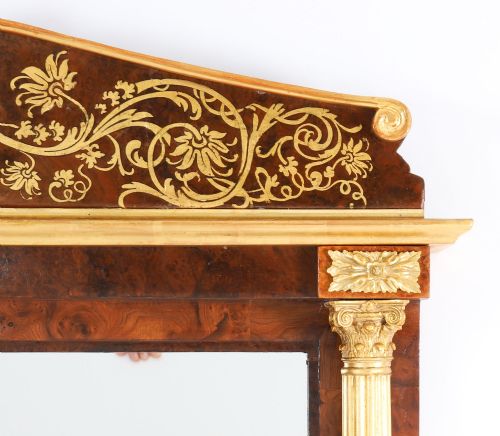
fig 5. A nineteenth-century rectangular French burr walnut mirror featuring gilded fluted pilasters, classical foliate cresting with a central mask motif, and gilt rosettes.
fig 5. Antique French Burr Walnut Parcel Gilt Mirror 19th C 144x89cm

Walnut & Burr Walnut

Walnut is a hard, dense, tight- grained wood that polishes to a very smooth finish. It is a popular and attractive wood whose colour ranges from near white in the sapwood to a dark hew in the heartwood. When dried in a kiln, walnut wood tends to develop a dull brown colour, but when air-dried, it can become a rich purplish-brown. Because of its colour, hardness and grain, it is a prized furniture and carving wood. Walnut veneer was highly priced and the cost would reflect the ‘fanciness’ of the veneer – the more decorative, the more expensive and desirable.
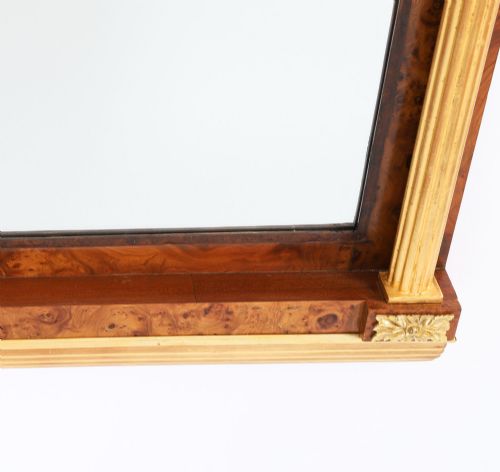
fig 6. A nineteenth-century rectangular French burr walnut mirror featuring gilded fluted pilasters, classical foliate cresting with a central mask motif, and gilt rosettes.
fig 6. Antique French Burr Walnut Parcel Gilt Mirror 19th C 144x89cm

Burr walnut refers to the swirling figure present in nearly all walnut when cut and polished, and especially in the wood taken from the base of the tree where it joins the roots. However, the true burr is a rare growth on the tree where hundreds of tiny branches have started to grow. Burr walnut produces some of the most complex and beautiful figuring you can find.
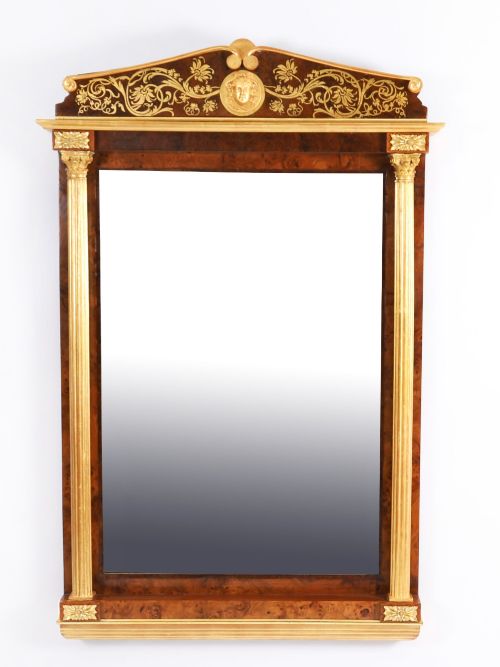
fig 7. A nineteenth-century rectangular French burr walnut mirror featuring gilded fluted pilasters, classical foliate cresting with a central mask motif, and gilt rosettes.
fig 7. Antique French Burr Walnut Parcel Gilt Mirror 19th C 144x89cm

Walnut "burrs" were often used to make fabulous furniture.  Veneer sliced from walnut burl is one of the most valuable and highly prized by cabinet makers and prestige car manufacturers and is also a favourite material for shotgun stocks.

Inlay was commonly used in the production of decorative burr walnut furniture, where pieces of coloured veneers are inlaid into the surface of the walnut, adding delicate or intricate patterns and designs. Inlays normally use various exotic veneers, but other materials such as mother-of-pearl, brass or bone were also used.

Our reference: A2658x

Height
144cm (56.69")
Width
89cm (35.04")
Depth
11cm (4.33")
Date of Manufacture

Regent Antiques has dated this French Burr Walnut Mirror to the 1880s.

Reference Numbers
Sellingantiques Ref
SA1236843
Dealers Internal Ref
A2658x
Regent Antiques
Regent Antiques
Sellingantiques verified Since Sep 2016

We specialise in english and continental furniture, silver, porcelain and decorative items.

Dealer Profile

You can view the stock and full dealer information on the Regent Antiques Profile Page

Trade Associations

Regent Antiques is a registered member of LAPADA  CINOA
PDF SHARE
SAVE
A nineteenth-century rectangular French burr walnut mirror featuring gilded fluted pilasters, classical foliate cresting with a central mask motif, and gilt rosettes.
1 / 8
Archive I A nineteenth-century rectangular French burr walnut mirror featuring gilded fluted pilasters, classical foliate cresting with a central mask motif, and gilt rosettes.

Antique French Burr Walnut Parcel Gilt Mirror 19th C 144x89cm
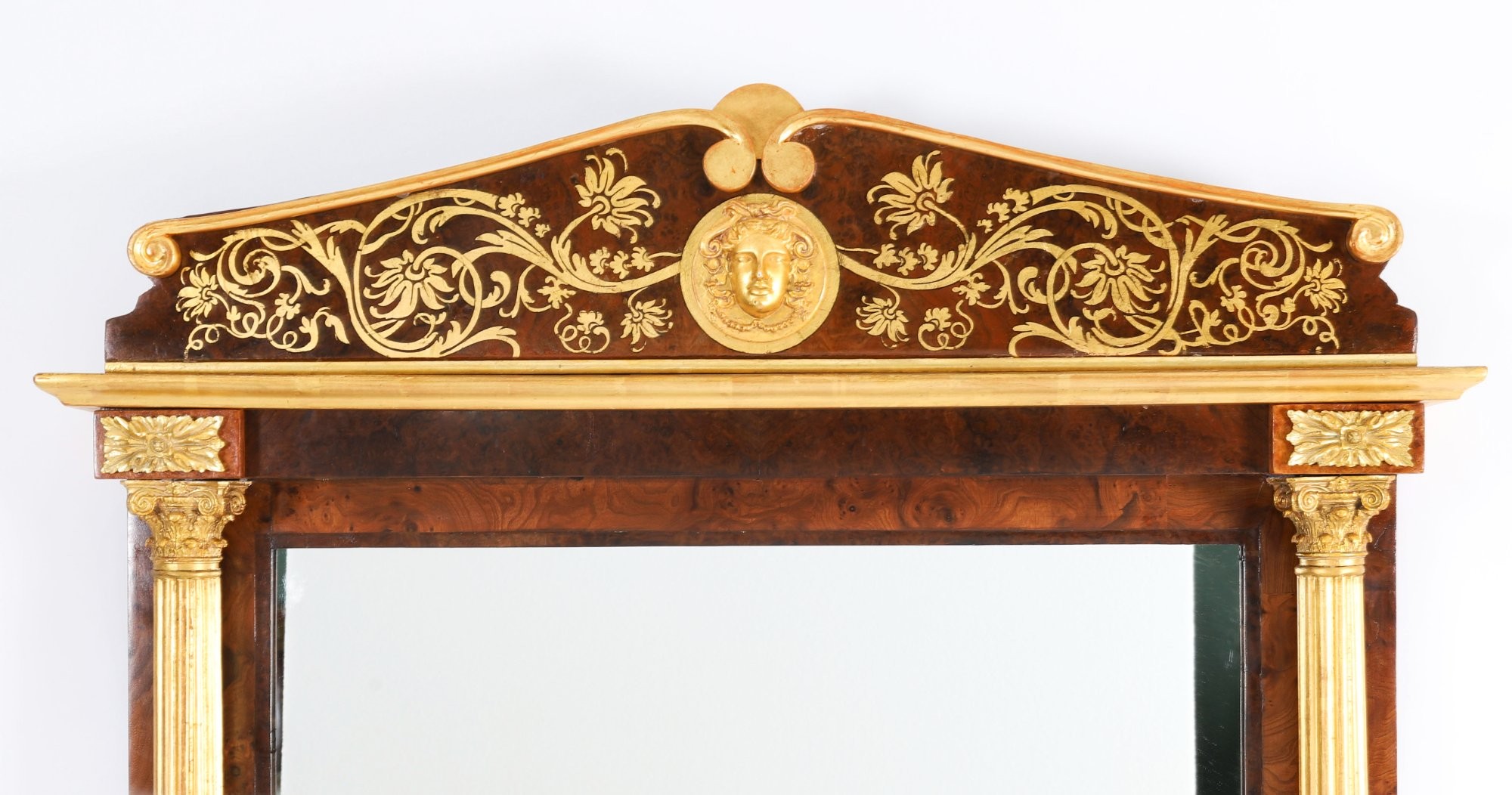
Archive II A nineteenth-century rectangular French burr walnut mirror featuring gilded fluted pilasters, classical foliate cresting with a central mask motif, and gilt rosettes. View II
Archive III A nineteenth-century rectangular French burr walnut mirror featuring gilded fluted pilasters, classical foliate cresting with a central mask motif, and gilt rosettes. View III
Archive IV A nineteenth-century rectangular French burr walnut mirror featuring gilded fluted pilasters, classical foliate cresting with a central mask motif, and gilt rosettes. View IV
Archive V A nineteenth-century rectangular French burr walnut mirror featuring gilded fluted pilasters, classical foliate cresting with a central mask motif, and gilt rosettes. View V
Archive VI A nineteenth-century rectangular French burr walnut mirror featuring gilded fluted pilasters, classical foliate cresting with a central mask motif, and gilt rosettes. View VI
Archive VII A nineteenth-century rectangular French burr walnut mirror featuring gilded fluted pilasters, classical foliate cresting with a central mask motif, and gilt rosettes. View VII
Archive VIII A nineteenth-century rectangular French burr walnut mirror featuring gilded fluted pilasters, classical foliate cresting with a central mask motif, and gilt rosettes. View VIII
Enlarged Archival View
Location
Manor Warehouse
318 Green Lanes
London
N4 1BX
United Kingdom
Verified Since Sep 2016
Items For Sale 666
Items Sold 2,656
Regent Antiques
Regent Antiques
Verified Since Sep 2016
View Dealer Info
Location: Manor Warehouse, 318 Green Lanes, London, N4 1BX, United Kingdom
Verified
Sep 2016
For Sale
666
Sold
2,656
A nineteenth-century rectangular French burr walnut mirror featuring gilded fluted pilasters, classical foliate cresting with a central mask motif, and gilt rosettes.
Antique French Burr Walnut Parcel Gilt Mirror 19th C 144x89cm
Ref: SA1236843
A nineteenth-century rectangular French burr walnut mirror featuring gilded fluted pilasters, classical foliate cresting with a central mask motif, and gilt rosettes.
Detail View 1
Detail View 2
Detail View 3
Detail View 4
Detail View 5
Detail View 6
Detail View 7
Archival Detail
Every single antique dealer on our platform is individually approved by our internal team. We verify their professional trade history, ethical standards, and photographic quality to ensure a secure, high-standard buying environment. Upon joining, every dealer agrees to a strict 9-point code of conduct. While issues can occasionally arise, our dealers typically resolve them swiftly and directly with the buyer. In fact, since our founding in 2002, Sellingantiques has only had to step in to help resolve an issue on roughly five occasions—a true testament to the quality of our dealers and their dedication to your happiness.
Our dealers are highly experienced in packing and shipping fragile, high-value antiques. Because you are in direct contact with the dealer, you will be able to easily go through all available shipping and insurance options together to ensure your item arrives safely.
Antiques are the ultimate green purchase. By choosing historical pieces over newly manufactured goods, you completely eliminate the carbon footprint of modern mass production while preserving exceptional, timeless craftsmanship.
Written by Sellingantiques from the dealer’s photographs and listing
  • ObjectWall Mirrors
  • Period19th century
  • StyleFrench Empire
  • MaterialBurr Walnut, Gold Leaf, Glass
  • ColourWarm Brown
  • MotifsFluted pilasters, Foliate scrollwork, Central mask cresting, Gilt rosettes
  • SizeH 144 cm (57 in) x W 89 cm (35 in) x D 11 cm (4 in)

This nineteenth-century French Empire wall mirror dates to 1880 and is made from warm brown burr walnut with bright gold leaf details and clear glass. The rectangular frame showcases a shaped pediment with gilded foliate scrollwork, a central mask cresting, and gilt rosettes, flanked by fluted Corinthian columns with square capitals and bases. The timber displays a rich burr grain figure with high-polish finishing, original gilding, and deep warm tones throughout the wooden surfaces and carved ornaments. Measuring 144 cm high by 89 cm wide and 11 cm deep, this large hanging glass piece is proportioned for placement above the mantel in a living room, dining room, or hallway. Placement above a fireplace or a console table allows the reflective glass to bounce natural daylight around the interior space while adding classical architectural presence to the wall. The combination of figured burr walnut and shimmering parcel gilding creates a formal focal point suitable for traditional and period-inspired interiors.

Nineteenth-century French mirrors of these eras feature architectural proportions, classical motifs such as pilasters, rosettes, and gilded embellishments set against rich hardwood veneers like burr walnut.

Craftsmen typically used solid timber foundations overlaid with figured veneers such as burr walnut, alongside hand-carved pine or lime wood elements finished with gold leaf gilded highlights and silvered glass plates.

Authentic pieces show evidence of hand-carved joinery, natural shrinkage or minor stress cracks in the veneer, hand-cut glass plates displaying slight distortions or foxing, and natural patination across the gilding.

Positioning a large architectural mirror above a contemporary sideboard or fireplace creates a striking focal point that bridges traditional craftsmanship with modern minimalist or eclectic design schemes.

Dust the gilded surfaces gently using a soft, dry feather duster or natural hair brush, avoiding liquid cleaners on gilding, while applying a high-grade beeswax polish sparingly to untreated walnut areas.
items
Add keywords to the filter
Price
£100
£250000
Era
Period
Style
Material
Origin
Stock Location
Recently Added
Online Payments
Categories