



Gilded Pilaster Wall Mirror
These gilded pilaster wall mirror pieces bring classical lines and bright reflective depth to a room, drawn from nineteenth century workshops.
Gilded Pilaster Wall Mirror
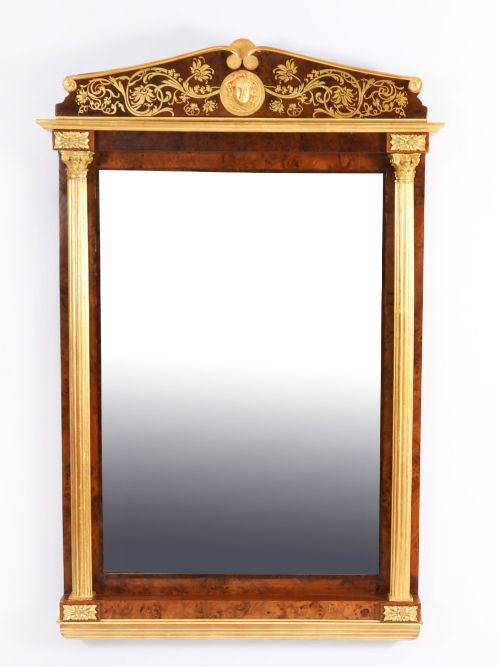
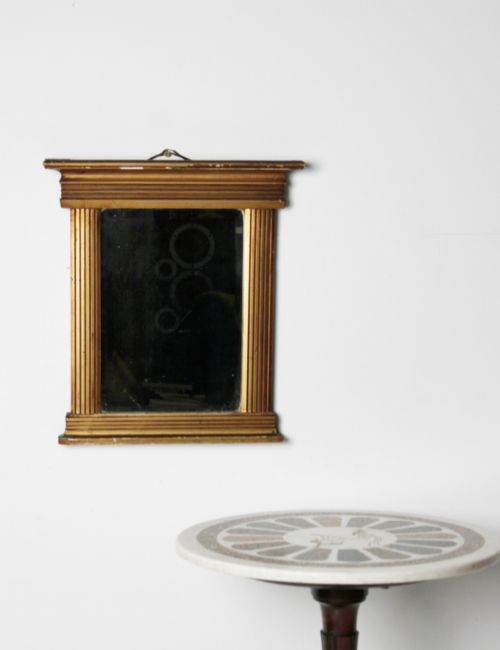
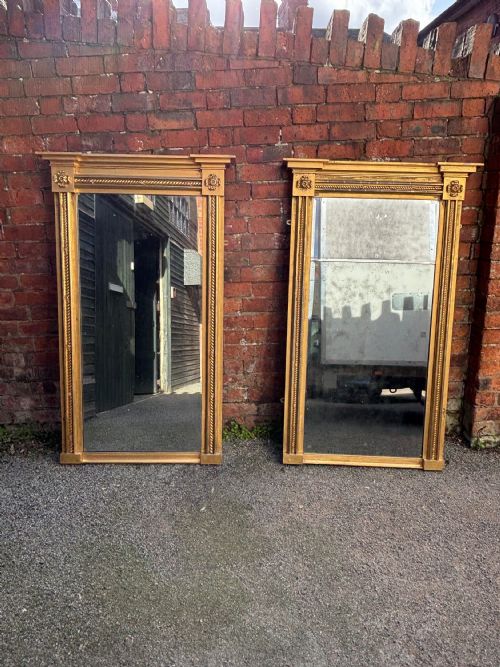
A gilded pilaster wall mirror brings classical architectural proportion to an interior space, framed by vertical supports and reflective glass. When searching for a gilded pilaster wall mirror, buyers encounter pier mirrors, overmantel mirrors, and hall mirrors originating from the nineteenth century. These forms include Regency, Victorian, George IV, and Neoclassical styles designed to hang on walls or sit above mantelpieces.
The pieces listed on this page span several decades of the nineteenth century, featuring formats such as large overmantels and compact pier glasses. Many examples incorporate decorative elements like verre eglomise panels and reeded mouldings. Their origins encompass English and French makers working within classical idioms.
How they were made
Carvers shaped softwood carcases before applying layers of gesso and composition for ornamental detail. Artisans then applied gold leaf or silver leaf to create the characteristic reflective surface of a gilded pilaster wall mirror.
Certain surfaces received faux marble paint to imitate stone, while upper panels often featured verre eglomise decoration. Mirror glass was set into these frames, sometimes accompanied by silvered finishes.
Listings span the nineteenth century, including specific dates from the Regency era through to the eighteen-eighties.
What varies in quality
The crispness of carved detail in the gesso and wood distinguishes finer examples from simpler production. Pier mirrors with well-preserved gilding and original mirror glass demonstrate superior preservation.
The architectural balance of the pilasters and the integration of decorative panels such as verre eglomise affect the visual presence of the object.
The Gilded Pilaster Wall Mirror Glossary
- Pilaster
- A rectangular column that projects slightly from the wall to which it is attached. These architectural supports frame the glass in many wall mirrors.
- Verre eglomise
- A process of applying cold painting and metal leaf to the rear of glass. This technique creates decorative friezes often found above the main mirror plate.
- Giltwood
- Timber coated with gold leaf over a prepared gesso ground. This material provides the bright surface seen on classical frames.
- Pier glass
- A tall mirror designed to hang on the wall between windows. These pieces often feature detailed frames and lower consoles.
- Composition
- A moulded mixture of whiting, resin, glue and oil pressed into ornaments. Makers utilised this material to build up intricate decorative motifs quickly.
Gilded Pilaster Wall Mirror: Frequently Asked Questions
Where should I hang a gilded pilaster wall mirror?
These mirrors suit placement above a fireplace mantel or on a wall between windows where they can reflect natural light.
Their vertical proportions help to create a sense of height in reception rooms and hallways.
How do I identify a Regency period mirror?
Regency mirrors often display classical motifs, reeded columns, and sometimes verre eglomise panels depicting landscapes or classical scenes.
They date from the early nineteenth century and reflect Neoclassical design influences.
What is the difference between a pier mirror and an overmantel mirror?
Pier mirrors are typically taller and narrower, designed to fit wall spaces between architectural openings.
Overmantel mirrors are broader horizontal pieces built to sit directly above fireplace mantels.
Are these mirrors made of solid gold?
No, the frames consist of softwood, gesso, and composition covered with thin sheets of gold leaf or silver leaf.
This technique provided the appearance of solid metal at a manageable weight for wall hanging.