
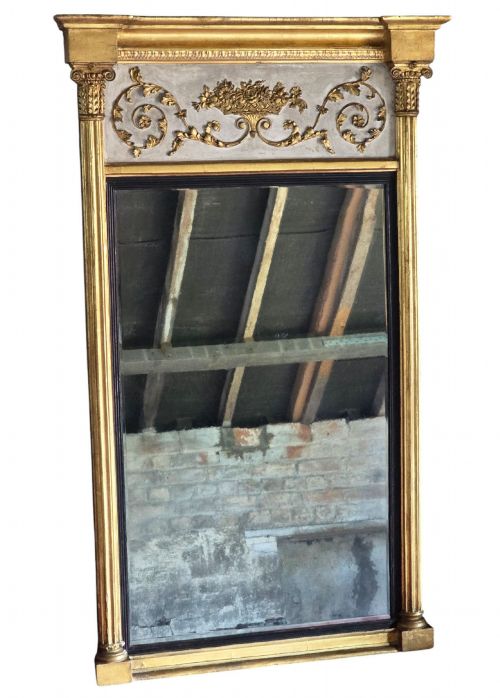
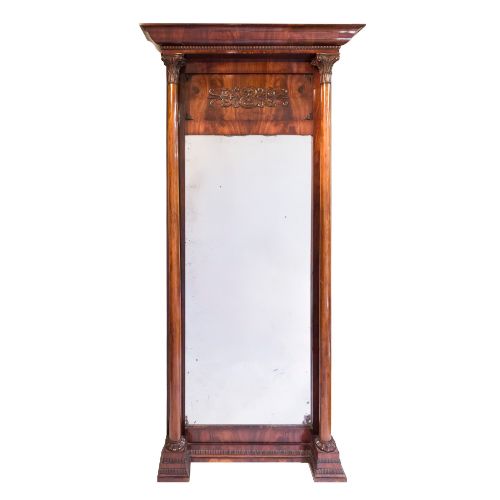


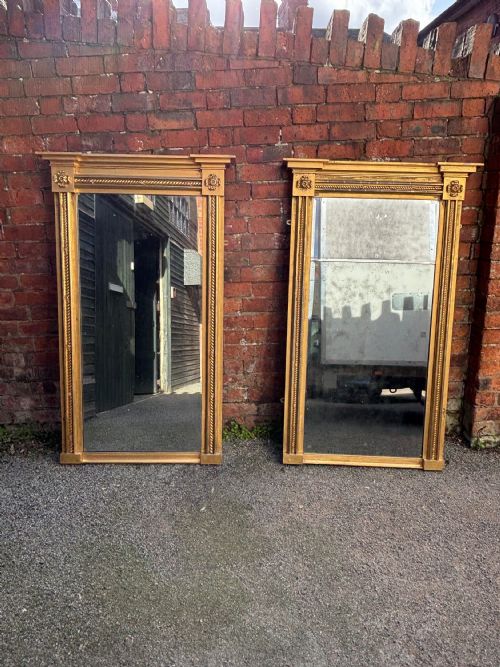


Regency Trumeau Wall Mirror
A regency trumeau wall mirror brings architectural symmetry to a room, combining painted or reverse-glass panels with tall looking glass plates.
Regency Trumeau Wall Mirror
A regency trumeau wall mirror combines a vertical looking glass with an upper decorative panel, often integrating painted scenes, reverse glass prints or carved motifs into a single architectural frame. These pieces span periods from the Georgian era through the nineteenth century, encompassing Regency, French Empire, Neoclassical and William IV styles.
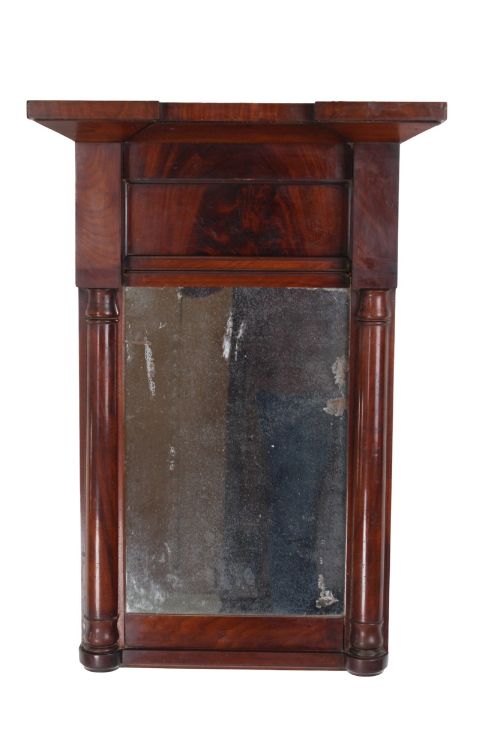
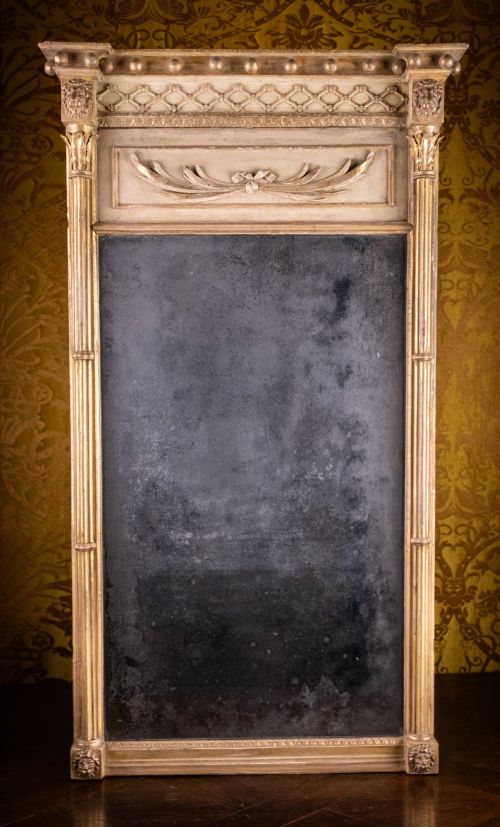
The versions most commonly met in these listings are pier mirrors and wall-hanging overmantles constructed in giltwood, carved mahogany, flame mahogany veneer and painted timber. Examples frequently incorporate classical details such as half columns, lion masks and gilt surfaces designed to hang between windows or above mantelpieces.
How they were made
Frames rely on carved wood, gesso and giltwood applied to timber foundations, occasionally utilising flame mahogany veneer or maple. Gilding techniques provide the characteristic metallic sheen on moulded cornices and column capitals.
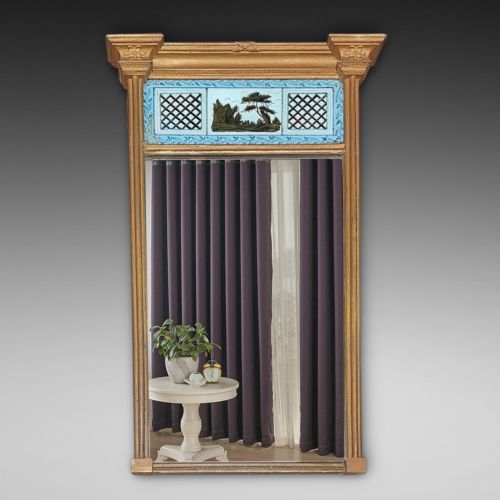
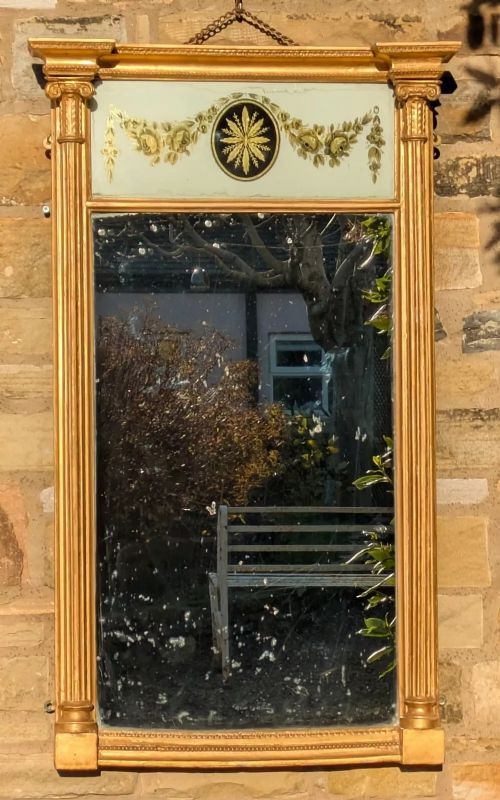
Upper panels employ verre eglomise reverse glass painting, painted scenes or decorative prints, paired with original mirror glass plates or mercury plates secured within the wooden carcass.
Early nineteenth-century frames occasionally preserve naval battle scenes behind glass, recording historic engagements between American and British fleets right above the looking glass.
What varies in quality
The refinement of the carved ornamentation separates standard pier mirrors from superior examples, particularly the depth and sharpness of giltwood motifs, lion masks and classical columns. Richness in the timber grain, such as figured flame mahogany or maple, similarly elevates the presence of the frame.
The preservation of original components dictates desirability, notably retention of the earliest mercury plates or authentic verre eglomise panels alongside untouched gilding and paintwork.
The Regency Trumeau Wall Mirror Glossary
- Verre eglomise
- A cold-painting and gilding technique on the reverse of glass, frequently used for the upper decorative panels of trumeau mirrors. It produces a glossy, reflective pictorial surface.
- Pier mirror
- A tall looking glass designed specifically to hang on the narrow pier of wall space between two windows. These mirrors often incorporate console tables or bottom brackets.
- Mercury plate
- An older mirror glass manufacturing method using a tin-mercury amalgam behind the glass. This process creates a characteristic mottled, deep reflection distinct from modern silvered glass.
- Giltwood
- Timber carved and coated with gold leaf applied over a prepared gesso ground. It provides the bright reflective framing typical of Regency interior decoration.
Regency Trumeau Wall Mirror: Frequently Asked Questions
Where should I hang a trumeau mirror?
These mirrors suit narrow wall spaces between tall windows, above mantelpieces, or as focal points in hallways and reception rooms. Their vertical proportions naturally draw the eye upward and reflect ambient daylight.
Ensure the wall construction supports the substantial weight of a gilded timber frame and glass plate combination, securing the piece with appropriate heavy-duty fixings.
Are the mirror plates original?
Many nineteenth-century examples retain their original glass plates or mercury plates, which often display characteristic ageing spots and soft, uneven reflections. Replacements occur when earlier glass suffered terminal degradation over generations of use.
Close inspection of the glass edges and the backing boards helps determine whether the plate dates to the initial construction period of the frame.
What is a verre eglomise panel?
A verre eglomise panel is a section of glass decorated on the reverse side with metallic leaf and painted designs. In trumeau mirrors, this panel sits directly above the looking glass to create a balanced architectural composition.
These panels depict maritime engagements, classical landscapes, or decorative motifs that complement the gilded or mahogany framework below.
How do I clean an antique gilt frame?
Dust giltwood and painted frames gently with a dry, soft-bristled brush to remove surface particles without disturbing fragile gesso or gold leaf. Avoid liquid cleaners, chemical solvents or abrasive cloths entirely.
Professional conservation is recommended if the gilding shows signs of flaking or if structural stabilization of the wooden joints becomes necessary.