

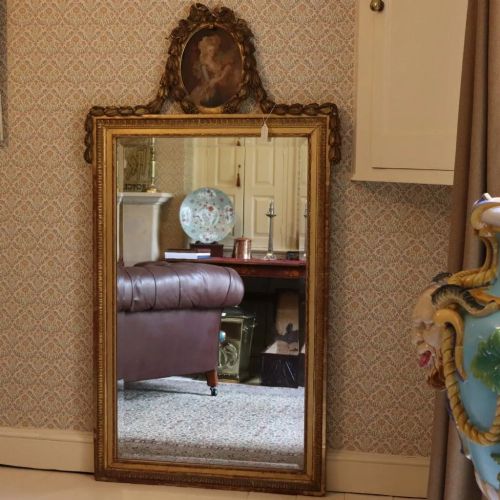
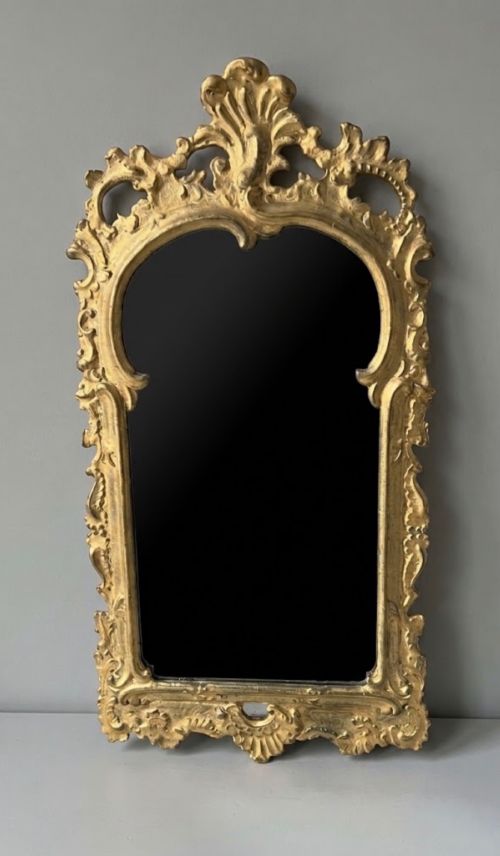
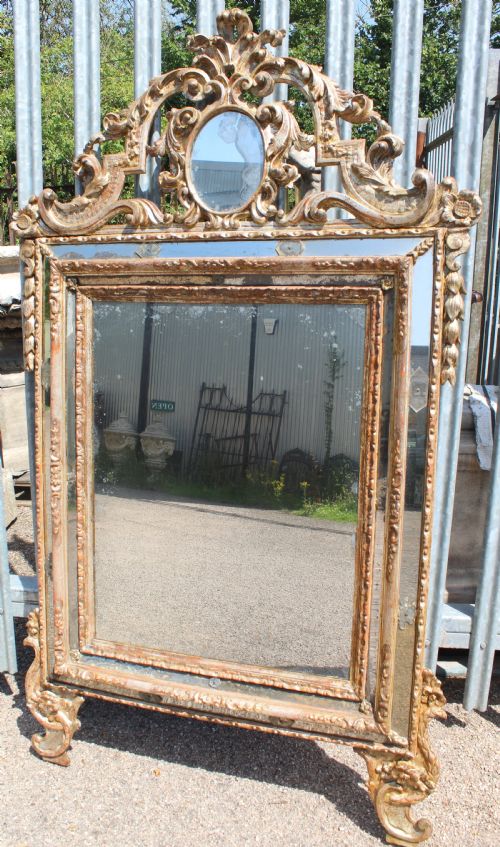

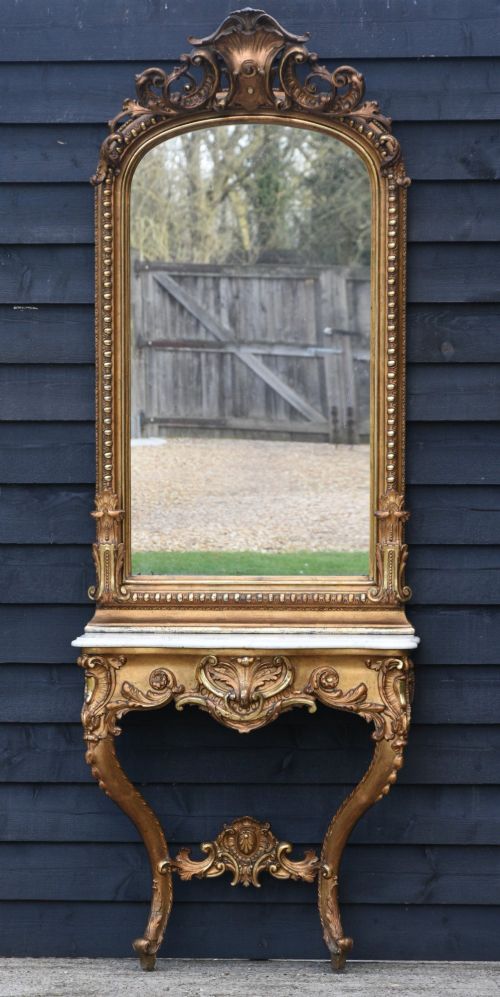
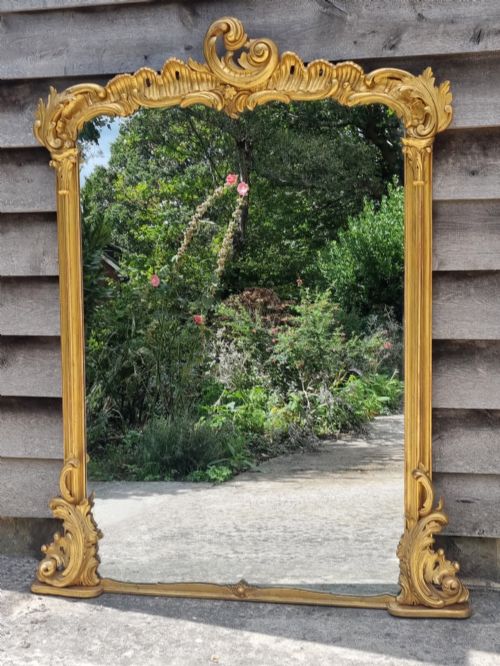
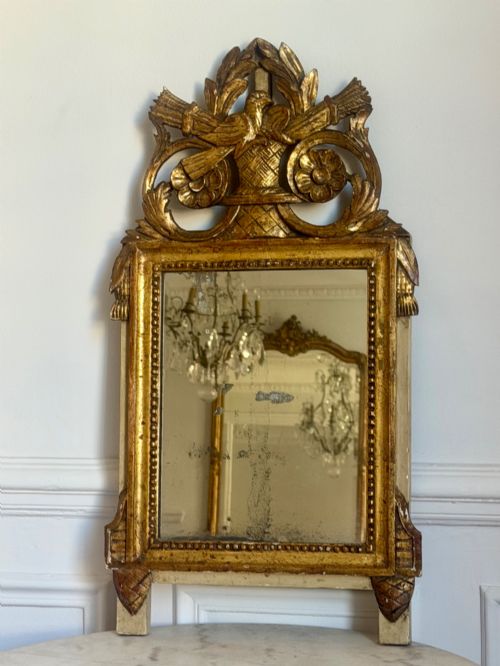
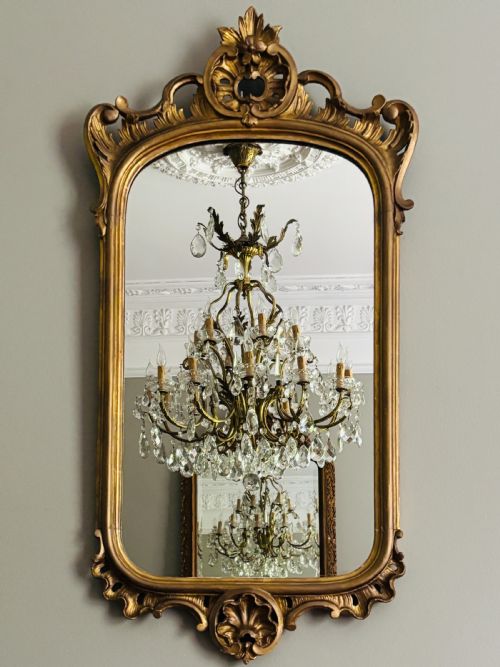
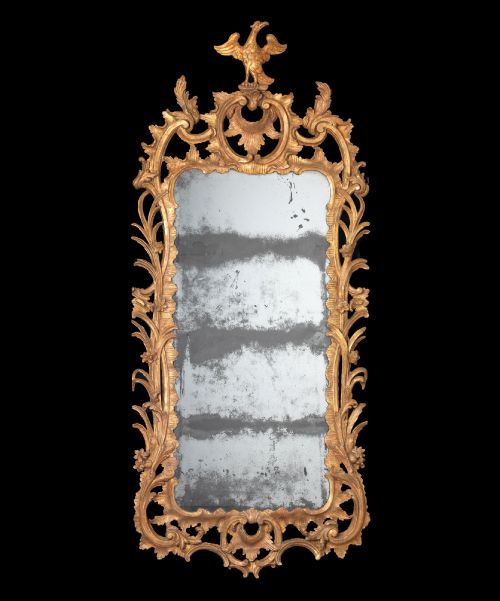
Gold Gilt Pier Mirror
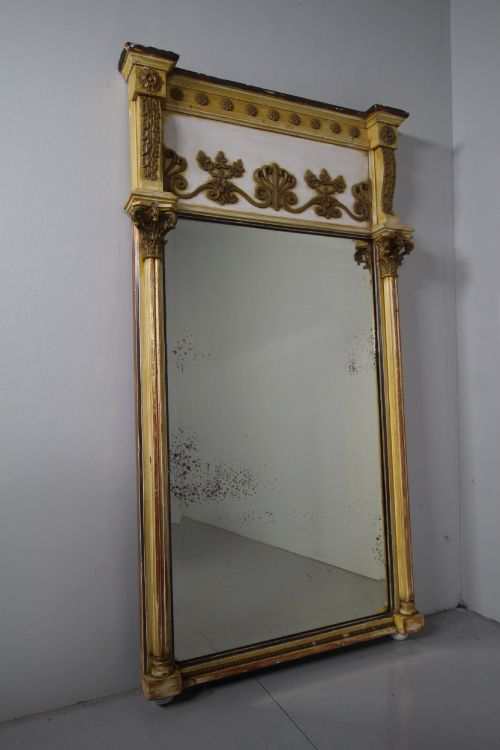
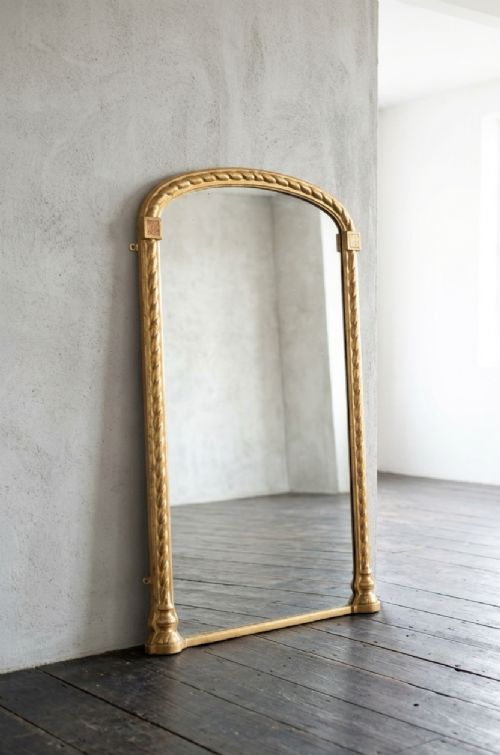
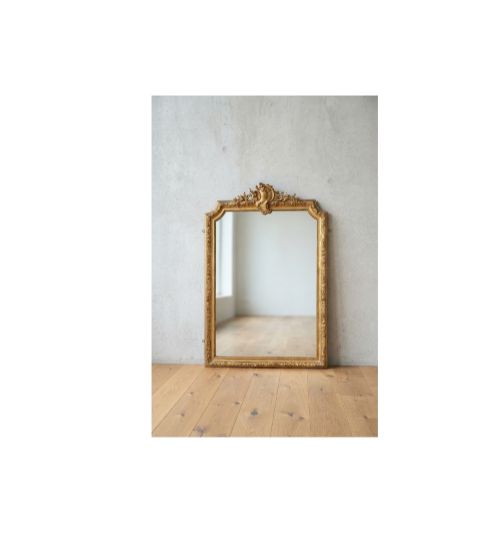
A gold gilt pier mirror brings architectural presence and reflected light to a room, drawing the eye with its gilded frame and tall proportions.
Gold Gilt Pier Mirror
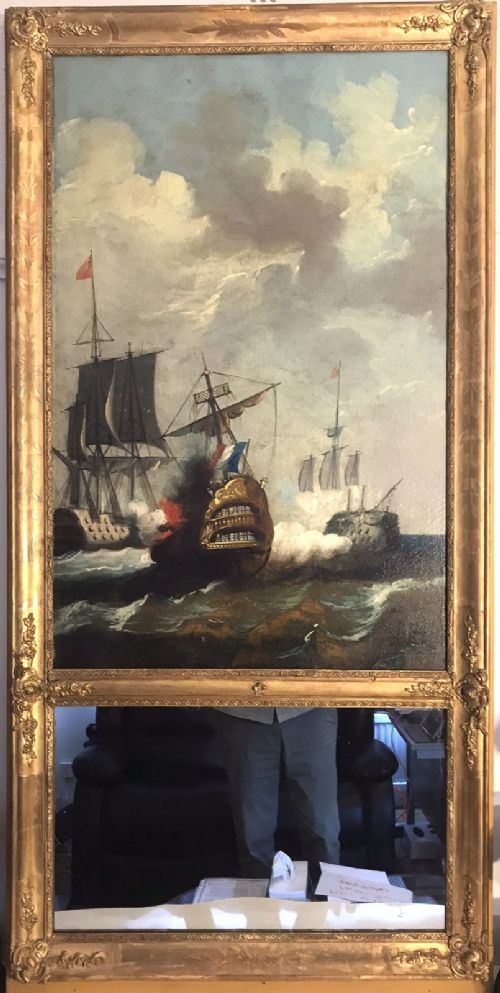
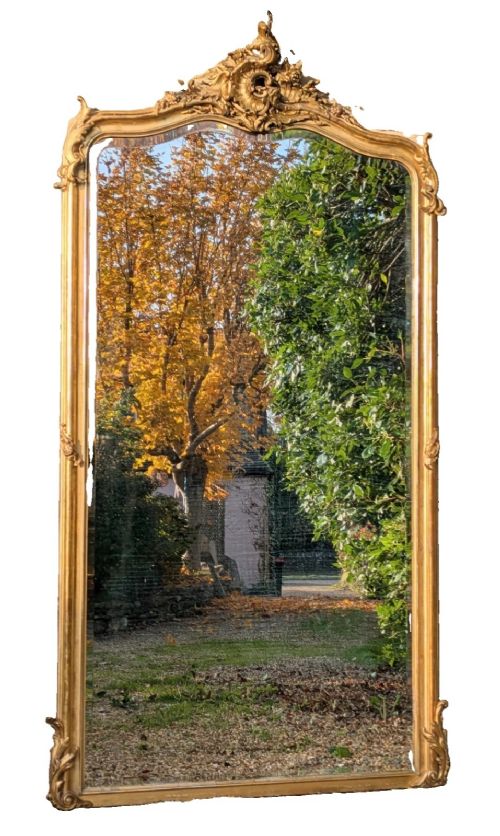
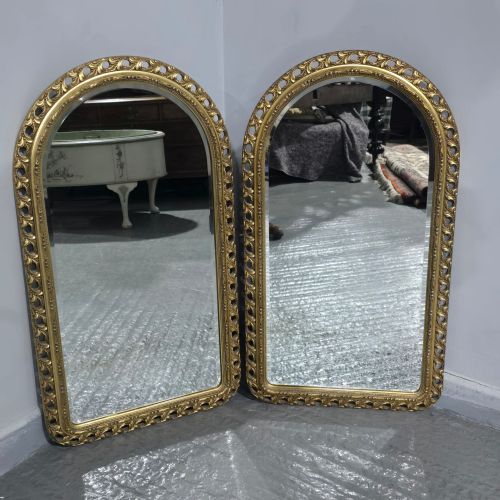
A gold gilt pier mirror is designed specifically to hang on the narrow wall space between windows, known as the pier, often pairing with a matching console table below. When browsing this selection, you encounter substantial vertical formats stretching well over a metre in height, alongside grand overmantel variants.
The pieces span several centuries of design, with nineteenth-century French and English examples appearing alongside earlier eighteenth-century Georgian and Regency periods. Makers and artisans employed distinct regional styles ranging from French Rococo and Neoclassical to heavy Victorian interpretations.
Materials and construction
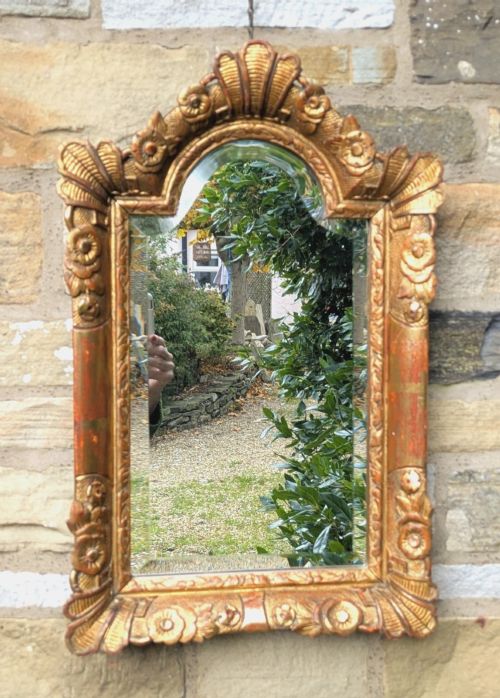
The construction of a gold gilt pier mirror relies heavily on carved wood and gesso frames finished with delicate gold leaf. Craftsmen built structural elements from solid timbers like mahogany or walnut, frequently applying parcel-gilt details to accentuate the carved ornamentation.
Mirror plates were traditionally produced using silvering techniques on mercury glass, which often develops a characteristic foxed appearance over time. Gilded wood and painted surfaces required meticulous preparation of gesso layers before the gold leaf could be burnished to a high sheen.
Gold Gilt Pier Mirror Retail Price Guide 2026
Typical asking prices for gold gilt pier mirror among the pieces listed under this phrase on Sellingantiques today, from the lower quarter to the upper quarter. They describe what is for sale here now, not the wider market.
Listings feature eighteenth-century Georgian and Regency pieces alongside nineteenth-century French chateau and Rococo revival styles.
Factors determining quality
The standard of a gold gilt pier mirror rests upon the crispness of the hand-carved gesso and wood detailing. Finer examples display deeply undercut foliage, scrolls, and crests that remain sharp and well-defined beneath the layers of gold leaf.
The integrity of the glass plate also distinguishes the tier of execution. Original mercury glass panels, complete with period distortion and foxing, hold greater historical significance than later replacement mirror plates.
The Gold Gilt Pier Mirror Glossary
- Pier mirror
- A tall mirror designed to fit the wall space between two windows. They frequently incorporate console tables and tall vertical frames.
- Gesso
- A plaster-like mixture applied to wood frames to create a smooth surface for gilding. Skilled artisans carved intricate relief patterns directly into this hardened material.
- Mercury glass
- A double-walled blown glass medium lined with a silvering mixture. It produces a mottled, reflective finish common in older mirrors.
- Verre eglomise
- A cold decoration technique where gold or silver leaf is applied to the reverse of glass and etched. Panels decorated this way appear frequently in Regency pier mirrors.
- Parcel-gilt
- A decoration style where only specific portions of a wooden object are gilded. This technique highlights carved details against a contrasting painted or dark wood ground.
- Trumeau mirror
- A decorative wall mirror integrated into wood panelling or fitted with a painted panel above the glass. These originate largely from French interior design traditions.
Gold Gilt Pier Mirror: Frequently Asked Questions
Where should I hang a pier mirror?
These mirrors suit narrow wall sections between windows or above low console tables where their vertical height can be fully appreciated. Placing them opposite a light source maximises the reflection across the room.
Ensure the wall fixings support the considerable weight of the wooden frame and glass plate. Professional installation is often recommended for larger nineteenth-century examples.
What is mercury glass?
Mercury glass refers to antique mirror plates produced by pouring a liquid silvering mixture between double-walled blown glass. This method creates a deep, soft reflection rather than the stark clarity of modern float glass.
Over decades, chemical reactions cause the backing to develop dark spots and foxing. Collectors prize this characteristic ageing as evidence of authenticity.
How do I identify a Regency pier mirror?
Regency pieces typically feature classical architectural motifs such as columns, reeded mouldings, and verre eglomise panels. The frames lean towards structured symmetry influenced by Greek and Roman revival styles.
Proportions are often tall and slender, designed to maximise light in nineteenth-century drawing rooms. Look for original giltwood finishes and early mirror plates.