
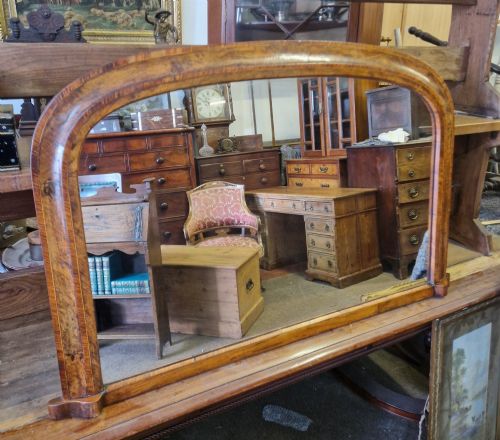
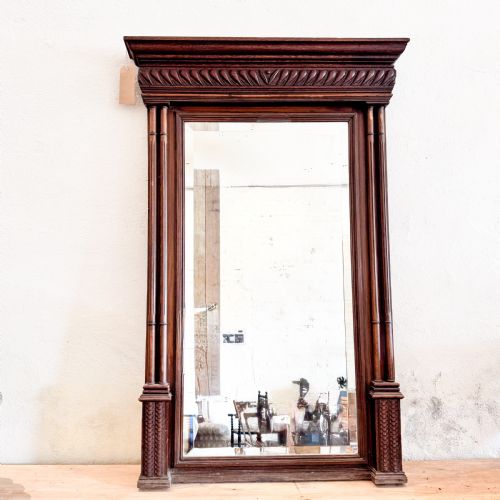


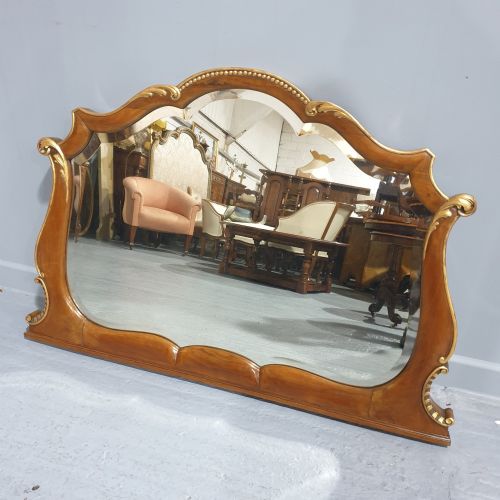
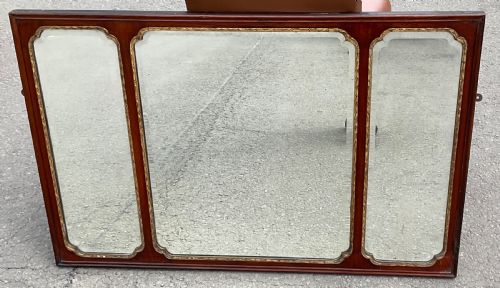

Walnut Fireplace Mirror
A walnut fireplace mirror brings warmth and weight to a room, offering rich timber frames designed to sit naturally above a hearth.
Walnut Fireplace Mirror
A walnut fireplace mirror is fundamentally an overmantel mirror designed to anchor the space above a chimney breast. When you search for this phrase, you encounter large horizontal or arched looking glasses framed in dark timber, predominantly dating from the Victorian era up to 1920.
The pieces on this page lean heavily towards Victorian and early twentieth-century examples, including grand nineteenth-century overmantel mirrors. They take the form of heavy wooden frames, occasionally incorporating triple plates or architectural pediments.
Makers of these items utilised distinct stylistic revivals, producing Georgian style, Queen Anne style, and Grand Regency pieces alongside Aesthetic Movement designs. You will frequently find them functioning as overmantel mirrors or peer glasses meant to reflect light around period reception rooms.
Construction and materials
Construction relies upon solid wood frameworks and applied veneers, with burr walnut and standard walnut providing distinctive swirling grain patterns. Cabinetmakers combined these primary timbers with secondary woods like oak, framing heavy mirror glass plates.
Surface ornamentation involved wood inlay, parcel gilt accents, and brass detailing to catch the firelight. Carved elements and ebonised highlights added depth to the frames, while Tunbridge wear introduced intricate geometric mosaic patterns into the timber.
The listings here span the Victorian era, the nineteenth century, and up to nineteen-twenty, featuring walnut, burr walnut, oak, and gilt wood.
Assessing quality and craftsmanship
Quality reveals itself in the selection of the timber veneers and the depth of the carving. Finely figured burr walnut and crisp wood inlay distinguish the more ambitious pieces from plain domestic looking glasses.
The sophistication of the secondary decoration dictates the standing of a mirror. Hand-carved arches, parcel gilt highlights, and intricate brass detailing show a level of workshop attention that elevates the piece far beyond standard production.
The Walnut Fireplace Mirror Glossary
- Overmantel mirror
- A large looking glass specifically shaped to hang on the wall directly above a fireplace mantelpiece. These pieces often feature wide horizontal proportions to match the width of the hearth below.
- Burr walnut
- A specialised wood veneer taken from the warted excrescences of a walnut tree, prized for its swirling, highly figured grain patterns. It was frequently utilised on high-end Victorian furniture and mirror frames.
- Tunbridge wear
- A meticulous form of woodworking originating in Kent, where tiny pieces of different coloured woods are assembled to form geometric mosaic pictures. It appears on specific Victorian frames as decorative banding.
Walnut Fireplace Mirror: Frequently Asked Questions
Where do I hang an overmantel mirror?
These mirrors are built to hang on the wall directly above a fireplace mantelpiece, where they naturally balance the hearth.
Because of their substantial weight and scale, they require secure fixings anchored directly into the wall studs or masonry.
How do I date a walnut mirror?
Dating relies on observing the framing styles, timber preparation, and decorative motifs such as brass detailing or inlay. Victorian and nineteenth-century examples often display heavier architectural proportions compared to later pieces.
Examining the backboards and the silvering on the mirror glass also offers clear clues to the period of manufacture.
Can I place these mirrors in modern rooms?
The rich timber tones and classic proportions of walnut frames allow them to warm up contemporary interior spaces very effectively. They provide a strong visual anchor when hung above low modern sideboards or traditional fireplaces alike.
Their reflective glass plates also help to bounce natural daylight deep into minimalist or neutral rooms.
What is the difference between an overmantel and a peer glass?
An overmantel mirror is specifically proportioned to sit above a fireplace mantelpiece to complement the hearth. A peer glass traditionally hung on the narrow pier of wall space situated between two windows.
Over time, the terms occasionally overlapped, particularly during the Victorian period when large looking glasses served multiple interior functions.