
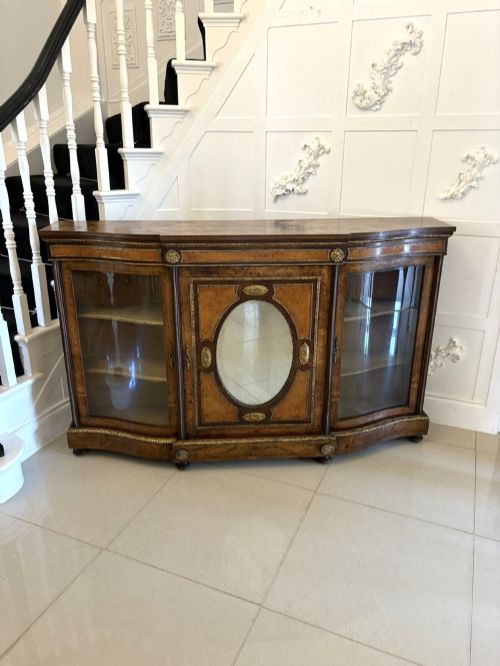
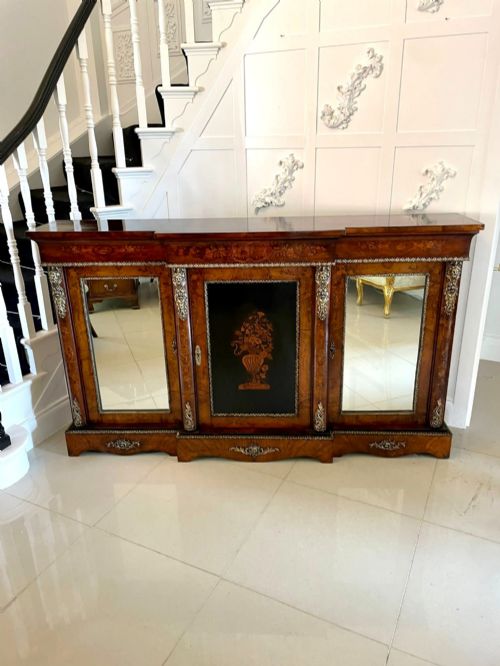
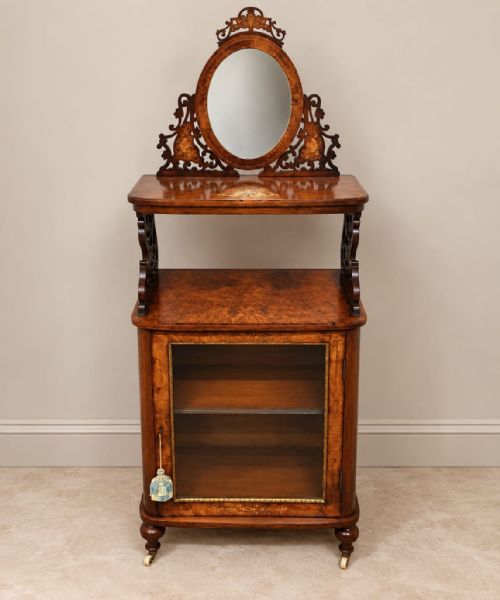
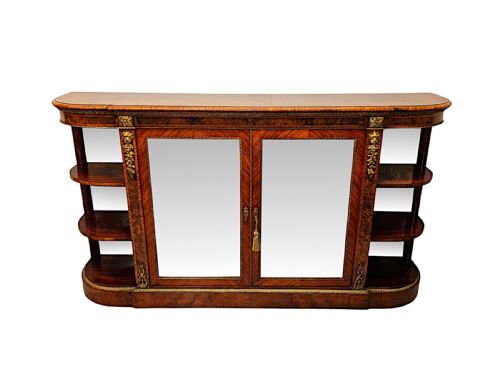
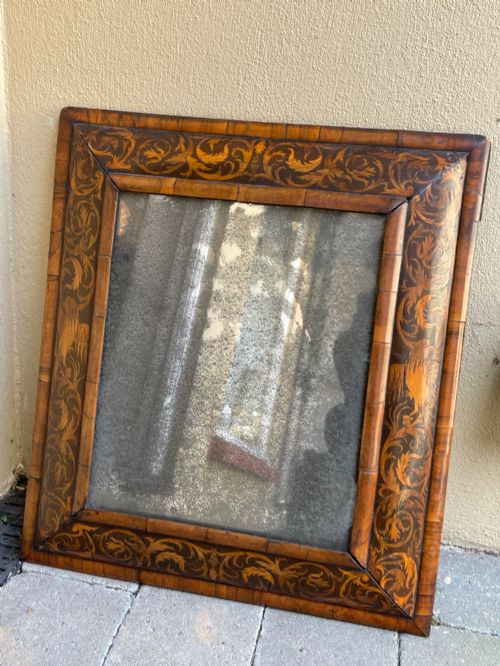


Inlaid Walnut Mirror
An inlaid walnut mirror brings rich timber grain and fine decorative stringing into a room, spanning periods from the late seventeenth century through the Victorian era.
Inlaid Walnut Mirror
An inlaid walnut mirror combines a warm, figured timber frame with delicate contrasting stringing or marquetry, appearing most frequently in Victorian overmantel and wall formats across this selection.
The pieces on this page range from compact dressing table swing mirrors and Georgian wall styles to substantial nineteenth-century overmantels designed to anchor a principal room.
Makers and craftsmen applied floral marquetry, geometric banding, or Tunbridge ware to enhance the natural grain of the walnut, creating decorative focal points for domestic interiors.
How they were made
Cabinetmakers constructed these frames using solid walnut and figured veneers laid over secondary timbers, often selecting burr walnut for its complex, swirling grain patterns.
Decoration relied on precision wood inlay, using lighter timbers such as boxwood to create contrasting floral motifs, strapwork, or linear stringing.
Many examples incorporate brass detailing, ormolu mounts, and giltwood highlights, reflecting French revival and Aesthetic movement influences alongside traditional British craftsmanship.
Inlaid Walnut Mirror Retail Price Guide 2026
Typical asking prices for inlaid walnut mirror among the pieces listed under this phrase on Sellingantiques today, from the lower quarter to the upper quarter. They describe what is for sale here now, not the wider market.
Listings feature walnut timber alongside boxwood, brass, and ormolu across Victorian and Georgian periods.
What varies in quality
The crispness of the marquetry and the choice of veneer dictate the visual impact of an inlaid walnut mirror, with burr walnut and multi-wood pictorial inlays sitting at the higher end of the scale.
Construction methods reveal the standard of the workshop, seen in the retention of original mirrored glass plates and the precision of the mitred joints in the cushion or flat frames.
Gillows·Maples
The Inlaid Walnut Mirror Glossary
- Burr walnut
- A prized timber harvested from walnut tree growths, yielding intricate, swirling grain patterns used for decorative veneer work on high-status furniture.
- Marquetry
- The art of applying small pieces of wood veneer to a structure to form decorative patterns or pictorial designs.
- Cushion mirror
- A frame style with a pronounced, rounded profile that swells outward toward the outer edge, typical of seventeenth-century William and Mary designs.
- Stringing
- Thin lines of contrasting wood inlay set into channels in the primary timber to outline panels, drawers, or mirror frames.
- Overmantel mirror
- A large mirror designed specifically to be hung on the wall directly above a fireplace mantelpiece.
Inlaid Walnut Mirror: Frequently Asked Questions
How do I hang a heavy overmantel mirror safely?
Large nineteenth-century overmantel frames carry substantial weight due to their solid timber construction and thick glass plates. They require secure fixing directly into masonry walls using appropriate brackets.
Professional installation ensures the weight distributes evenly across the frame structure rather than straining the original hanging loops.
What is the difference between walnut and burr walnut?
Standard walnut displays a rich, straight grain with gentle figuring, whereas burr walnut comes from a tree growth that produces dense, swirling patterns. Burr veneers were reserved for the most decorative surfaces.
Both timbers respond well to traditional polishing, but burr walnut offers a much more dramatic visual texture.
Are the mirror plates usually original?
Many older frames retain their original mercury or early silvered glass, which often exhibits characteristic foxing, light oxidation, and minor speckling. These subtle imperfections confirm the age and authenticity of the piece.
Replacements do occur when original glass suffered damage over the centuries, though surviving early plates remain highly desirable.
How should I care for the wood and glass?
Maintain the walnut frame by applying a light coat of quality beeswax periodically to nourish the timber and preserve the satin sheen of the French polish. Avoid modern silicone sprays.
Clean the glass gently with a soft cloth and non-ammonia cleaner, taking care to prevent moisture from seeping behind the frame edge into the veneer.