






Renaissance Revival Mirror
A renaissance revival mirror brings heavy architectural carvings, rich timber, and classical drama to a modern room.
Renaissance Revival Mirror
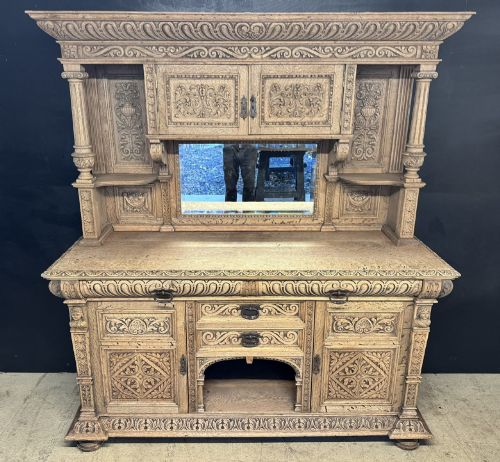
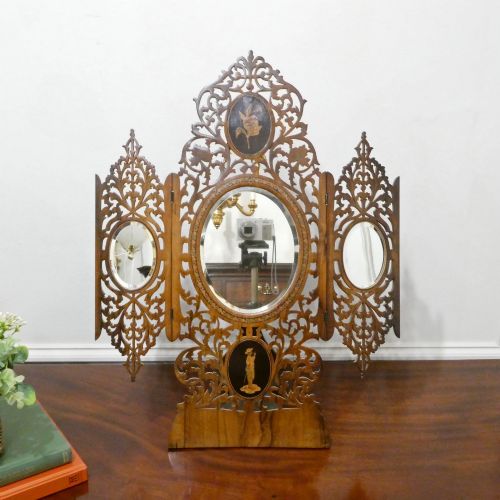
A renaissance revival mirror draws on sixteenth-century classical forms through nineteenth-century Victorian interpretations. These pieces appear as large wall mirrors, overmantels, easel table mirrors, and architectural components integrated into sideboards and hall stands.
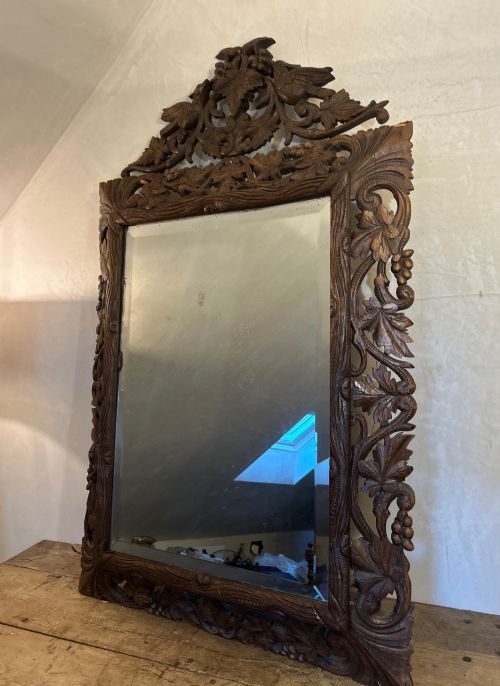
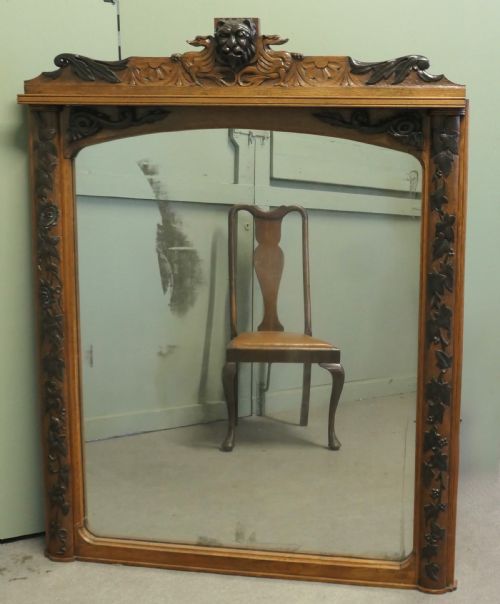
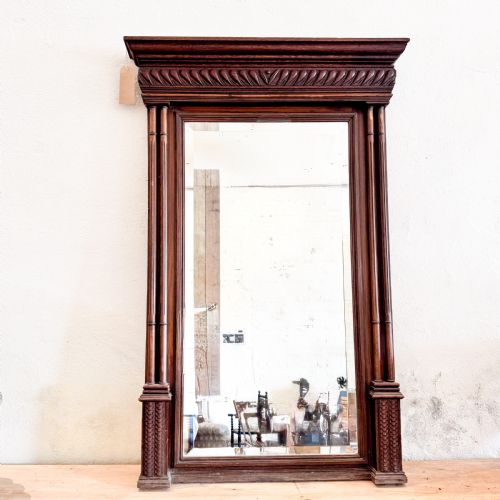
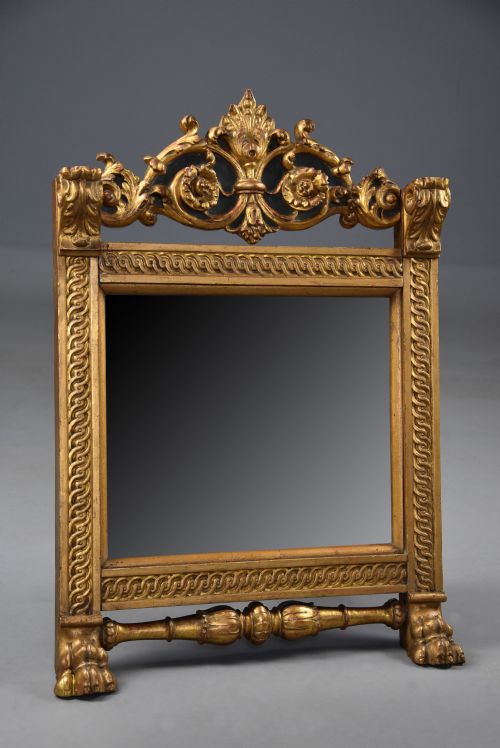
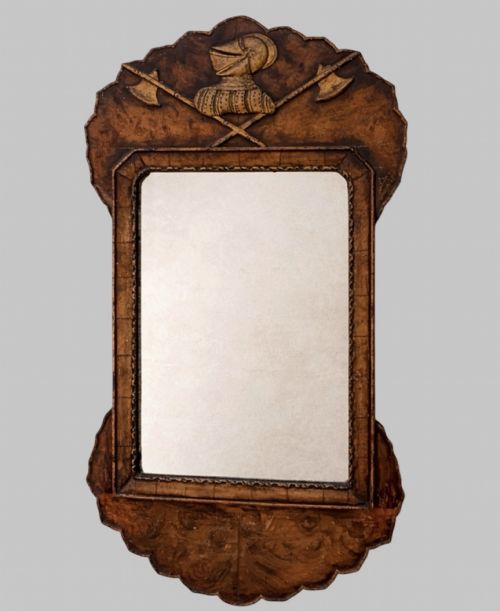
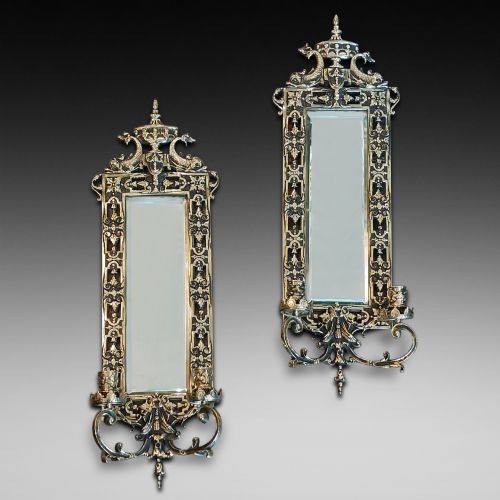
The most common version met on this page is the carved oak wall mirror, often featuring deep mouldings, side columns, and armorial crests. Walnut and giltwood variants also occur, alongside repousse brass frames and occasional French or Italian regional expressions.
Many examples date from the nineteenth century, spanning decades from eighteen sixty to eighteen ninety, with occasional twentieth-century interpretations. They function equally well hung above a mantelpiece or positioned on a sideboard surface.
How They Were Made
Cabinetmakers used solid timbers like oak and walnut, shaping the wood through deep relief carving, turned side columns, and applied crests. Giltwood and gesso surfaces provided a contrasting metallic sheen, while brass appeared in repousse frames and girondelle brackets.
Glass panels were set into heavy timber frames, sometimes featuring bevelled edges that caught the light. Joinery relied on traditional framing techniques to support the substantial weight of the timber and carved ornamentation.
Renaissance Revival Mirror Retail Price Guide 2026
Typical asking prices for renaissance revival mirror among the pieces listed under this phrase on Sellingantiques today, from the lower quarter to the upper quarter. They describe what is for sale here now, not the wider market.
Keep an eye out for carved Green Man motifs hiding among the foliage.
What Varies in Quality
The depth and crispness of the carving separate standard production from exceptional work, as seen in the sharpness of foliage, figures, and armorial crests. Finer pieces demonstrate careful proportion between the mirror plate and the heavy architectural framework.
Materials and secondary details also distinguish the range, from simple walnut mouldings to elaborate giltwood tabernacle frames and Italian inlaid walnut. The integration of structural elements like side columns and crests shows the maker's hand.
The Renaissance Revival Mirror Glossary
- Armorial crest
- A carved heraldic device or shield placed at the top of the frame. This decorative element draws on sixteenth-century lineage symbols.
- Overmantel mirror
- A large mirror designed specifically to hang above a fireplace mantel. These pieces often match the horizontal proportions of the hearth below.
- Repousse
- Metalwork hammered into relief from the reverse side. This technique creates raised patterns on brass frames and mirror surrounds.
- Tabernacle mirror
- A frame architectural in structure, resembling a small shrine or altar piece with columns and a pediment. Italian examples frequently use this format with giltwood.
- Girondelle
- A wall mirror featuring attached candle sconces or branches. The brass or gilt frame reflects the candlelight across the room.
Renaissance Revival Mirror: Frequently Asked Questions
Where should I hang a heavy oak wall mirror?
These substantial frames require secure fixing directly into wall studs or masonry to support the weight of the timber and glass.
Position them at eye level in hallways or above principal pieces of furniture to balance the visual mass.
How do I identify a nineteenth-century piece?
Look for construction details in the timber, hand-carved relief work, and the characteristics of the glass plate.
Nineteenth-century makers drew heavily on Victorian and continental Renaissance styles, incorporating architectural columns and crests.
Can I place these mirrors in a modern interior?
The rich tones of oak and walnut anchor contemporary spaces by introducing texture and historical contrast.
Pair a carved frame with neutral walls to let the architectural details and deep mouldings stand out.
What is the difference between wall and overmantel mirrors?
Wall mirrors are generally vertical and self-contained, suitable for hanging on any open wall space in a room.
Overmantel mirrors tend to be wider and lower, specifically proportioned to sit horizontally above a fireplace.