



Repousse Brass Mirror
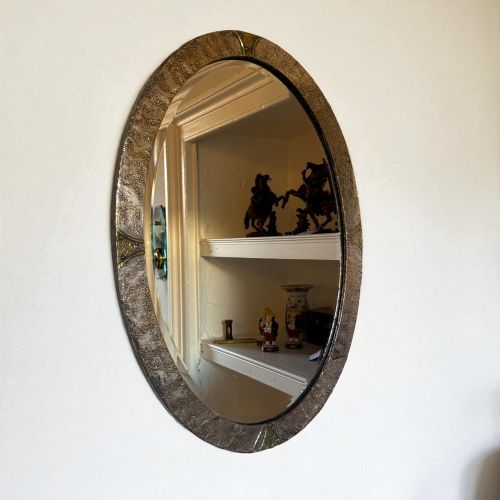
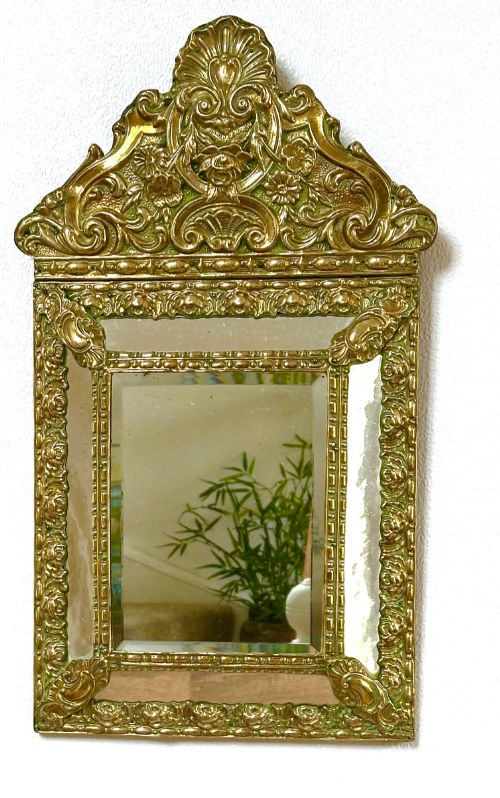
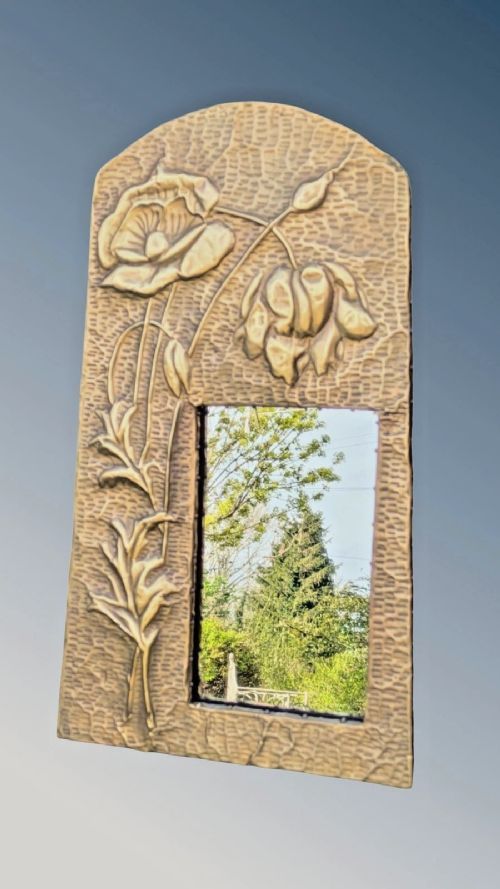
These repousse brass mirror designs bring tactile metalwork and reflective depth into a room, spanning Victorian, Edwardian, and Arts and Crafts periods.
Repousse Brass Mirror
A repousse brass mirror brings together beaten metalwork and reflective glass, appearing across wall-hung, dressing table, and cushion-framed variants. When searching for a repousse brass mirror, buyers encounter pieces ranging from compact oval wall fixtures to large cushion frames modelled on seventeenth-century prototypes.
The evidence shows heavy representation from Victorian and Edwardian eras, alongside distinct Arts and Crafts and Art Nouveau interpretations. French and Dutch stylistic influences recur frequently, often featuring deep wooden frames entirely clad in embossed metal.
Domestic interiors accommodate these pieces as hallway wall ornaments, dressing table accessories, or focal points above fireplaces. Cushion-framed versions project forward from the wall, creating deep bevels that catch light from multiple angles.
How artisans constructed these frames
Craftsmen built repousse brass mirror frames by hammering sheet brass from the reverse side to raise ornamental motifs in relief. Artisans combined this beaten metal with wood backing structures, glass mirror plates, and occasionally copper elements or ebonised wood mouldings.
Many examples utilise pressed brass techniques for repetitive floral or geometric patterns, whilst hand-embossed panels display individual tool marks from the metalworker. Mirror plates vary from bevel-edged modern replacements to older mercury glass with characteristic foxing.
Repousse Brass Mirror Retail Price Guide 2026
Typical asking prices for repousse brass mirror among the pieces listed under this phrase on Sellingantiques today, from the lower quarter to the upper quarter. They describe what is for sale here now, not the wider market.
Peacocks flank the metalwork on Glasgow School mirrors, watching every visitor who pauses in the hallway.
What separates the finest examples
Quality in a repousse brass mirror rests upon the depth of the metal relief and the crispness of the hand-beaten detail. Superior specimens exhibit sharp floral or figural definition without thinning or tearing in the brass sheet.
The integrity of the underlying wooden carcass and the originality of the mirror plate dictate value among collectors. Frames retaining their original mercury glass plates and robust timber backing structures command greater respect than those with modern glass replacements.
The Repousse Brass Mirror Glossary
- Repousse
- A metalworking technique where the artisan hammers sheet metal from the reverse to create a raised design on the front. This process gives the brass frames their characteristic three-dimensional texture.
- Cushion mirror
- A frame style with a rounded, sloping profile resembling a soft cushion, frequently covered in embossed metal. The design projects outward from the wall to frame the glass.
- Foxing
- Small dark spots and speckles that develop within older mirror plates over time due to the degradation of the backing. Collectors often prize this ageing as proof of genuine antiquity.
- Girandole
- A branched wall fixture designed to hold candles alongside a reflective mirror plate. These pieces multiplied ambient light within nineteenth-century rooms.
- Bevelled glass
- A mirror plate with angled, polished edges that refract light inward. This treatment adds a decorative border to the reflection.
Repousse Brass Mirror: Frequently Asked Questions
How do I clean a brass mirror frame?
Dust the embossed metal gently with a soft dry brush to remove particles settled in the recessed areas. Avoid harsh chemical polishes that strip away the aged patina accumulated over decades.
Keep moisture away from the wooden backing and the edges of the mirror plate to prevent corrosion. A soft cloth lightly dampened with warm water suffices for occasional surface marks.
What is the difference between Dutch and French styles?
Dutch repousse brass mirrors often feature broad cushion frames with pronounced floral motifs, reflecting seventeenth-century maritime prosperity and trade. French examples frequently incorporate finer chased detailing, tortoiseshell accents, or elegant crests.
Both regional traditions utilised beaten brass, but French pieces tend toward lighter proportions whilst Dutch designs emphasise robust volume.
How can I date an antique brass mirror?
Examine the construction of the wooden backing, the type of screws or fixings used, and the composition of the glass plate. Hand-beaten tool marks and mercury silvering indicate nineteenth-century production or earlier.
Stylistic cues such as Arts and Crafts peacocks or Art Nouveau whiplash lines point towards the late nineteenth or early twentieth century. Comparing the joinery helps narrow down the period of manufacture.