

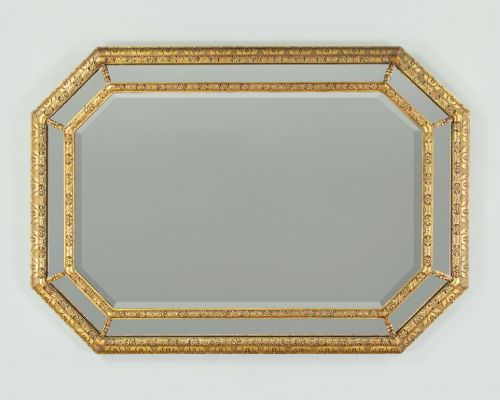

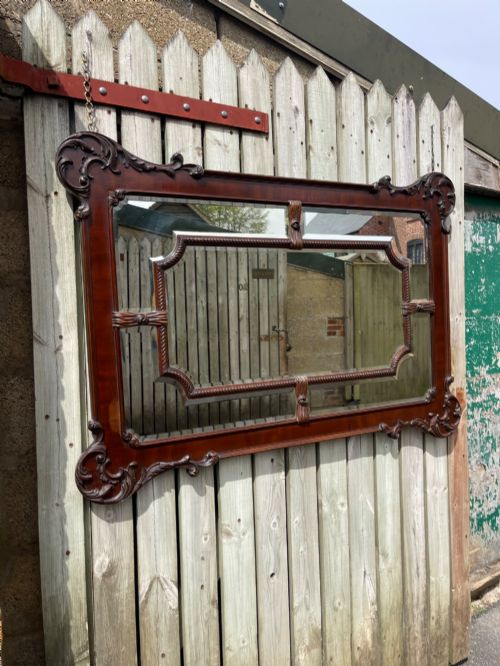


Bevelled Cushion Mirror
A bevelled cushion mirror brings optical depth and reflected light to a room through its distinct convex frame and angled glass edges.
Bevelled Cushion Mirror
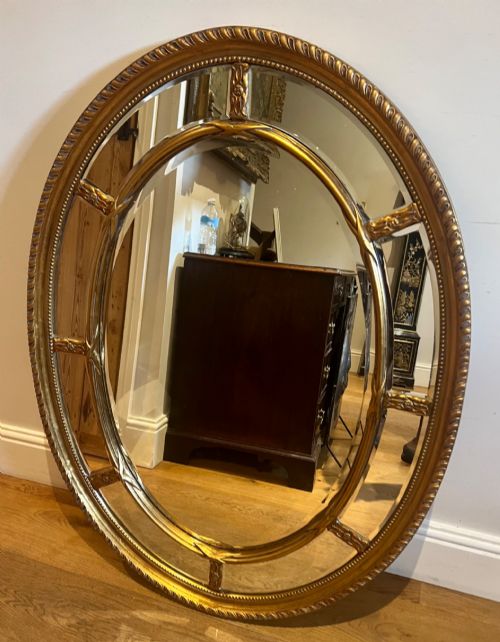
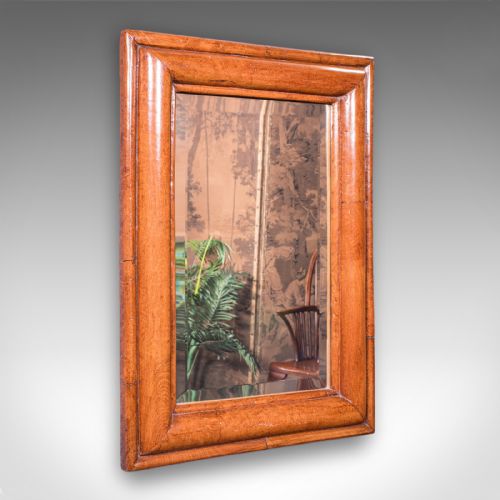
A bevelled cushion mirror centres on a rounded, swelling frame profile that projects forward from the wall, housing a central plate with slanted edges. When searching for a bevelled cushion mirror, buyers encounter wall-hanging and overmantle forms spanning the nineteenth century up through the nineteen-thirties.
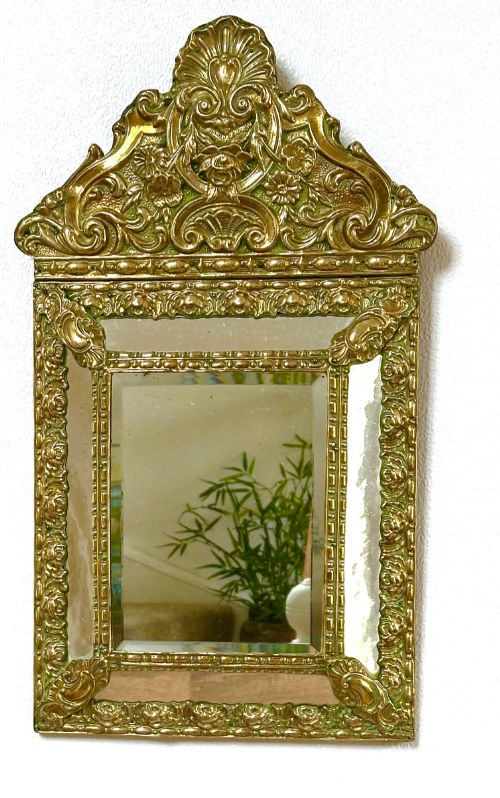
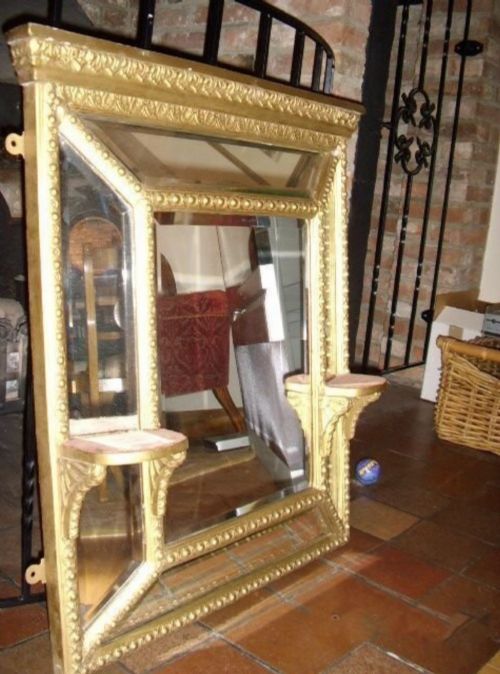
The pieces appearing here lean heavily toward Victorian and French designs, alongside Edwardian and Regency examples. These wall mirrors deploy forms varying from simple mahogany and oak sections to ornate giltwood and embossed brass frames.
Venetian and Rococo revival styles appear alongside French chateau interpretations, giving buyers a broad spectrum of decorative contexts. The most common versions met on this page combine bevelled glass with wooden, gilt, or brass cushion frames dating from the eighteen-hundreds to the early twentieth century.
Materials and construction
Makers built these frames using solid hardwoods like walnut, mahogany, and oak, often shaping the timber into the characteristic rounded cushion profile. Alternatively, they applied gesso and gold leaf over wooden carcases to create luminous giltwood finishes.
Metal-framed variants utilise embossed brass or incorporate cast metal mounts secured directly to the wooden backing. The glass plates feature hand-cut bevelled edges, occasionally accompanied by mercury backing on the earliest French examples.
Bevelled Cushion Mirror Retail Price Guide 2026
Typical asking prices for bevelled cushion mirror among the pieces listed under this phrase on Sellingantiques today, from the lower quarter to the upper quarter. They describe what is for sale here now, not the wider market.
Listings feature walnut, mahogany, oak, brass, and giltwood among primary materials spanning the nineteenth and early twentieth centuries.
Distinctions in quality
Quality rests in the crispness of the frame's sculptural contour and the integrity of the joinery where the cushion mitres meet. Superior pieces display deep, confident carving in wood or finely chased detail in brass rather than flat, repetitive stamping.
The clarity and depth of the glass plate itself dictate the upper tier of execution, particularly where hand-bevelled edges catch the light without distortion. Original mercury backing and intact, fire-gilded surfaces separate workshop pieces of high ambition from standard production.
The Bevelled Cushion Mirror Glossary
- Cushion mirror
- A wall-hanging looking glass characterised by a convex, swelling frame that resembles a stuffed cushion. This profile projects outward from the wall toward the viewer.
- Bevel
- An edge ground and polished to an angle other than ninety degrees around the perimeter of the glass plate. This angled perimeter refracts light and frames the reflection.
- Giltwood
- Timber carved and coated with a thin layer of gold leaf over a prepared gesso ground. It provides a warm, reflective surface suited to formal interiors.
- Overmantle mirror
- A large horizontal mirror designed specifically to hang on the wall directly above a fireplace mantel. These pieces often feature extended proportions to match the width of the hearth.
Bevelled Cushion Mirror: Frequently Asked Questions
Where should I hang a cushion mirror?
These pieces suit reception halls, dining rooms, and sitting rooms where their projecting frames can catch and multiply natural light. Hanging them at eye level allows the bevelled edges to frame reflections effectively.
Overmantle versions belong above a fireplace where their horizontal proportions balance the hearth below. Ensure the wall fixings match the substantial weight of wooden or gilt-framed examples.
How do I identify a Victorian mirror?
Victorian examples often employ heavy moulded timber, embossed brass, or giltwood frames with robust construction methods. Examining the backboards and fixings helps confirm the period.
They frequently feature deep cushion profiles and thick glass plates with wide hand-bevels. Stylistic cues draw heavily on revival aesthetics popular during the nineteenth century.
How do I clean the glass?
Maintenance requires mild glass cleaner applied sparingly to a soft cloth rather than sprayed directly onto the surface. This prevents moisture from seeping behind the bevelled edges and damaging the silvering.
Wooden and gilt frames need gentle dusting with a dry brush to protect the finish. Avoid commercial polishes on antique metal mounts or gilded surfaces.