



Embossed Brass Mirror
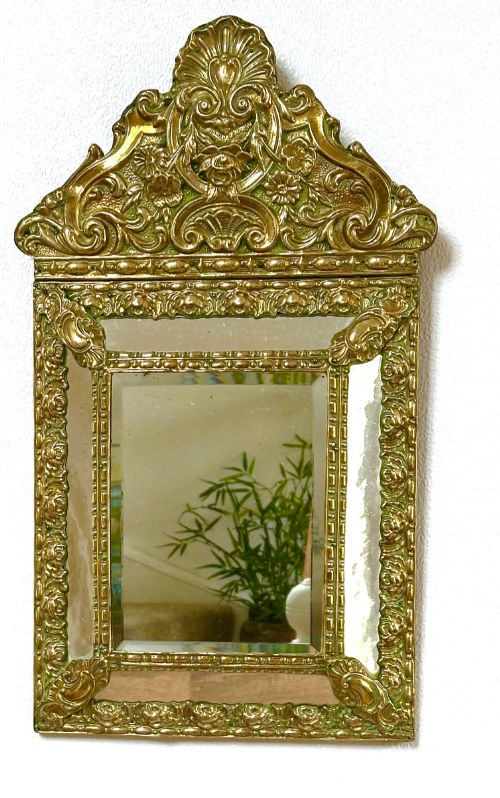
An embossed brass mirror brings tactile warmth and reflective depth to a room, catching the light in a way plain timber never manages.
Embossed Brass Mirror
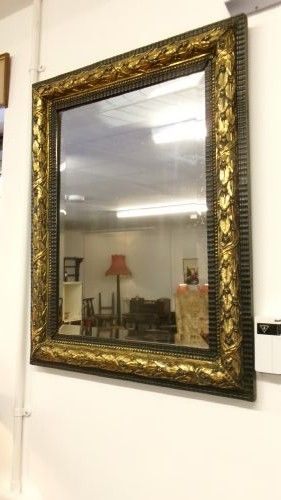
An embossed brass mirror draws the eye through heavy metalwork frames shaped in periods from the Regency era through to the Edwardian decades. Buyers hunting for an embossed brass mirror will find wall-hung and dressing table formats that reflect nineteenth- and early twentieth-century tastes.
The selections on this page lean heavily towards Victorian and Arts and Crafts examples, alongside Flemish and Dutch revival styles. Circular, oval, rectangular, and cushion-framed silhouettes dominate the available forms.
Origin points stretch across Britain, France, and the Netherlands, offering everything from restrained Scottish Arts and Crafts work to elaborate continental cushion frames. These pieces function equally well as functional looking glasses and striking wall decoration.
Materials and construction
Makers formed these frames primarily from sheet brass, often utilising pressed or repoussé techniques to hammer patterns into the metal from reverse and front. Wood serves as the structural backing and carcass material, supporting the heavy brass mounts and mirror glass.
Glass panels include both flat plates and bevelled edges, secured within timber or metal housings. Secondary materials such as ebony, leather, and enamel appear occasionally to accent the primary brass and glass construction.
Embossed Brass Mirror Retail Price Guide 2026
Typical asking prices for embossed brass mirror among the pieces listed under this phrase on Sellingantiques today, from the lower quarter to the upper quarter. They describe what is for sale here now, not the wider market.
Proud peacocks flank the brass borders on select Arts and Crafts frames, keeping perpetual watch over your hallway.
Factors that separate the range
The depth and crispness of the hand-chased or repoussé work separate mass-produced items from superior examples. Skilled metalworkers achieved intricate relief patterns that retain sharp detail across motifs like flora, fauna, and geometric borders.
The quality of the underlying wooden carcass and the integrity of the original mirror plate heavily influence the overall standard. Early bevelled glass with natural foxing commands distinct appreciation compared to later, plain replacements.
The Embossed Brass Mirror Glossary
- Repoussé
- A metalworking technique where the artisan hammers design motifs into relief from the reverse side of the brass sheet. This method creates tactile, three-dimensional decorative surfaces.
- Cushion framed
- A frame style characterised by a rounded, sloping profile that swells outwards towards the outer edge. It creates a volumetric frame that catches ambient light from multiple angles.
- Bevel edged
- Glass featuring an angled, ground perimeter that refracts light into prismatic colours. This detail signals finer manufacturing standards in period looking glasses.
- Foxing
- The speckled brown spots and age-related oxidation that develop within historical mirror glass. Many collectors prize this natural patination as proof of genuine age.
- Arts and Crafts
- A design movement valuing handcraftsmanship and natural motifs over industrial uniformity. Pieces from this tradition often display stylized plant or animal ornamentation.
Embossed Brass Mirror: Frequently Asked Questions
Can I polish the brass frame?
Light dusting with a soft, dry cloth is usually sufficient to maintain the surface without removing historical character. Aggressive chemical cleaners strip away desirable aged patination and can damage embedded details.
If cleaning becomes necessary, use a non-abrasive metal cleaner sparingly and keep it away from the mirror glass and wooden backing elements.
How do I distinguish Arts and Crafts mirrors?
Arts and Crafts examples typically display hand-hammered surfaces with stylized plant motifs, peacocks, or geometric borders. The craftsmanship emphasises visible hand-working marks rather than factory perfection.
They often feature simpler wooden structures or exposed rivet heads that contrast with the ornate scrolling found in later Dutch or Flemish revival pieces.
Are the mirror plates usually original?
Many surviving pieces retain their original glass, often identifiable by minor surface blemishes, waviness, or foxing spots. Replacement glass does happen over long centuries of domestic use.
Inspect the edges of the glass and the backing boards to determine whether the looking glass has been replaced during past maintenance.