

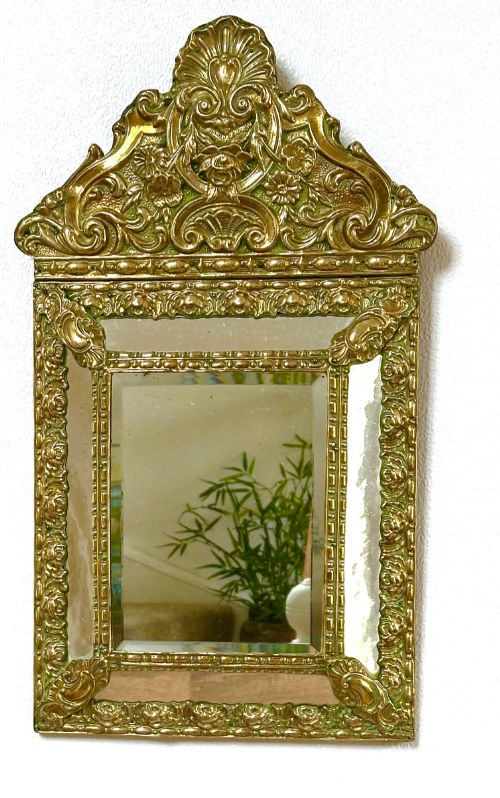


Dutch Brass Wall Mirror
These dutch brass wall mirror pieces bring heavy embossed metalwork and deep wooden frames into a hallway.
Dutch Brass Wall Mirror
When you search for a dutch brass wall mirror, you are looking at decorative looking glasses framed in heavy metalwork, often with a cushion shape. The pieces on this page span the Victorian and Edwardian periods, alongside Regency and nineteenth-century examples.
You are most likely to meet cushion framed mirrors and repousse wall pieces carrying Flemish and Dutch revival styles. These objects function primarily as hallway or reception mirrors, combining reflective glass with ornate metallic borders.
The forms draw heavily on earlier continental designs, appearing through nineteenth-century revivals rather than original seventeenth-century production. Workshops utilised ebonised wood and tortoiseshell elements to back and mount the gleaming brass sheets.
How they were made
The makers formed the decorative borders by hand embossing and repousse work on sheet brass, creating raised floral and figurative patterns. This metalwork was then mounted around mirror glass, frequently set into wooden or ebonised wood frames.
Structure relies on timber foundations beneath the brass, with some pieces incorporating tortoiseshell details to enhance the rich, dark contrast against the polished metal.
Dutch Brass Wall Mirror Retail Price Guide 2026
Typical asking prices for dutch brass wall mirror among the pieces listed under this phrase on Sellingantiques today, from the lower quarter to the upper quarter. They describe what is for sale here now, not the wider market.
Every time you adjust your hair in an embossed brass frame, you share a mirror with a Victorian hallway.
What varies in quality
The depth and crispness of the hand embossing define the character of the metalwork, distinguishing heavily worked repousse from simpler pressed plates. Crisp detailing in the floral and figurative motifs shows greater skill in the workshop.
The construction of the underlying wooden frame and the integration of ebonised wood or tortoiseshell elements dictate the overall robustness and visual weight of the piece.
The Dutch Brass Wall Mirror Glossary
- Repousse
- A metalworking technique where the artisan hammers the design from the reverse side to form a raised pattern on the front. This method gives the brass frames their distinct, tactile depth.
- Cushion framed
- A frame profile that swells outwards towards the edge before sloping back to the wall, resembling a soft pillow. It provides a substantial border for the mirror glass.
- Ebonised wood
- Timber treated with a finish to imitate expensive ebony, creating a deep black surface. It is often paired with polished brass to heighten the visual contrast.
- Flemish Renaissance Revival
- A nineteenth-century design movement that reinterprets sixteenth-century continental motifs. It heavily influences the scrollwork and figures seen on these mirrors.
Dutch Brass Wall Mirror: Frequently Asked Questions
Where should I hang a dutch brass wall mirror?
These mirrors suit hallways and reception spaces where their reflective glass and heavy metal frames can catch the light. Their strong decorative presence works well against plain or dark walls.
Ensure the wall fixings can support the substantial weight of the timber and brass construction. Position the glass at a height that reflects natural light from nearby windows.
How do I clean the brass frame?
Dust the embossed metal gently with a soft, dry brush to prevent dirt settling in the recesses of the repousse work. Avoid harsh chemical polishes that strip away the aged patina accumulated over the centuries.
Keep moisture away from the wooden backing and the edges of the mirror glass to protect the original assembly. Light wiping with a dry microfiber cloth is generally sufficient for maintenance.
Are these mirrors original seventeenth-century pieces?
Most examples found here date from the nineteenth and early twentieth centuries, spanning Victorian, Edwardian, and Regency revivals. They draw inspiration from earlier Dutch and Flemish styles rather than dating from the primary period.
Craftsmen of the Victorian era revived these cushion framed designs using traditional hand embossing techniques. This gives them the authentic appearance of older continental looking glasses.
What materials are used in the frames?
The primary visible material is brass, shaped by hand embossing and repousse work into ornate patterns. This metal is mounted over wooden foundations that provide structural support for the glass.
Some examples incorporate ebonised wood or tortoiseshell details to create contrast around the central mirror plate. These secondary materials add to the dark, rich aesthetic typical of the revival styles.