

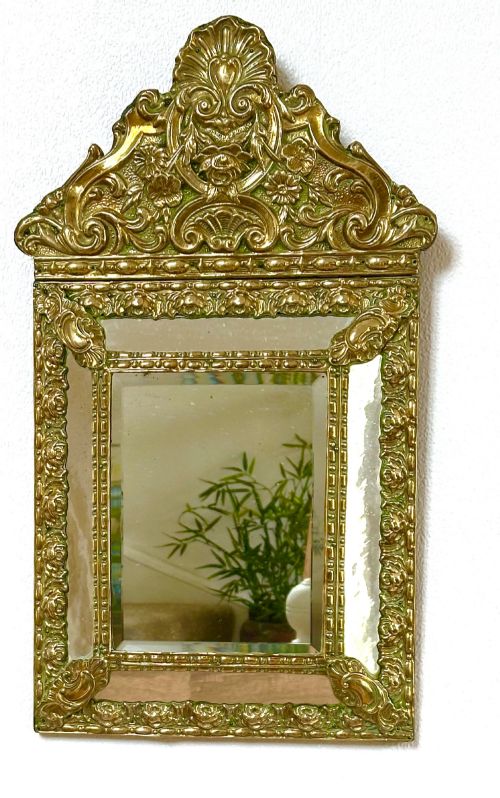


Dutch Repousse Mirror
These dutch repousse mirror examples bring rich brass work and deep cushion frames into any hallway or reception room.
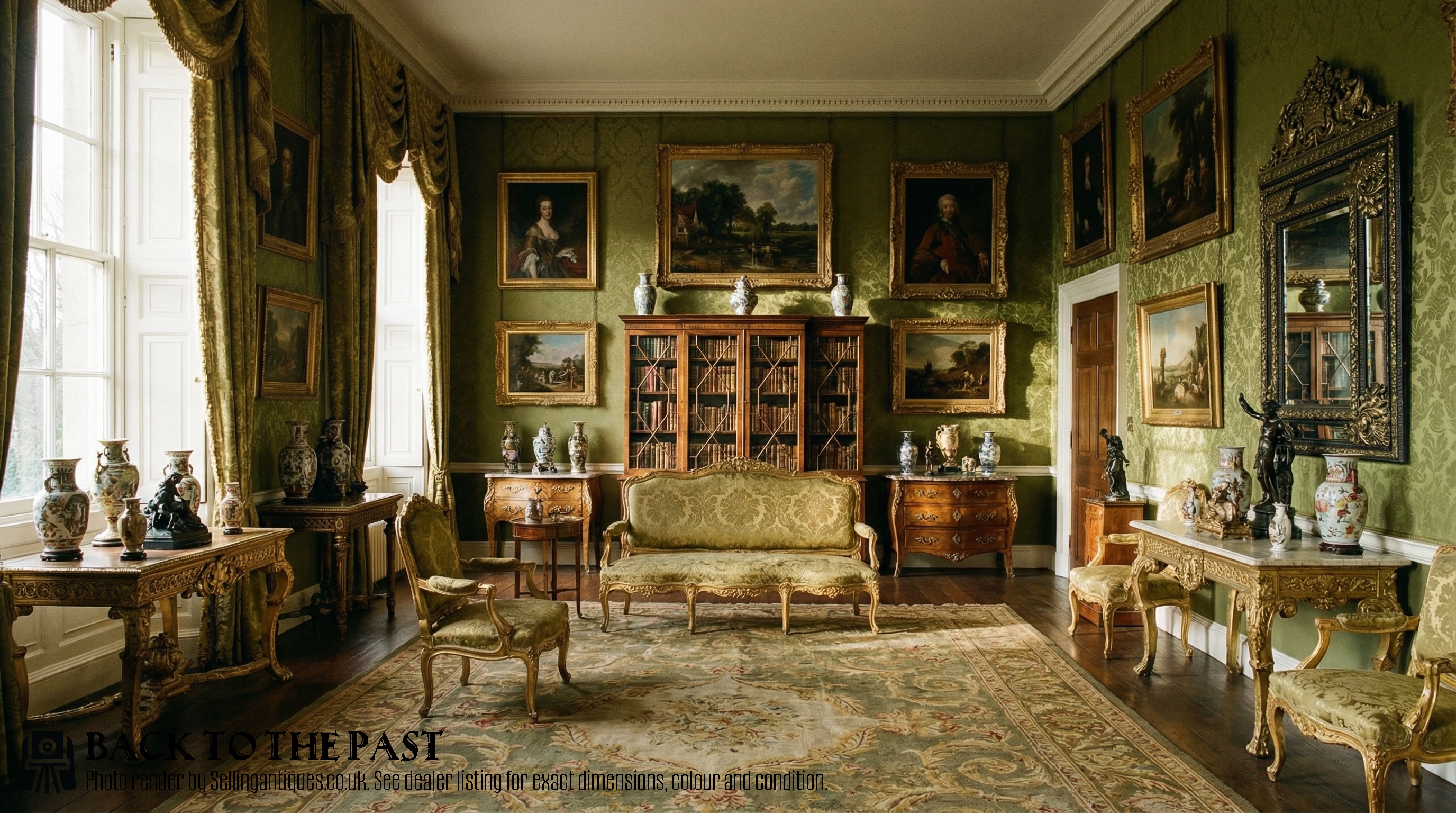
Dutch Repousse Mirror
When you search for a dutch repousse mirror, you are looking at wall mirrors defined by heavy brass frames beaten from the reverse to create raised ornamentation. These pieces frequently draw on Flemish Renaissance Revival and Dutch Baroque Revival styles, bringing distinct historical character to interior spaces.
On this page, you are most likely to meet Victorian and Edwardian interpretations alongside nineteenth-century examples. The forms range from small wall hung pieces to large cushion framed mirrors designed for prominent placement in hallways and reception rooms.
How they were made
The makers formed these frames using sheet brass, hammering the metal from behind to build up repousse relief decoration. They mounted these embossed brass plates over wooden foundations, often utilising ebonised wood or tortoiseshell elements to frame the mirror glass.
The glass itself was occasionally silvered using early methods, leaving characteristic foxed mercury plates in surviving older examples. Patinated finishes were deliberately applied to the brass to accentuate the depth of the floral and figurative embossing.
Dutch Repousse Mirror Retail Price Guide 2026
Typical asking prices for dutch repousse mirror among the pieces listed under this phrase on Sellingantiques today, from the lower quarter to the upper quarter. They describe what is for sale here now, not the wider market.
The listings here feature wall mirrors spanning the Victorian and Edwardian eras, executed primarily in embossed brass, glass, and ebonised wood.
What varies in quality
The distinction between ordinary and exceptional pieces lies in the crispness and depth of the metalwork. Master craftsmen achieved sharp, undercut relief in the repousse brass, whereas lesser examples show flat, mechanical stamping with little hand finishing.
The integration of the frame materials also dictates quality, particularly the retention of original ebonised wood mouldings and the clarity or authentic ageing of the mirror plate.
The Dutch Repousse Mirror Glossary
- Repousse
- Metalworking technique where the design is hammered into relief from the reverse side. This creates tactile, three-dimensional surface decoration on sheet brass.
- Cushion frame
- A frame profile that swells outwards towards the edge like a pillow. This generous shape maximises the surface area available for embossed brass decoration.
- Foxed mirror plate
- Glass that has developed dark spots and speckling as the backing degrades over time. This ageing process is characteristic of antique mercury plates.
- Ebonised wood
- Timber treated to imitate ebony, usually through staining and polishing. It provides a dark, contrasting border around the bright brass frame.
Dutch Repousse Mirror: Frequently Asked Questions
Where should I hang a dutch repousse mirror?
These pieces suit reception rooms and hallways where their reflective glass and detailed brass frames catch the light. They function well as focal points above console tables or mantelpieces.
Ensure the wall fixings can support the substantial weight of the wood and brass construction safely.
How do I clean the brass frame?
Dust the embossed surface gently with a soft brush to remove particles settled in the deep repousse crevices. Avoid harsh metal polishes that strip the historic patination.
Preserving the aged dark tone of the brass maintains the visual depth intended by the maker.
Are original mirror plates common?
Many surviving examples retain their early glass, which often displays characteristic foxed markings and uneven silvering. Replacements do occur when original plates have suffered breakage over the centuries.
Examine the edges of the glass for signs of age to determine whether the plate is period to the frame.
What defines the Dutch style?
The style draws heavily on seventeenth-century Dutch Baroque traditions, featuring floral motifs, scrolls, and deep cushion mouldings. Victorian and Edwardian makers revived these opulent designs.
The resulting frames combine heavy metal relief with dark wooden borders to create a dramatic architectural presence.