



Brass Hat Rack Mirror
These brass hat rack mirror pieces combine polished metal and bevelled glass to organise hallways with practical hanging space and a functional looking glass.
Brass Hat Rack Mirror
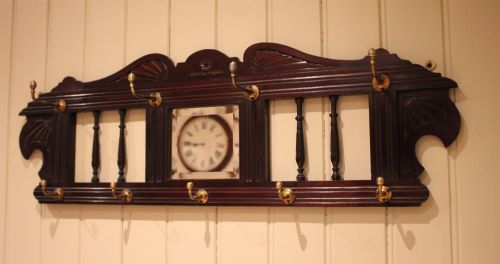
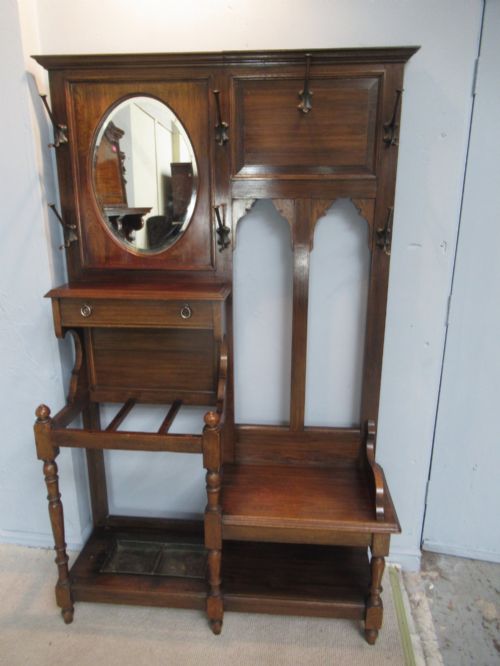
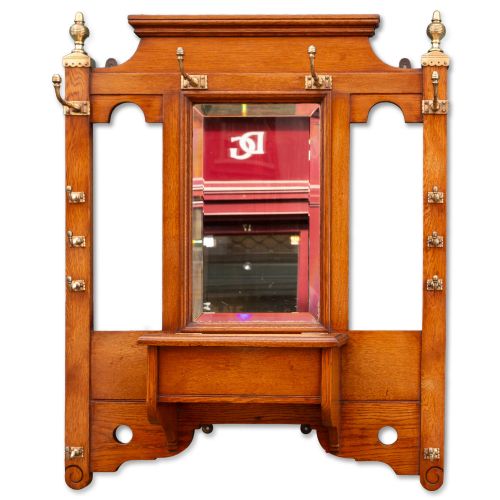
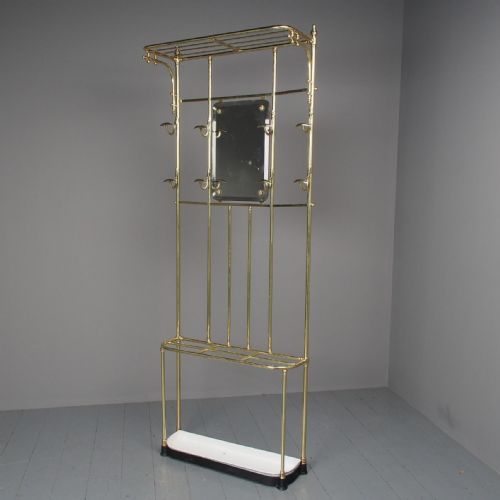
A brass hat rack mirror serves as a dual-purpose entrance furnishing, combining a wall-mounted or freestanding frame with integrated metal hooks and a central reflective plate. When buyers search for this phrase, they encounter hallway accessories designed to hold coats, hats and umbrellas while offering a final check before leaving the house.
The versions most commonly met across these listings span the late nineteenth century into the Edwardian period, often incorporating oak or mahogany backboards alongside cast brass elements. Pieces range from compact wall-mounted horseshoe designs to narrow freestanding hall stands and French portmanteau frames.
Stylistic variations in the evidence include Victorian equestrian novelties, Dutch revival pieces and French bistro influences. Each form addresses the traditional entrance hall requirement for organised storage paired with a glass plate to brighten smaller spaces.
How they were made
Construction relies on combining solid hardwoods like oak and mahogany with heavy cast or pressed brass for the structural hooks and frames. Wood backboards are frequently shaped, carved or turned to support the weight of garments and secure the glass plates.
Glass plates feature deep bevelled edges set securely into the wooden or metal frames to create the central mirror component. Brass hooks are screwed or riveted directly into the timber backplates, often shaped into specific motifs such as horseshoes or decorative scrolls.
Brass Hat Rack Mirror Retail Price Guide 2026
Typical asking prices for brass hat rack mirror among the pieces listed under this phrase on Sellingantiques today, from the lower quarter to the upper quarter. They describe what is for sale here now, not the wider market.
Several Victorian pieces take the exact shape of a lucky horseshoe just to make sure guests check their appearance properly.
What varies in quality
The grade of materials distinguishes finer examples, visible in the selection of figured mahogany or golden oak against simpler softwoods. Heavier cast brass components and original bevelled glass plates demonstrate higher manufacturing standards than later or lighter commercial alternatives.
Joinery execution and the integration of the mirror plate within the timber frame indicate the level of craftsmanship involved. Well-executed corner joints and robust brass fixings ensure stability when the piece bears the weight of heavy coats and hats.
The Brass Hat Rack Mirror Glossary
- Bevelled plate
- A mirror glass whose outer edges are cut and polished at an angle to create a framed border effect. This technique adds depth and catches light differently than flat plate glass.
- Portmanteau
- A combination piece of hall furniture incorporating a mirror, coat hooks and umbrella storage into a unified wall or floor-standing unit. The term derives from the French luggage trunk, adapted here for entrance utility.
- Hall stand
- A piece of furniture designed for entranceways, typically combining a mirror, hat and coat hooks, and sometimes a glove box or stick stands. These items anchor the hallway decor and provide storage.
- Horseshoe motif
- A decorative shape mimicking an equine shoe, frequently utilised in nineteenth-century equestrian items. In these pieces, the brass frame takes the curved horseshoe outline around the mirror plate.
Brass Hat Rack Mirror: Frequently Asked Questions
Where should I hang a brass hat rack mirror?
These pieces suit entrance halls, porches or narrow corridors where space is limited and practical hanging storage is required.
Position the piece at a height that allows comfortable use of the mirror while leaving adequate clearance below the hooks for long coats.
How do I clean the brass and glass?
Dust the wooden backboards regularly with a dry cloth and use standard glass cleaner on the mirror plate.
Avoid abrasive polishes on the brass parts to preserve any patination accumulated over the decades.
Are these pieces wall mounted?
Many examples are designed to attach directly to walls using integrated brackets or mounting points on the timber backboard.
Larger hall stand variations may rest on the floor while still requiring wall securing for stability.
How do I identify a Victorian piece?
Victorian examples often feature dense timbers such as mahogany, heavier cast brass fittings, and deep bevelling on the mirror glass.
Stylistic cues like Gothic revival influences or horseshoe equestrian motifs also point toward late nineteenth-century manufacture.