
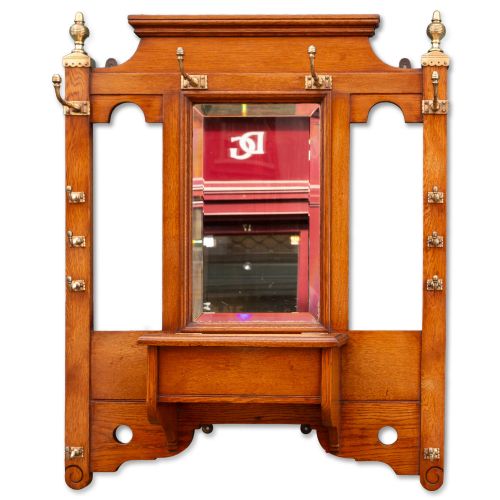
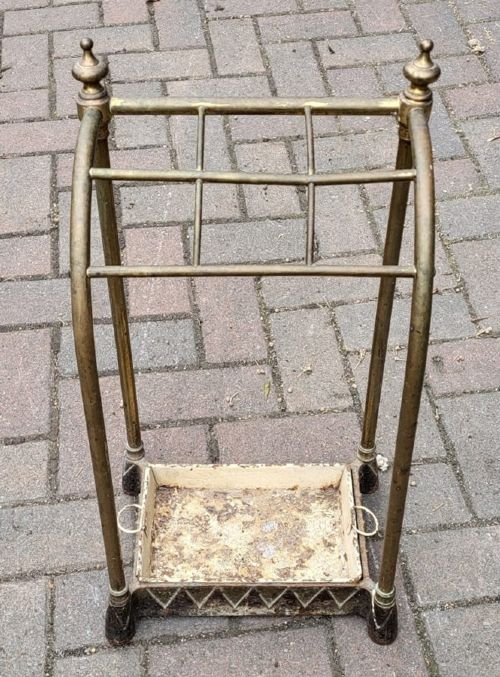
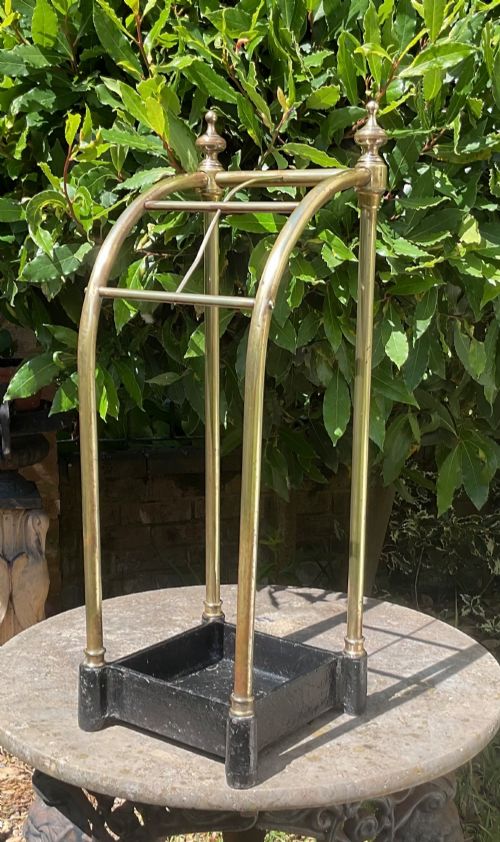
Vintage Brass Hall Stand
A vintage brass hall stand brings polished metal and structured utility to an entrance, organising umbrellas and walking canes with functional period character.
Vintage Brass Hall Stand
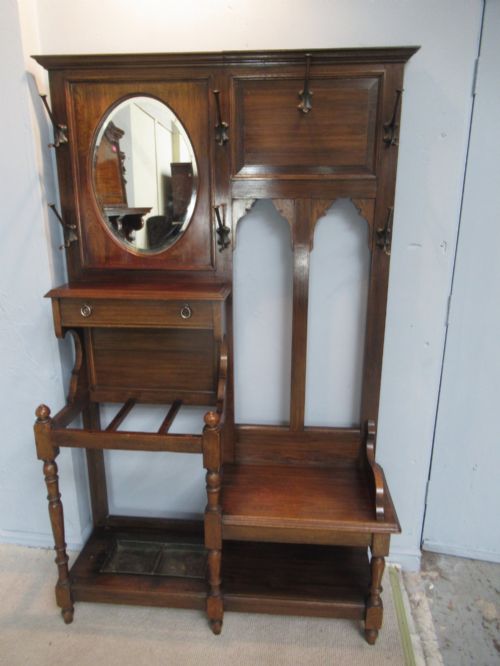
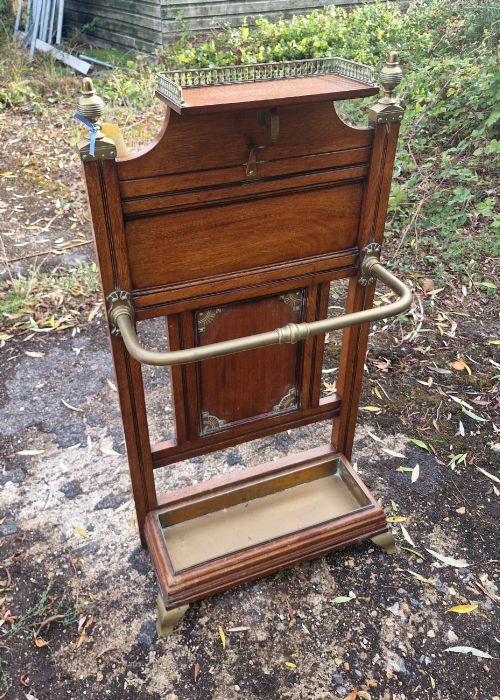
When searching for a vintage brass hall stand, buyers encounter entrance furniture designed to hold wet umbrellas and walking sticks, often appearing alongside related items like coat racks and umbrella stands. These pieces emerge from periods including the Victorian and Edwardian eras, as well as the 1920s and 1930s.
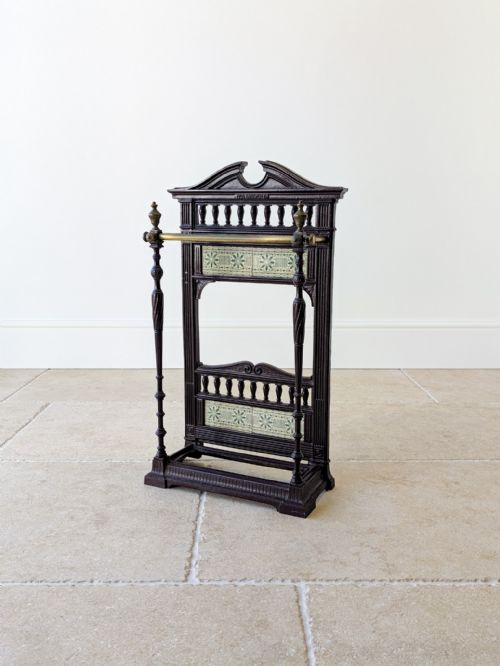
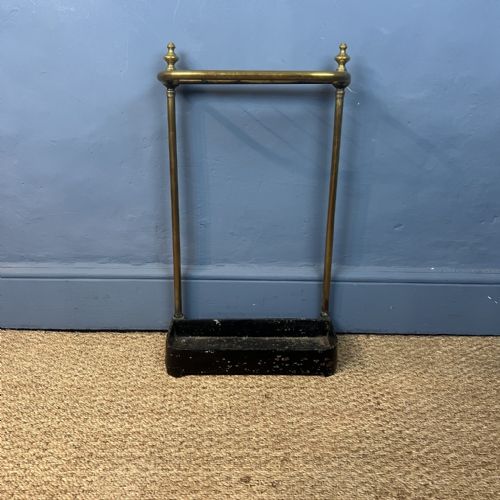
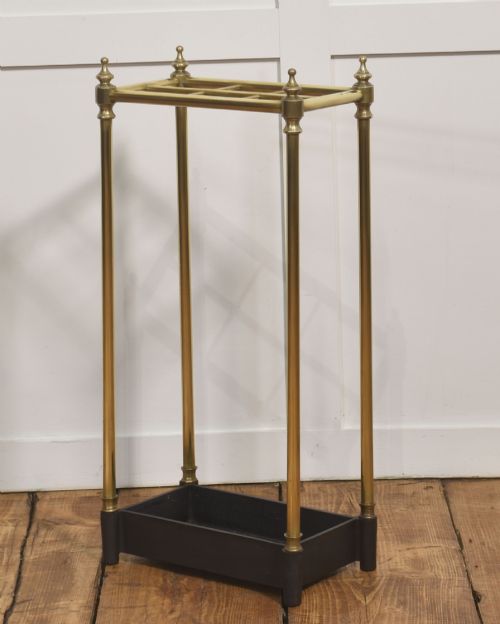
The specific forms range from demi-lune shapes and narrow walking cane holders to broader umbrella and stick stands fitted with drip trays and bun feet. Common materials paired with the metal include cast iron, oak, and mahogany, creating structured frames for hallway use.
Materials and construction
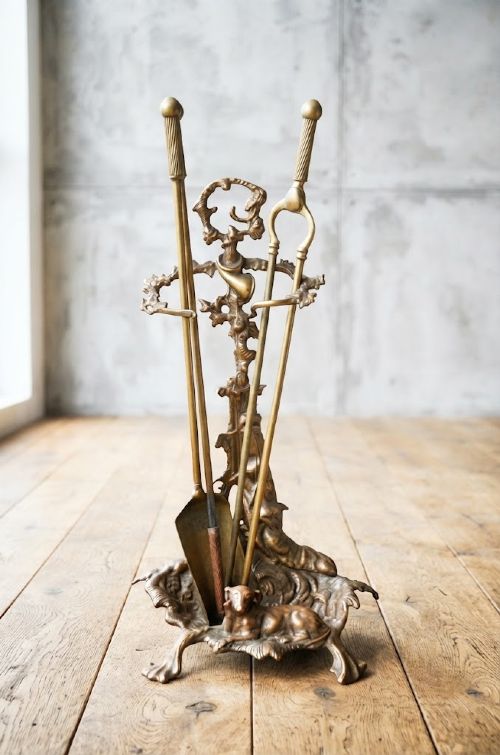
Makers utilised durable combinations of brass, cast iron, and timber such as oak, walnut, and mahogany to build these entrance pieces. Brass provided reflective structure and decorative framing, while cast iron frequently formed weighted bases to support the heavy weight of wet umbrellas and walking sticks.
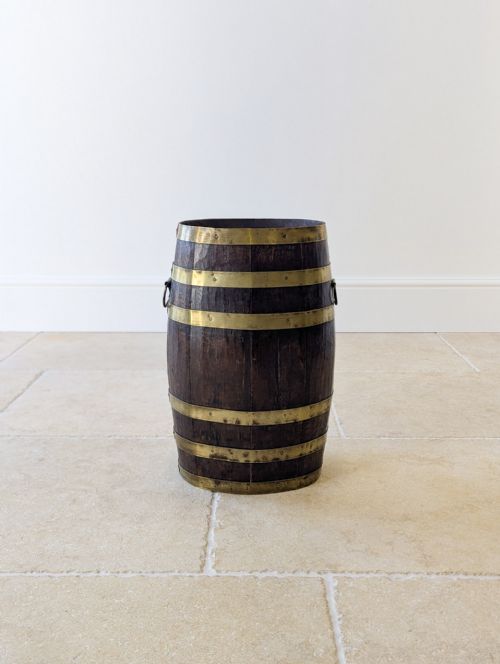
Techniques varied from coopered wooden staves bound with brass bands to cast metal frameworks featuring integrated drip trays. Certain pieces incorporate steel components or applied decorative scenes, reflecting the industrial methods of the late nineteenth and early twentieth centuries.
Listings demonstrate a frequent pairing of brass with cast iron and oak, spanning Victorian, Edwardian, and 1930s periods.
Assessing quality and manufacture
Quality in these entrance pieces rests on the weight of the materials and the rigidity of the assembly. Heavy gauge brass and solid cast iron bases indicate superior durability compared to lighter, stamped sheet metal alternatives.
Attention to detail in the casting work and the inclusion of original, functional drip trays separate standard utility items from finer examples. The integration of secondary materials, such as coopered oak construction, further defines the standard of manufacture.
Coalbrookdale·Jas Shoolbred·Elliott
The Vintage Brass Hall Stand Glossary
- Demi-lune
- A half-moon shape used for furniture designed to sit flush against a hallway wall. This configuration saves valuable floor space in narrow corridors.
- Coopered
- Construction formed from staves of wood joined edge-to-edge and bound with metal bands, traditionally used for buckets and cylindrical stick stands.
- Drip tray
- A shallow metal basin placed at the base of a stand to catch water from wet umbrellas. It protects hallway flooring from moisture damage.
- Bun feet
- Rounded, flattened spherical feet that elevate the base of the stand off the floor. They add a distinct Victorian decorative touch to heavy items.
- Cast iron
- A strong, heavy alloy poured into moulds to create rigid frames and weighted bases. It prevents tall umbrella stands from tipping over under heavy loads.
Vintage Brass Hall Stand: Frequently Asked Questions
How do I maintain brass parts?
Keep the metal clean using a dry or slightly damp cloth to remove dust and moisture. Avoid harsh chemical cleaners that can strip the historic surface finish.
Allow the natural patina to develop over time, as gentle handling preserves the aged character of vintage metalwork.
Where should I place a stand?
Position the piece in an entrance hall or porch where wet umbrellas and walking sticks accumulate upon entry. Ensure the floor surface underneath is protected if the piece lacks an original drip tray.
Keep the stand away from direct radiators to prevent any associated timbers from drying out or splitting.
How do I date these pieces?
Examine the materials, construction methods, and stylistic cues such as Victorian cast iron work or Edwardian aesthetic details. Comparing the hardware and assembly types helps narrow down the manufacturing decade.
Consult the recorded periods in the listings, which typically span from the late nineteenth century through to the interwar years.
Are drip trays usually original?
Many surviving stands retain their original metal drip trays, which are fitted specifically to the base dimensions. Check for consistent wear and matching patination between the tray and the main frame.
Replacements do occur due to rust over decades of catching water, so matching metal types indicate a higher degree of originality.