


Hallway Coat Mirror
A hallway coat mirror combines practical storage with a reflecting glass plate, welcoming visitors to the home.
Hallway Coat Mirror
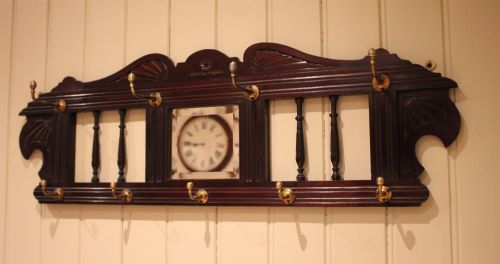
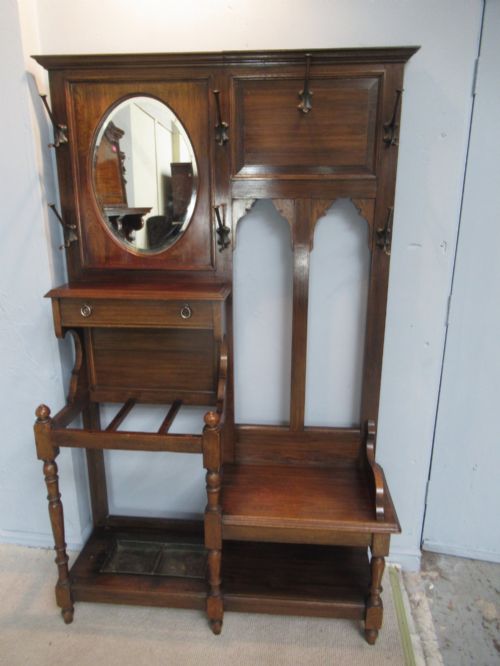
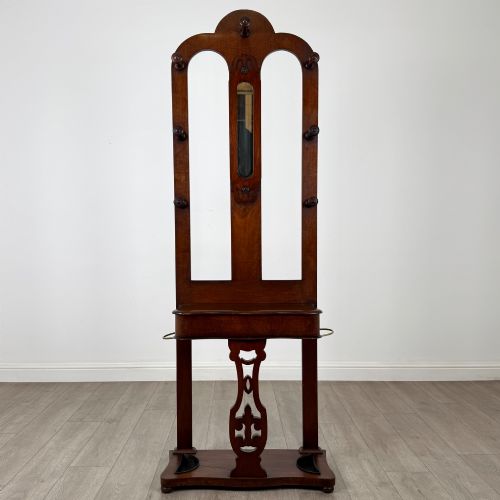
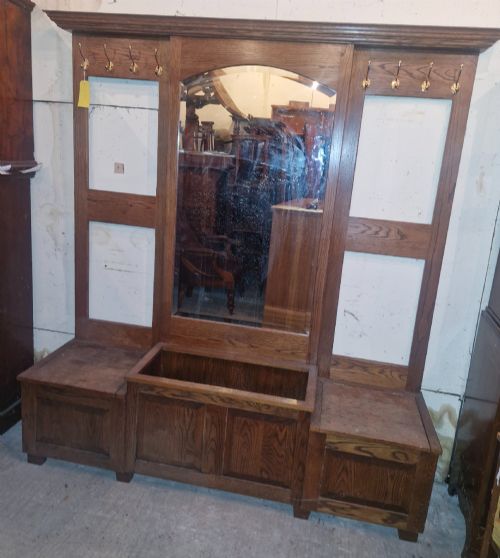
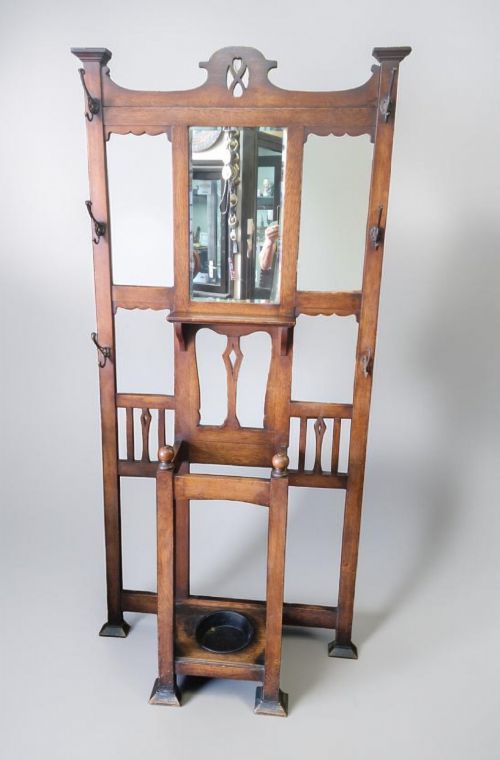
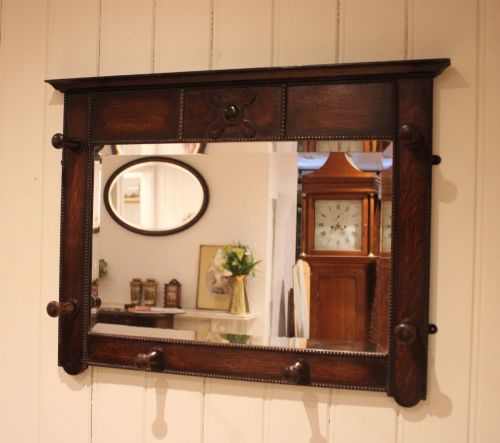
A hallway coat mirror serves as a functional piece of furniture designed for entranceways and lobbies, combining hanging hooks with glass panels. These objects appear in various forms, from large freestanding hall stands incorporating seats and umbrella wells to smaller wall-mounted racks.
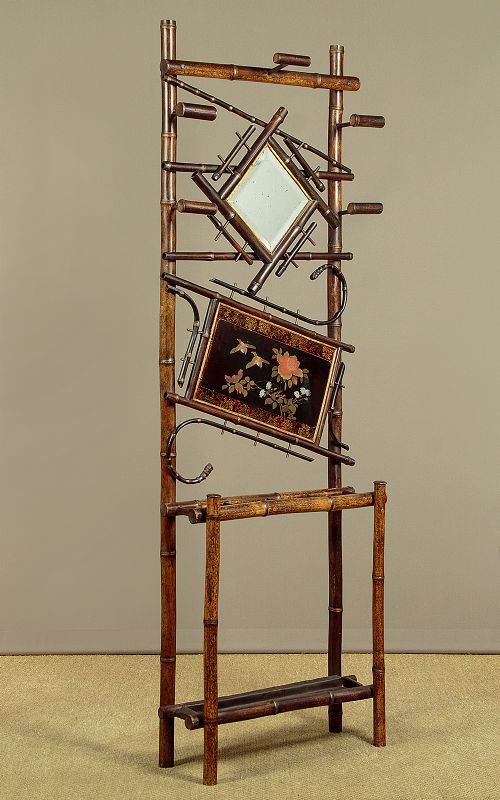
The pieces seen here date predominantly from the Victorian and Edwardian periods, stretching from the mid-nineteenth century through to the 1920s. Buyers frequently encounter solid oak and mahogany constructions alongside lighter materials such as bamboo and bentwood.
Stylistic influences span Art Nouveau, Aesthetic Movement, and Gothic Revival, reflecting the changing interior tastes of British and continental homes. Whether freestanding or hanging, each item provides a dedicated spot for hats, coats, and final glances before departure.
Materials and construction
Cabinet makers utilised heavy hardwoods such as mahogany and oak for substantial freestanding hall stands, often incorporating carved details and panelled backs. Brass and cast iron supplied robust hooks and umbrella drip trays, while marble added durable surfaces to central shelves.
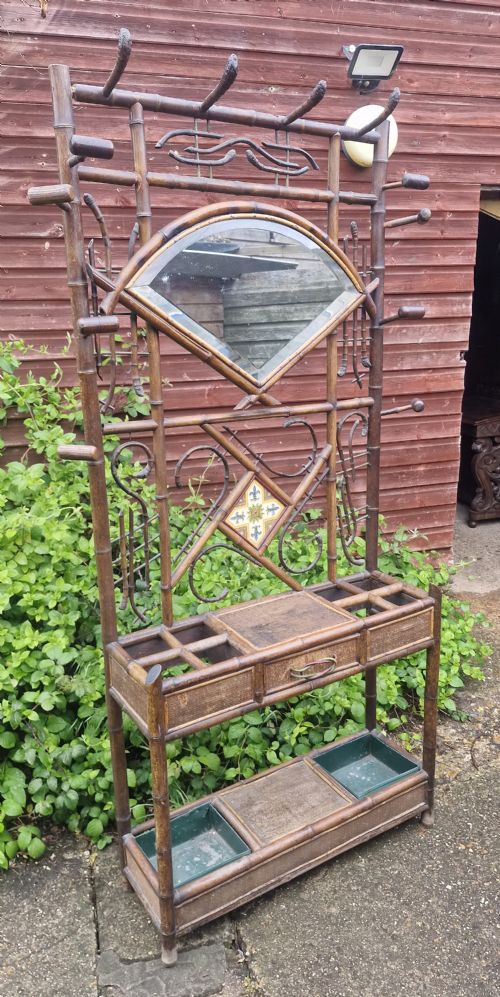
Lighter alternatives emerged through the use of bamboo, sometimes styled with chinoiserie motifs, and bentwood techniques pioneered by makers like Fischel. Glass plates were typically bevelled and set securely into wooden frames designed to withstand daily hallway use.
Many pieces include hidden drip trays designed to catch rainwater from dripping umbrellas before it reached the hallway floor.
Distinctions in quality
Quality reveals itself in the selection of timber and the depth of carving, where hand-carved oak or figured mahogany stands apart from simpler machine-made equivalents. The integration of functional elements, such as fitted marble shelves and heavy brass or cast iron hardware, indicates higher production standards.
The scale and ambition of the design dictate the upper tier of pieces, seen in large multi-functional hall stands with integrated seating and substantial bevelled mirrors. Proportion and structural integrity under heavy loads distinguish superior examples from standard domestic furnishings.
Fischel·Gillows
The Hallway Coat Mirror Glossary
- Hall stand
- A large freestanding item of furniture combining a mirror, coat hooks, a glove box, and umbrella stands. These units anchored Victorian and Edwardian entrance halls.
- Bevelled plate
- A glass mirror whose edges are cut and polished at an angle to create a framed, glittering border. This technique adds depth to the reflection.
- Bentwood
- Wood softened by steam and bent into curved shapes using moulds. This technique created light, durable frames popular around nineteen hundred.
- Aesthetic Movement
- A late nineteenth-century design style emphasising visual beauty over narrative function. Pieces from this movement often utilised bamboo or ebonised wood.
- Hall tree
- An alternative term for a freestanding coat and hat stand incorporating vertical posts and hanging pegs. They populated nineteenth-century reception rooms.
Hallway Coat Mirror: Frequently Asked Questions
How do I clean an antique mirror?
Wipe the wooden frame with a dry cloth and use mild glass cleaner on the plate.
Avoid letting moisture seep behind the glass to protect the original silvering.
Are these pieces suitable for small spaces?
Wall-mounted coat racks and narrow hall stands fit compact entranceways effectively.
Freestanding multi-functional stands require deeper floor space to accommodate umbrella wells and seats.
How do I date a hall stand?
Examine the timber, hardware, and stylistic clues such as Art Nouveau curves or Gothic Revival carving.
Victorian and Edwardian pieces often display distinct construction methods and brass hook designs.
Can these hold heavy winter coats?
Solid mahogany and oak frames secured with original brass or cast iron hooks handle heavy garments reliably.
Wall-mounted versions require proper anchoring into wall studs to support substantial weight.