
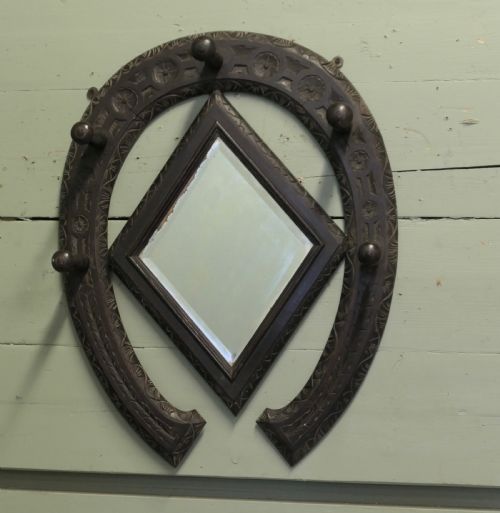
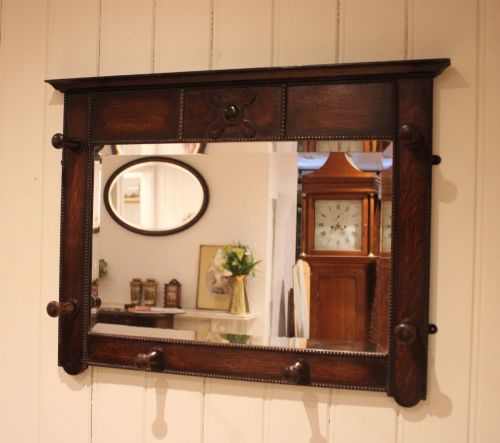


Coat Hook Mirror
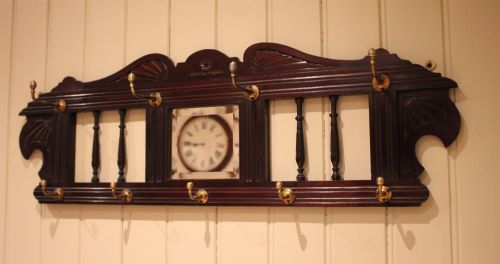
These coat hook mirror combinations serve as practical hallway furniture, combining a functional glass looking plate with sturdy brass or metal pegs for daily convenience.
Coat Hook Mirror
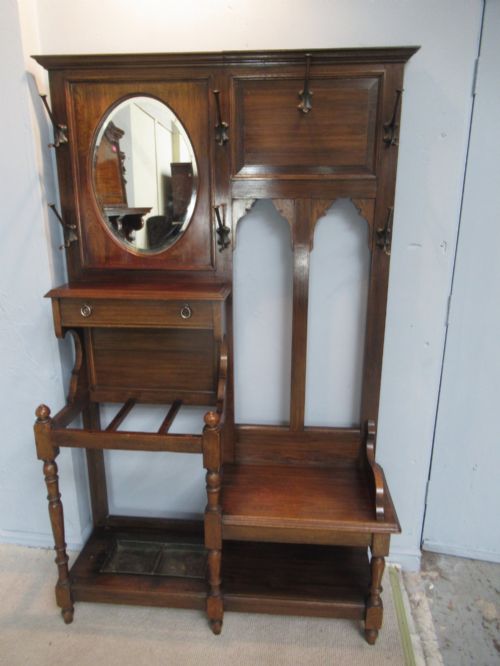
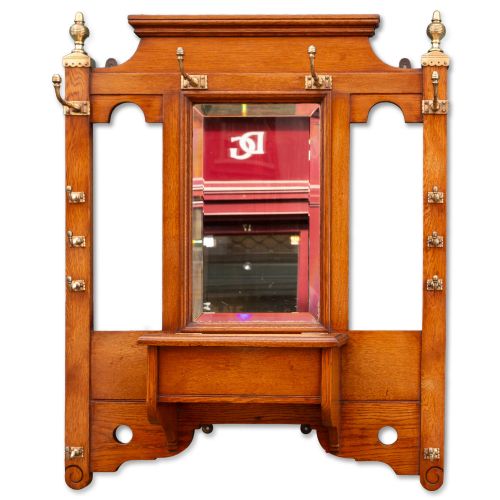
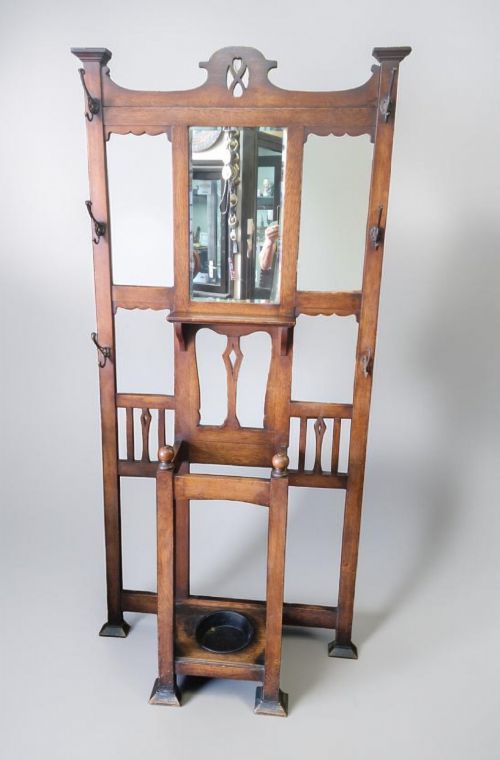
A coat hook mirror combines a wall-mounted glass looking plate with integrated hanging pegs for garments, originating in periods from the nineteenth century through the early decades of the twentieth century. These domestic fixtures appear in forms ranging from compact wall-mounted oak panels to large freestanding hall stands equipped with umbrella holders and glove boxes.
The most frequent examples encountered on this page date from the Victorian and Edwardian eras, executed in timbers such as oak, mahogany, and walnut. Many incorporate specialised elements like horseshoe motifs, brass hooks, or ceramic tile inserts associated with makers from the period.
Makers often integrated shelves for hats and correspondence alongside the central mirror plate, creating a practical piece for entrance halls and vestibules. Wall-hanging variations sit alongside grander hall trees, reflecting the diverse spatial needs of historic domestic interiors.
How they were made
Construction relies heavily on traditional cabinet timbers including solid oak, mahogany, and walnut, often shaped with bevelled glass mirror plates secured by wooden backing boards. Joinery techniques from the nineteenth and early twentieth centuries ensure structural rigidity to support the weight of heavy garments hung on the metal pegs.
Metalwork forms an integral part of the construction, utilising brass, iron, and chromed elements for the coat hooks and decorative brackets. Ceramic tiles and antler mounts occasionally appear as decorative insets, secured within the wooden frames using traditional fixings.
Listings feature oak, mahogany, and walnut wall racks alongside larger freestanding hall stands from the Victorian and Edwardian periods.
What varies in quality
Quality rests in the selection of timber and the depth of the bevel on the glass plate, alongside the originality of the brass or iron hooks. Finer examples display superior cabinet work with figured mahogany or quarter-sawn oak, whilst simpler utility pieces utilise plain pine or standard framing.
Ellen E. Houghton of Minton
The Coat Hook Mirror Glossary
- Bevelled plate
- A glass mirror whose outer edges are cut and polished at an angle to catch the light. This technique adds depth and decorative refinement to the glass.
- Hall stand
- A large piece of hallway furniture incorporating a mirror, coat hooks, a shelf, and frequently umbrella stands and glove boxes. They anchor the entrance space of a traditional home.
- Portmanteau
- A large mirrored hall stand or coat rack, often of French origin, designed for an entrance hall. The term denotes a substantial piece combining multiple utility functions.
- Quarter-sawn oak
- Timber cut radially from the growth rings, producing a distinct medullary ray pattern known as silver grain. This method yields stable boards prized in Arts and Crafts furniture.
- Hall tree
- A tall freestanding piece of furniture featuring pegs for hats and coats, and frequently a central mirror. They serve the same organizational purpose as wall-mounted racks but stand on the floor.
Coat Hook Mirror: Frequently Asked Questions
Where should a coat hook mirror be hung?
These pieces belong in an entrance hall, vestibule, or boot room where guests and residents naturally pause to check their appearance and deposit outerwear. Mounting height depends on the stature of the users and whether the piece incorporates a shelf or umbrella stand below.
Ensure the wall fixings align securely with the wooden batons or hanging brackets provided on the back of the frame. Because historic wall racks carry substantial weight from garments, professional installation into solid masonry or studwork is recommended.
Can these hold heavy winter coats?
Most historic examples feature robust brass or iron hooks screwed directly into dense hardwoods like oak or mahogany, making them structurally capable of supporting heavy garments. Distribute the weight evenly across the available pegs to prevent undue strain on the wall fixings.
Lighter pine or decorative wall-hanging panels should be used with more discretion, reserving the pegs for scarves, hats, or lighter jackets rather than heavy winter overcoats.
How do I tell Victorian from Edwardian styles?
Victorian pieces tend to feature darker timbers, heavier carved ornamentation, and occasionally Gothic or Renaissance revival motifs. The construction is typically solid and imposing, reflecting the formal aesthetic of the nineteenth century.
Edwardian designs often display lighter golden oak or mahogany, cleaner lines, and influences from the Arts and Crafts movement or Art Nouveau. These later pieces prioritize domestic brightness and simplified utility over heavy ornamentation.