



Repousse Metal Mirror
A repousse metal mirror brings tactile warmth and historic craftsmanship to a room, catching the light across hammered copper and embossed brass.
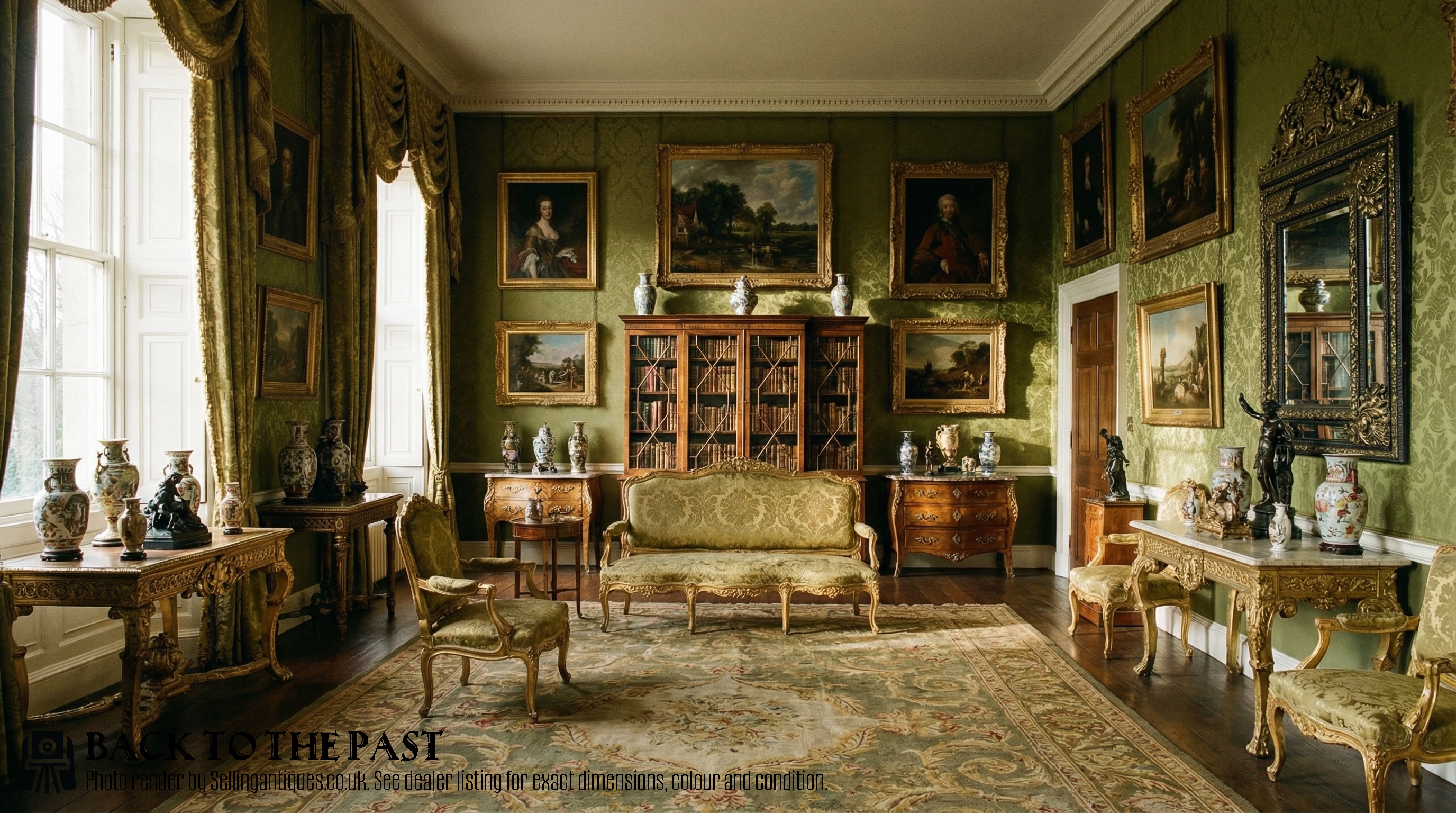
Repousse Metal Mirror
A repousse metal mirror takes many forms across the inventory, ranging from compact table mirrors to substantial wall-hanging pieces. The search phrase covers items designed to reflect light while offering a decorative metallic frame created by working the material from the reverse.
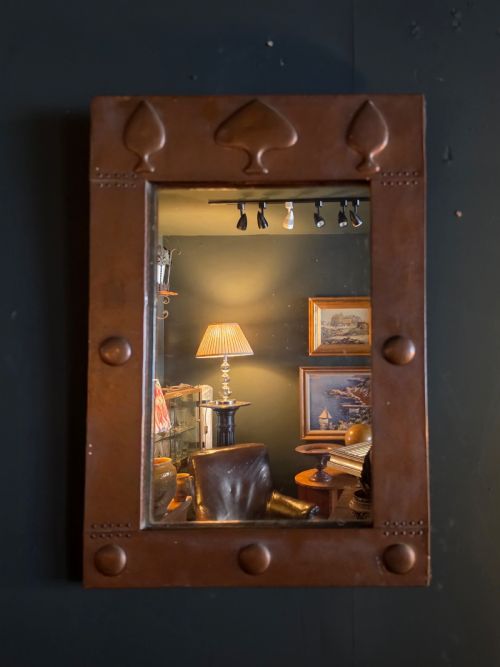
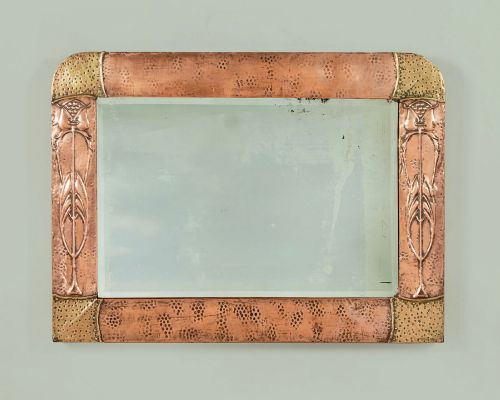
Most examples appearing here belong to the Arts and Crafts movement or the Victorian period, frequently utilising copper and brass. Makers often shaped these frames with botanical motifs such as stylised trees and honesty seed pods, alongside geometric or Dutch-inspired designs.
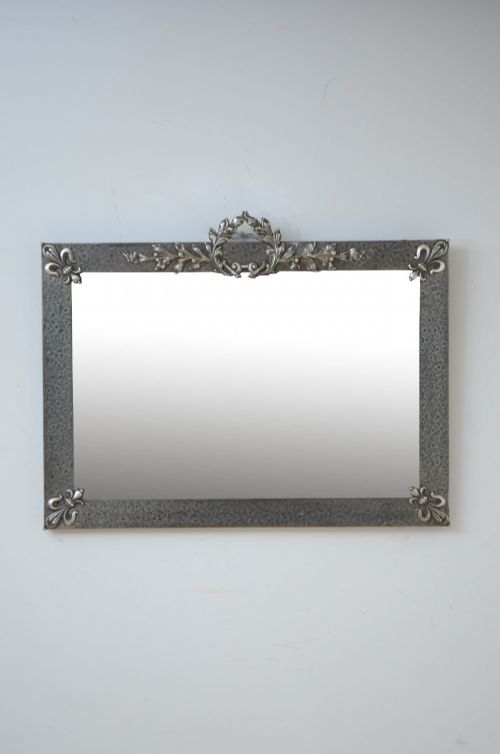
Wall mirrors dominate the selection, though collectors also encounter cushion frames, silvered copper variations, and small table models. These pieces bridge utilitarian function and sculptural metalwork, suiting both period interiors and modern settings.
Materials and construction
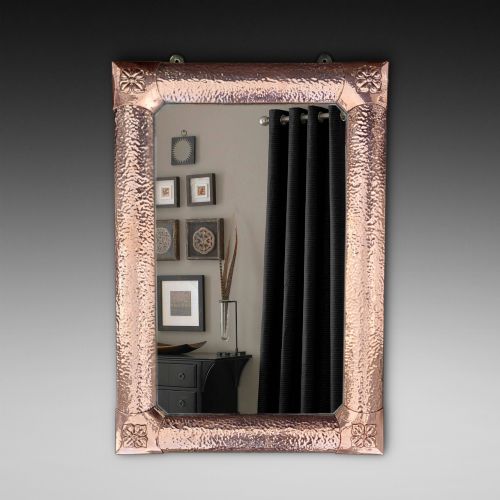
Makers shaped these frames by hammering, beating, and embossing sheet metal such as copper, brass, and pewter over a supportive wooden or structural core. The repousse technique involves pushing the metal out from the reverse side to create raised reliefs on the front.
Glass is set within these hand-worked metal mounts, which frequently exhibit tool marks and variable patination resulting from manual execution. Some pieces incorporate silvered copper or added wood elements to provide stability and contrasting texture.
Listings span the Victorian period through the nineteen-fifties, with a strong concentration of Arts and Crafts copper wall mirrors from around nineteen hundred.
Assessing quality and execution
Quality reveals itself in the crispness and depth of the hand-hammered relief work rather than mere weight or polish. Skilled makers achieved controlled proportions and deliberate detailing in motifs like stylised foliage.
The integration between the metal frame and the underlying wood structure dictates the durability of the piece. Superior examples display careful finishing at the corners and joints, preserving the integrity of the embossed surface over time.
Liberty & Company
The Repousse Metal Mirror Glossary
- Repoussé
- A metalworking technique where the artisan hammers the design from the reverse side to form a raised relief on the front. This method creates tactile depth on copper and brass frames.
- Arts and Crafts
- A design movement spanning the late nineteenth and early twentieth centuries that valued handcraftsmanship and simple materials over mass production. Many mirror frames in the listings reflect this ethos.
- Aesthetic Movement
- A nineteenth-century style emphasising visual beauty and artistic expression above narrative or moral content. Pieces from this period often display refined metalwork.
- Cushion frame
- A convex or rounded frame profile that swells outward toward the outer edge. This style appears frequently on Victorian and continental brass mirrors.
- Patina
- The surface sheen and coloration developed through age, handling, and oxidation on metals like copper and brass. A natural patina indicates uncompromised historic age.
Repousse Metal Mirror: Frequently Asked Questions
How do I hang a heavy metal mirror safely?
Check the weight distribution across the wooden backing and metal frame before selecting your wall fixings. Use appropriate screws and wall plugs suited to the load of the specific piece.
Ensure the hanging wire or integrated brackets are secure and capable of supporting the item permanently without straining the frame joints.
How should I clean embossed brass frames?
Dust the surface gently with a soft, dry cloth to remove particles trapped within the hammered recesses. Avoid harsh chemical cleaners that strip away the historic patination.
Preserve the natural ageing by leaving the darker tones in the deeper crevices untouched, as this highlights the hand-worked relief.
Are these mirrors suitable for bathrooms?
High humidity can affect the exposed metal and the silvering on the mirror glass over time. Placing them in dry living spaces or hallways helps protect the historic materials.
If positioned in a room with moisture, ensure adequate ventilation to prevent corrosion on the copper or brass surfaces.
How do I distinguish Arts and Crafts mirrors from Victorian ones?
Arts and Crafts examples generally feature hand-beaten surfaces with stylised botanical motifs like honesty seed pods or trees. They emphasise honest construction and artisanal tool marks.
Victorian pieces often lean towards formal cushion frames, embossed brass scrollwork, or symmetrical revival styles reflecting earlier European periods.