
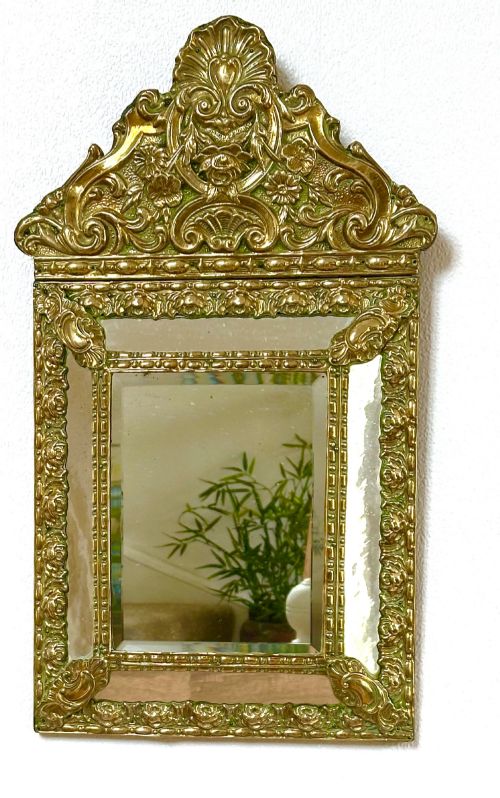


Vintage Dutch Mirror
A vintage dutch mirror brings rich marquetry, brasswork and centuries of continental craft directly to your wall.
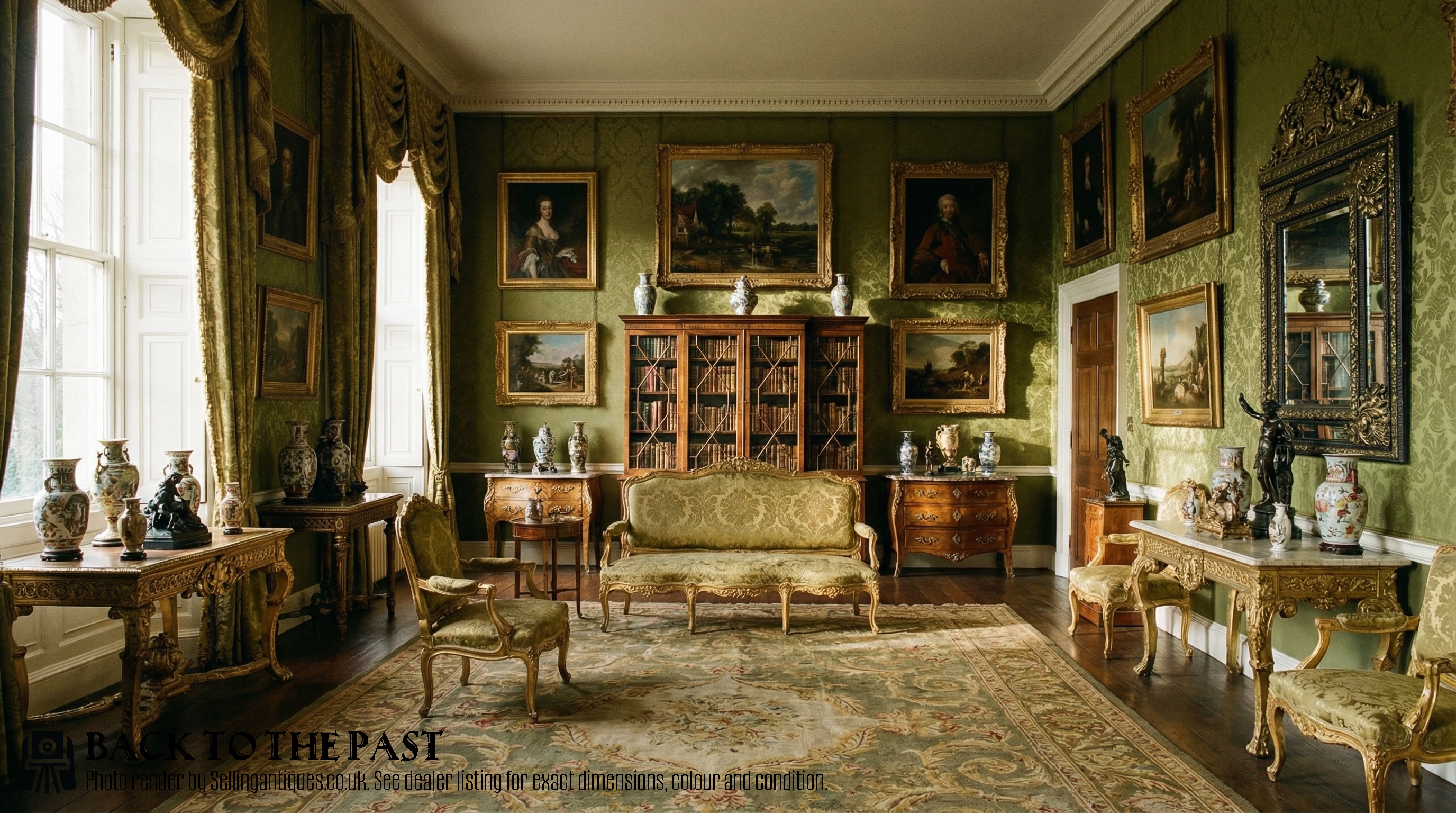
Vintage Dutch Mirror
When you search for a vintage dutch mirror, you enter a field defined largely by wall mirrors, dressing table mirrors and pier glasses. The examples you meet on this page cross the eighteenth and nineteenth centuries, drawing on regional styles from baroque revival to simple continental forms.
You are most likely to encounter dressing mirrors and swing frames alongside wall-mounted pier glasses. These pieces use domestic wood forms like walnut, mahogany and fruitwood marquetry alongside embossed and plain brass frames.
The aesthetic leans heavily on historical revivalism, incorporating eighteenth-century continental motifs into nineteenth-century domestic interiors. They serve as functional looking glasses that double as decorative panels of wood and brass.
How they were made
The makers of these pieces relied on solid structural timbers like mahogany and walnut, often applying elaborate fruitwood marquetry to the surfaces. Boxwood details frequently accent the intricate floral and pictorial inlay work.
Brass formed a major component, appearing both as heavy cast frames and as hand-embossed sheet metal applied to wooden backings. Glass was hand-set into rebated frames, often featuring bevelled or marginal plate edges characteristic of the period.
The styles represented across these items span Dutch Marquetry, Dutch Baroque, French Chateau, Dutch Neo-Classical and Victorian.
What varies in quality
Quality rests primarily in the crispness of the marquetry and the precision of the fruitwood and boxwood inlay. Finer pieces display tight, detailed floral patterns that remain intact across the entire wooden surface without lifting.
The treatment of the metal and glass matters equally, distinguishing robust brass frames and clear marginal mirrors from simpler secondary iterations. The integrity of the original backing wood and the stability of the swing mechanisms on dressing mirrors define the upper tier of the range.
The Vintage Dutch Mirror Glossary
- Marquetry
- Decorative patterns formed by the insertion of pieces of wood, veneer, and other materials into a wooden base. This technique defines the surface decoration of many continental pieces.
- Pier glass
- A tall mirror designed to be hung on the pier, the wall space between two windows. These tall wall fixtures often anchor the formal decoration of a room.
- Swing mirror
- A looking glass mounted on pivots within a frame, allowing the angle of the glass to be adjusted. These typically sit atop dressing tables.
- Fruitwood
- Dense, fine-grained timber derived from fruit-bearing trees such as pear or apple, frequently used in detailed inlay work. It takes a smooth finish and accepts stains well.
- Regency
- A British stylistic period spanning the early nineteenth century, characterised by classical revival motifs that often influenced contemporary continental design.
Vintage Dutch Mirror: Frequently Asked Questions
What is a vintage dutch mirror?
It is a decorative looking glass originating from or styled after traditional continental designs, predominantly featuring wood marquetry or embossed brass frames.
These pieces range from small dressing table swing mirrors to tall wall-mounted pier glasses dating across the eighteenth and nineteenth centuries.
How do I date a mirror?
Dating relies on examining the construction of the wooden frame, the composition of the glass plates, and the style of the brasswork or inlay. Eighteenth-century examples typically show hand-worked joinery and older glass characteristics compared to later nineteenth-century revivals.
Changes in hardware, backing boards, and the specific type of marquetry help narrow down whether a piece is an eighteenth-century original or a later nineteenth-century interpretation.
Where should I hang it?
Wall mirrors and pier glasses suit entryways, reception rooms, and spaces above mantelpieces where their decorative frames can catch the light. Dressing mirrors function best placed on top of appropriate period tables or chests.
Ensure the wall fixings match the weight of the heavier brass and wood frames to support the piece securely.
Are brass frames original?
Many brass frames are contemporary with the mirror glass and wooden backing, particularly those featuring hand-embossed surface patterns from the nineteenth century. Cast brass surrounds were standard for specific wall-mounted formats of the period.
Checking the attachment methods and the patina on the metal helps confirm the age relationship between the frame and the glass.