


Embossed Metal Wall Mirror
An embossed metal wall mirror brings depth and warmth to a room through beaten surfaces and reflective glass.
Embossed Metal Wall Mirror
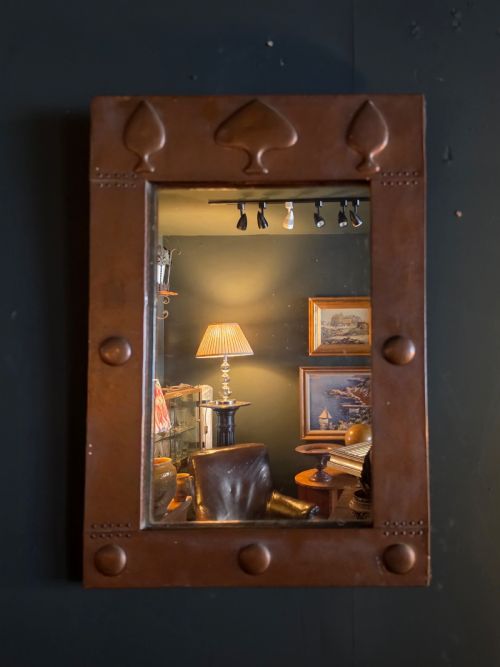
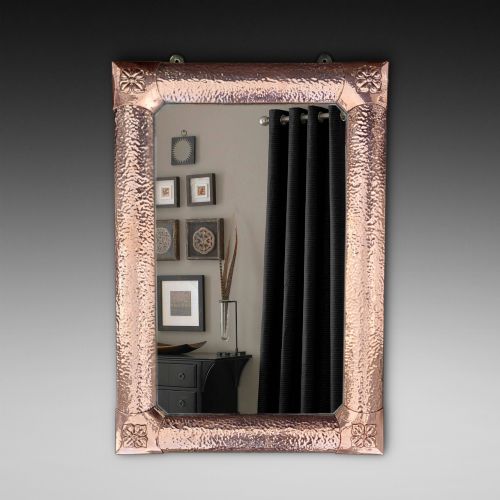
An embossed metal wall mirror is a hanging looking glass set within a decorative frame of beaten copper, brass or silver. When you search for an embossed metal wall mirror, you meet pieces ranging from small domestic looking glasses to larger wall-hanging plates.
The versions most likely to meet you on this page date from the Victorian period through to nineteen hundred, with Arts and Crafts examples featuring prominently alongside Dutch Baroque Revival styles. Makers such as Liberty and Company also appear among the selection.
These pieces serve both practical and decorative functions, reflecting light into hallways, parlours and living spaces while displaying intricate hand-worked metallic detail. The frames demonstrate various revivalist aesthetics, including Peruvian Colonial and Victorian Rococo motifs.
How they were made
The frames are constructed using base metals such as copper and brass, often mounted over wooden backings to provide structural rigidity. Artisans shaped the metal through hand-beating and embossing techniques to create raised motifs and stylised patterns.
Glass plates, including mirror glass, are fitted into the metal surrounds, sometimes secured with metal mounts or wooden backing boards. Silver is also utilised for specific borders, demonstrating the varied metallic palette employed by period craftsmen.
The site's listings demonstrate a strong representation of Arts and Crafts copper work alongside Victorian and Edwardian brass wall mirrors.
What varies in quality
Quality in an embossed metal wall mirror rests upon the depth and crispness of the hand-beaten relief work. Finer examples display deliberate, assured tool marks and coherent design motifs, such as stylised trees or baroque scrolls, rather than uniform machine stamping.
The integration of the metal frame with its wooden carcass and the preservation of the original mirror glass significantly affect the character of the piece. Superior construction ensures the metal remains securely fastened without distortion to the reflective surface.
Liberty and Company
The Embossed Metal Wall Mirror Glossary
- Embossed
- A technique where a design is raised above the background surface using hammers, punches or dies. This process gives metal frames their characteristic three-dimensional texture.
- Arts and Crafts
- A design movement spanning the late nineteenth and early twentieth centuries that valued handcraftsmanship and simple, honest materials. Copper framed mirrors with stylised natural motifs are typical of this aesthetic.
- Cushion frame
- A frame profile that curves outward like a pillow, adding volume and depth around the glass. This form is frequently seen on Victorian and Dutch style brass mirrors.
- Mirror glass
- The reflective glass plate fitted within the frame, which can show age through oxidation and foxing. Period pieces often retain their original plates with characteristic surface variation.
- Dutch Baroque Revival
- A revival style drawing on seventeenth-century Dutch aesthetics, often featuring elaborate embossed brass work and cushion mouldings. These mirrors bring a dramatic historical presence to interiors.
Embossed Metal Wall Mirror: Frequently Asked Questions
What periods do these metal mirrors come from?
The pieces span from the nineteenth century through to the mid-twentieth century, encompassing Victorian, Edwardian and nineteen-hundreds examples.
Stylistic influences range from Arts and Crafts and Dutch Baroque Revival to Peruvian Colonial designs.
How do I clean an antique embossed metal frame?
Dust the frame gently with a soft, dry cloth to prevent the accumulation of dirt within the embossed recesses.
Avoid abrasive metal polishes that can strip the aged patina and historical character from the copper or brass surface.
How can I tell an Arts and Crafts mirror apart from a Victorian one?
Arts and Crafts examples typically feature beaten copper frames with stylised natural motifs, reflecting a philosophy of honest handcraftsmanship.
Victorian pieces more frequently utilise cast or embossed brass with cushion framing and revivalist decorative motifs.