
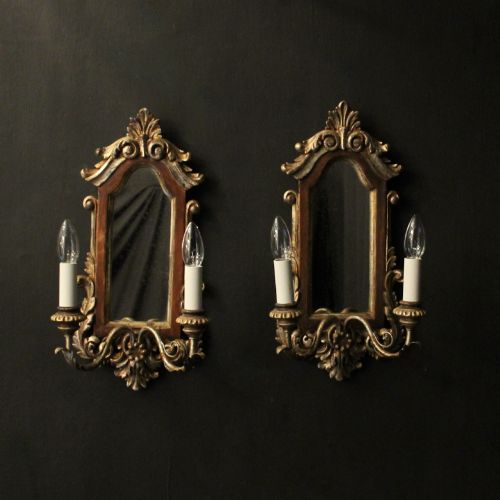
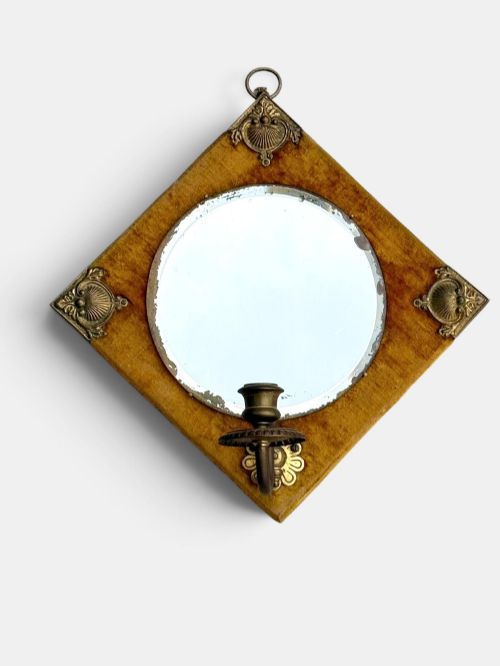
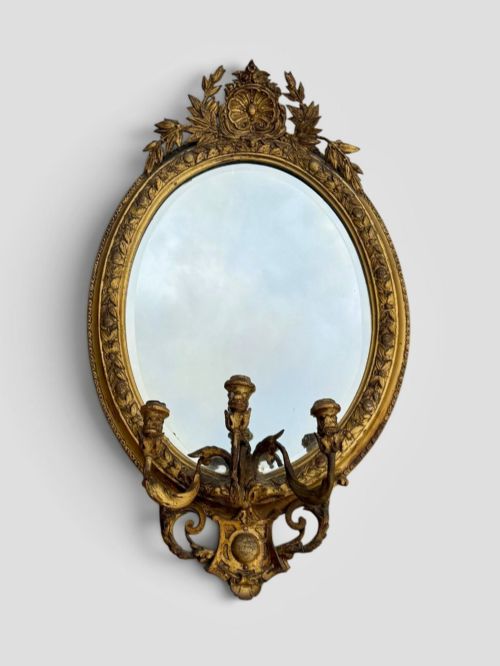
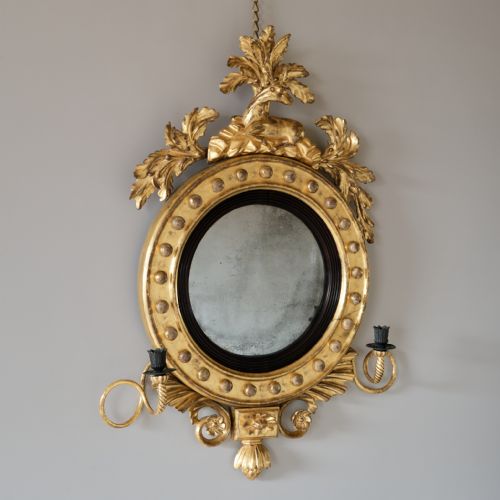



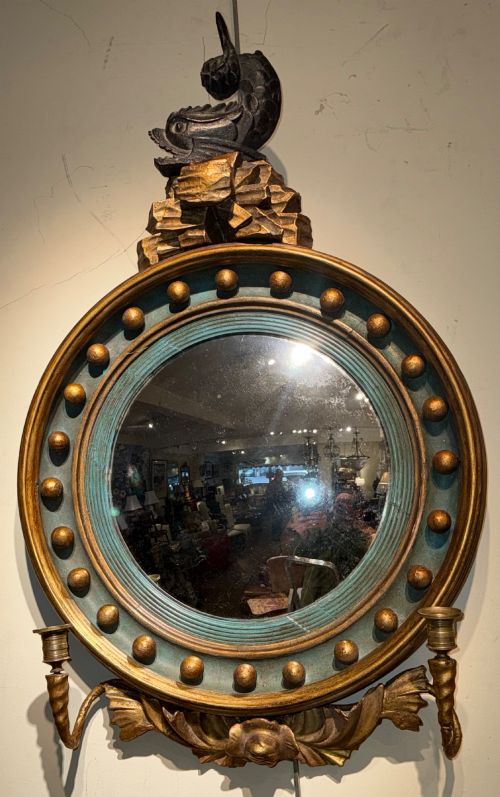
Antique Candle Sconce Mirror
These antique candle sconce mirror pieces combine reflective glass with integrated candle arms to bring warmth and illumination into a room.
What an antique candle sconce mirror is
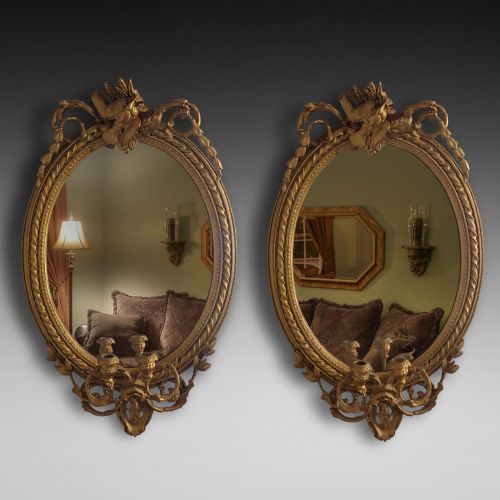
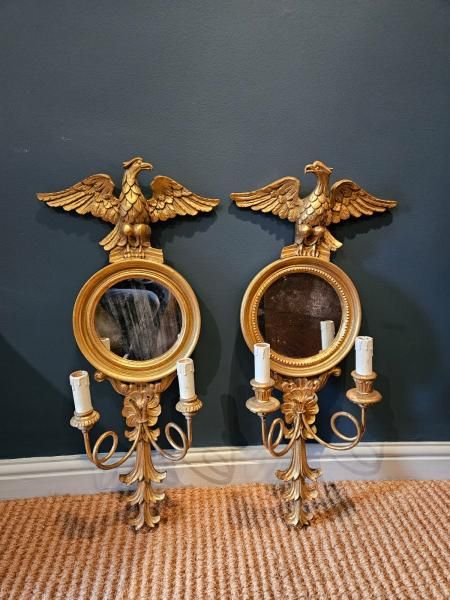
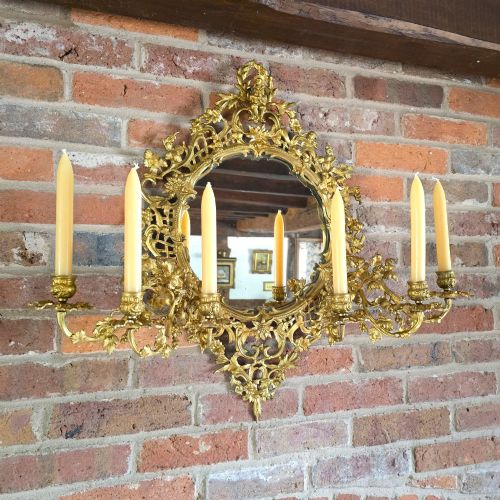
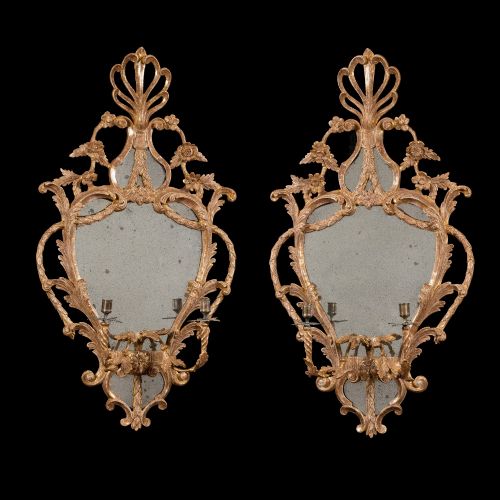
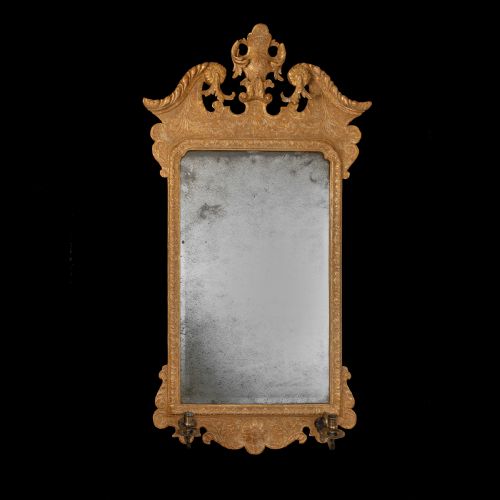
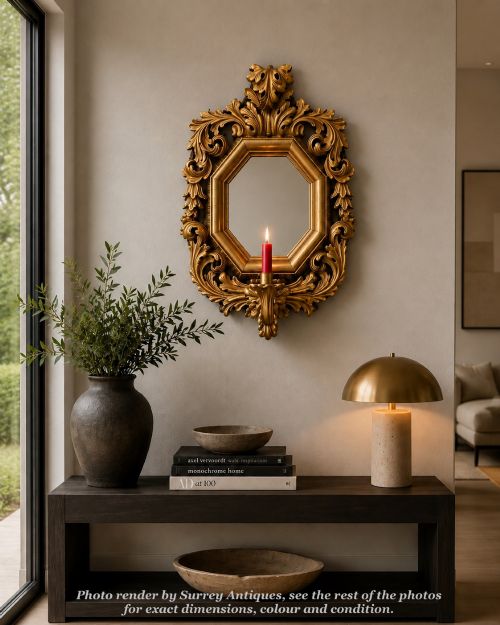
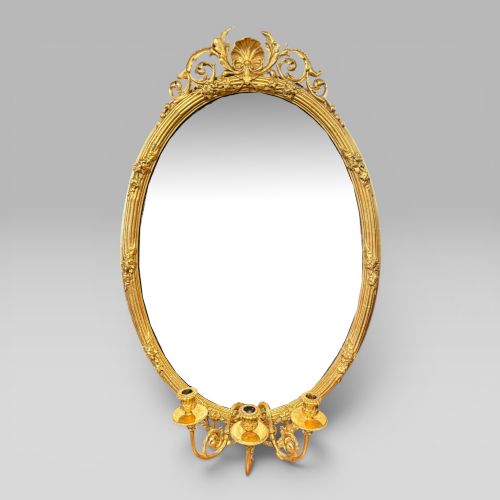
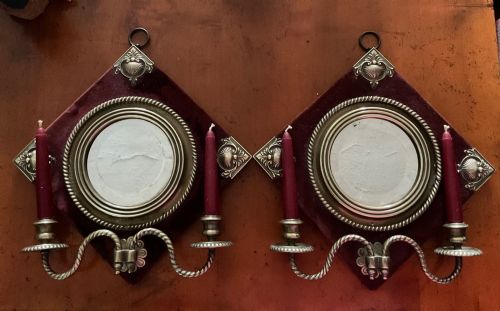
When searching for an antique candle sconce mirror, you are looking at wall-mounted looking glasses fitted with arms designed to hold candles. These pieces serve both a decorative and a practical purpose, multiplying the available light in a dimly lit interior.
The versions you are most likely to meet on this page hail from the eighteenth and nineteenth centuries, including Georgian, Regency, and Victorian periods. They appear in forms such as convex mirrors, girondelles, and carved giltwood designs.
Makers utilised various regional styles across England and France, adapting the wall mirror format to hold single or multiple taper holders. Surviving examples demonstrate how historic homes managed artificial illumination before the arrival of gas and electric lighting.
How they were made
The construction of these mirrors relies on traditional cabinet-making and framing techniques using wood, gesso, and glass. Carved giltwood and ebonised wood form the primary structures, often finished with gold leaf applied over moulded gesso ornamentation.
Metal components such as brass are utilised for framing and secure candle sconce arm attachments. Glass plates, sometimes convex in shape, are set within these frames to catch and disperse the flickering light from the candles.
Retail Price Guide 2026
Typical UK retail prices for candle sconce mirror, calculated from the Sellingantiques database of over a million retail prices indexed since 2003. This retail price guide relies exclusively on Sellingantiques data; no external sources or auction records are used, so the figures do not describe the wider market.
Listings feature pieces spanning the Georgian, Regency, and Victorian periods, constructed from giltwood, brass, gesso, and painted wood.
What varies in quality
Quality in these mirrors rests upon the depth and crispness of the carving within the wood and gesso frames. Finer pieces display hand-carved detailing and rich gilding that retains its texture and lustre over centuries.
The integration of the candle sconces relative to the main mirror plate dictates the success of the design. Superior examples exhibit harmonious proportions between the reflective surface and the projecting arms, executed by skilled hands.
The Antique Candle Sconce Mirror Glossary
- Giltwood
- Wood that has been coated with a thin layer of gold leaf. This finish gives the frame a bright, metallic sheen.
- Gesso
- A plaster-like mixture applied to wood frames before gilding. It provides a smooth surface for intricate moulding and carving.
- Convex mirror
- A round looking glass with a curved surface that bulges outward. This shape provides a wide-angle reflection of the interior space.
- Girondelle
- A decorative wall mirror featuring attached candle branches. The design is intended to maximise light reflection from the candles.
- Sconce
- A wall-mounted bracket designed to hold a candle or group of candles. On these mirrors, they project forward from the frame base or sides.
Frequently Asked Questions
How were antique candle sconce mirrors used?
These mirrors were hung on walls in reception rooms and hallways to reflect and multiply the light cast by burning candles. The reflective glass helped illuminate spaces before modern lighting existed.
They also served as prominent decorative focal points, often positioned above mantelpieces or between windows to create an impression of greater space and luxury.
How can I tell the period of a mirror?
Dating relies on examining the framing materials, carving styles, and the construction methods used on the reverse. Georgian and Regency pieces often feature specific ornamentation like ball-stud bezels or heavy gesso mouldings.
The type of glass and the backing boards also offer clues to the age of the piece. Comparing the stylistic motifs against documented examples helps confirm the era.
Where should I hang a sconce mirror?
These pieces suit walls where they can capture natural daylight or reflect the ambient glow of evening lamps. Placing one in a hallway or above a fireplace creates a traditional focal point.
Ensure the wall structure can support the weight of the wood, metal, and glass construction. Secure fixings are essential due to the projecting candle arms.