

Antique Mirror with Sconces
An antique mirror with sconces brings both reflected light and paired candleholders to a wall, combining utility with decorative presence.
Antique Mirror with Sconces
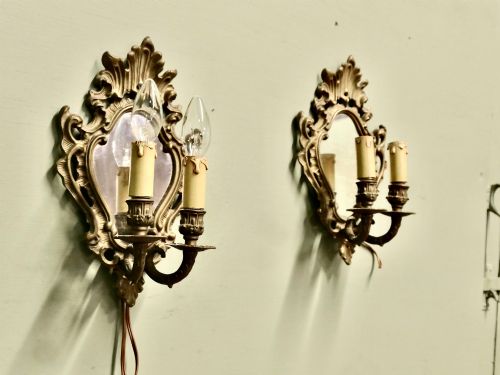
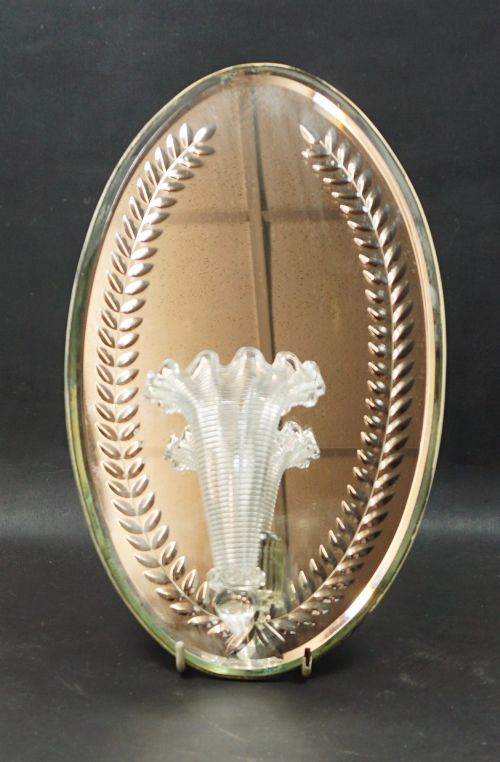
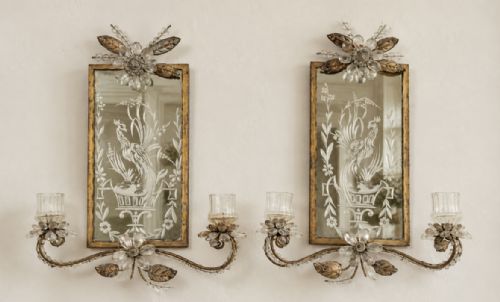
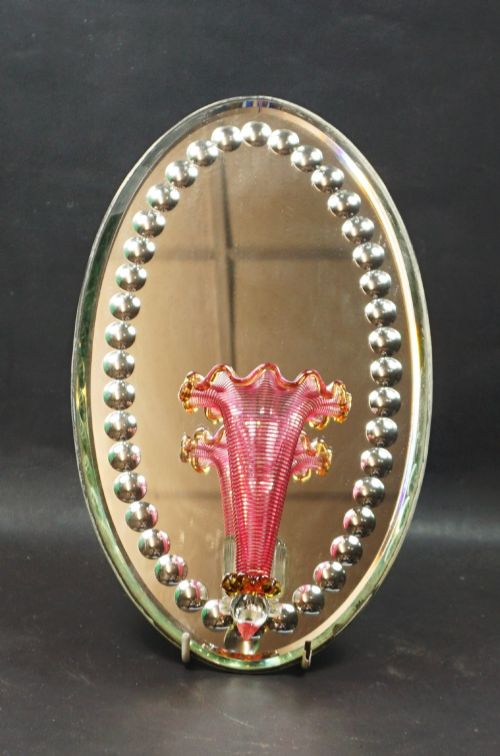
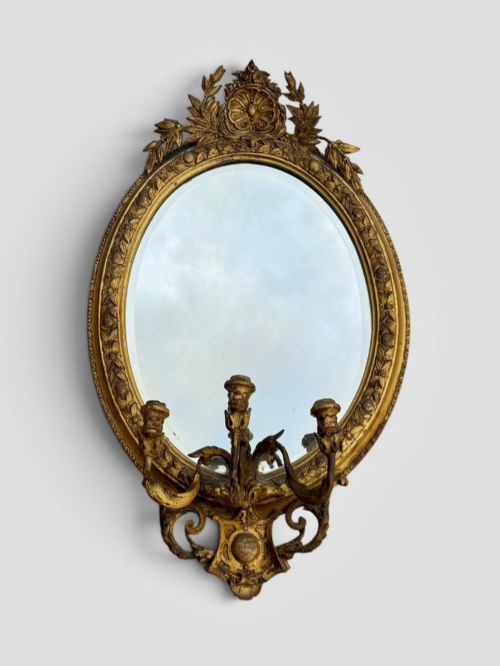
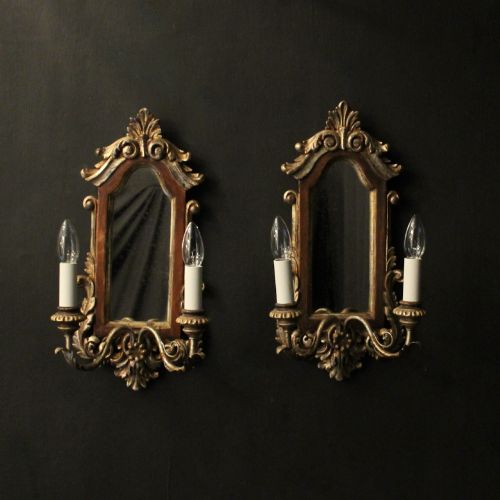
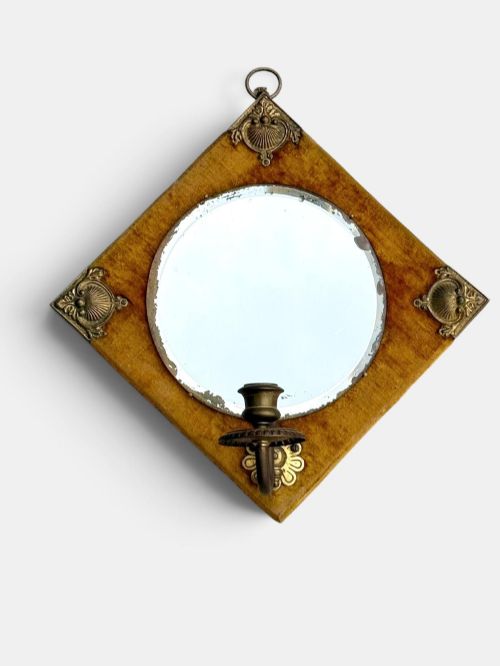
An antique mirror with sconces integrates reflective glass with projecting candle arms, designed to multiply the flickering illumination of early lighting. These pieces appear across several eras, including the Georgian, Regency, and Victorian periods.
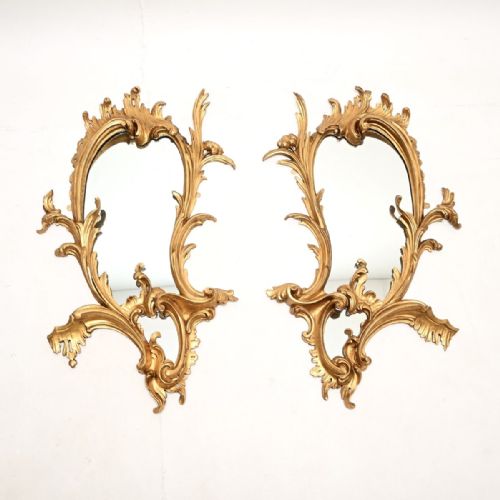
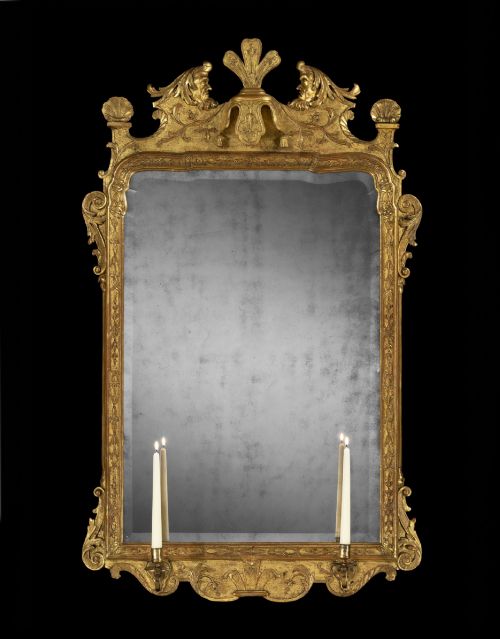
Buyers encounter distinct stylistic expressions ranging from George I sophistication to Victorian Rococo Revival ornamentation and Edwardian simplicity. Each example demonstrates how previous centuries solved the practical problem of room illumination through reflective optics.
Materials and construction methods
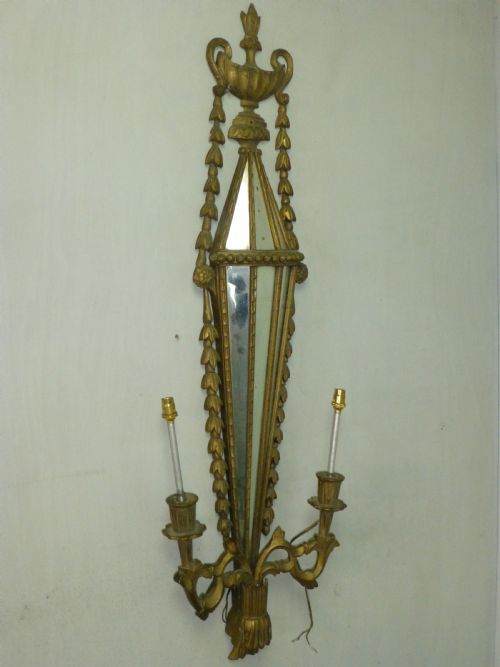
Makers utilised dense timbers like mahogany alongside softer woods to build foundational frames, frequently applying gesso to create intricate relief decoration before gilding. Brass and metal components form the structural arms and sockets of the candle sconces attached to the frames.
Giltwood and gilt painted finishes required careful preparation of the wooden substrate to accept gold leaf or paint layers. Glass plates, silvered by hand in earlier periods, sit within these housings to complete the optical assembly.
Antique Mirror with Sconces Retail Price Guide 2026
Typical asking prices for mirror with sconces among the pieces listed under this phrase on Sellingantiques today, from the lower quarter to the upper quarter. They describe what is for sale here now, not the wider market.
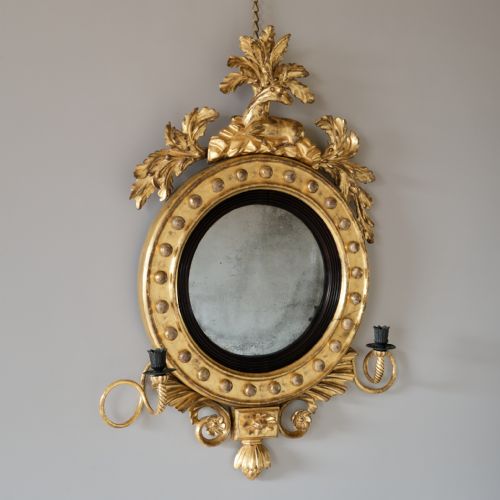
Candlelight dancing off a convex girandole plate once offered Georgian guests a panoramic, miniature view of the entire dining parlour.
Distinguishing quality across periods
Quality rests in the crispness of the carved detail and the integrity of the gilding or timber finish applied to the frame. Finer pieces demonstrate superior hand-finishing in the gesso and more complex architectural or organic ornamentation.
The proportion between the mirror plate and the attached candle arms reveals the deliberate design intent of the maker. Original glass plates and intact sconce mountings elevate an object above those altered or reconfigured in later centuries.
The Antique Mirror with Sconces Glossary
- Girandole
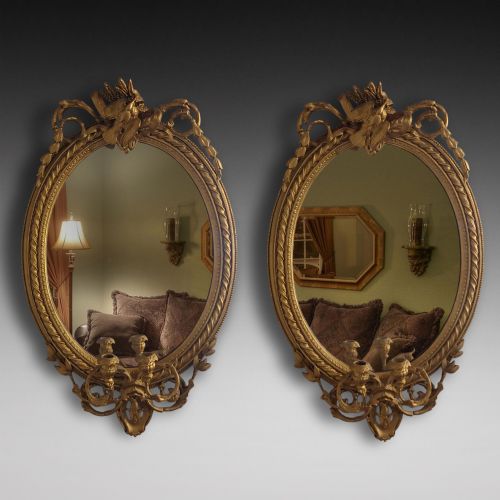
- A decorative wall mirror featuring attached candle sconces designed to reflect and multiply light. These circular or oval forms often incorporate convex glass plates.
- Gesso
- A plaster-like mixture applied to wood frames as a base for carving and gilding. Skilled artisans modelled this material into elaborate relief ornamentation.
- Giltwood
- Wood carved and covered with a thin layer of gold leaf. It defines the lustrous appearance of many formal Georgian and Regency frames.
- Cheval mirror
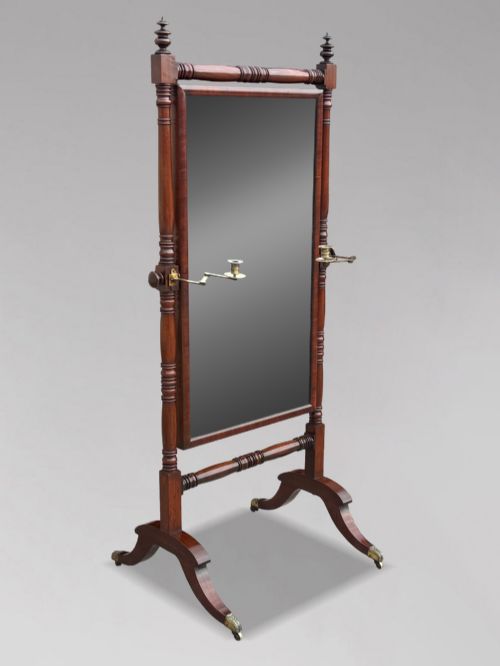
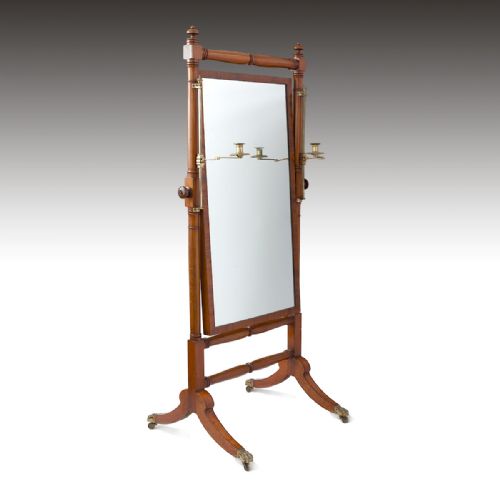
- A freestanding full-length mirror hung in a frame that allows it to tilt. These pieces often incorporate stable floor supports rather than wall fixings.
- Convex mirror
- A round mirror with an outward-curving glass surface that provides a wide-angle reflection of the interior space. It frequently appears within Regency girandoles.
Antique Mirror with Sconces: Frequently Asked Questions
How were antique mirror with sconces used?
These pieces hung in principal reception rooms where candle placement in front of glass magnified the available light before electricity existed. The paired sconces held tallow or wax candles to illuminate dark evening interiors.
Over time, they transitioned into decorative wall furniture as lighting technology evolved, retaining their dual purpose of reflection and ornamentation in domestic settings.
Where should I hang these mirrors?
Principal spaces such as hallways, drawing rooms, and dining areas suit these pieces best, positioned to catch natural daylight or evening candlelight. Placing them opposite windows maximises the reflection across the room.
Wall construction must support the combined weight of dense timber, gesso, and metal sconce arms safely.
How do I identify a Regency example?
Regency pieces often display classical motifs, convex plates, and sophisticated use of giltwood within circular or architectural frames. These designs emerged during the early nineteenth century.
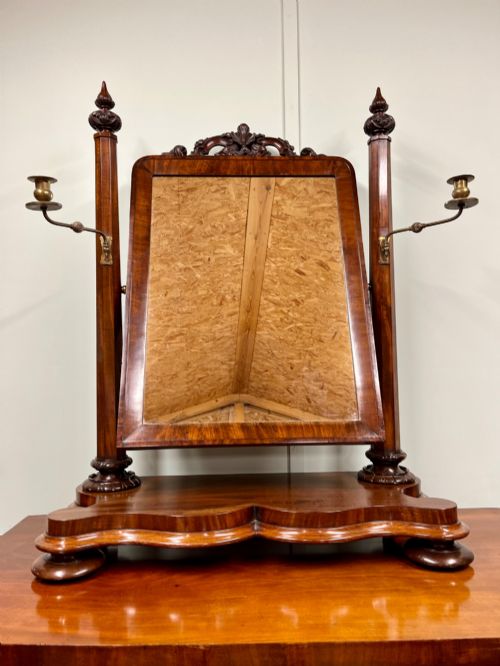
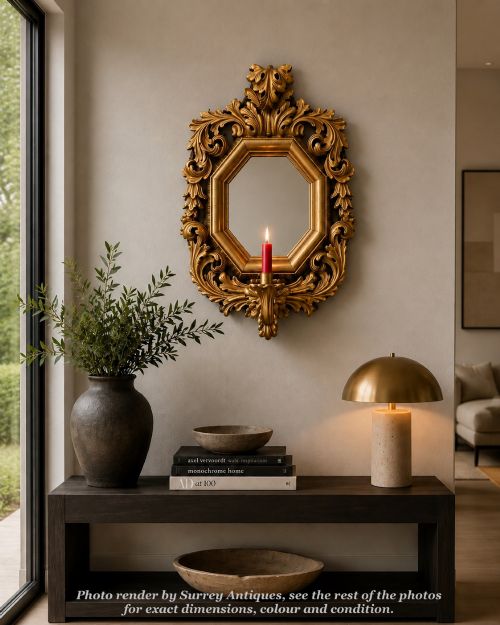
They contrast with the heavier, more ornate carving seen in Victorian Rococo Revival pieces or the simpler Edwardian mahogany hanging formats.
What materials make up the frames?
Makers constructed frames from solid mahogany, softwoods coated in gesso for carving, and cast brass for the candle arms. Giltwood finishes predominated in formal Georgian and Regency interiors.
Later Victorian and Edwardian examples introduced gilt painted treatments and simpler timber mouldings suited to changing domestic tastes.