

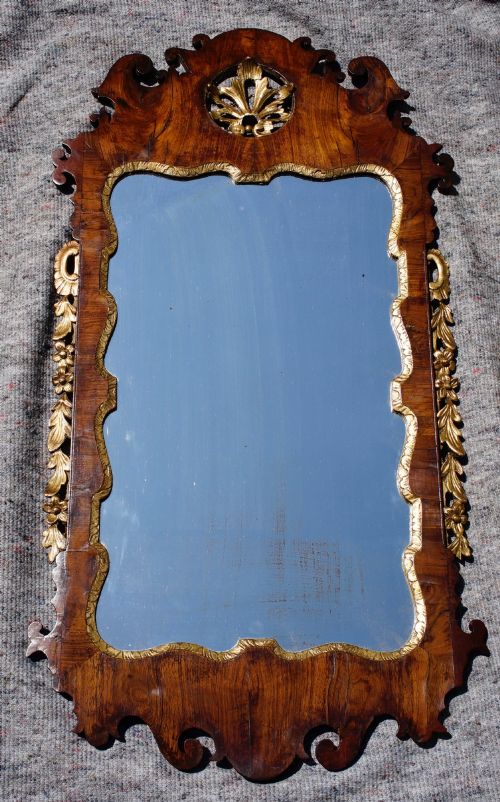
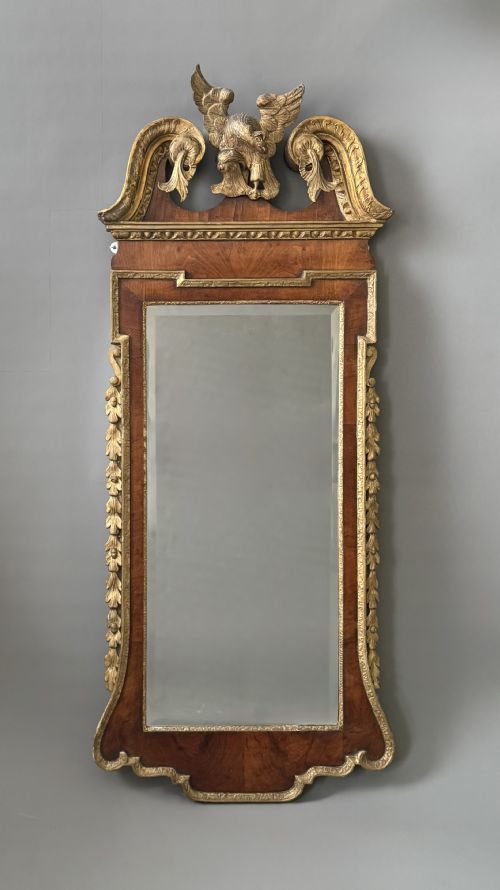
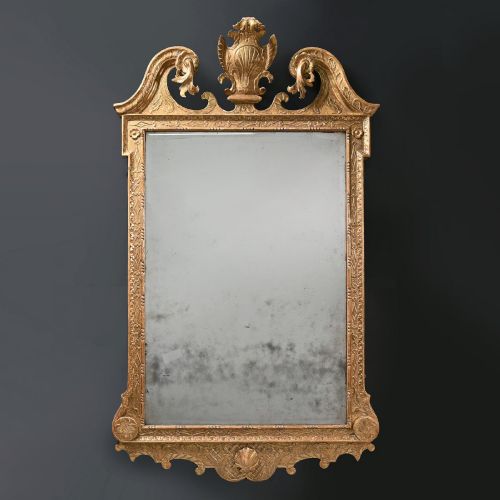
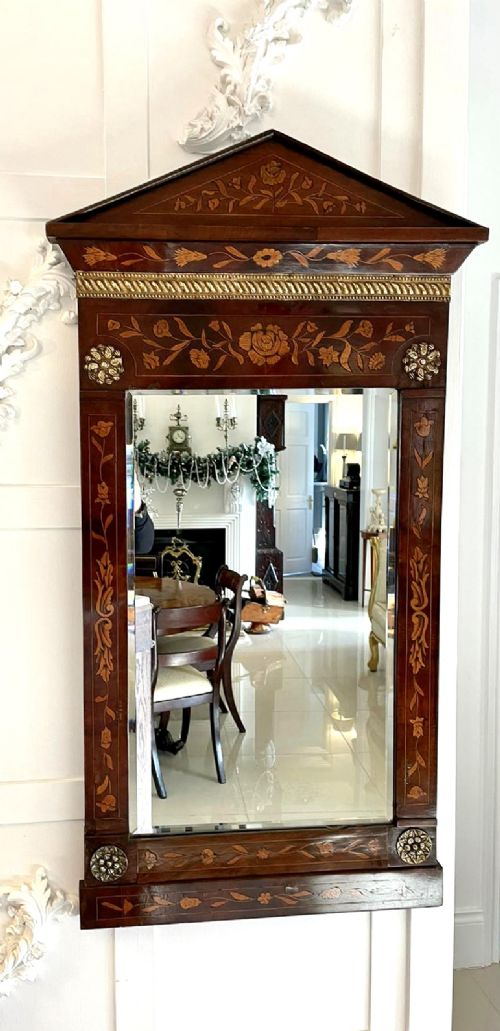




George I Pier Mirror
When you search for a george i pier mirror, you enter a world of tall, light-reflecting frames designed to hang between windows.
George I Pier Mirror
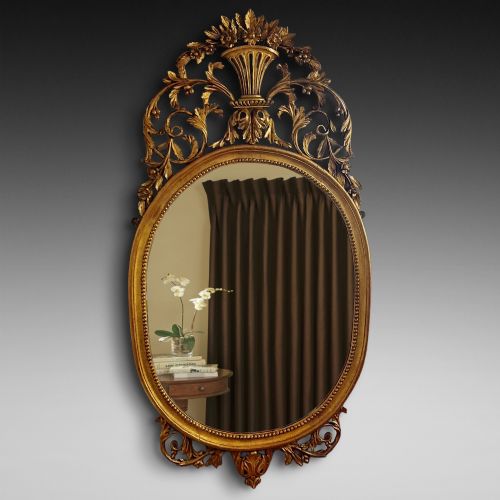
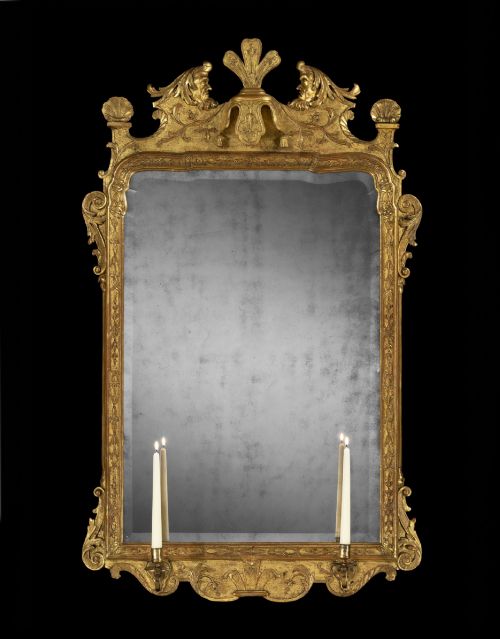
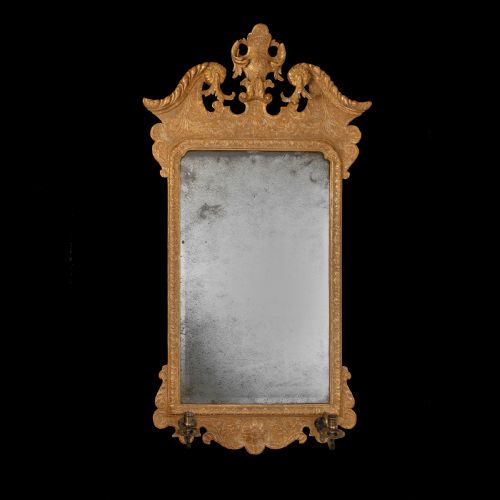
A george i pier mirror is a tall, vertical wall glass designed specifically to hang on the narrow wall space, known as the pier, between two windows. These pieces often incorporate rich gilding, carved gesso on pine, and figured walnut veneers that reflect available daylight into darker rooms of the period.
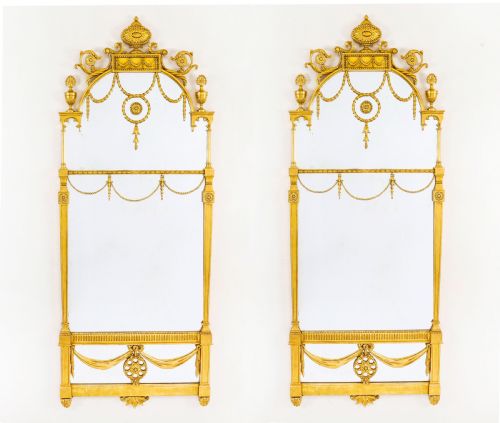
Forms range from simple fretwork mahogany wall hangings to imposing architectural Palladian designs and tall pier glasses with original hand-silvered plates. Buyers find both single statement mirrors and matched pairs intended to anchor formal eighteenth-century interiors.
Materials and Construction
Frames rely heavily on native timbers such as walnut, mahogany, and sycamore, often enhanced with parcel-gilt details or intricate fretwork cut from thin boards. Carved gesso applied over a timber base allows for crisp relief work, particularly on early giltwood examples.
Gilding techniques involve laying thin sheets of gold leaf onto prepared surfaces, while mirror plates utilise early silvering methods that result in characteristic surface speckling and oxidation over centuries of use.
George I Pier Mirror Retail Price Guide 2026
Typical asking prices for george i pier mirror among the pieces listed under this phrase on Sellingantiques today, from the lower quarter to the upper quarter. They describe what is for sale here now, not the wider market.
Several mirrors proudly retain charming wooden ho-ho birds perched atop their fretwork frames, keeping watch over centuries of reflections.
Evaluating Quality
Quality rests upon the crispness of the hand-carving and the depth of the gesso relief work, where skilled hands achieve sharp definition rather than soft, rounded edges. The choice of timber veneers, such as highly figured burr walnut or dense mahogany, dictates the visual richness of the frame.
The survival of the original glass plate significantly elevates an object, showing authentic distortion and age. Construction details, including period joinery methods and untouched backboards, separate authentic early pieces from later revival work.
William Kent·John Belchier·John Linnell·Sir William Trotter
The George I Pier Mirror Glossary
- Pier glass
- A tall mirror designed to hang on the wall space between two windows. These pieces often feature matching console tables placed beneath them.
- Gesso
- A mixture of chalk or gypsum and size used as a base for moulding and gilding on wooden frames. Skilled artisans carved intricate relief patterns directly into this built-up surface.
- Parcel-gilt
- Partially gilded woodwork where gold leaf highlights specific carved details against a contrasting wood background such as walnut or mahogany.
- Fretwork
- Thin wood panels cut with a fretsaw into intricate geometric or scroll patterns. This technique defines many mid-eighteenth-century hanging mirrors.
- Carton pierre
- A moulded material made from paper pulp, chalk, and glue, used to create light and intricate decorative reliefs on frames.
George I Pier Mirror: Frequently Asked Questions
Where should a pier mirror hang?
These mirrors suit narrow wall spaces, traditionally positioned between two windows to maximise light distribution around a room. They also anchor entrance halls or hang above mantlepieces.
Because of their vertical proportions, they draw the eye upward and add a sense of height to high-ceilinged spaces.
How do I spot an original glass plate?
Original mirror plates exhibit subtle imperfections, minor dark speckling, and slight distortion in the reflection due to early manufacturing methods. They show the natural patina of age rather than the uniform clarity of modern float glass.
Many period frames retain their initial glass secured with original wedges and backboards behind the rabbet.
What is a parcel gilt finish?
Parcel gilt woodwork combines polished exposed wood grain, such as walnut or mahogany, with selective applications of gold leaf. This technique highlights specific carved mouldings, edges, or motifs without covering the entire frame.
The contrast between the warm timber and the bright gold creates a balanced decorative effect.
How do I distinguish George I from George II styles?
George I frames often lean towards architectural gesso designs, carved pine, and rich walnut veneers with restrained classical detailing. George II pieces frequently introduce heavier Palladian elements, bolder carving, and elaborate Kentian or rococo motifs.
Revival pieces from the nineteenth century often blend these elements with later construction methods.