

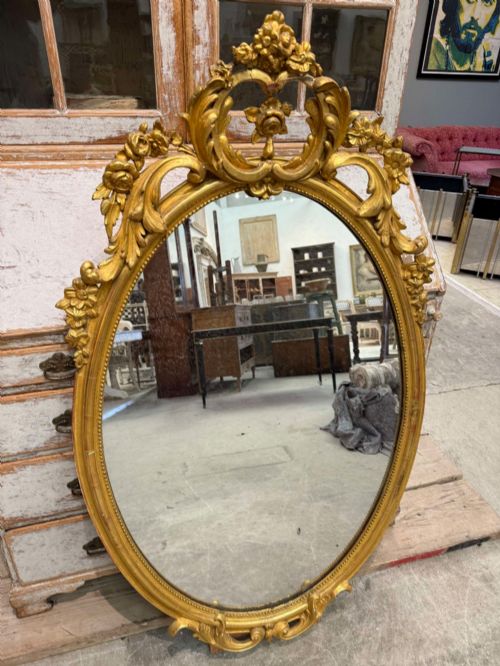
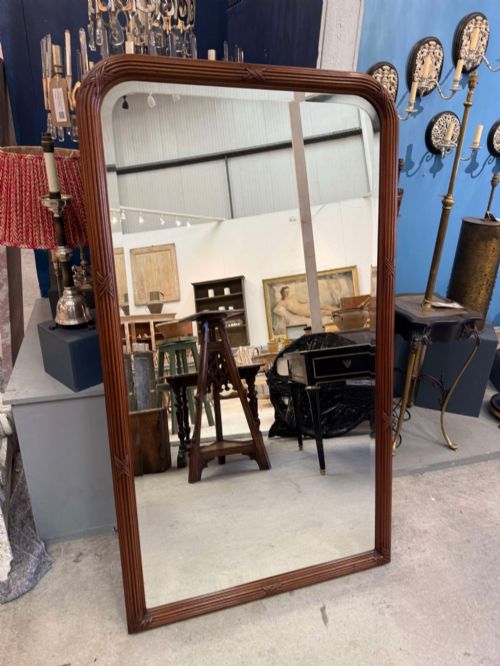
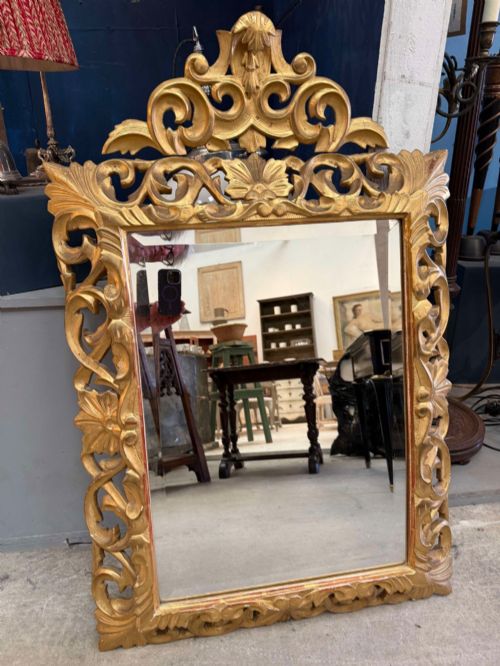
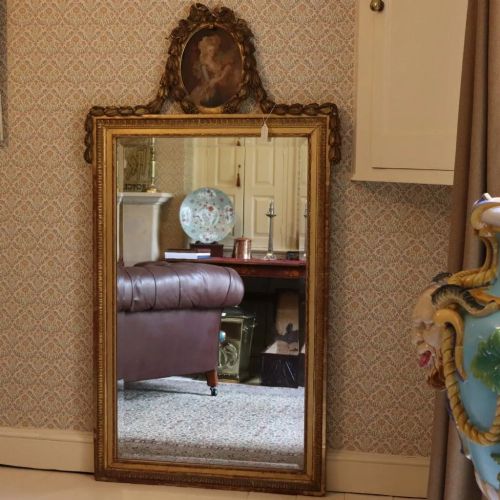
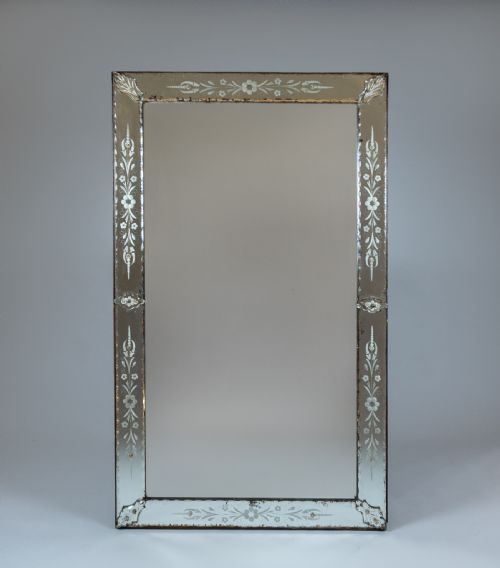
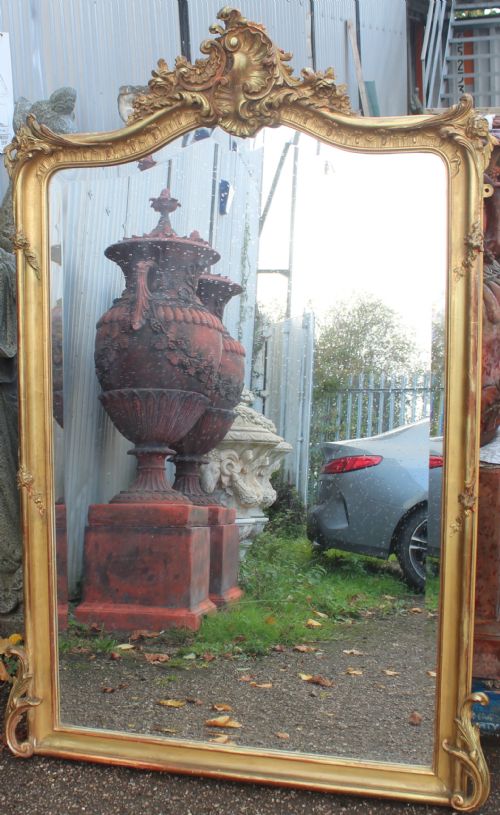
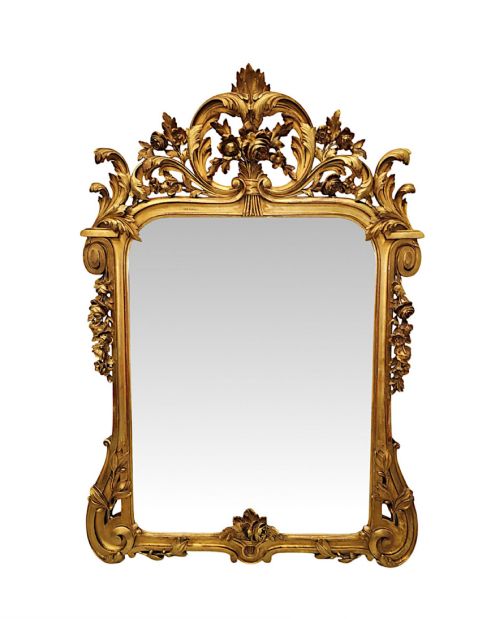
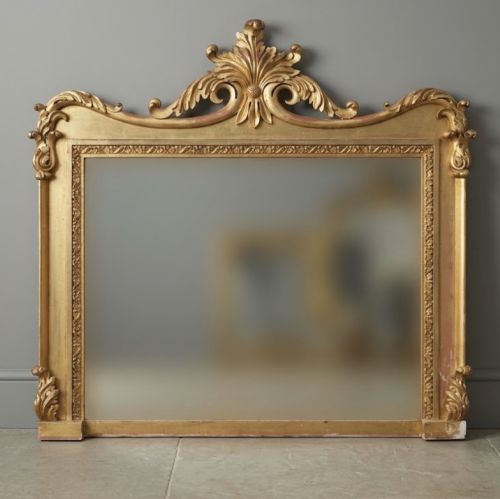

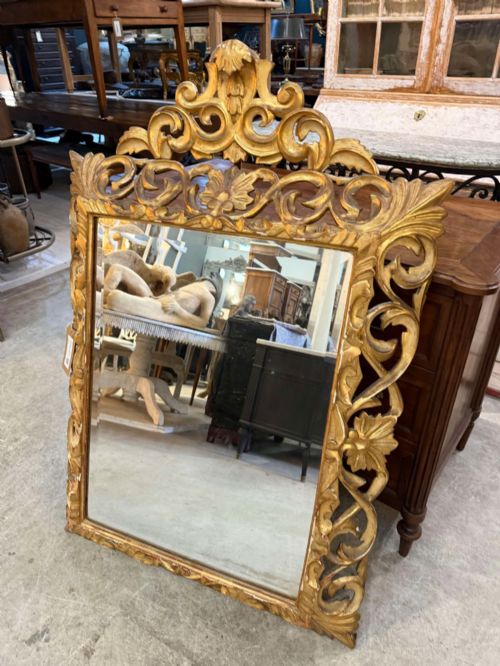
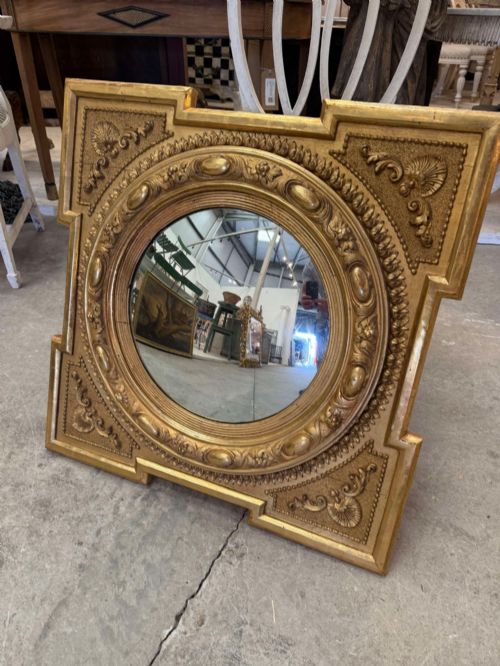
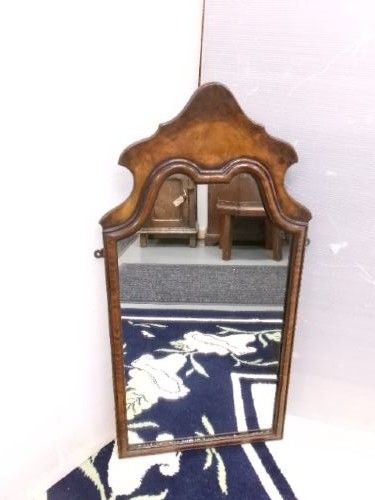
Antique Carved Frame Mirror
An antique carved frame mirror brings light and structural depth to a room through centuries-old joinery and hand-applied gilding.
Antique Carved Frame Mirror
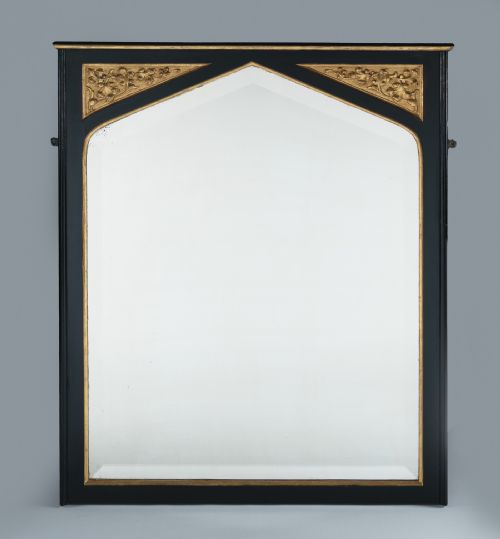
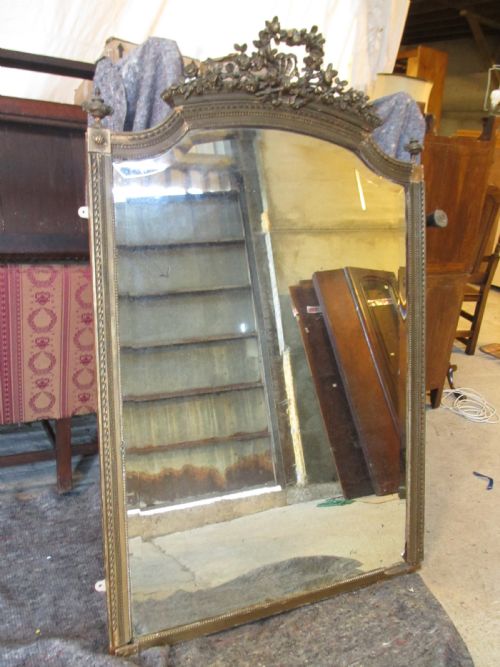
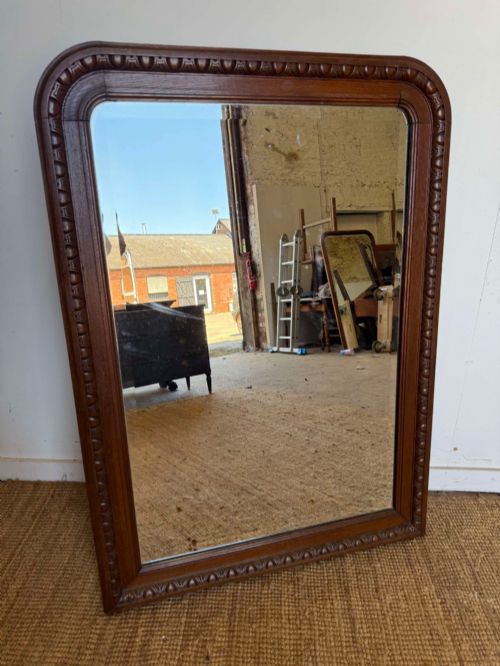
Buyers seeking an antique carved frame mirror encounter a variety of substantial forms designed for domestic display across the eighteenth, nineteenth, and early twentieth centuries. The selection ranges from grand overmantel mirrors intended to sit above a fireplace to smaller wall-hung ovals and dressing table glasses.
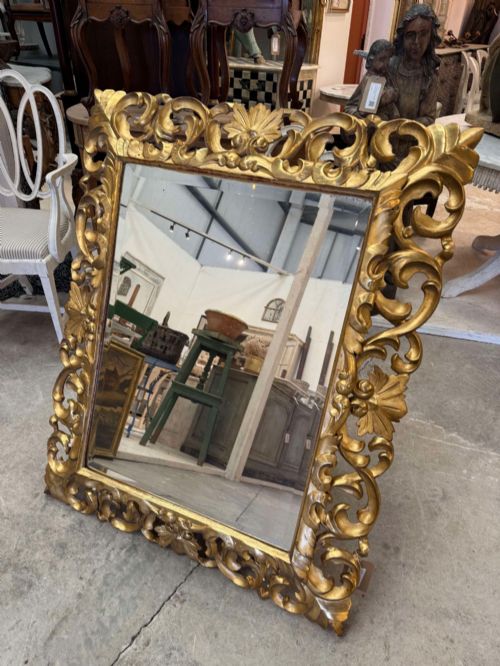
The nineteenth-century examples often appear as large architectural pieces featuring arched tops and heavy gesso ornamentation. Other variations include girandoles with candle sconces, pier glasses, and French or Florentine styles defined by intricate floral and scrolling motifs.
Makers utilised native and imported timbers, resulting in frames shaped from mahogany, oak, walnut, and yew wood. Many pieces combine structural wood bases with moulded gesso layers to achieve deep relief decoration.
Materials and construction methods
Frames rely on solid wood carcases of oak, mahogany, or pine that provide the underlying structural rigidity. Carvers worked directly into the timber or applied layers of gesso - a mixture of chalk and binder - to build up intricate surface details such as rope twists, acanthus leaves, and ribbed mouldings.
Giltwood pieces received thin sheets of gold leaf laid over a prepared bole base, whilst other items display original painted finishes, parcel gilding, or the natural grain of bleached oak and walnut. Glass plates were traditionally silvered and set within the rebate, often displaying the slight distortions or foxing typical of antique manufacture.
Antique Carved Frame Mirror Retail Price Guide 2026
Typical asking prices for carved frame mirror among the pieces listed under this phrase on Sellingantiques today, from the lower quarter to the upper quarter. They describe what is for sale here now, not the wider market.
Listings feature items spanning the eighteenth century through to the Art Nouveau and Edwardian periods.
Assessing quality in carved mirrors
Quality rests upon the crispness and depth of the hand-carved detail within the wood and gesso. Superior examples demonstrate fluid, undercut foliage and harmonious proportions rather than mechanical uniformity.
The integrity of the original surface finish, whether gold leaf or polished wood, determines the character of the piece. High-grade items retain their original glass plates and backboards, displaying coherent signs of age without crude structural alterations.
The Antique Carved Frame Mirror Glossary
- Gesso
- A plaster-like material applied to wooden frames and carved or moulded into decorative relief before gilding.
- Overmantel mirror
- A large horizontal mirror designed specifically to be hung on the wall directly above a mantelpiece.
- Girandole
- A decorative wall mirror fitted with attached candle sconces that reflect candlelight into the room.
- Pier glass
- A tall, narrow mirror traditionally hung on the pier or wall space between two windows.
- Giltwood
- Timber that has been coated with thin leaves of gold or metal leaf over a prepared surface.
- Rope twist
- A carved decorative moulding that spirals continuously to resemble the strands of a rope.
Antique Carved Frame Mirror: Frequently Asked Questions
Where should I hang an overmantel mirror?
These large mirrors are traditionally mounted centrally above a fireplace mantel to reflect light and anchor the surrounding furniture.
Ensure the wall fixings are secured directly into structural studs or masonry to support the considerable weight of the wood and gesso frame.
How do I identify the period of a carved frame?
Examine the timber species, the style of the carved motifs, and the construction methods visible on the reverse of the frame. Eighteenth-century pieces frequently employ mahogany or walnut with fretwork, while Victorian examples often feature heavy gilt gesso and arched crests.
The backing boards, fixing screws, and the condition of the mirror plate also offer clear indicators of the manufacturing era.
What is the difference between giltwood and painted frames?
Giltwood frames have real gold leaf applied over a prepared red or yellow bole ground, creating a warm metallic sheen that ages with a soft patina. Painted or parcel gilt frames incorporate solid pigments alongside partial gilding to highlight specific carved details.
Both finishes were used across different periods, with French and English workshops favouring distinct regional colour palettes.
Can antique mirror plates be replaced?
Most surviving antique mirrors retain their original glass plates, which often exhibit characteristic foxing, light oxidation, and minor surface waviness. Collectors generally prefer to preserve the original glass wherever possible to maintain historical authenticity.
Replacement is typically reserved for instances where the original plate has been shattered beyond repair.