
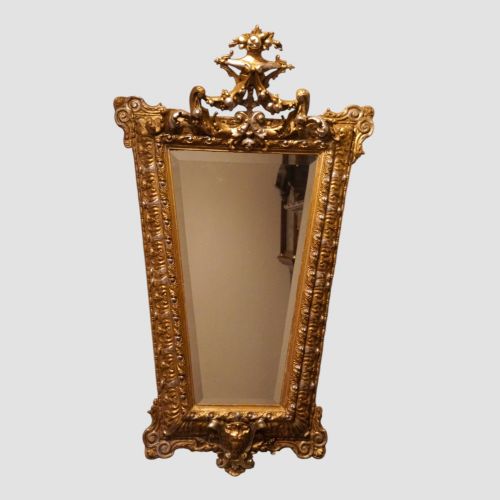
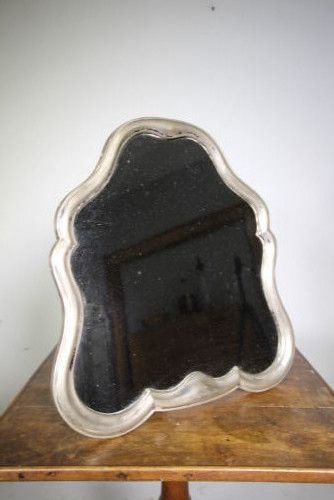
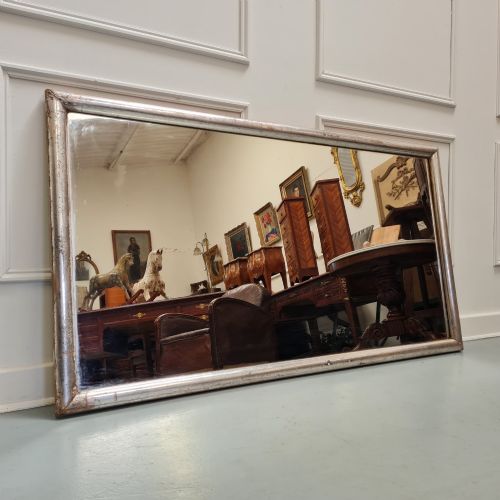
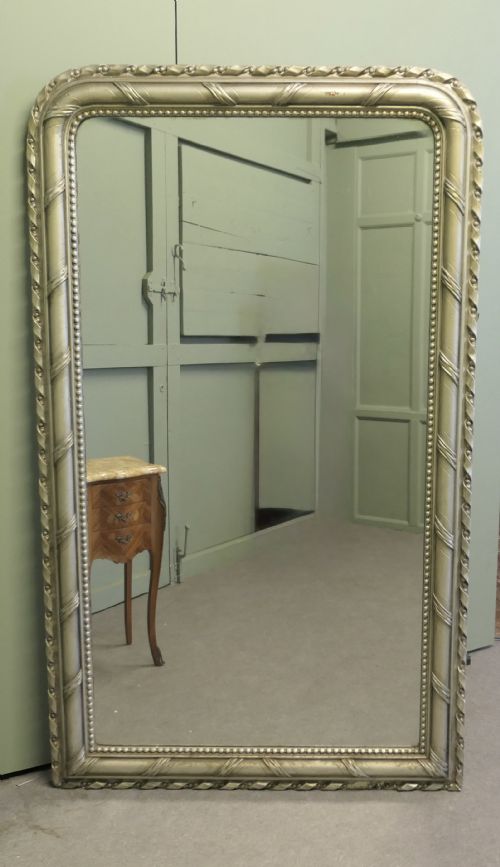





Silver Gilt Wall Mirror
These silver gilt wall mirrors bring reflective depth and bright metallic warmth to a room.
Identifying a silver gilt wall mirror
A silver gilt wall mirror provides reflective glass set within a metallic-coated wooden frame, capturing light across interior spaces. When you search for a silver gilt wall mirror, you encounter pieces spanning from the seventeenth century through to the twentieth century, with nineteenth-century French examples appearing with notable frequency.
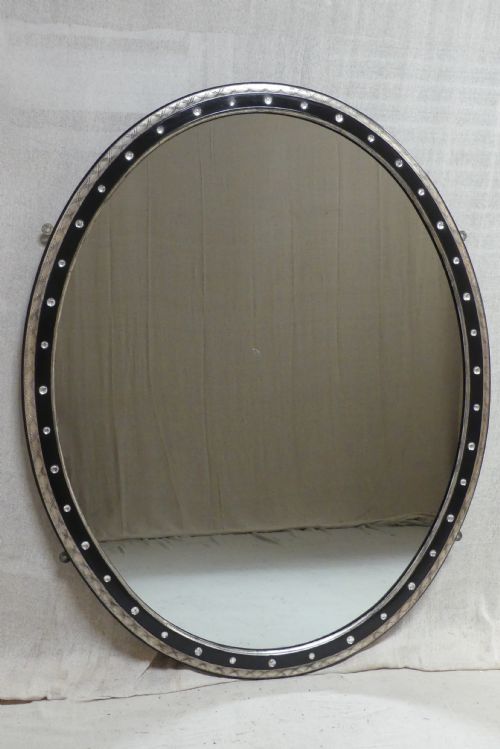
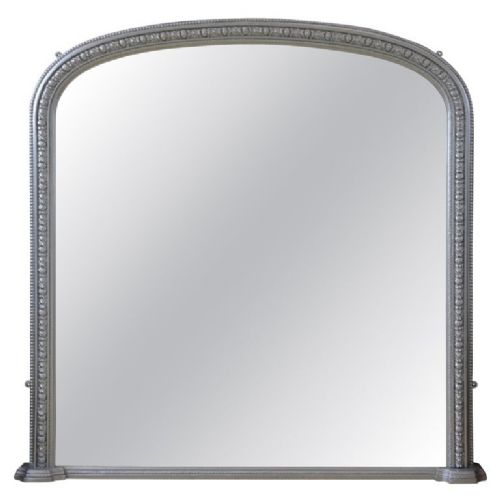
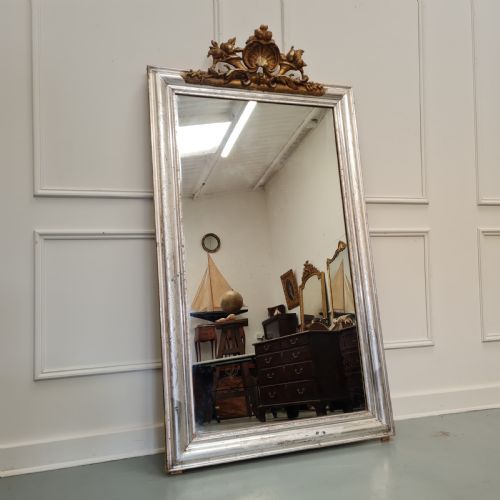
Forms range widely in scale and proportion, including tall Louis Philippe models, large overmantle pieces, compact bistro frames, and oval formats. Styles cross from ornate Rococo and French nineteenth-century designs to clean Art Deco compositions and regional Irish pieces.
Origins include French workshops, English makers, and London studios such as that of A.J. Rowley. The framing materials and reflective glass combine to create decorative focal points suited to period and eclectic interiors alike.
Materials and construction
Frames are constructed from timber, frequently shaped with gesso to build up decorative mouldings, floral details, or flat architectural surfaces. Wood marquetry also appears in specific twentieth-century pieces, combining inlaid timbers with metallic treatments.
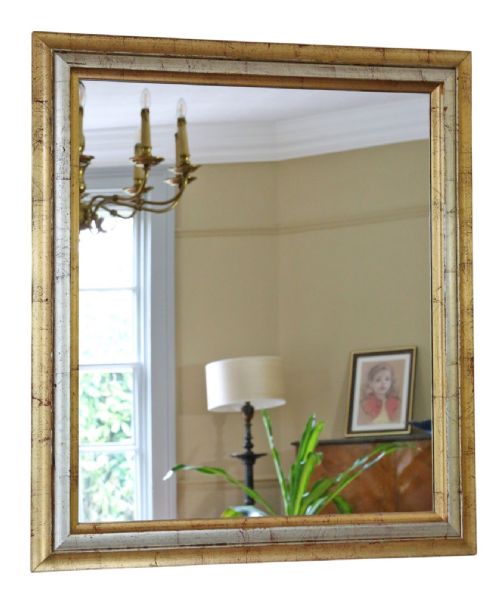
The metallic finish is achieved through the application of silver leaf, silver gilt, or silvered layers, sometimes accompanied by gold finishes, cream paint, or ebonised elements. Glass plates are fitted within these prepared wooden structures, completing the mirror assembly.
Retail Price Guide 2026
Typical UK retail prices for silver gilt wall mirror, calculated from the Sellingantiques database of over a million retail prices indexed since 2003. This retail price guide relies exclusively on Sellingantiques data; no external sources or auction records are used, so the figures do not describe the wider market.
Some nineteenth-century mirrors sneaked in cream paint beneath their silver leaf just to confuse future decorators.
Distinguishing quality
Quality rests upon the crispness of the gesso mouldings and the finesse of the silver leaf or silver gilt application across the wooden frame. Pieces with deeply articulated floral ornamentation or hand-cut marquetry demonstrate a higher degree of artisan skill than simpler, flat-surfaced alternatives.
The integrity of the structural timber and the retention of the original silvered finish distinguish superior examples. Furthermore, the character of the glass plate and the harmony between frame proportion and decorative detail determine the overall standing of the piece.
A.J Rowley
The Silver Gilt Wall Mirror Glossary
- Silver gilt
- A metallic surface finish created by applying silver leaf or a silver coating onto wood, often treated to achieve a warm lustre. It provides the primary reflective coloration for the frames.
- Gesso
- A plaster-like mixture applied to wooden frames and carved or moulded into intricate decorative patterns before gilding. It forms the raised ornamentation seen on many period mirrors.
- Louis Philippe
- A French nineteenth-century style characterised by understated elegance, often featuring rounded upper corners and restrained framing. These mirrors offer a classic architectural presence.
- Rococo
- An ornate design style marked by asymmetric scrolls, floral motifs, and shell-like curves. It generates high visual movement within the frame decoration.
- Marquetry
- The art of applying pieces of veneer to a structure to form decorative patterns or pictorial scenes. It appears in specific twentieth-century works alongside silver-gilt elements.
Frequently Asked Questions
How do I date a silver gilt wall mirror?
Dating relies on examining the construction methods of the wooden frame, the composition of the gesso, and the style of the decoration. French Louis Philippe forms, Rococo curves, and Art Deco marquetry each correspond to distinct periods of manufacture.
Secondary clues include the type of glass, the backing materials, and the formulation of the silver leaf or silver gilt finish. Comparing these characteristics against documented examples helps narrow the decade or century of origin.
Where should I hang a silver gilt wall mirror?
These mirrors function effectively above mantelpieces, along hallway walls, or as focal points within reception rooms. Their reflective surfaces amplify natural light and visually expand the dimensions of the surrounding space.
When positioning a piece, consider the scale of the furniture below it and the eye level of occupants. Taller formats suit grander wall expanses, while smaller oval or bistro mirrors fit comfortably in intimate settings.
What is the difference between silver gilt and silvered?
Silver gilt generally indicates a finish where silver leaf or metal is applied to a surface, sometimes with warm undertones resembling gilding. It yields a rich, reflective metallic sheen across the frame.
Silvered finishes focus purely on the silver coloration without the golden warmth, often producing a crisper, cooler metallic appearance. Both techniques interact differently with surrounding light and interior colour schemes.
How should I clean a silver gilt mirror frame?
Cleaning requires a soft, dry cloth to gently remove dust from the intricate gesso mouldings and carved wooden details. Avoiding moisture and chemical sprays protects the delicate silver leaf or silver gilt surface from degradation.
Glass cleaner applied directly to a cloth rather than the glass prevents liquid from seeping beneath the frame edge. Regular, gentle maintenance preserves the metallic lustre and the integrity of the antique materials.