
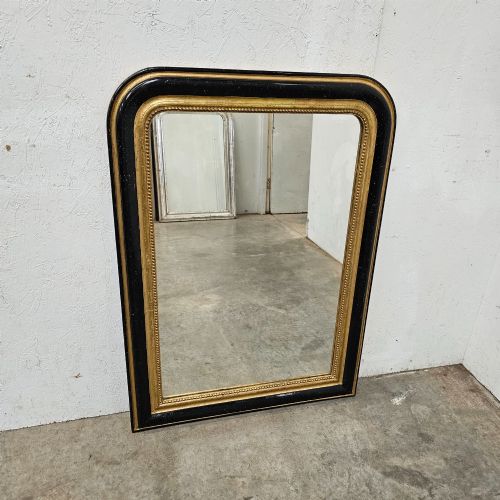

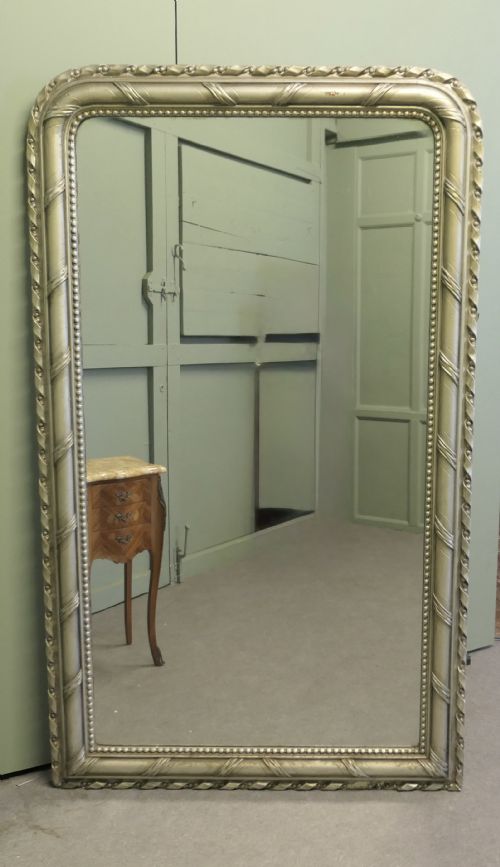

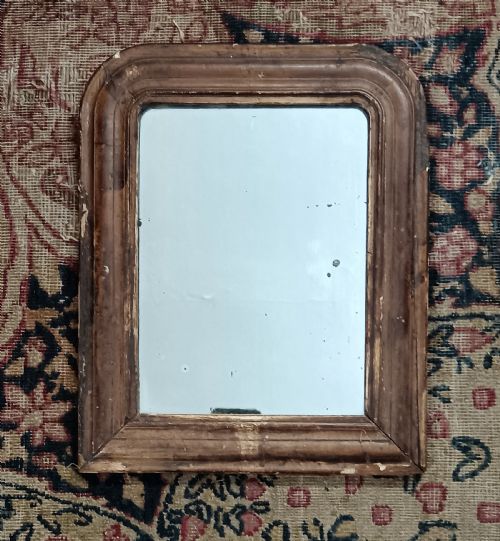


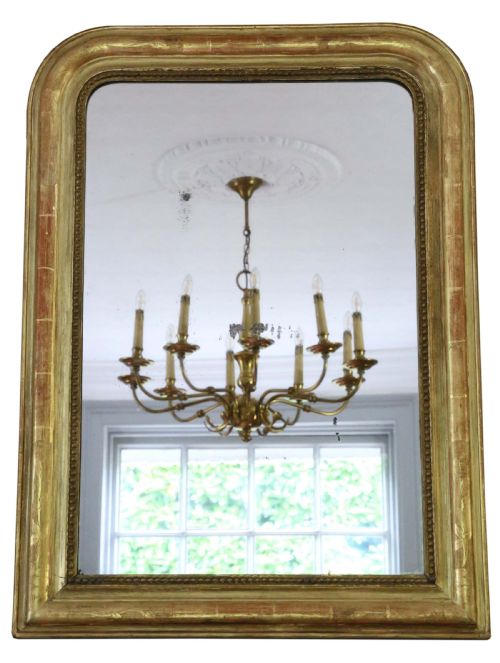


Rounded Corner Mirror
A rounded corner mirror brings understated French and Victorian elegance to a room, offering soft lines that suit both traditional and modern spaces.
What a rounded corner mirror is
A rounded corner mirror is typically encountered as a wall mirror or an overmantel mirror dating from the nineteenth century up to nineteen forty. The listings here predominantly feature French Louis Philippe styles alongside Victorian examples.
Buyers look for these pieces to provide reflective light and classical proportions without the sharp angles of standard rectangular frames. The softened upper corners define the aesthetic, bridging French chateau charm with nineteenth-century utility.
How they were made
Construction relies on wood frames finished with gesso and plaster to achieve intricate mouldings and smooth curves. Gilt and paint are applied to the surfaces to create traditional gold and decorative finishes.
Glass plates are set within these frames, often accompanied by original backing boards and structural elements characteristic of nineteenth-century workshop methods.
Retail Price Guide 2026
Typical UK retail prices for rounded corner mirror, calculated from the Sellingantiques database of over a million retail prices indexed since 2003. This retail price guide relies exclusively on Sellingantiques data; no external sources or auction records are used, so the figures do not describe the wider market.
Some nineteenth-century mirrors spent decades reflecting busy Victorian shop floors before finding their way into domestic quiet.
What varies in quality
Quality separates ordinary joinery from finer craftsmanship through the depth and crispness of the gesso moulding and the preservation of the original gilt surface. Superior examples display harmonious proportions across different scales, from petite arched formats to large overmantel proportions.
The integrity of the frame construction and the clarity of the glass contribute significantly to the overall merit of the piece. Lesser examples show wear that obscures the original decorative intention, whereas better pieces retain their structural and visual balance.
The Rounded Corner Mirror Glossary
- Louis Philippe
- A mid-nineteenth-century French style characterised by simple, elegant lines and rounded top corners. This aesthetic avoids excessive ornamentation in favour of graceful curves.
- Overmantel mirror
- A large mirror designed to hang specifically above a fireplace mantel. These pieces often feature wide proportions to reflect light across the room.
- Gesso
- A plaster-like material applied to wooden frames as a base for gilding or painting. It allows craftsmen to carve and mould fine decorative details.
- Giltwood
- Timber that has been covered with a thin layer of gold leaf. It provides a luminous finish that catches natural light.
Frequently Asked Questions
Where should I hang a rounded corner mirror?
These mirrors work well above mantelpieces, in hallways, or as feature pieces on living room walls where their curved frames can soften architectural lines.
Ensure the wall structure can support the weight, particularly with larger nineteenth-century overmantel versions.
How do I identify a Louis Philippe mirror?
Look for the characteristic softly rounded upper corners combined with a relatively simple, clean-lined frame structure.
French nineteenth-century examples often display subtle arched shaping and traditional gilt finishes.
Can I clean the original gilt frame?
Dust the surface gently with a soft, dry cloth to protect the delicate gesso and gold leaf layers.
Avoid using water, chemical sprays, or abrasive cleaners which can damage the historic finish.