






Copper Framed Mirror
A copper framed mirror brings tactile warmth and hammered texture to a room, dominated by Arts and Crafts examples from the early twentieth century.
Copper Framed Mirror
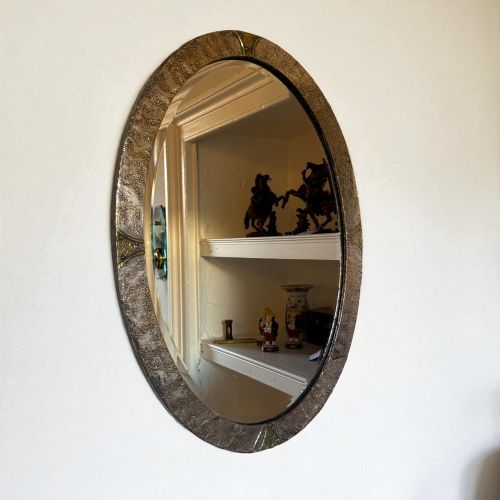
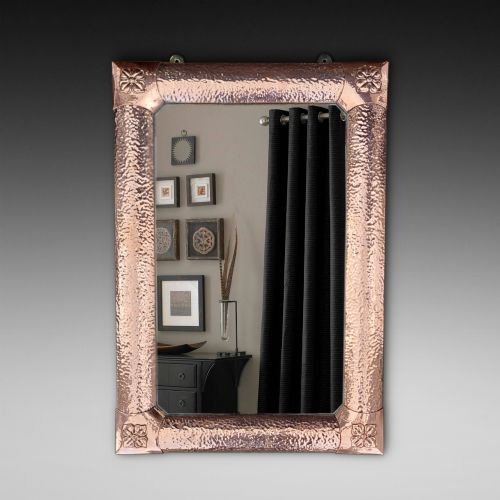
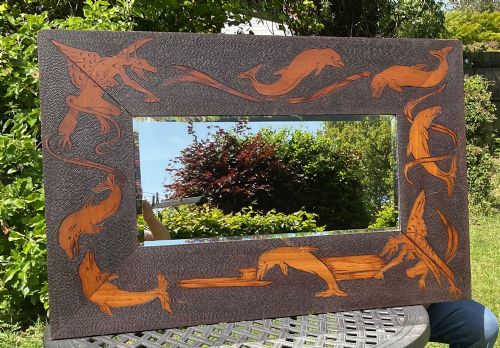
A copper framed mirror is a wall-hanging glass looking-glass set within a metal surround, predominantly created during the Arts and Crafts period around nineteen hundred. These pieces range from simple beaten ovals to elaborate rectangular designs featuring stylized motifs like trees, dragons, and Celtic knots.
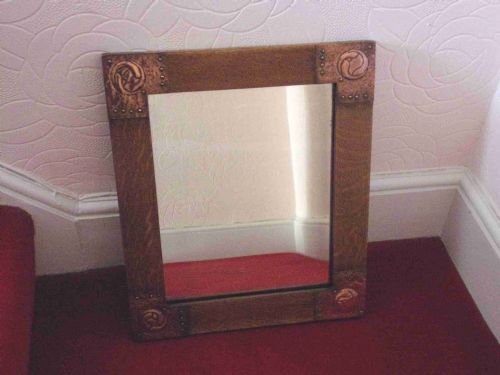
The version most commonly met on this page is the Arts and Crafts wall mirror, frequently combining sheet copper with oak or brass detailing. Makers utilised circular, oval, and rectangular formats to suit domestic hall and parlour spaces of the period.
How they were made
The copper frames were typically formed by hand beating sheet metal from the reverse using hammers and wooden stakes to raise the decorative relief work, a technique known as repoussé. Artisans secured these metal plates around wooden carcases or backboards, often incorporating brass rivets or ceramic cabochons.
Makers integrated mirror glass into the wooden structures, sometimes utilising bevelled edges to catch the light. Oak provided a sturdy structural backing for the metalwork, while ceramic elements such as Ruskin cabochons added spots of coloured glaze to the copper surface.
Copper Framed Mirror Retail Price Guide 2026
Typical asking prices for copper framed mirror among the pieces listed under this phrase on Sellingantiques today, from the lower quarter to the upper quarter. They describe what is for sale here now, not the wider market.
One unusual piece bears the motto 'Behind Time', turning a domestic looking-glass into a wry commentary on the hours.
What varies in quality
Quality rests in the depth and crispness of the hand-hammered relief work on the copper frame, distinguishing skilled metalwork from mechanical production. Stronger pieces display confident repoussé detailing and careful integration of motifs like trees or mythical creatures rather than shallow, flat stamping.
The choice of secondary materials also separates pieces, with solid oak frames and inset ceramic cabochons indicating higher workshop standards. Better examples show superior joinery on the wooden carcase and heavier gauge copper that holds its structural integrity without buckling.
Liberty and Company
The Copper Framed Mirror Glossary
- Repoussé
- A metalworking technique where the artisan hammers the metal from the reverse side to form a raised design in relief on the front. This process gives Arts and Crafts copper frames their characteristic tactile texture.
- Cabochon
- A polished, convex gem or ceramic piece without facets, often set directly into the copper frame. Ruskin pottery frequently supplied these colourful ceramic inserts.
- Pier glass
- A tall wall mirror traditionally designed to hang on the wall space between windows. These pieces often feature combined copper and brass elements.
- Bevelled glass
- Mirror glass with edges ground and polished to an angled slope. This treatment creates a decorative framed border effect within the glass itself.
Copper Framed Mirror: Frequently Asked Questions
How do I date a copper mirror?
Dating relies on stylistic markers such as Arts and Crafts or Art Deco design motifs, alongside construction methods like hand-beaten copper work. Most examples on this page cluster around the late nineteenth and early twentieth centuries.
Examine the backboards, fixings, and glass type for further clues to the period. Older pieces often use traditional woods like oak and hand-cut mirror plates.
Where should I hang a copper mirror?
These wall mirrors suit hallways, living rooms, and bedrooms where their warm metallic tones can reflect natural light. Their domestic scale makes them practical focal points above mantelpieces or console tables.
Ensure the wall fixings can support the combined weight of the metal frame, wooden backing, and glass. Hanging them away from damp environments helps protect the copper surface and mirror backing.
How do I clean a copper frame?
Cleaning requires a gentle approach to preserve the natural patina built up over decades of age. Avoid harsh chemical polishes that strip the surface character away.
A soft, dry cloth removes dust effectively without disturbing the metal. If cleaning is necessary, use a mild, non-abrasive metal cleaner specifically formulated for historical copper.
What is the difference between Arts and Crafts and Art Deco mirrors?
Arts and Crafts copper mirrors emphasise hand-beaten textures, organic motifs, and vernacular materials like oak and ceramic cabochons. They reflect a design philosophy centred on craftsmanship and natural forms around nineteen hundred.
Art Deco mirrors, emerging towards nineteen thirty, favour geometric lines, streamlined symmetry, and contrasting materials such as blue glass. Their aesthetic shifts from rustic handcraft to modern industrial styling.